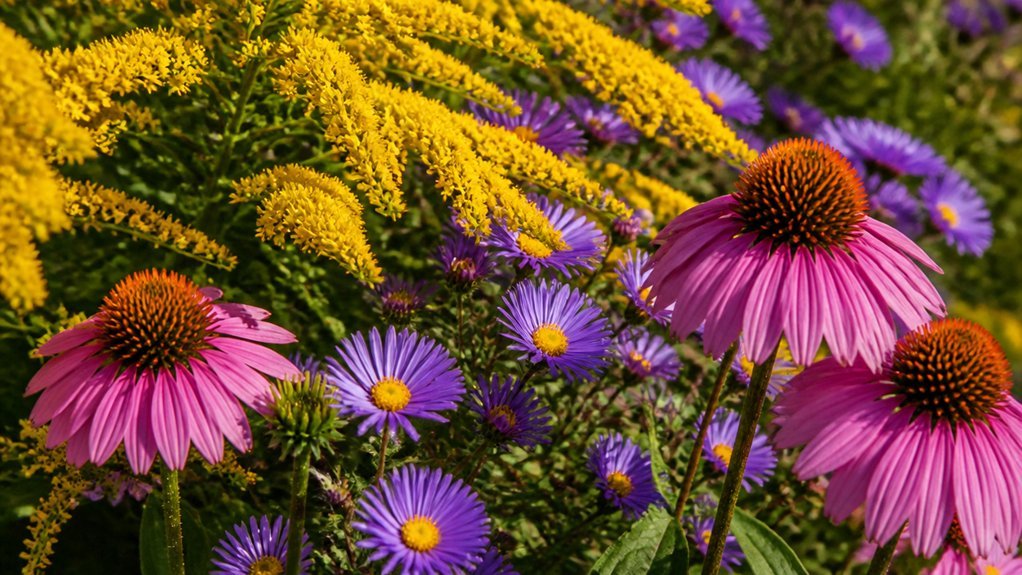
For the best pollen plants for forage, you should plant a mix of willow, maple, coneflower, sunflower, borage, clover, aster, goldenrod, lavender, and bee balm. These bloom across spring through fall, so bees always have a steady pollen source. Choose open, clustered flowers in sunny spots, and favor native species when you can. If you keep bloom times staggered, your garden can feed bees longer and more reliably, with plenty more options to explore.
What Makes a Good Pollen Plant?
A good pollen plant gives bees a reliable, abundant source of high-quality pollen when they need it most. You want flowers that produce plenty of pollen, expose it where bees can reach it, and bloom during times when forage is scarce. Choose plants with open blossoms, so bees can land easily and collect pollen quickly. You also need species that offer nutritious pollen with the right protein and fat balance, because that supports brood rearing and colony growth. Long-lasting bloom matters too, since steady availability helps colonies avoid gaps in feed. Native plants often perform well because they suit local conditions and attract local bees. Supporting native plant species can significantly enhance pollinator health and biodiversity. Avoid double flowers and heavily bred ornamentals, which can hide or reduce pollen and make foraging harder for bees.
Best Spring Pollen Plants for Bees
In spring, you can give bees a strong start by planting early blooming sources like willow, maple, and crocus. These plants help fill the first forage gap when colonies need quick access to pollen. A mix of native wildflower species that bloom early can also provide reliable forage and support regional biodiversity. If you also choose blooms that offer both nectar and pollen, you’ll support healthier, faster-growing hives.
Early Blooming Sources
When spring first warms the soil, early blooming plants give bees their first reliable source of pollen after winter. You can boost forage by planting willow, maple, alder, and hazelnut, since they open before most other blooms. These sources help colonies rebuild brood rearing, strengthen nurse bees, and recover from cold months. A diverse array of pollen substitutes can supplement natural sources, ensuring bees receive adequate nutrition during early foraging. You’ll also benefit from crocus, snowdrop, and hellebore, which flower early and offer steady pollen when little else is available. Choose sheltered sites that warm quickly, and group plants in drifts so bees can work them efficiently. If you maintain a diverse mix, you’ll extend the season and reduce hunger gaps. Early sources matter because they support strong spring starts, and strong starts lead to healthier hives later.
Nectar And Pollen Mix
For spring forage, you’ll get the best results from plants that offer both nectar and pollen, because bees need energy for flight and protein for brood rearing at the same time.
You should prioritize species that bloom steadily and keep workers busy through cool, changeable weather. A mixed patch helps you support stronger colonies and reduces gaps in forage.
- Willow gives you early pollen and light nectar.
- Clover supplies abundant nectar plus usable pollen.
- Fruit blossoms feed bees during short spring windows.
- Maple offers a quick boost when little else blooms.
You can improve returns by planting in clusters, staggering bloom times, and avoiding pesticides during flowering. When you combine these resources, your bees build brood faster and enter summer in better shape.
Additionally, choosing bee-friendly plants that are resilient and suitable for your local climate can enhance your garden’s effectiveness in supporting pollinator health.
Best Summer Pollen Plants
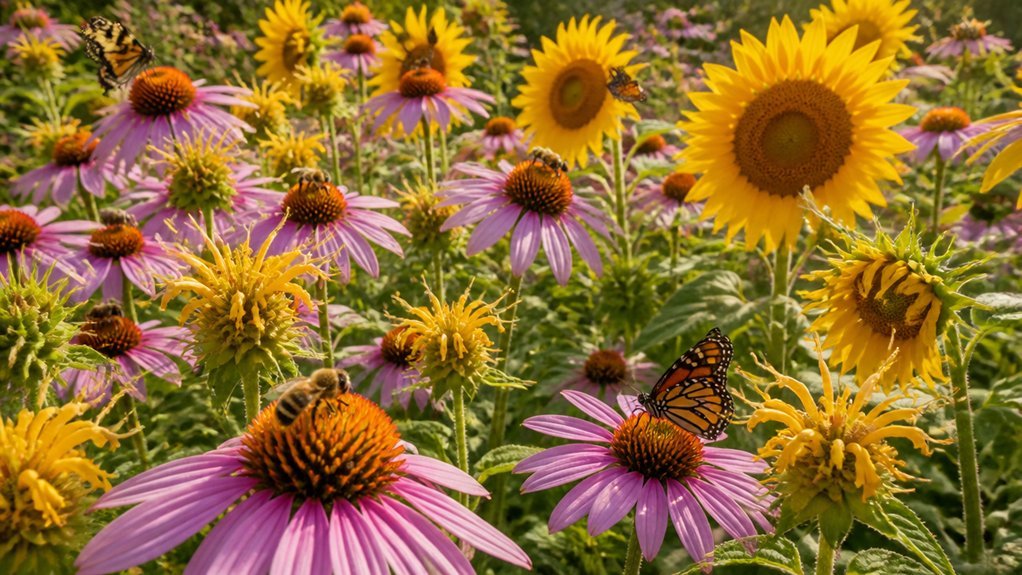
As summer heats up, you’ll want pollen plants that keep blooming through the longest, brightest days. You can rely on sunflowers, zinnias, and coneflowers to give bees a steady pollen source when the season runs hot.
Sunflowers, zinnias, and coneflowers keep bees fed with steady pollen through the hottest summer days.
Plant borage if you want quick blooms that keep working, and add squash blossoms for a productive patch near your garden. Clover also helps fill gaps, especially when you mow it lightly and let flowers rebound.
For shrubs, consider buttonbush or vitex, which draw pollinators without much fuss. Give these plants full sun, well-drained soil, and regular watering during dry spells.
If you stagger planting times, you’ll extend bloom coverage and keep your forage area buzzing all summer long. Incorporating pollen content plants enhances not only nectar flow but also the nutritional variety that supports healthy bee colonies.
Best Late-Season Pollen Plants
By late season, you’ll want pollen plants that can carry bees through the final stretch before frost. You can give them a strong finish with asters, goldenrod, sedum, and sunflower regrowth. These blooms often keep producing when many others fade, so they help you avoid a forage gap. Incorporating synthetic Pheromone blends in your trap management can also support maintaining healthy bee activity during this time. Plant them in full sun and well-drained soil, and stagger bloom times if you want steady pollen flow. – Asters bloom late and pack reliable pollen. – Goldenrod offers dense stands and long-lasting support. – Sedum holds up well in dry, cooler weather. – Sunflowers can rebloom if you cut them back. If you manage your plot well, you’ll extend forage and keep bees active while temperatures drop.
Best Native Wildflowers for Pollen

Native wildflowers can be some of the best pollen plants you add to a forage plot because they’re well adapted to local conditions and often support bees with steady, dependable bloom. You can plant asters, coneflowers, blazing star, bee balm, and wild lupine to feed pollinators through the season. These species produce abundant pollen and thrive with less intervention than many ornamentals, so you’ll spend less time managing them. Mix several bloom times to keep forage available from spring into fall, and choose species that match your soil and moisture. Providing stable and weather-resistant materials helps ensure the longevity of your plants and continuous forage, especially during variable seasonal conditions. You’ll also help native bees, butterflies, and other beneficial insects by creating a diverse stand that resists stress and recovers quickly after dry spells or weather swings.
Best Pollen Plants for Small Yards
If you’ve got a small yard, you can still support forage with compact blooming species that fit tight spaces. You’ll want plants that offer steady pollen across the seasons, so your garden keeps feeding pollinators longer. Container-friendly options also let you add pollen-rich color to patios, balconies, and narrow borders. Using pollen traps can further enhance your harvest and support your bees’ health.
Compact Blooming Species
When you’re working with limited space, compact blooming species can give you plenty of pollen without crowding out the rest of your yard.
You can tuck them into borders, containers, or narrow beds and still support foraging insects. Choose plants that stay tidy, branch well, and produce abundant flowers close to the stems.
- Catmint offers dense blooms and handles pruning well.
- Lavender gives you fragrant spikes and thrives in sunny spots.
- Dianthus stays low and keeps flowers coming in clusters.
- Coreopsis adds bright, pollen-rich color without spreading fast.
You’ll get the best results by grouping several small plants together, so pollinators can move efficiently from bloom to bloom.
Keep soil healthy, water during establishment, and deadhead regularly to encourage more flowers.
Incorporating visual aids such as photos and diagrams can help you identify and maintain these plants effectively.
Seasonal Pollen Sources
Seasonal pollen sources help you keep your small yard useful for pollinators from early spring through fall, even if you only have room for a few plants. You can start with early bloomers like willow, crocus, and flowering currant to feed bees when little else is open. Using natural materials such as bamboo, wood, and untreated pine in your garden not only supports the health of pollinators but also encourages diverse nesting options. Midseason, add sunflowers, coneflowers, and cosmos, which produce dependable pollen during the busiest foraging months. For late-season support, choose asters, goldenrod, and sedum so your yard keeps offering food as temperatures cool. When you stagger bloom times, you help pollinators find steady nutrition instead of brief surges. Mix colors, shapes, and bloom windows, and you’ll create a small but reliable pollen chain that supports bees, hoverflies, and other beneficial insects all season long.
Container-Friendly Options
Container gardening lets you grow plenty of pollen-rich plants even in a small yard, patio, or balcony. You can choose compact blooms that feed pollinators without crowding your space, and you’ll still get a strong forage display. Pick roomy pots with drainage, use rich soil, and water consistently so flowers keep producing.
- Sunflowers in dwarf varieties
- Thyme and oregano for long bloom periods
- Lavender in large containers
- Bee balm in deep pots
Place containers where they’ll get at least six hours of sun, then deadhead spent flowers to extend blooming. Group pots together to create a bigger target for bees, and rotate them if one side gets too hot.
With smart placement, you’ll support pollinators and enjoy a productive, low-space garden.
Best Trees and Shrubs for Pollen
Trees and shrubs can anchor a pollen-rich forage plan, especially because they bloom early, last longer than many annuals, and offer a steady resource when bees need it most. You can choose species that fit your climate, soil, and space, then let them support bees with abundant pollen.
| Plant | Bloom | Value |
|---|---|---|
| Willow | Early spring | High |
| Maple | Spring | High |
| Serviceberry | Early spring | Good |
| Aronia | Spring | Good |
| Elderberry | Late spring | Good |
Plant these where they get sun and room to mature, and avoid heavy pruning during bloom. You’ll give pollinators dependable cover, nesting structure, and a broad pollen source without extra fuss, so your forage area works harder for the whole season.
How to Stagger Bloom Times

To keep pollen available for as long as possible, plan for overlapping bloom times instead of relying on one big flush of flowers. You can do this by mixing early, midseason, and late bloomers so bees always find fresh forage. Plant each group in small blocks, then add a few repeat bloomers to extend the season.
Watch your site’s microclimates, since sunny edges often bloom sooner than shaded spots.
- Choose species with different flowering windows
- Pair annuals with perennials for steady succession
- Stagger planting dates for crops you start yourself
- Note bloom gaps and fill them next season
Track what flowers when, then adjust your lineup each year. That way, you’ll build a reliable pollen supply from spring through fall.
Best Pollen Plants for Dry Yards
When your site stays hot and dry, choose pollen plants that can handle stress without sacrificing bloom. You’ll get reliable forage from tough perennials and annuals that keep producing even when rainfall is scarce. Sunflower offers abundant pollen, while yarrow, bee balm, and globe thistle tolerate lean soils and long dry spells. Penstemon and lavender also thrive with little extra water once established.
| Plant | Dry-yard strength |
|---|---|
| Sunflower | Heavy pollen, heat tolerant |
| Yarrow | Low water use |
| Bee balm | Drought-tough once rooted |
| Globe thistle | Spiny, resilient blooms |
| Lavender | Fragrant, reliable pollen |
Group these plants in full sun, mulch lightly, and avoid rich soil that pushes weak growth. You’ll support bees without spending much water or effort.
How to Build a Bee Forage Garden
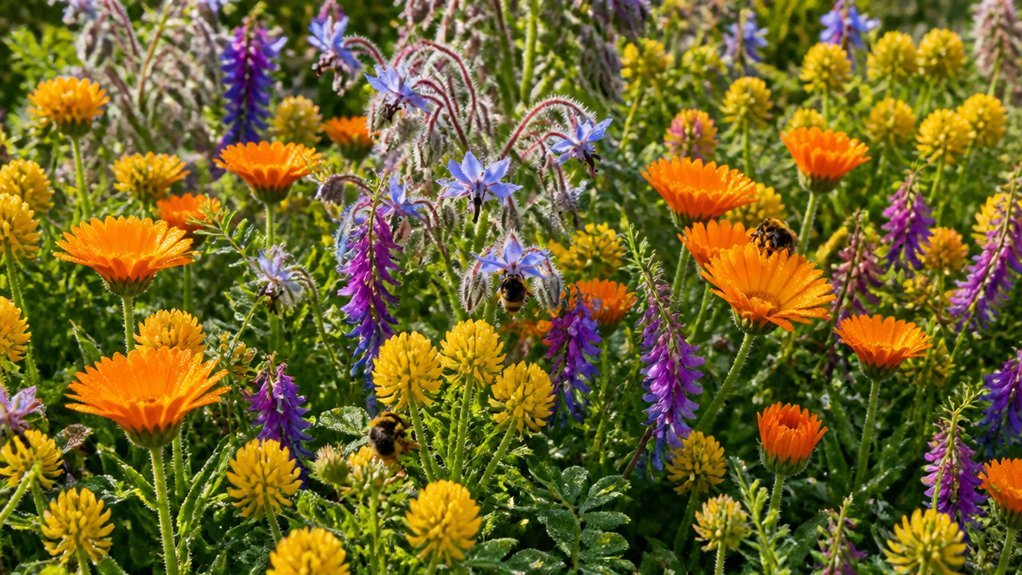
You can build a bee forage garden by choosing blooming plants that offer plenty of pollen and nectar.
Mix early, midseason, and late bloomers so bees have food across the whole growing season. Then arrange your plants in open, easy-to-reach clusters so bees can move through your garden with ease.
Choose Blooming Plants
Choose blooming plants that stagger their flowers through the season, and your bee forage garden will keep feeding pollinators from early spring into fall. You should mix native flowers, herbs, and shrubs so bees find varied pollen and nectar sources close together.
Pick plants with different bloom shapes and colors; that diversity attracts more bee species and supports stronger foraging.
- Lavender and salvia lure long-tongued bees.
- Coneflower and asters offer sturdy landing pads.
- Thyme and oregano bloom in tight clusters.
- Sunflowers supply abundant pollen for busy colonies.
Avoid sterile hybrids that produce little reward. Instead, choose varieties known for abundant blossoms and easy access. Group plants in drifts, water them well, and remove spent blooms to encourage new flowers.
Your garden will become a reliable feeding site that bees can visit quickly and repeatedly.
Provide Season Coverage
A bee forage garden works best when something is always in bloom. You can do that by mixing early, mid, and late season pollen plants so bees never face a gap.
Start with spring bloomers like willow, crocus, and fruit trees, then keep summer flowing with clover, sunflower, catmint, and lavender. Finish strong with asters, goldenrod, and sedum for fall.
If your climate has mild winters, add a few winter-blooming shrubs or herbs to extend forage even more. You should also stagger planting dates and choose varieties with different bloom times within the same species. That way, your garden supports bees through changing weather and seasonal shifts, giving them steady nutrition from the first warm days to the last.
Design Bee Access
Make every bloom easy for bees to reach by shaping the garden around their flight paths. You’ll help them forage faster when you group pollen-rich plants in broad drifts, not scattered singles.
Keep paths open, beds low at the front, and taller flowers behind so bees can land and lift off without obstacles. Add:
- flat stones for resting
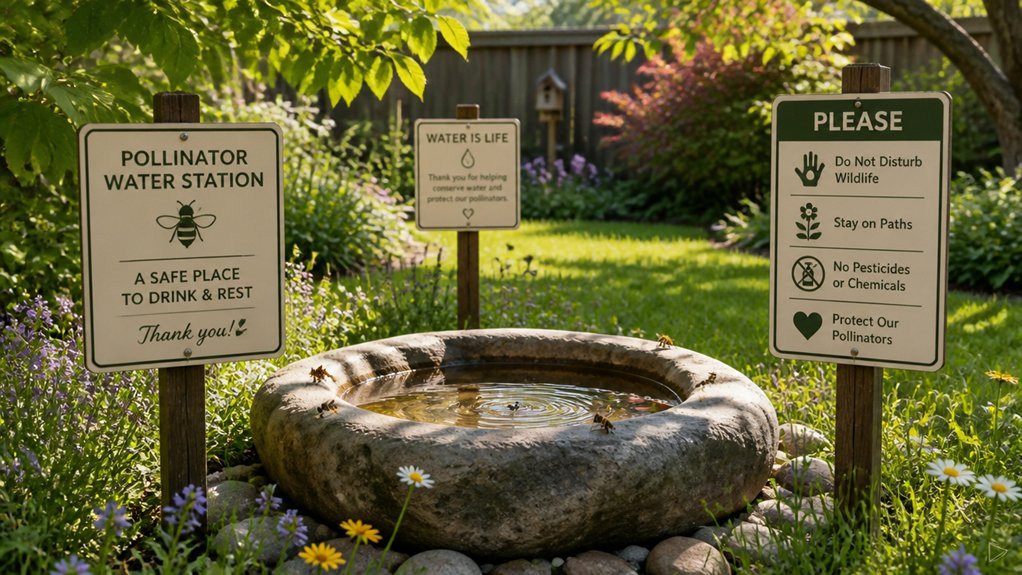
- shallow water with pebbles
- sunny spots with wind shelter
- successive bloom heights
Place herbs, native wildflowers, and shrubs in clusters bees can scan quickly. Avoid dense mulch mounds and deep barriers that block approach.
If you let flowers overlap bloom times, bees can move through the space with less wasted energy, and your garden becomes a reliable feeding route.
Frequently Asked Questions
How Much Pollen Do Bees Need Daily?
You don’t need a fixed daily pollen amount; a healthy colony often needs roughly 1–2 pounds weekly, depending on brood rearing and season. You’ll see foragers collect more when young bees need protein.
Can Ornamental Plants Provide Useful Pollen?
Yes, you can rely on many ornamental plants for useful pollen if they’re pesticide-free and varied. You’ll help bees most by choosing double-checked, open-flowered cultivars that bloom through the season and offer accessible pollen.
Do Pesticide-Free Plants Matter for Pollen Safety?
Yes, you should choose pesticide-free plants because residues can contaminate pollen and harm pollinators. You’ll protect bees better, improve pollen quality, and support safer foraging when you avoid treated blooms and nearby chemical drift.
Which Pollen Plants Attract Other Pollinators Too?
You’ll attract more pollinators with sunflowers, clover, borage, lavender, and wildflowers. Their blooms draw bees, butterflies, hoverflies, and beetles, so you’re feeding a wider pollinator mix while boosting pollen availability too.
Can Container Plants Support Bee Forage?
Yes, you can support bee forage with container plants by choosing nectar- and pollen-rich species, using large pots, sun, and regular watering. You’ll help bees if you stagger blooms and avoid pesticides.
In Summary
By choosing a mix of pollen-rich plants, you give bees food through every season. Start with spring bloomers, add summer favorites, and finish with late-season plants so your garden never runs dry. If you pick native wildflowers, shrubs, trees, and drought-tough options, you’ll support stronger hives with less work. Keep bloom times staggered, and you’ll create a forage garden that keeps bees coming back year after year.