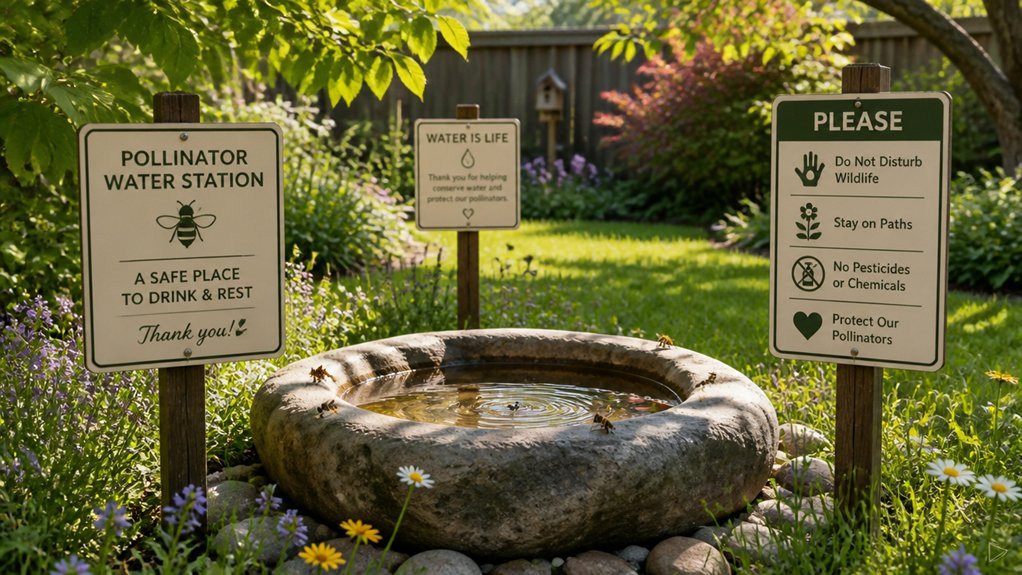
Check your local rules, HOA covenants, and city codes before you set out a backyard bee water station. You should place shallow, stable water dishes with pebbles or corks where bees can land safely, but keep them at least 20 to 30 feet from property lines and away from patios, doors, and play areas. Refresh and scrub the water often to stop mosquitoes and nuisance complaints, and you’ll see how to set it up right for your yard.
What Backyard Bee Water Sources Need
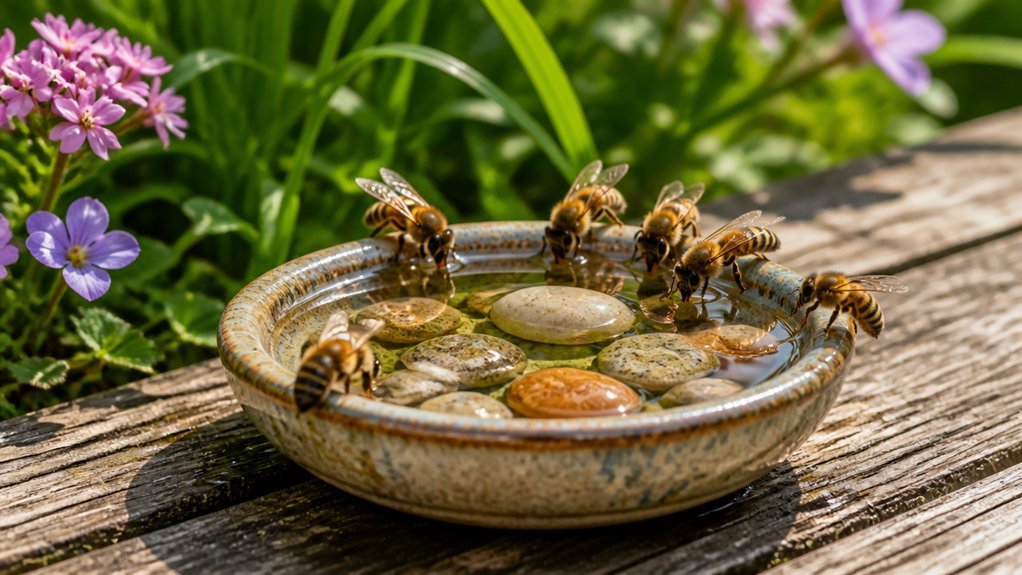
If you keep bees in your backyard, their water source should stay shallow, clean, and easy to reach. You can use a birdbath, planter saucer, or small tub, as long as you add pebbles, corks, or floating wood so bees have firm landing spots. Providing a safe footing helps prevent drowning and encourages frequent use. Place the source in a sunny area near the hive, but not so close that it invites crowding at the entrance. Refill it often with fresh water, and scrub away algae, mud, and debris before they build up. You should also choose a container that won’t tip, overflow, or trap insects. If you manage the setup carefully, your bees will find it quickly and use it consistently throughout warm weather.
Why Bees Need Safe Water
Safe water matters because bees use it to cool the hive, dilute stored honey, and feed developing brood. You help them stay healthy when you give them clean, dependable water instead of risky puddles or chemically treated runoff. A properly maintained water source can also contribute to better hive ventilation and overall colony stability. Inner cover ventilation helps regulate moisture and temperature within the hive, supporting healthier bees. Bees collect droplets on hot days to support temperature control, which protects larvae and keeps the colony working. They also need water for digestion and for making food easier to share inside the hive. If the source contains oil, pesticides, or manure, you can expose the colony to illness or contamination. You don’t need fancy equipment; you just need water that’s fresh, stable, and free from hazards. When you protect their water supply, you support stronger bees, better brood development, and steadier hive activity throughout the season.
What Local Bee Water Rules Usually Cover
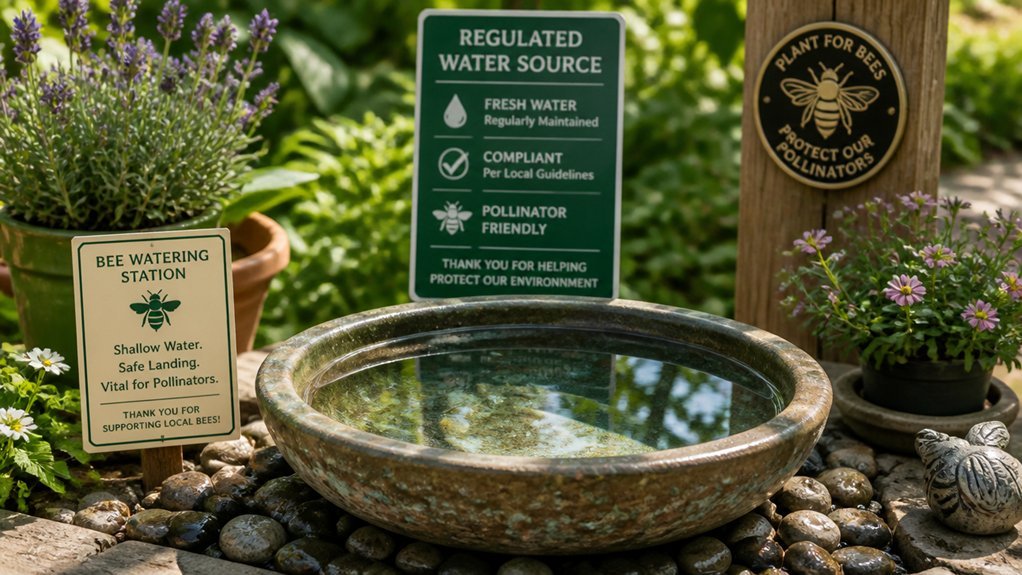
Once you know why clean water matters, the next step is checking what your local bee water rules actually require. You’ll usually find rules about keeping water clean, preventing mosquito breeding, and avoiding runoff that could affect nearby property.
Some areas ask you to use shallow containers, add landing spots, or refresh water often so bees don’t drown or drink stagnant water. You may also see guidance on sanitation, especially if you use shared yards or public-facing spaces.
In some places, local codes fold bee water into broader nuisance or wildlife provisions, so you should read them together. If your area has no bee-specific rule, general property, health, and water-use regulations still apply, and they can shape how you set up and maintain your water source. Proper robbing prevention measures can further help protect your hive from intruders and ensure a healthy environment.
How Far to Place Water From Neighbors
How close is too close? You should place your bee water source far enough from a neighbor’s patio, play area, or driveway that people won’t brush past it. A practical buffer is at least 20 to 30 feet from property lines when you can manage it, especially if neighbors are sensitive or have children and pets.
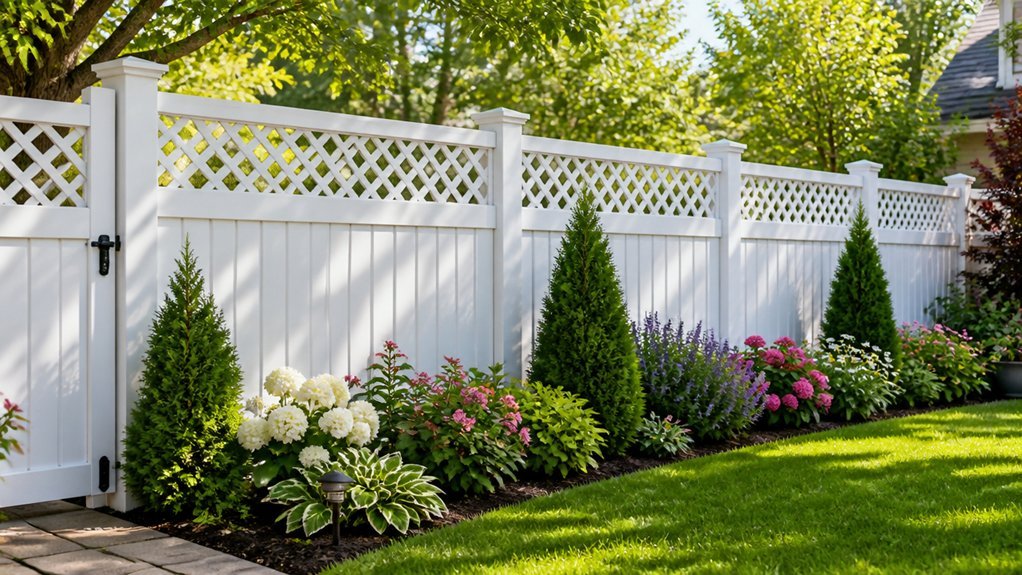
Use your yard’s layout to keep bees on your side and away from shared gathering spots. If space is tight, move the water farther from doors, gates, and windows, since traffic there can trigger complaints. You can also choose a quiet corner with some screening from shrubs or fencing.
Ensuring proper water placement and elevated positioning helps prevent pests and reduces interference with your neighbors. Clear placement helps reduce conflict, supports safe access, and shows you’re being considerate.
Best Bee Water Setups for Small Yards
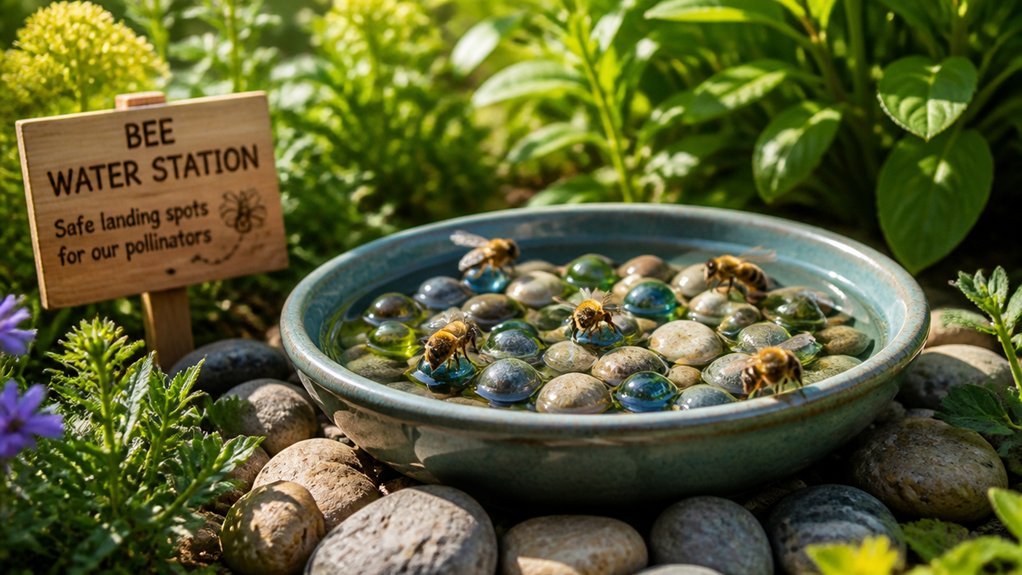
For a small yard, you can use a shallow dish waterer, a pebble-filled bowl, or a simple drip system to give bees safe access to water. You’ll want to keep the water shallow and add landing spots so bees can drink without slipping. Place each setup where it’s easy to reach, but not in a spot that creates a nuisance for neighbors. Maintaining leak prevention features in your water setups can help keep spills to a minimum and prevent attracting unwanted pests or robbers.
Shallow Dish Waterers
If you’re working with a small yard, a shallow dish waterer gives bees a safe, simple place to drink without taking up much space. You can set one on a patio table, porch step, or tucked corner, and refill it easily during dry spells.
- Choose a low, stable dish.
- Fill it with fresh water daily.
- Place it in partial shade.
- Keep it near flowers, not traffic.
- Clean it often to prevent buildup.
This setup works well because you control the size, placement, and maintenance. You don’t need complex equipment, and bees can visit quickly without crowding your yard. Additionally, selecting native wildflowers nearby can improve nectar and pollen availability for visiting bees.
Pebble-Filled Bowls
Pebble-filled bowls give bees a safer landing spot, since the stones break the water’s surface and let them drink without slipping. You can set one in a sheltered corner of your yard, then refill it with clean water before it runs dry.
Choose smooth pebbles that rise above the waterline, and pack them closely enough that bees can move easily from stone to stone. A wide, shallow bowl works best because it gives more landing space and slows evaporation.
You should scrub the bowl regularly to prevent algae and debris from building up. Keep the water level low enough that the pebbles stay exposed. Incorporating native plant species nearby can further support pollinator health by providing additional nectar and habitat.
With this simple setup, you offer pollinators a dependable drink without taking up much room in a small yard.
Drip System Placement
A drip system can be an even smaller-footprint option when you don’t have room for a bowl. You can hang it near shrubs, fence posts, or a porch edge where bees already travel. Keep the drip slow and steady, and place the landing spot on gravel, bark, or a rough stone so they don’t slip.
- Choose partial shade to slow evaporation
- Set it a few feet from foot traffic
- Use clean, chemical-free water only
- Refresh the setup often to prevent algae
- Watch bee activity and adjust height
- Select weather-resistant materials to ensure durability over time and seasons for outdoor use
Safe Materials for Bee Water Containers
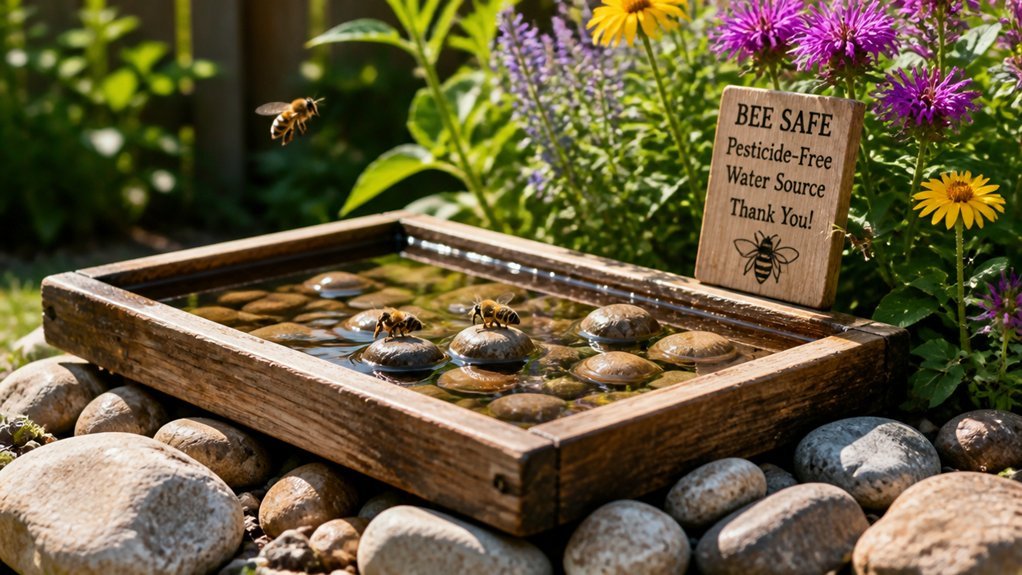
When you set out bee water containers, choose materials that won’t leach toxins or degrade in sun and water, like food-grade plastic, glazed ceramic, stainless steel, or glass.
You should avoid painted metal, untreated wood, and brittle plastics that can crack or shed chemicals over time. Pick containers with smooth, easy-to-clean surfaces so you can wash away mineral buildup without damaging the vessel.
If you use a metal dish, confirm it’s corrosion resistant and free of sharp edges. For ceramic, make sure the glaze is intact and food safe. Glass works well if you place it where it won’t tip. Plastic foundation sheets are a durable choice known for resisting warping and cracking under various weather conditions.
How to Prevent Mosquitoes and Standing Water
To keep your bee water source from becoming a mosquito nursery, refresh the water often and never let it sit stagnant for days. You can stop breeding sites by managing depth, drainage, and debris around the container.
A properly designed entrance reducer, or a cover that limits access, can also help prevent mosquitoes from reaching the water if placed near your hive.
- Empty and scrub the dish every few days.
- Refill with fresh water before algae builds up.
- Add pebbles so bees can land safely without deep water.
- Check for overflow after rain and dump excess water.
- Remove leaves, mud, and other organic matter promptly.
Place the container where water dries quickly and doesn’t collect in low spots. If you use a larger basin, keep the level shallow and monitor it after storms. Consistent upkeep helps you protect bees while reducing mosquito pressure in your yard.
How to Keep Bees Away From Pools and Patios
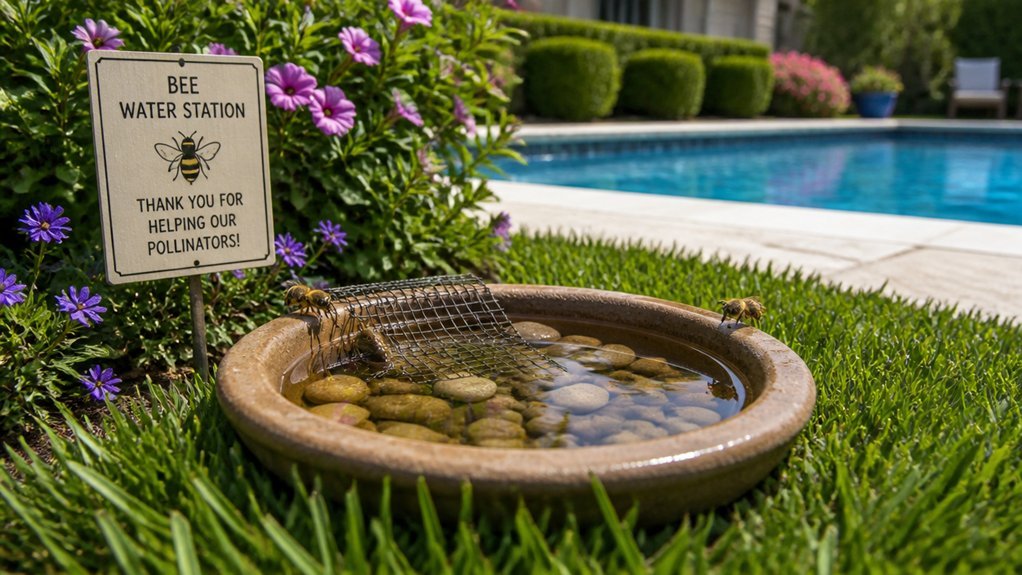
If bees keep showing up around your pool or patio, you can make the area less inviting by removing easy water access and nearby attractants.
Cover drinks, wipe spills quickly, and rinse sticky residue from tables, railings, and lounge chairs. Keep trash bins sealed, and don’t leave fruit, syrup, or pet food outside. Sweep up fallen blossoms and trim flowering plants that hang over seating areas.
If you have a pool, use a cover when it’s not in use and clean skimmers regularly so bees don’t find a landing spot. You can also move hummingbird feeders and decorative water features farther away.
When bees still visit, observe their path and block access to the source without swatting or spraying.
What to Do During Drought or Heat Waves
During drought or a heat wave, bees may crowd the few reliable water sources left, so you’ll want to give them a safer option before they reach your pool, patio, or birdbath. Set out shallow dishes with pebbles, corks, or marbles so they can land without drowning. Refill them daily, and keep the water cool and fresh.
Set out shallow water with pebbles or marbles so bees can drink safely without drowning.
- Place stations in shade.
- Use multiple small sources.
- Add stones for landing spots.
- Check water twice a day.
- Move stations away from foot traffic.
If you notice heavy bee activity, expand the number of stations instead of removing water. You’ll help bees stay hydrated while reducing their interest in places you use.
During extreme heat, consistency matters more than size. A few dependable refills can make your yard safer for both you and the pollinators.
How to Prevent Neighbor Complaints
Keep your bee water station in a quiet, tucked-away spot so it doesn’t become a nuisance for neighbors. Choose a location that’s away from property lines, patios, and walkways, and keep the container neat so it blends in.
Refill it regularly to prevent odors, algae, and stagnant water that can draw attention for the wrong reasons. Use shallow stones or floating corks so bees can drink safely without splashing.
If bees gather in noticeable numbers, reduce glare and movement nearby by shading the setup with plants or a simple screen. You can also explain to nearby neighbors that you’re supporting pollinators and keeping water available so bees are less likely to visit their pools, birdbaths, or outdoor drink areas.
HOA and City Bee Rules
Once you’ve placed your bee water station in a discreet, neighbor-friendly spot, check whether your HOA or city has rules that affect it. You may need approval if your association limits outdoor features, shared spaces, or standing water.
Check whether your HOA or city has rules affecting your bee water station before you install it.
City codes can also address drainage, mosquito control, setbacks, and maintenance. Review the exact language before you install anything.
- Read your HOA covenants and architectural guidelines
- Confirm whether permits or notice are required
- Check local nuisance and health ordinances
- Ask about water placement near property lines
- Keep written approval for your records
If rules are vague, contact your HOA board or municipal office and ask for clarification in writing. That simple step can save you fines, complaints, and avoidable changes later.
Common Bee Water Source Mistakes
A common mistake is placing bee water where it sits in full sun, dries out fast, or creates a muddy mess that can attract pests.
You also might use a container that’s too deep, smooth, or unstable, which makes it hard for bees to land safely.
Don’t forget to refresh the water often; stagnant water can breed mosquitoes and raise sanitation concerns.
Avoid adding chemicals, soaps, or decorative additives that could harm pollinators.
If you set the source too close to walkways, play areas, or shared fences, neighbors may complain or local rules may apply.
Use shallow dishes, stones, or floating corks, and position them in partial shade.
Keep the area tidy, because sloppy setups invite problems and undermine compliance.
Frequently Asked Questions
Do Bee Water Rules Differ for Rooftop Gardens?
Yes, you’ll usually face the same bee water rules on rooftop gardens, but you may need extra safeguards for runoff, access, and weight limits. Check local codes, since building rules can add stricter requirements.
Are Rain Barrels Allowed as Bee Water Sources?
Yes, you can use rain barrels for bee water if they’re clean, covered, and mosquito-free. You should add landing stones or floats so bees don’t drown, and check local rules before relying on them.
Can I Use a Birdbath for Backyard Bees?
Yes, you can use a birdbath for backyard bees if it’s shallow and has landing spots. You’ll help bees safely drink by adding pebbles or corks and keeping it clean and refreshed.
Do Regulations Change During Wildfire Smoke Events?
Usually, you won’t see special bee-water rules change during wildfire smoke events, but you should check local advisories. You’ll want cleaner water, shade, and less disturbance, since smoke can stress bees and affect foraging behavior.
Is Treated Tap Water Safe for Bee Watering Stations?
Yes, you can use treated tap water for bee watering stations if it’s clean and chlorine levels are low. You’ll help bees by offering shallow water, pebbles, and regular refills to keep them safe.
In Summary
In your backyard, you can support bees and keep peace with neighbors by choosing a safe, shallow water source and placing it wisely. Check local rules, HOA guidelines, and city codes before you set it out. Keep the water clean, refill it often, and add landing spots to reduce problems. When you plan ahead, you help bees stay hydrated, avoid complaints, and create a yard that works for everyone.