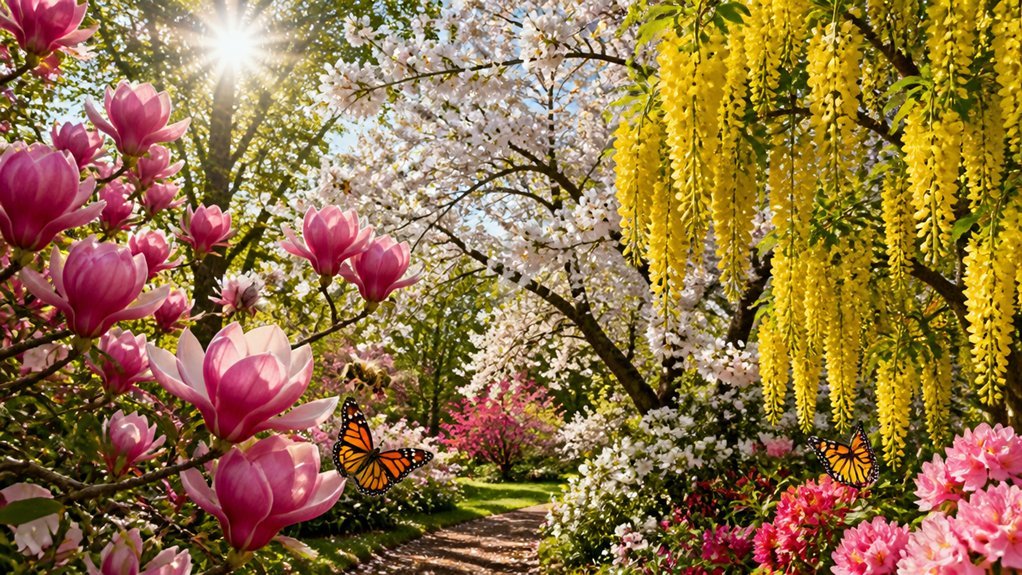
For top flowering trees for pollinator forage, choose native, full-sun bloomers that offer abundant nectar and pollen: serviceberry, redbud, crabapple, willow, black locust, basswood, elderberry, holly, and yellowwood. Mix early, mid, and late bloomers so bees have food from spring through fall. Pick open, single flowers, avoid double forms, and plant compatible fruit trees for better set. With smart selection and care, you can create a strong bee-friendly landscape with plenty more to explore.
Flowering Trees That Bees Love Most

If you want to support bees, start with flowering trees that feed them well. You’ll get the best results from species that bloom abundantly and offer rich nectar and pollen. Crabapple, cherry, willow, basswood, and black locust often draw steady bee visits when they flower.
You should plant them where they’ll get enough sun and room to mature, because healthy trees produce more blossoms. Choose a mix of early-, mid-, and late-season bloomers so you can extend forage across the year. Native trees usually suit local bees best, and they’re often easier for you to maintain. Avoid double-flowered varieties, since they can limit access to pollen and nectar.
When you select the right trees, you give bees reliable food and a stronger landscape. Selecting pollinator-friendly trees that thrive in your local climate ensures sustained support for bee populations throughout the growing season.
How Flowering Trees Help Bees
Flowering trees help bees by giving them a steady source of nectar and pollen when they need it most. You support foragers by planting trees that open clusters of flowers high above the ground, where bees can work quickly and safely. A diverse selection of flowering trees can also provide nectar-rich blooms, lasting from spring through fall, ensuring continuous food supply for pollinators. Their blooms offer both energy-rich nectar and protein-rich pollen, so bees can feed themselves and raise healthy brood. You also help native bees, honey bees, and other pollinators move efficiently through your landscape when you provide large, visible flower displays. Because trees live for years, you give bees a reliable foraging resource and reduce the need for frequent replanting. When you choose diverse flowering trees, you strengthen local pollination and encourage stronger, more resilient bee populations around your home.
Bloom Times for Season-Long Nectar

To keep pollinators supplied with nectar over a longer season, you’ll want flowering trees that bloom at different times from early spring through late summer. Start by mapping your landscape’s bloom calendar so you can pair early, midseason, and late-flowering trees.
Choose a few species that open when others pause, and you’ll create a steady nectar flow instead of a feast-or-famine gap. In early spring, blossoms help bees recover after winter; in summer, later blooms support active foraging and brood rearing.
If you stagger bloom windows across sunny and sheltered spots, you’ll extend availability even further. You should also remove spent flowers carefully and avoid heavy pruning during bud set, since both can reduce bloom. With planning, your trees can feed pollinators for months.
Incorporating native wildflowers and trees adapted for different seasons will further enhance pollinator habitat and ensure a continuous supply of nectar throughout the growing season.
Best Native Flowering Trees for Bees
When you choose native flowering trees, you give bees blooms that match their local timing and support their foraging needs. You’ll also want bee-friendly canopies that offer easy access to nectar and pollen. Focus on high-nectar species so your landscape feeds pollinators well throughout the season. Ensuring that the trees you select provide a complete amino acid profile similar to natural pollen enhances brood production and colony resilience.
Native Bloom Timing
Native bloom timing matters because bees need a steady sequence of flowers from early spring through late summer, and native trees can fill those gaps better than many ornamentals. You’ll support pollinators best when you plant species that bloom in waves, not all at once.
Start with redbud and serviceberry for early nectar, then rely on black locust, tulip tree, or basswood for stronger midseason forage. Later, native holly, sourwood, and elderberry can extend feeding into summer.
When you match tree bloom periods to your local climate, you give bees dependable access to pollen and nectar during critical nesting and brood-rearing stages. Check regional bloom charts before you plant, and mix species so something’s always flowering nearby.
Bee-Friendly Canopies
If you want to feed bees from the canopy down, choose native flowering trees that offer abundant nectar and pollen in a form they can use fast. You’ll give foragers a reliable source when you plant species that bloom in broad clusters and hold open flowers bees can land on easily.
Look for trees that fit your region, tolerate local soil, and mature into strong, shaded canopies without demanding much care. Understory and edge plantings help, too, because bees move from sunlit blossoms to sheltered ones as the day warms.
Prune lightly so you don’t remove future blooms, and avoid pesticides that can cut forage quality. When you mix heights and bloom shapes, you’ll support steady bee traffic through the season.
Selecting trees with weather-resistant coatings can help ensure their blooms remain available and healthy during variable conditions, providing consistent forage for pollinators.
High-Nectar Species
Sugar-rich bloom is the draw with the best native flowering trees for bees. You’ll boost pollinator visits when you choose trees that pump out abundant nectar across bloom windows. Plant them in sun, keep soil moist while they establish, and avoid pesticides that can spoil forage. Incorporating essential oils into planting and caring practices can further enhance hive health and resilience. You can also add basswood for midsummer support and a layered flowering schedule. Place each tree where bees can access open clusters easily, and let leaf litter stay beneath the canopy to protect soil life. When you mix these high-nectar natives, you’ll feed bees through the season and strengthen your yard’s pollinator network.
Early Spring Trees for First Nectar
When you plant early spring trees, you give bees their first reliable nectar right as the season wakes up. These blooms open before many other flowers, so they fill a vital gap in early bloom timing. Including seasonal management practices can help ensure your trees thrive and provide consistent forage for pollinators.
Early Bloom Timing
Early spring trees give pollinators a crucial head start, especially after a long winter when nectar and pollen are still scarce. When you choose species that bloom before most garden plants wake up, you extend the season’s first food window and help bees, flies, and other insects recover faster. Selecting trees with long-lasting, durable finishes can ensure their blooms remain visible and accessible for pollinators longer. You’ll get the best results by planting trees that open buds as temperatures rise, not after they’ve fully warmed. That timing matters because pollinators need reliable forage during the gap between winter dormancy and peak spring bloom. Look for trees that flower on bare branches or just as leaves emerge, since easy access to blossoms can speed visits. If you plan for staggered bloom dates, you’ll keep your landscape useful longer and support stronger early-season activity.
Nectar Sources for Bees
For bees, the best early spring trees are the ones that offer dependable nectar as soon as they can fly, long before most flowers open. You can count on willow, maple, and fruit trees to supply that first energy boost. Their blossoms warm up in the sun, open fast, and give foragers a steady sugar source after winter dearth. Using synthetic Nasonov, beekeepers can even enhance natural attractants and improve scout bee response to these early bloomers. If you plant several species, you stretch bloom time and reduce gaps when bees need food most. Choose trees with simple, accessible flowers, because bees work them more efficiently than crowded blooms. Avoid heavy pesticides, since even small residues can weaken colonies. When you support early nectar flow, you help bees rebuild brood, stay active, and begin spring with stronger hives and better chances of success.
Summer Bloomers That Feed Honey Bees

As summer settles in, flowering trees can become reliable refueling stations for honey bees. You can plant black locust, basswood, and crepe myrtle to keep forage flowing during warm months. Their blossoms offer nectar and pollen when colonies need steady energy for brood rearing and honey storage.
A well-placed swarm trap can also help sustain local bee populations during peak foraging times.
Choose a sunny site with well-drained soil, then water young trees until roots establish. You’ll also help bees by avoiding insecticides during bloom and by planting several species with staggered flowering times.
If you want stronger foraging, mix trees with nearby herbs and native shrubs so bees can move efficiently through your yard. With the right selections, you’ll support busy summer hives and add shade, beauty, and seasonal interest to your landscape.
Fall Flowering Trees for Late Forage
When autumn light softens the garden, late-blooming trees can give honey bees one last burst of nectar and pollen before winter. You can extend forage by planting species that flower after summer’s peak, especially where fall blooms are scarce. Choose trees that open reliably in mild weather and stand up to shorter days.
Late-blooming trees can offer honey bees a final nectar and pollen boost before winter sets in.
- Linden cultivars may rebloom lightly and keep bees working.
- Yellowwood offers fragrant clusters that draw steady visits.
- Seven-son flower tree blooms late and fills a gap.
- Vitex-trained as a small tree can still feed pollinators well.
Place these trees in sunny, sheltered spots and water them during dry spells. You’ll help colonies build resources without relying on a single season.
Fruit Trees Bees Visit Most

When you choose fruit trees with nectar-rich blossoms that open at the right time, you give bees a strong reason to visit.
You’ll often see the most activity on reliable spring bloomers like apples, cherries, and pears. Those visits can improve fruit set and give your orchard a better pollination boost.
Nectar-Rich Blossom Timing
Nectar-rich blossoms can turn a fruit tree into a pollinator magnet, but timing matters just as much as bloom count. You’ll get the best bee traffic when blooms open during warm, calm mornings, because nectar flows faster and foragers leave the hive sooner.
Watch your trees closely:
- Track first open flowers, not just peak bloom.
- Note sunny days, since bees fly more often then.
- Avoid spraying anything during active bloom.
- Keep nearby water available so visitors stay longer.
If you time pruning and irrigation well, you can help your trees produce steadier nectar and keep pollinators returning. Short bloom windows still matter, so you’ll want to match orchard care to weather and flower stage, not the calendar alone.
Best Spring Bloomers
Some of the best spring bloomers for bees are fruit trees that open lots of fragrant flowers all at once, including apples, cherries, pears, plums, and peaches. When you plant these trees, you give pollinators a broad, early-season buffet of pollen and nectar. Bees often work the blossoms from dawn through midday, moving quickly among branches while temperatures stay mild.
Choose sunny sites, since full light helps flowers open evenly and supports strong bee activity. You’ll also get a showy landscape, because these trees add color before most shrubs leaf out. To keep forage abundant, mix varieties that bloom in overlapping windows. That way, you extend the feast across several weeks and support busy pollinators when they need it most.
Fruit Set Pollination Boost
To boost fruit set, plant the flowering trees bees visit most and make sure they can work them easily. You’ll get better pollination when you match bloom times, avoid pesticide sprays during bloom, and keep water nearby.
Give bees a simple route through your orchard, because they’ll move pollen faster when flowers are abundant and accessible.
- Choose apple, cherry, plum, and pear trees for strong bee traffic.
- Plant at least two compatible varieties for cross-pollination.
- Place hives or wild habitat close to the canopy.
- Prune lightly so sunlight reaches blossoms and bees can navigate.
When you support bees, you’ll usually see more fruit, better sizing, and fewer blank branches.
Small Flowering Trees for Tight Spaces

When you only have a narrow yard, patio, or front garden, small flowering trees can still give pollinators a steady food source without overwhelming the space. You can choose compact species such as serviceberry, crabapple, redbud, or dwarf sourwood, which stay manageable yet still produce lots of nectar and pollen.
Place one where bees, hoverflies, and butterflies can reach the blooms easily, and give it enough root room so it grows well. Prune lightly to keep its shape open and easy to maintain.
Mix in spring- and summer-blooming choices if you want a longer forage season. Even a single well-placed tree can turn a tight space into a reliable pit stop for pollinators and add color, shade, and seasonal interest too.
Full-Sun Trees for Better Blooms
If you’ve got room to place a tree in full sun, take advantage of it—many flowering trees bloom more heavily and produce more nectar and pollen with at least six hours of direct light. You’ll give pollinators a richer foraging site while helping the tree build stronger flower clusters and sturdier growth.
- Pick open spots away from shade from buildings or tall evergreens.
- Match the tree to your soil, drainage, and local climate.
- Water deeply during establishment, then let roots search outward.
- Prune lightly to keep the canopy open and sunlight reaching buds.
With steady light, you’ll often see fuller blooms, better fragrance, and more insect activity. Choose sun-loving species, and you’ll make your garden work harder for bees, butterflies, and other beneficial visitors.
How to Stagger Bloom Times for Bees
A steady food supply keeps bees coming back, so choose flowering trees with different bloom windows to extend nectar and pollen across the season. You can build a bloom ladder by mixing early, mid, and late performers.
Start with redbud or serviceberry for spring, then add crabapple or tulip tree for the middle season. Finish with basswood, sourwood, or Chinese fringe tree for summer support. If space allows, plant more than one of each type, since overlapping flowers help when weather shortens a bloom.
Avoid relying on a single showy tree, because one brief flush won’t carry pollinators for long. Check local bloom dates, too, since climate and site conditions can shift timing, and match trees so something’s always opening in your yard.
Planting and Watering for Strong Blooms
Even the best bloom ladder won’t help much if trees are stressed at planting. You’ll set up stronger flowers by giving each tree a wide hole, loose soil, and room for roots to spread naturally.
Plant at the same depth it grew in the nursery, then water deeply to settle soil around the root ball.
- Dig twice as wide as the root ball, not deeper.
- Backfill with native soil and firm it gently.
- Water slowly so moisture reaches the full root zone.
- Recheck soil moisture after a few days and water again if it’s drying out.
A steady, deep soaking pattern helps roots establish without sitting in soggy ground. When roots settle well, your flowering trees can channel more energy into healthy growth and fuller bloom.
Care Tips to Keep Trees Blooming
To keep flowering trees blooming well, focus on steady, simple care through the season. Mulch the root zone to hold moisture, suppress weeds, and protect roots, but keep mulch a few inches from the trunk.
Water deeply during dry spells so roots stay active and buds form properly. Prune only when needed, and time cuts right after bloom for spring-flowering trees, or during dormancy for others. Remove dead, crossing, or crowded branches to improve air flow and light.
Feed sparingly with a balanced fertilizer if soil tests show a need, since too much nitrogen can push leaves over flowers. Watch for pests and disease early, and act fast so stress doesn’t reduce nectar and pollen.
Protect young trees from drought, frost, and lawn damage.
Frequently Asked Questions
Which Flowering Trees Attract the Most Butterflies Besides Bees?
You’ll attract the most butterflies with butterfly bush, cherry, crape myrtle, dogwood, and lilac; you’ll also draw them to catalpa and redbud. You’ll give them nectar, shelter, and sunny landing spots.
Do Flowering Trees Support Native Solitary Bees Effectively?
Yes, they can support native solitary bees effectively if you choose species with abundant, accessible blooms. You’ll help them most by planting diverse trees, avoiding pesticides, and keeping nearby nesting habitat available.
Can Flowering Trees Improve Honey Quality and Flavor?
Yes, flowering trees can improve your honey’s quality and flavor by boosting nectar diversity, which adds richer aromas and tastes. If you place varied bloom sources nearby, you’ll often harvest more complex, distinctive honey.
Which Flowering Trees Are Safest for Pets and Children?
You’ll want non-toxic choices like crabapple, magnolia, serviceberry, and redbud; they’re generally safer for pets and children. Avoid yew, laburnum, oleander, and horse chestnut, which can cause poisoning if chewed.
How Far Should Pollinator Trees Be Spaced From One Another?
You should space pollinator trees 10 to 20 feet apart for smaller species, and 20 to 40 feet for larger ones. You’ll improve airflow, sunlight, and access for bees, butterflies, and birds.
In Summary
If you plant flowering trees with staggered bloom times, you give bees a steady food source from early spring through summer. Choose native trees whenever you can, give them full sun, and water young trees well so they establish strong roots and fuller blooms. With a little planning and simple care, you’ll create a pollinator-friendly landscape that supports bees year after year and adds beauty, shade, and seasonal interest to your yard.