You can turn pots into a pollinator haven with lavender, thyme, oregano, basil, mint, salvia, and zinnias. Give each plant a roomy, well-drained container and at least six hours of sun. Mix early-, mid-, and late-blooming choices so bees always find nectar and pollen. Deadhead spent flowers, water deeply but let soil dry slightly, and skip pesticides. If you keep going, you’ll see how to group them for even better bee traffic.
Best Container-Friendly Bee Forage Plants
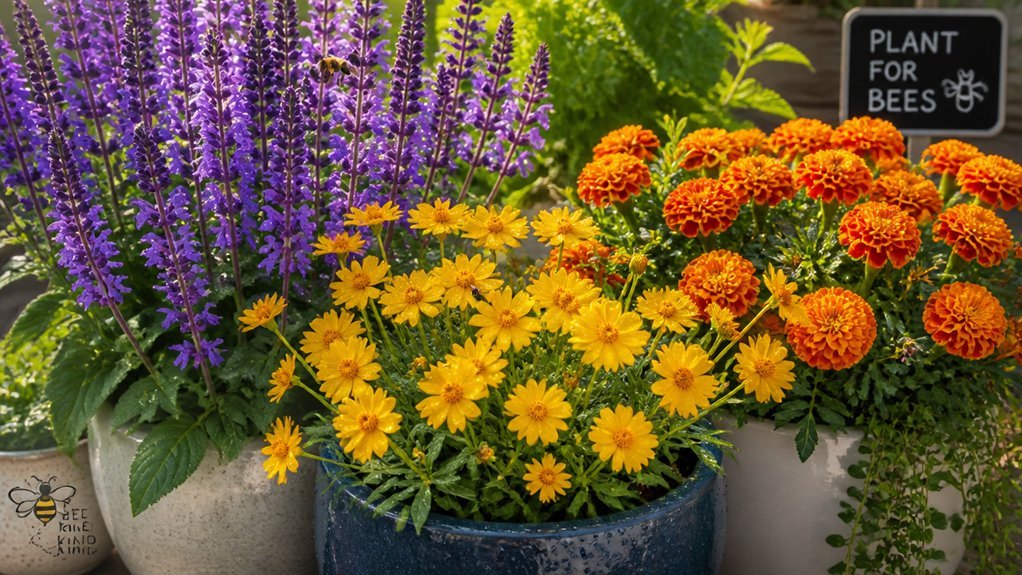
If you want to support bees from a balcony, patio, or small yard, start with container-friendly forage plants that bloom generously and thrive in pots. Choose sun-loving herbs and flowers that offer easy nectar access, such as thyme, oregano, chives, borage, and calendula.
You can mix compact annuals and perennials to stretch bloom time from spring through fall. Place them in roomy containers with well-draining soil, then water consistently so flowers keep producing. Deadhead spent blooms to push more nectar-rich growth.
Group several pots together, because clustered color helps bees find food faster. Set containers where they’ll get at least six hours of sun, and avoid pesticides. With the right plant mix, you’ll create a steady feeding station that bees can use all season. Including varieties known for high nectar production and long flowering seasons supports pollinator health and ensures your garden remains a reliable food source.
Lavender for Pots and Pollinators
Lavender is a standout choice for pots because it gives bees a rich nectar source and fills your space with fragrant, long-blooming flowers. You can place it in a sunny spot and use a container with sharp drainage, since soggy roots quickly weaken the plant. Choose a gritty potting mix, water deeply but infrequently, and let the top inch dry before you water again. When you prune spent stems after bloom, you encourage fuller growth and more flowers. Pick compact varieties if your patio is small, and rotate the pot so all sides get light. As blooms open, you’ll notice bees visiting often, especially on warm mornings. Supporting native species and diverse native pollinators can boost your garden’s biodiversity and resilience, making your pollinator garden even more vibrant. Lavender rewards you with beauty, scent, and steady pollinator support all season long.
Thyme and Oregano for Small Containers
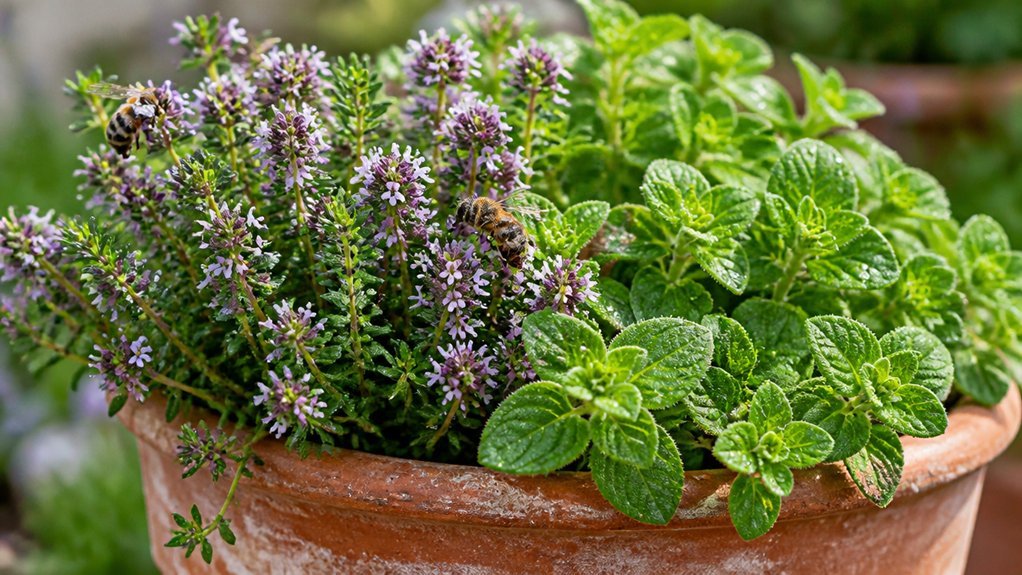
You can grow thyme and oregano in small containers, and a 6- to 8-inch pot usually gives each plant enough room to thrive. Place them in full sun with fast-draining soil so their roots stay healthy and don’t sit in water. Their tiny flowers also attract bees and other pollinators, so your container garden can be both useful and lively. Ensuring the plants have a balanced sun and soil needs can help maximize their growth and flowering potential.
Best Pot Sizes
For thyme and oregano, small containers usually work best because both herbs prefer a snug root zone and don’t need deep pots to thrive. You can start with a 6- to 8-inch pot for a single plant, or choose a wider 10-inch container for a paired display. Keep the shape shallow and roomy, so roots spread without wasting soil. Using beehive-friendly finishes can help ensure the containers remain safe and durable for outdoor use.
| Pot size | Best use |
|---|---|
| 6 inch | One small thyme plant |
| 8 inch | One oregano plant |
| 10 inch | Two herbs together |
| 12 inch | Seasonal division or extras |
You’ll find that compact pots also make moving, trimming, and harvesting easier. Match the container to the plant’s size, and you’ll support steady growth without crowding.
Sunlight And Drainage
Thyme and oregano do best in full sun, so place their containers where they’ll get at least six hours of direct light each day. Choose a spot with morning sun and good air movement if you can.
These herbs hate soggy roots, so use containers with drainage holes and a fast-draining potting mix. You can improve drainage by blending in perlite or coarse sand.
Water only when the top inch of soil feels dry, then soak the mix thoroughly and let excess water escape. Don’t let saucers hold standing water under the pots.
In hot weather, check moisture often, because small containers dry out quickly. If rain is heavy, move the pots under cover until the soil dries a bit.
Pollinator Benefits
Though they’re compact, thyme and oregano can be excellent pollinator plants in small containers. When they bloom, they send up clusters of tiny flowers that attract bees, hoverflies, and other beneficial insects.
You can boost their pollinator value by letting a few stems flower instead of harvesting every sprig. Place the pots near sunny seating areas, and you’ll notice more insect activity throughout the day. These herbs also provide nectar over a long stretch of the season, especially if you prune them lightly after flowering.
Because they stay small, you can fit several containers together and create a stronger feeding spot. In return, pollinators help support your garden’s overall health while you enjoy fresh, fragrant herbs for cooking.
Salvia and Coneflower for More Nectar

You can boost nectar in your containers with salvia, which gives pollinators a rich, easy-to-reach food source.
Coneflower also pulls in bees and butterflies with its bold blooms and steady nectar.
Together, they make your container garden far more inviting to pollinators.
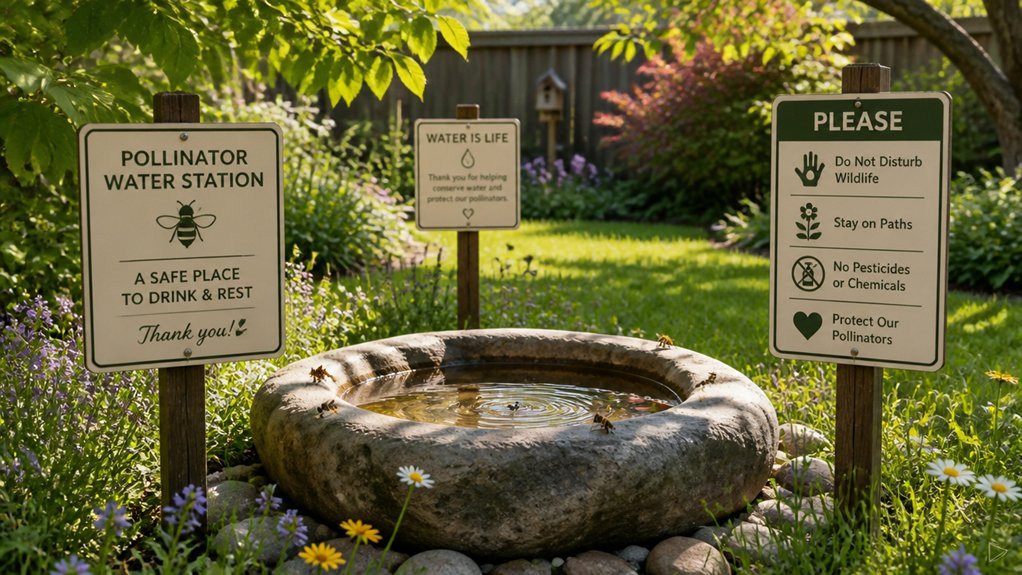
Including shallow water sources nearby can further encourage pollinator activity and support their hydration needs.
Salvia Nectar Richness
If you want a container that really feeds pollinators, salvia and coneflower are hard to beat for nectar production. Salvia shines because its tubular blooms hold rich nectar where visiting insects can reach it efficiently. You’ll get the best results in full sun, with a gritty potting mix and steady moisture that never turns soggy. Deadhead spent spikes, and you’ll keep fresh flowers coming for weeks. Proper pheromone blend strength in surrounding native flowering plants can further attract pollinators to your container garden.
Coneflower Pollinator Appeal
Coneflowers add a second layer of nectar and pollen value to a container planting, with daisy-like blooms that draw bees, butterflies, and seed-seeking birds.
You’ll get even more pollinator traffic when you pair them with salvia, which offers tubular flowers that keep nectar available for longer visits. Choose a roomy pot with sharp drainage so both plants stay healthy, and set it where they’ll receive at least six hours of sun.
Deadhead spent blooms to encourage more flowering, but leave some seed heads late in the season for goldfinches. Water deeply when the top inch of mix dries, and feed lightly to avoid excess foliage.
With this combination, you create a bright, resilient buffet that supports pollinators from summer into fall.
Zinnias That Keep Bees Visiting
Bright, easygoing zinnias can turn a container into a steady bee stop when you choose open, single-flowered varieties in lively colors like orange, pink, and yellow. You’ll give bees an easy landing pad, and they’ll keep returning while blooms keep opening through warm months.
Plant them in a roomy pot with fast-draining soil, then set the container where sun pours in for most of the day. Water deeply when the top inch dries, and deadhead spent flowers to spark more color.
- A terracotta pot glowing on a sunny patio
- Bees hovering over vivid petals at midday
- Fresh blooms rising after each quick trim
You can mix heights by pairing compact and taller zinnias, but keep the display airy so pollinators can move freely.
Basil, Mint, and Other Bee-Friendly Herbs

After enjoying zinnias, you can keep the pollinator activity going with herbs that bloom in small but bee-loved clusters. Basil sends up white or purple flowers that bees quickly notice, especially if you let a few stems bloom instead of pinching every one.
Mint does the same, offering nectar-rich spikes that draw steady traffic, but keep it in its own pot because it spreads fast. Oregano, thyme, and rosemary also reward you with tiny blossoms that pollinators visit often. You’ll get bonus flavor for your kitchen and a steady nectar source for bees in a compact space.
Choose healthy containers, give each herb room to flower, and let blooms stay on the plant long enough for foragers to find them. Incorporating nectar sources like these supports bee health and colony strength by providing essential energy and nutrients throughout the growing season.
Planting Tips to Boost Bee Forage
To keep bees coming back, group your containers where they’ll get at least six hours of sun and easy access to the flowers. You’ll help them forage faster when you cluster pots by bloom color, scent, and height, creating a visible landing zone.
Mix early, midseason, and late bloomers so nectar stays available longer, and deadhead spent flowers to trigger more buds. Water consistently, because stressed plants cut nectar production and lose appeal.
- Place shallow dishes of water nearby.
- Set herbs beside flowering annuals for variety.
- Rotate containers so blooms stay in the brightest spots.
- Incorporate diverse nectar sources and protein-rich pollinator plants to support bee health and colony resilience throughout the season.
When you plant densely but don’t overcrowd roots, you’ll fill gaps that weeds might take, and bees will move smoothly from one pot to the next.
Frequently Asked Questions
Which Container Materials Stay Coolest for Pollinator Roots?
Unglazed terracotta and light-colored fiberglass stay coolest, so your pollinator roots won’t overheat. You’ll want thicker walls and good drainage, since they insulate better and reflect less sun than dark plastic or metal pots.
How Often Should I Fertilize Potted Bee-Friendly Plants?
You should fertilize potted bee-friendly plants lightly every 4 to 6 weeks during active growth, then stop in fall and winter. Use a diluted, balanced fertilizer so you don’t overfeed blooms or stress roots.
Can I Overwinter Container Pollinator Plants Outdoors?
Yes, you can overwinter them outdoors if your pots can handle freezing. You’ll want to insulate containers, group them, and choose hardy plants. Reduce watering, protect roots, and check drainage so they don’t rot.
Do Pollinator Plants Need Companion Flowers in the Same Pot?
No, you don’t need companion flowers in the same pot, though you can mix them if the container’s large enough. You’ll get better bloom if you match light, water, and root space to each plant.
How Do I Prevent Pests Without Harming Visiting Bees?
Use neem only at dusk, handpick pests, and blast aphids off with water. You can also trap insects, keep plants healthy, and avoid spraying blooms, so you won’t harm visiting bees.
In Summary
Choosing container-friendly pollinator plants is a simple way to bring more bees to your space. When you grow lavender, thyme, salvia, coneflower, zinnias, and bee-friendly herbs in pots, you give pollinators a steady source of nectar and pollen. With the right soil, sun, and watering, your containers can bloom beautifully all season. Start small, plant a mix, and you’ll create a welcoming bee haven right on your patio, balcony, or doorstep.