You can attract more bees by planting five pollinator-friendly herbs: lavender, thyme, oregano, mint, and rosemary. Grow them in sunny, well-drained soil and group them in clumps so bees can forage efficiently. Let some stems flower, since those blooms offer easy nectar and pollen with strong scents that guide pollinators in. Harvest gently in the cool morning or late afternoon, and if you keep going, you’ll discover when each herb blooms best.
Best Bee-Friendly Herbs

If you want to draw more bees into your garden, a few herbs do the job especially well. You can grow lavender, thyme, oregano, mint, rosemary, and basil to give foragers easy landing spots and steady nectar access. Plant them in sunny, well-drained beds, and let some stems flower instead of cutting everything back. Using pollinator-friendly floral traits in your herb selection can further enhance your garden’s attractiveness to bees. You’ll notice bees working the small blooms quickly, especially when you group herbs together in clumps. Choose varieties that fit your climate, and avoid overfertilizing, since lush growth can mean fewer blossoms. Keep watering consistent while plants establish, then let tougher herbs handle drier stretches.
Why Bees Love Flowering Herbs
Flowering herbs attract bees because they offer easy-to-reach nectar and pollen in compact, fragrant blooms. You’ll notice that basil, thyme, oregano, mint, and rosemary give bees a rich payoff without forcing them to travel far between tiny florets.
Their open shapes and repeated blossoms make for efficient foraging, so bees can gather food quickly and visit more flowers in one trip. The strong scent helps guide bees from a distance, while bright clusters signal a reliable food source.
Because many herbs bloom over long stretches, you can support bees through more of the season. When you let herbs flower, you’re offering both nourishment and a steady reason for bees to return. Additionally, choosing native species can enhance the stability of pollinator habitats and ensure dependable food sources.
How to Grow Bee-Friendly Herbs
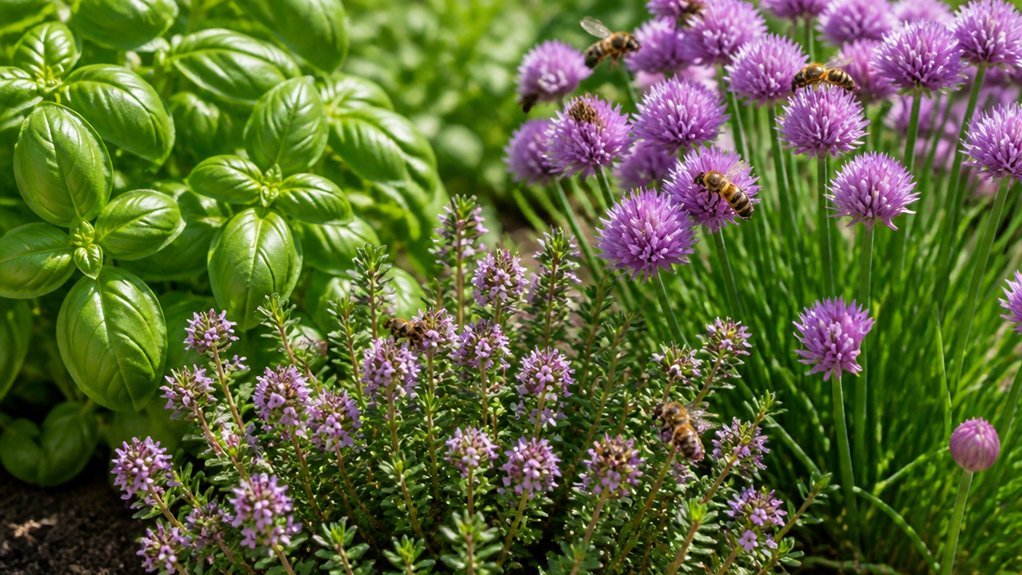
To grow bee-friendly herbs, start by choosing a sunny spot with well-drained soil and room for plants to bloom freely. You’ll help pollinators most by planting basil, thyme, oregano, mint, rosemary, and sage in clusters instead of single scattered pots. A balanced season-long bloom can be achieved by planting a variety of herbs that flower at different times, providing a steady nectar supply for bees. Water deeply when the soil feels dry, but don’t keep it soggy. Feed lightly with compost rather than heavy fertilizer, since lush growth can reduce blooms. Let some plants bolt and flower, because those blossoms give bees easy access to nectar and pollen. If you grow herbs in containers, use large pots and rotate them so each plant gets plenty of light. Prune gently to encourage branching, but leave enough stems to support flower buds and steady foraging visits.
How to Harvest Herbs Without Harming Bees
Harvest herbs in the cool morning or late afternoon, when bees are less active, and snip only what you need with clean scissors. Move slowly, watch the stems, and pause if pollinators land nearby. Harvest from the outer growth first so the plant stays full and can keep feeding insects. Take a few leaves or sprigs from several plants instead of stripping one plant bare. Additionally, choosing odorless or scentless harvesting methods can help reduce disturbance to nearby pollinators.
When Bee-Friendly Herbs Bloom

As the season warms, bee-friendly herbs start sending up blooms that bees can find fast. You’ll usually see chives, thyme, oregano, mint, and rosemary open first in spring or early summer, depending on your climate.
Basil, dill, and cilantro often bloom later, especially if you let them bolt in heat. Watch each plant closely, because flowering can last weeks or only days. You can extend nectar season by staggering plantings and trimming only part of the patch.
If you leave some stems uncut, you’ll give bees a steady food source. In hot regions, herbs may rebloom after rain or light pruning, so check often. When you know the bloom window, you can time harvests and still support pollinators all season.
Frequently Asked Questions
Which Herbs Are Best for Shady Pollinator Gardens?
You’ll do best with mint, lemon balm, chives, and bee balm in shade; they attract bees and butterflies. Add parsley and cilantro, too. Keep soil moist, and let some herbs flower for extra pollinators.
Can I Dry Bee-Friendly Herbs for Tea?
Yes, you can dry bee-friendly herbs for tea. You’ll want to harvest them before flowering, then hang them in a cool, airy spot. Use fully dried leaves for the freshest flavor and safest storage.
Do Pollinators Prefer Native or Non-Native Herbs?
You’ll usually help pollinators more with native herbs, since they’ve coevolved together and offer familiar nectar, pollen, and bloom timing. Still, you can plant some non-natives too, especially long-blooming, pesticide-free varieties.
How Do I Attract Butterflies With Herbs?
You can attract butterflies with herbs by planting nectar-rich blooms like dill, fennel, thyme, mint, and oregano in sunny spots. Leave some flowers untrimmed, provide shallow water, and avoid pesticides so they’ll keep visiting.
Are Any Bee-Friendly Herbs Safe for Pets?
Yes—many bee-friendly herbs, like basil, rosemary, thyme, and mint, are generally safe for pets in small amounts. You should avoid toxic herbs like chives, garlic, and foxglove, and always check specific plant safety first.
In Summary
By choosing pollinator-friendly herbs, you help bees while enjoying fresh flavor in your kitchen. Grow them in sunny spots, let some blooms open, and you’ll give foragers the nectar and pollen they need. Harvest with care by snipping only what you need and avoiding flowers when bees are busy. With a little planning, you can support pollinators, boost your garden’s beauty, and keep your herbs thriving season after season.