You can build a low-maintenance pollinator garden with flowers bees love, like lavender, coneflowers, catmint, bee balm, asters, and goldenrod. Choose open, shallow blooms with bright blue, purple, yellow, or white colors, and group them in clusters so bees can forage fast. Add native, drought-tough plants for easier care, and stagger bloom times from spring through fall. With a little deadheading and smart watering, your garden will keep feeding pollinators and may reward you with even more tips.
What Bees Need From Flowers?

Bees need more from flowers than just a pretty bloom—they need easy access to nectar and pollen. You help them when you choose blossoms with open centers, shallow tubes, and sturdy landing spots. These traits let bees forage quickly and use less energy.
You should also look for flowers that bloom in clusters, so bees can move from one floret to the next without wasting time. Fresh, plentiful nectar and pollen matter most because bees rely on both for food and brood rearing.
Avoid flowers with double petals that hide the rewards or varieties that offer little nectar. When you understand what bees want, you can pick plants that support them without extra fuss, and your garden becomes a better feeding ground all season long. Native wildflowers are especially beneficial because they are well-adapted to local conditions and provide reliable forage for pollinators.
Best Low-Maintenance Bee Flowers
Once you know what bees look for, it’s easier to choose flowers that support them without demanding much from you. You can plant lavender for its fragrant blooms, coneflowers for sturdy petals, and catmint for easy care and reliable nectar.
Bee balm brings in bees with its bright, open flowers, while black-eyed Susans give them simple landing pads and need little fuss. You’ll also do well with native aster and goldenrod, which adapt easily to many gardens.
Incorporating a mix of native species can further support pollinator biodiversity and ensure your garden remains vibrant throughout the seasons.
Place these flowers in sunny spots, water them while they establish, and let them grow naturally after that. Avoid heavy pruning and chemical sprays, and you’ll create a welcoming space that keeps bees coming back without adding work to your routine.
Long-Blooming Bee Flowers

To keep bees visiting all season, choose flowers that bloom for a long stretch instead of just a few weeks. You’ll give pollinators steady nectar, and you won’t need constant replanting. Pick dependable bloomers that stay productive with simple care and light deadheading. A variety with long flowering season ensures continuous forage and supports seasonal pollinator activity.
| Flower | Benefit |
|---|---|
| Catmint | Long flowering, drought-tough |
| Coreopsis | Reblooms with trimming |
| Salvia | Nectar-rich spikes |
You can also plant coneflowers and blanket flowers to extend the buffet through summer. Group them in sunny beds, and bees will find them fast. Avoid heavy fertilizer, because it can cut blooms and weaken plants. Water deeply when new, then let established flowers handle dry spells. By mixing a few long-blooming species, you keep your garden buzzing without extra work.
Early Spring Bee Forage Plants
In early spring, you can give bees a crucial head start with easy-care bloomers like crocus, snowdrops, and hellebores. These early flowers offer rich nectar when few other plants are open. By planting them, you’ll support pollinators right when they need food most. Incorporating pollen substitutes can further ensure bees receive the necessary proteins and nutrients during periods of limited natural forage.
Best Early Bloomers
Early bloomers are the first lifeline for hungry bees, offering nectar and pollen when little else is available. You can fill your garden with reliable spring stars that wake up pollinators fast.
Crocus, snowdrops, and grape hyacinth push through cold soil and give bees an early meal. Hellebores and lungwort bloom in shade, so you’ve got options for tricky spots.
These plants need little care once established, and they return year after year with minimal fuss. Using non-toxic, lightweight, durable materials in garden decorations and waterers can help protect fragile pollinators during early spring activities.
- Plant bulbs in fall for spring payback.
- Group flowers so bees can spot them easily.
- Choose sunny and partly shaded sites.
- Leave spent stems until bees finish feeding.
- Mix bloom times for a longer season.
Nectar Sources for Bees
When spring arrives, you can give bees a strong head start with nectar-rich plants that bloom before the garden fully wakes up. Plant crocus, snowdrops, and scilla for early color and reliable nectar.
Add hellebores and lungwort in partial shade, where they’ll feed hungry bees during cool mornings. You can also tuck in dandelions if you don’t mind a wild edge; they’re among the first nectar stops.
Keep clusters close together so bees waste less energy searching. Choose single-flowered varieties when possible, since doubles often hide the nectar.
Skip pesticides, and let some stems and leaf litter stay put. That simple habitat helps bees find food, rest, and return quickly as temperatures rise.
Summer Flowers Bees Visit Most
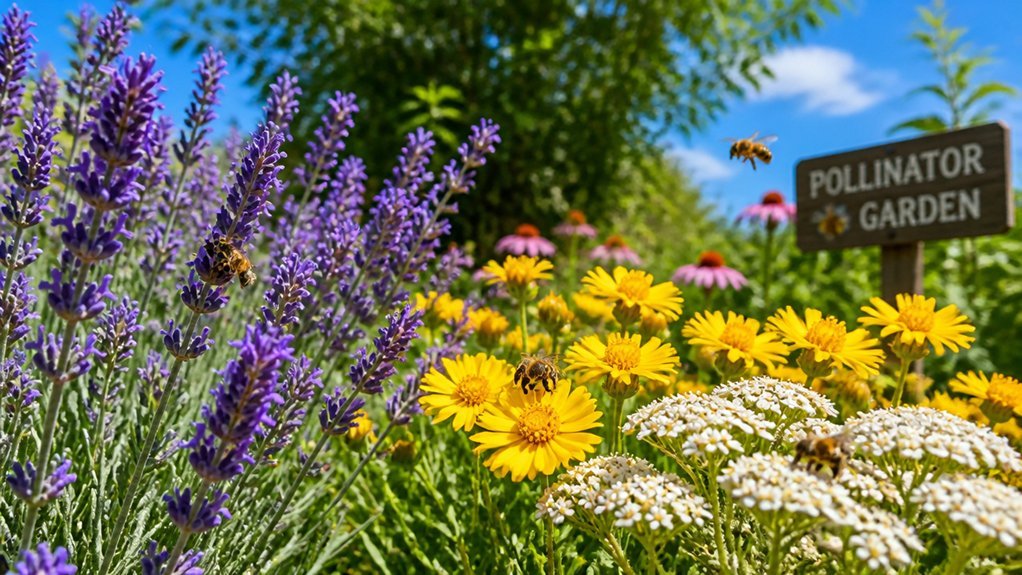
When you want summer flowers bees can’t resist, choose easy-care blooms that keep producing nectar for weeks.
You’ll get the best results from plants with long bloom periods, like coneflowers, bee balm, and black-eyed Susans. You can also boost visits by planting bright blue, purple, yellow, and white flowers that bees notice quickly.
Nectar-Rich Bloom Periods
During the warmest months, your garden can become a steady nectar source if you choose flowers that bloom for long stretches and keep producing open, bee-friendly blossoms. You’ll give bees reliable feeding windows when you match bloom timing with peak foraging hours and mix early, mid, and late summer varieties.
Look for plants that reopen daily, offer shallow centers, and keep nectar flowing through heat.
- Stagger bloom times for nonstop forage.
- Choose open flowers that bees can enter easily.
- Favor varieties with long flowering periods.
- Plant in sunny spots for stronger nectar production.
- Remove spent blooms to encourage fresh blossoms.
- Incorporate synthetic pheromones to attract scout bees and enhance foraging efficiency.
When you plan for overlap, you help pollinators find food even during dry spells, and your beds stay lively longer.
Easy-Care Summer Favorites
If you want dependable summer bee activity without a lot of fuss, focus on hardy flowers that handle heat, bloom for weeks, and don’t need constant attention. You can rely on coneflowers, black-eyed Susans, blanket flowers, and bee balm to feed visitors through the hottest stretch of the season.
A new tip to support bee health is to choose probiotic supplements that enhance gut microbiome stability and boost immunity.
Plant them in full sun with well-drained soil, then water deeply while they establish. After that, you’ll only need occasional watering during drought. Deadhead spent blooms to keep flowers coming, but leave some seedheads for later forage.
Group several plants together so bees can work efficiently, and skip heavy fertilizer, which can weaken blooms. When you choose tough summer standouts, you get steady pollinator action, fewer chores, and a garden that keeps performing.
Bee-Attracting Flower Colors
Bee are especially drawn to blue, purple, violet, white, and yellow flowers, so those colors are smart choices when you want steady summer visits.
You’ll boost bee traffic when you plant blooms in simple, open shapes that make nectar easy to reach. Choose lavender, salvia, zinnia, cosmos, and coneflower for reliable color and feeding spots. Skip double-petaled varieties, since they often hide pollen and nectar. Mix several hues in one bed, and bees’ll spot your garden faster from a distance. Keep flowers blooming through summer by deadheading and watering during dry spells.
- Blue and purple signal nectar well
- White flowers glow at dusk
- Yellow blooms catch quick attention
- Open centers help bees land
- Continuous bloom keeps visits coming
Fall Flowers for Late-Season Bees
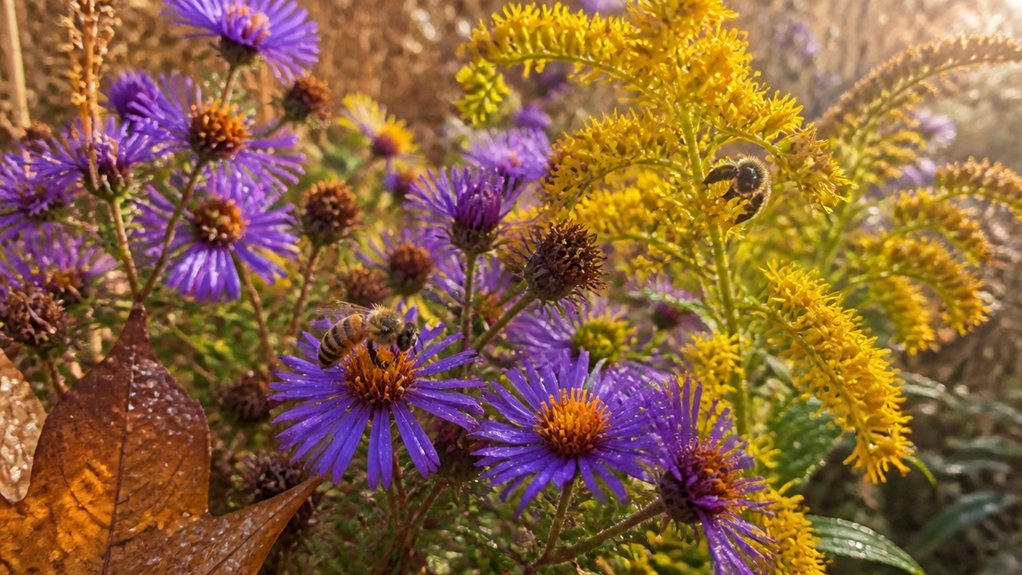
As temperatures drop, you can still keep your garden buzzing by planting fall flowers that give late-season bees one last reliable food source. Choose blooms that open in late summer and keep going into autumn, like asters, goldenrod, sedum, and native sunflowers. You’ll help bees build up energy before winter while adding color when most plants fade. Incorporating plants with balanced amino acids can further support bee nutrition during this critical time. Let some flowers stay standing after frost so bees can still forage on warm days. Skip heavy deadheading, and leave a few spent stems for shelter nearby. Water deeply during dry spells, but don’t overdo it; these plants usually thrive with little fuss.
Native Bee Forage Plants by Region
Native plants make bee gardening easier because they’re already suited to your local climate, soil, and pollinators. When you match forage plants to your region, you give native bees reliable nectar and pollen without extra fuss.
Check local extension lists and native plant nurseries to find species that bloom across your growing season. You’ll support specialists and generalist bees with flowers they recognize.
- Northeast: bee balm, goldenrod, asters
- Southeast: mountain mint, coreopsis, wild bergamot
- Midwest: prairie clover, blazing star, compass plant
- Southwest: penstemon, desert marigold, salvia
- Pacific Northwest: lupine, Oregon grape, sedum
Plant in clusters, repeat species, and stagger bloom times. Your garden will feed more bees with less maintenance and more ecological value.
Drought-Tolerant Bee Flowers

You can count on native wildflowers that handle dry spells and still feed bees well. A diverse array of seasonal blooms will ensure that pollinators have a steady supply of nectar throughout the year. Choose long-blooming nectar sources like yarrow, blanketflower, and coneflower to keep forage going through the season. With the right drought-tolerant picks, you’ll support pollinators without adding extra watering work.
Native Wildflower Picks
Want a flower bed that feeds bees without demanding much of your time? Choose native wildflowers, because they’re already adapted to your soil, heat, and rainfall patterns.
You’ll spend less time watering and fewer hours troubleshooting, while local bees find familiar food and shelter.
- Purple coneflower: sturdy, sun-loving, and easy to establish
- Black-eyed Susan: bright, tough, and dependable in lean soil
- Wild bergamot: aromatic blooms that attract many native bees
- Blanket flower: thrives in dry spots and handles poor ground
- Golden alexanders: a spring option that supports early pollinators
Plant them in groups, skip rich fertilizer, and let them settle in. Once rooted, they need little care and reward you with a natural, resilient display that supports your pollinators.
Long-Blooming Nectar Sources
If you want your bee bed to keep blooming through heat and dry spells, add drought-tolerant flowers that stretch nectar across a long season. You can count on salvia, lavender, catmint, and blanket flower to feed bees for weeks, not days. Their sturdy stems handle wind, poor soil, and skipped watering, so you won’t need constant upkeep.
Choose varieties that bloom in waves, and you’ll keep nectar flowing from spring into fall. Deadhead spent flowers to trigger fresh buds, and cut back plants lightly after peak bloom. Group these flowers in sunny spots with well-drained soil, then mulch around them to conserve moisture. With a smart mix, you’ll give pollinators a reliable buffet even when summer turns dry and tough.
Shade-Tolerant Flowers for Bees
Even in shadier spots, you can still support pollinators with flowers that bees love. Choose shade-tolerant bloomers that offer easy landing pads and reachable nectar, so bees can forage without strain.
Even in shadier spots, you can still support pollinators with flowers bees love.
You’ll get the best results in moist, well-drained soil and dappled light, where these plants stay healthy with less fuss. Native selections often handle local conditions better, and they usually need fewer inputs from you.
- Astilbe brings airy plumes bees can visit.
- Lungwort offers early flowers and sturdy foliage.
- Columbine nods in partial shade and attracts bees.
- Coral bells add color while feeding pollinators.
- Foxglove suits bright shade and tall stems.
Trim spent blooms, mulch lightly, and water during dry spells.
Plant for Continuous Bloom
For flowers that stay low-maintenance all season, aim for a steady bloom sequence instead of one big flush. You can do this by mixing early, midsummer, and late-season bloomers so pollinators always find something open.
Choose plants that naturally overlap, such as spring catmint, summer coneflower, and fall asters, and place them together in sunny borders or scattered drifts. When one flower fades, another steps in, so your garden never looks empty. You’ll also support bees, butterflies, and other visitors through changing weather and long foraging periods.
Grouping repeat bloomers with staggered bloom times keeps your planting simple and effective. With a planned sequence, you don’t need constant replanting; you just enjoy a longer, more reliable show.
Simple Care for Bee-Friendly Flowers
Once you’ve set up a steady bloom sequence, keeping bee-friendly flowers easy to care for is mostly about smart basics. You don’t need fussy routines; you just need to support healthy growth and reliable nectar.
Bee-friendly flowers thrive with simple care: steady blooms, healthy growth, and dependable nectar without fussy routines.
Water deeply when the soil dries, then let it drain well. Mulch to hold moisture and suppress weeds, but keep it off stems. Deadhead spent blooms if that extends flowering, and trim only what’s needed to shape plants. Skip heavy fertilizer, which can push leafy growth over flowers. Watch for pests, but avoid broad sprays that harm bees. Using long-lasting, protective wood finishes on hive structures ensures durability and safety, supporting healthy bee habitats.
Frequently Asked Questions
Which Bee Species Benefit Most From Container-Grown Flowers?
You’ll help bumblebees, mason bees, and small native solitary bees most, because they forage well in containers. You’ll also support honey bees, but native bees usually gain the biggest benefit from these flowers.
Can Low-Maintenance Flowers Survive in Clay Soil?
Yes, you can grow them in clay soil if you improve drainage with compost and mulch. You’ll want tough, clay-tolerant varieties, and you’ll water carefully until roots establish, then they’ll usually thrive.
Do Night-Blooming Flowers Attract Pollinators Too?
Yes, you’ll attract moths, beetles, and some bats with night-blooming flowers. You should choose fragrant, pale blossoms, since they’re easier for nocturnal pollinators to find and visit after dark.
How Close Should Bee Flowers Be Planted Together?
You should plant bee flowers in clusters, about 6 to 12 inches apart for small blooms, or 12 to 24 inches for larger ones. That way, you’ll help bees forage efficiently and visit more blooms.
Will Mulch Reduce Pollinator Visits to Flowers?
Yes, mulch can reduce pollinator visits if you cover bare soil or block access to blooms. Keep mulch low and away from stems, and you’ll help bees and butterflies find flowers more easily.
In Summary
If you want a garden that helps pollinators without adding extra work, choose flowers that bloom долго? Wait.