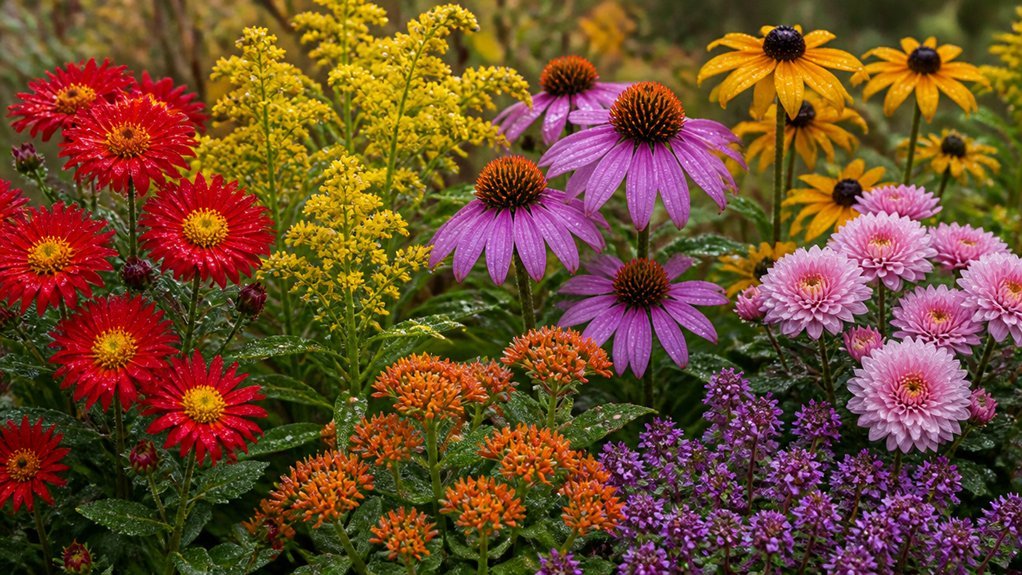
For 7 fall blooming forage plants for pollinators, you can plant asters, goldenrod, sedum, mums, sunflowers, Joe-Pye weed, and ironweed. These late-season bloomers keep nectar and pollen flowing when summer flowers fade, helping bees build energy before winter. Give them full sun, well-drained soil, and avoid pesticides. Group plants together, deadhead spent blooms, and leave some stems standing. If you keep going, you’ll find even more ways to feed pollinators through fall.
Best Fall Blooming Plants for Bees

When fall starts to thin out nectar sources, you can still support bees by planting late-blooming favorites like asters, goldenrod, sedum, and mums. These flowers give you a steady stream of pollen and nectar when many summer plants are fading.
You’ll help bees build energy reserves before cold weather arrives, and you’ll keep your garden active longer. Choose a mix of shapes and bloom times so foragers can find food over several weeks. Plant in full sun when possible, and avoid pesticides that can harm visiting bees. Leave some spent stems standing, too, because they can offer shelter and resting spots. Seed quality and choosing varieties that are resilient and well-suited for your climate further support pollinator health throughout the season.
Aster Varieties Bees Love in Fall
Asters are one of the best fall flowers you can grow for bees, especially when nectar is getting scarce. You can plant New England aster, New York aster, and aromatic aster to give your garden a late-season boost.
These blooms open in shades of purple, pink, and white, and bees flock to their wide, daisy-like centers. You’ll often see worker bees landing repeatedly as they gather pollen and sip nectar before winter.
Choose a sunny spot with well-drained soil, and let the plants spread into generous clumps. If you deadhead spent blooms, you can encourage a longer display.
Why Goldenrod Is Great for Fall Bees
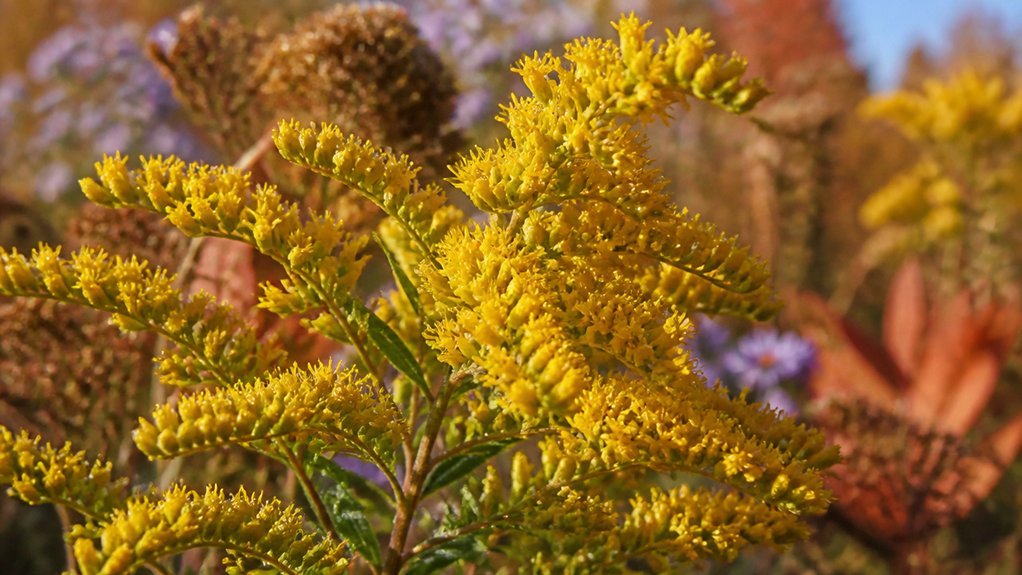
Goldenrod gives you a rich nectar source just when fall bees need it most. You can count on its late blooms to help sustain bees as other flowers fade. A nectar-rich prairie mix can further enhance seasonal forage for honey bees during this critical time.
Goldenrod Nectar Value
As autumn deepens, this bright late-season bloomer becomes a critical fuel source for bees that are still working hard after most summer flowers fade. You can count on goldenrod to offer abundant nectar when many other plants have stopped producing.
Its flowers pack clusters of tiny blooms that bees can visit efficiently, helping them gather energy fast. The nectar often has a rich sugar mix that supports quick foraging and gives you a dependable fall forage option in sunny borders, meadows, and field edges.
Because goldenrod blooms in large stands, it can provide a concentrated reward that keeps pollinators moving from plant to plant. If you want strong late-season nectar flow, you’ll find goldenrod hard to beat.
Seed mixes often include native species like goldenrod to better support regional pollinators during critical feeding periods.Late-Season Bee Support
Late in the season, bees still need steady food to build reserves, and goldenrod fills that gap when many other blooms are gone. You can count on its abundant nectar and pollen to support honey bees, native bees, and bumble bees as they prepare for winter. When you plant goldenrod, you give pollinators a reliable late bloom that keeps foraging activity strong during a lean period. You’ll also help young queens and colonies store energy for colder weather. Because goldenrod flowers in clusters, bees can work efficiently and return often. If you leave some stems standing, you extend forage value even longer. Incorporating essential oils in feeding can also help support their immune health during this crucial time.
Sedum Blooms Bees Need Before Frost
Sedum brings a final burst of nectar when many other blooms have already faded, giving bees a dependable food source before frost shuts down the garden. You can count on its sturdy flower heads to draw honeybees, bumblebees, and other pollinators during the season’s last warm days.
Plant sedum in full sun and well-drained soil, and it’ll reward you with low-maintenance blooms that hold up when nights turn cool. You don’t need to deadhead every spent cluster right away; the flat, open flowers keep feeding visitors for weeks.
When you add sedum to your fall border, you extend forage into a critical gap and help bees build reserves before winter arrives.
Sunflowers That Keep Bees Feeding Longer

Sunflowers can keep bees busy well into fall if you choose branching varieties that keep opening fresh blooms instead of one-and-done giants. You’ll give pollinators a longer feast when you deadhead spent flowers and let side shoots bloom.
Branching sunflowers extend the bloom season, feeding bees longer when you deadhead spent flowers and let side shoots bloom.
Plant them in full sun, give steady water early, and avoid rich nitrogen that pushes leafy growth over nectar.
- Pick pollen-rich, open-faced cultivars
- Stagger planting dates for overlap
- Leave some heads standing for foragers
- Support tall stems against wind
- Harvest seeds only after bees finish
- Maintain proper Materials and Design for bee-friendly water sources to support hydration during the season
You’ll notice bees working each new flower ring from morning to afternoon, especially when other nectar sources fade.
With smart selection, your sunflowers can bridge the gap between summer abundance and late-season scarcity.
Best Native Wildflowers for Fall Bees
When summer blooms start thinning out, native wildflowers can keep bees fed with reliable fall nectar and pollen. You’ll often see asters, goldenrods, Joe-Pye weed, and ironweed buzzing with activity as temperatures cool.
New England aster offers rich late-season nectar, while goldenrod supplies abundant pollen and supports honey bees, bumble bees, and many native species. Ironweed adds tall purple flowers that attract long-tongued bees, and Joe-Pye weed draws clusters of visitors with its sweet bloom.
You can also count on native sunflowers, blazing stars, and mountain mints in some regions. By choosing local species, you help bees build winter reserves and support a stronger pollinator community when other flowers have faded.
How to Plant Fall Bee Forage in Your Yard

Once you’ve chosen good fall bloomers, the next step is giving them the right spot and care in your yard. Plant them in full sun, loosen soil, and space each one so air can move freely.
Plant fall bloomers in full sun, loosen the soil, and leave space for air to move freely.
Water deeply after planting, then keep the soil evenly moist while roots settle. Mulch lightly to hold moisture and suppress weeds, but keep mulch off stems.
- Choose native species that match your soil
- Plant in groups for stronger pollinator signals
- Remove competing weeds before planting
- Deadhead spent blooms to extend flowering
- Skip pesticides that can harm bees
If you plant in stages, you can stretch bloom time and feed bees longer into autumn. Additionally, selecting bee-safe finishes for your garden structures can help ensure a safer habitat for pollinators and their foraging plants.
Frequently Asked Questions
Which Fall Flowers Attract Butterflies as Well as Bees?
Asters, goldenrod, sedum, Joe-Pye weed, and native mums attract butterflies and bees. You’ll give them nectar-rich blooms, bright colors, and late-season food, so your garden keeps buzzing and fluttering into fall.
How Can I Extend Blooming Time Into Late Autumn?
You can extend blooming into late autumn by planting staggered bloomers, deadheading regularly, and choosing cool-weather perennials. You’ll also get longer color if you mulch roots, water during dry spells, and shelter plants from early frosts.
Do Fall Forage Plants Need Fertilizer for Better Nectar Production?
Usually, you don’t need fertilizer for better nectar production; too much nitrogen can reduce blooms. You’ll get better results by planting in sunny, well-drained soil, watering moderately, and avoiding overfeeding or rich amendments.
Which Pollinators Besides Bees Use Fall-Blooming Forage Plants?
You’ll also attract butterflies, moths, hoverflies, beetles, wasps, and some flies. You can even support hummingbirds in warmer regions. These visitors seek nectar, pollen, or shelter from your fall-blooming forage plants.
Can Fall Bloomers Survive First Frost and Keep Producing Nectar?
Yes, some can. You’ll notice many hardy fall bloomers survive light frosts and keep flowering, though severe freezes stop nectar production. Protect plants with mulch, and you can often extend bloom a bit longer.
In Summary
Planting fall-blooming forage gives bees the nectar and pollen they need when summer flowers fade. If you add asters, goldenrod, sedum, sunflowers, and native wildflowers, you’ll keep your yard buzzing well into frost. Choose a mix of bloom times, plant in sunny spots, and avoid pesticides so pollinators can feed safely. With just a little planning, you can support bees through the season and help them head into winter stronger.