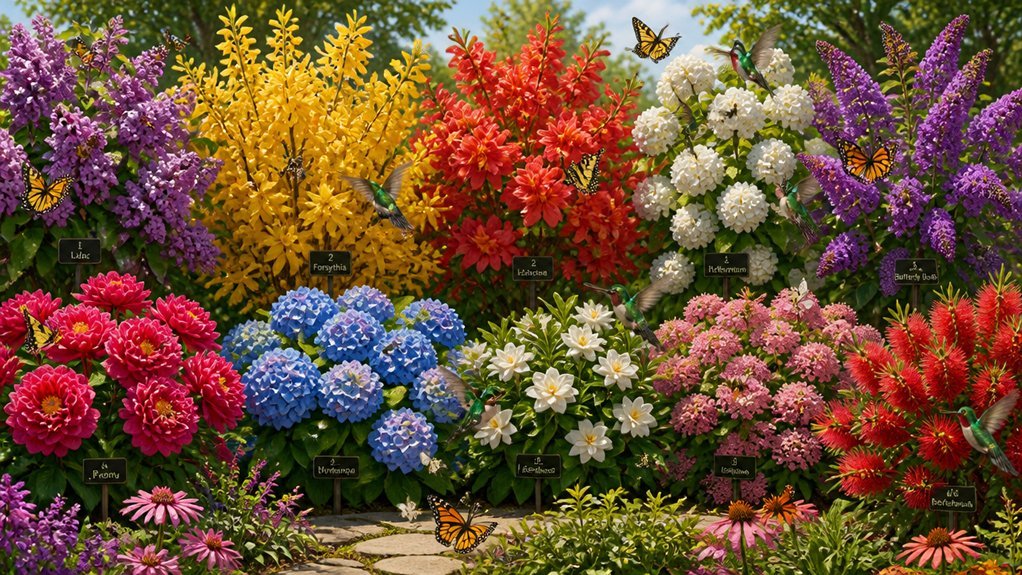
You can feed bees, butterflies, and beneficial insects all season by planting flowering shrubs that offer nectar, pollen, shelter, and even berries. Good choices include forsythia, blueberry, lavender, spirea, summersweet, and viburnum, plus other long-blooming, nectar-rich shrubs like witch hazel, cornelian cherry, ninebark, and native shrub varieties. Group them in sunny, well-drained spots, and you’ll support pollinators from early spring through fall. Keep going, and you’ll see which shrubs fit your garden best.
Why Bees Love Flowering Shrubs
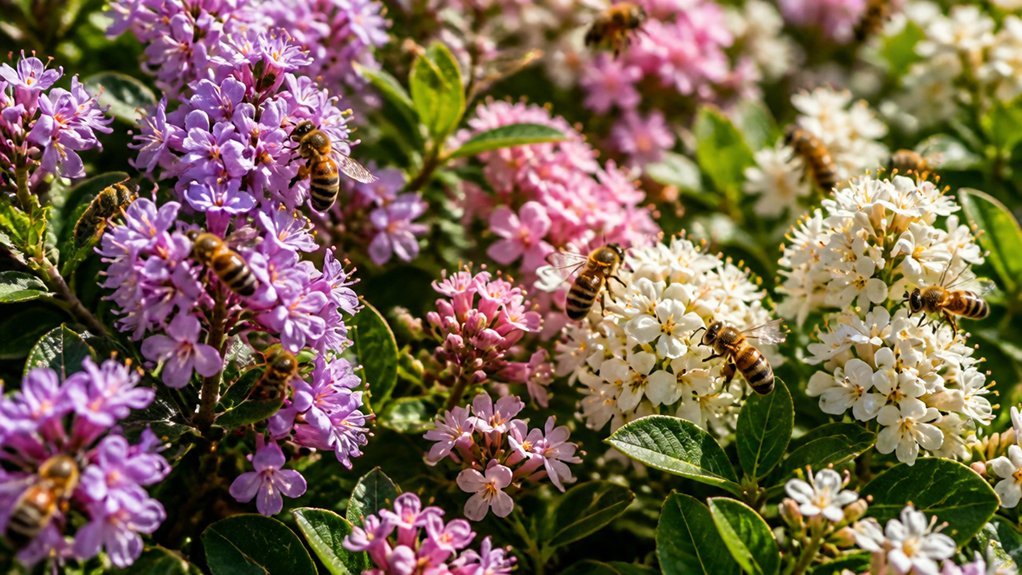
Bees love flowering shrubs because they offer a reliable mix of nectar, pollen, and shelter in one place. When you plant these shrubs, you give bees steady access to food during bloom times, which helps them save energy while they forage.
Their clustered flowers let bees work efficiently, moving from blossom to blossom without wasting time. You also create cover from wind and heat, so bees can rest and navigate more easily.
Many shrubs bloom at different points in the season, and that timing helps you support bees when other nectar sources are scarce. By choosing shrubs for your yard, you strengthen local pollination and help maintain healthier gardens, fruit set, and native plant communities over time.
Best Flowering Shrubs For Bee Forage
When you want to support bees, choose flowering shrubs that bloom early and give them a strong start in the season. You’ll get the best results from nectar-rich shrubs that keep pollinators coming back for more. These choices help you turn your garden into a steady bee forage source. Incorporating native species ensures that your pollinators have access to familiar, well-adapted nectar sources that thrive in your local environment.
Early Blooming Choices
As winter loosens its grip, early-blooming shrubs give bees one of their first reliable food sources of the season. You can plant witch hazel, forsythia, and cornelian cherry to bridge the gap before spring flowers open.
Their blossoms appear when little else does, so foraging bees quickly find them. Place these shrubs in sunny spots with well-drained soil, and they’ll establish more easily. You’ll also help support native pollinators by choosing species suited to your region.
Choose species that are native wildflowers to ensure they thrive and attract local pollinators effectively. Prune lightly after flowering, not before, so you don’t remove next year’s buds. If you mix several early bloomers, you extend the feeding window and create a stronger seasonal start for your garden’s bee visitors.
Nectar-Rich Shrubs
Nectar-rich shrubs keep pollinators coming back because they offer a steady supply of fuel through the bloom season. You’ll help bees, butterflies, and hoverflies by choosing shrubs with open flowers and easy nectar access. Plant them in groups so foragers waste less time and gather more energy. A diverse selection that blooms at different times can additionally support pollinator health throughout their active seasons, promoting pollinator sustenance.
Forsythia For Early Spring Nectar
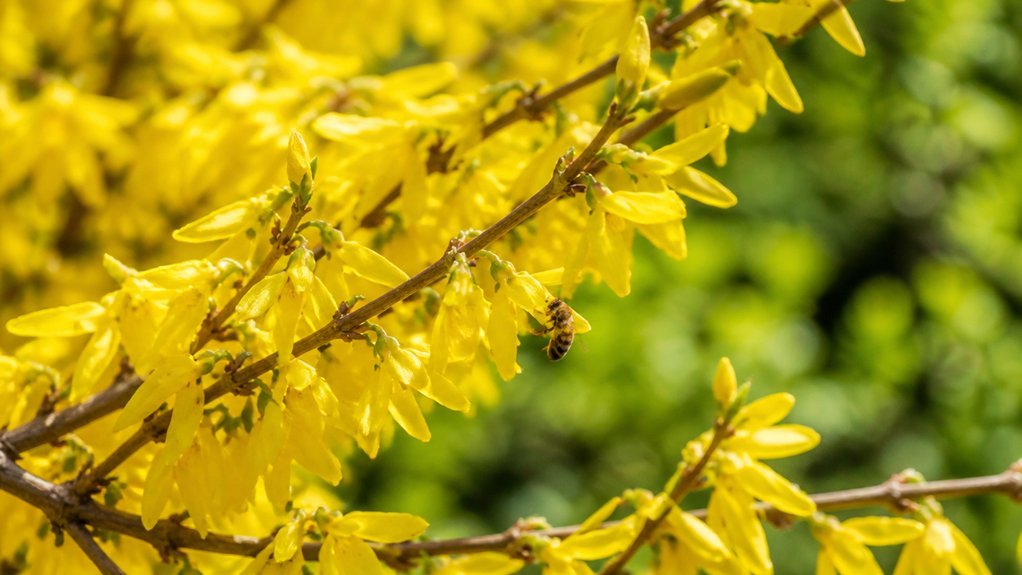
Forsythia brightens the garden just as spring begins, and its golden blooms can give hungry pollinators an early food source when little else is flowering.
You’ll notice bees visiting on mild days, darting from trumpet to trumpet while the shrub still looks bare at its base.
Plant forsythia where it gets full sun, and let its arching stems spread into a vivid hedge or accent.
- Watch the buds swell in late winter.
- Enjoy the bright yellow burst along fences and paths.
- See early bees use the flowers as a first stop.
You don’t need to fuss over it much; forsythia handles average soil and rewards you with a cheerful signal that spring’s arrived, offering nectar right when pollinators need it most.
Blueberry Bushes For Bee Forage
Blueberry bushes pull double duty in the garden, giving you berries later in the season while feeding bees with their bell-shaped spring flowers. You’ll give pollinators a rich nectar source when other blooms are still waking up, and you’ll boost fruit set by inviting more bee visits. Additionally, planting several compatible varieties nearby enhances cross-pollination, which improves your harvest and keeps bees moving from shrub to shrub. Choose a sunny spot with acidic, well-drained soil, and keep the roots evenly moist during bloom. Skip heavy pruning right before flowering, since you want plenty of blossoms for forage. If you add mulch, use an acid-friendly material to protect roots and conserve water while your shrubs support hungry bees. Incorporating weather-resistant materials in your garden setup helps maintain a steady forage source for bees throughout the season.
Lavender Shrubs That Attract Pollinators
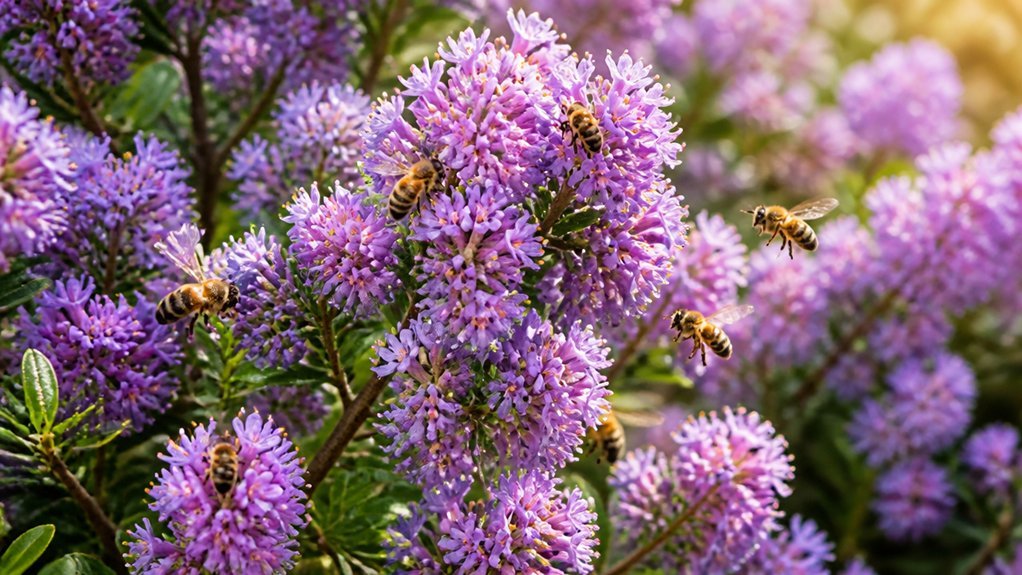
Lavender shrubs bring a steady stream of bees, butterflies, and other beneficial insects to the garden with their fragrant, nectar-filled spikes. You’ll notice pollinators hovering from sunrise to dusk, especially when you plant them in full sun and give them well-drained soil.
Their silvery foliage adds color even before the blooms open, and the scent deepens on warm days.
One effective way to attract more pollinators is by using scented attractants that mimic natural pheromones, which can enhance the appeal of your lavender plants.
- Place lavender where you can brush past it and release its aroma.
- Water young shrubs lightly until they settle in, then keep moisture moderate.
- Trim spent flowers to encourage more blooms and keep the shrub tidy.
When you mass several plants together, you create a vivid feeding zone that looks beautiful and gives pollinators an easy, reliable stop.
Ninebark As A Low-Maintenance Bee Shrub
If you want another easy pollinator magnet after lavender, ninebark is a smart choice. You’ll get a tough native shrub that handles heat, cold, and poor soil without fuss.
Bees visit its spring flower clusters for nectar and pollen, and you don’t need to baby it to keep it thriving. Plant it in full sun to part shade, give it room to spread, and water it while it settles in. After that, it usually manages with little help.
You can prune it lightly after flowering if you want a tidier shape, but it still performs well if you leave it alone. Its peeling bark and colorful foliage add interest too, so your garden stays useful and attractive through more than one season.
Additionally, selecting low-maintenance plants like ninebark ensures a sustainable garden with less frequent intervention.
Spirea For Long-Bloom Bee Forage
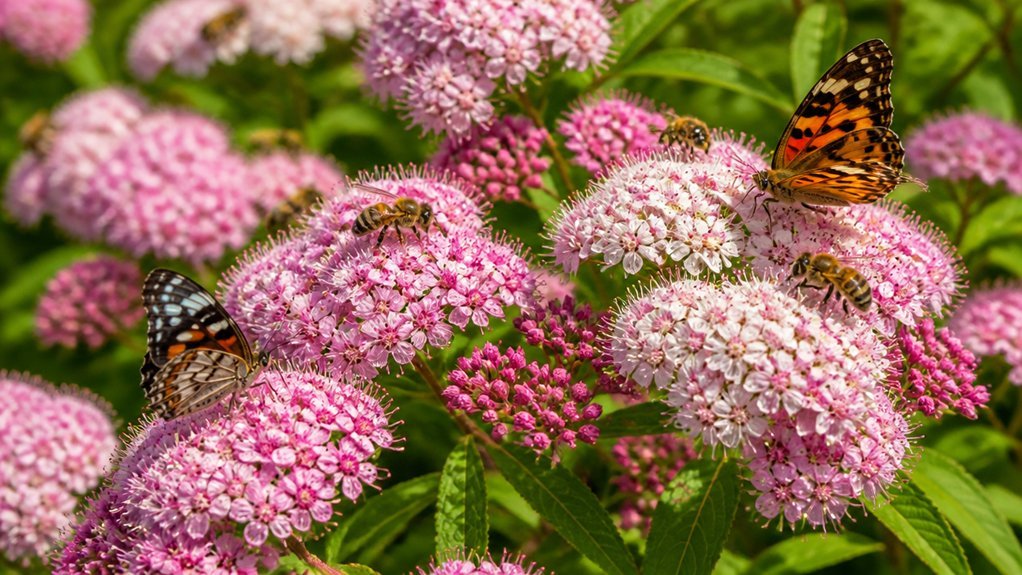
Spirea gives you one of the longest stretches of bee forage from a flowering shrub, with clusters that can keep pollinators coming back from spring into summer. You’ll see bees work the tiny blooms steadily, especially when you plant it in full sun and well-drained soil.
Its arching stems make an easy, graceful mass that brightens a border while feeding insects.
- Choose a compact or fountain form for a neat, bee-friendly edge.
- Prune lightly after bloom to keep fresh growth and more flowers.
- Group several plants together so pollinators spot the display fast.
You don’t need much fuss to keep spirea productive. Give it moderate water while it establishes, then let it do the work.
Its reliable bloom window helps you support bees without adding extra chores.
A well-maintained nectar source can support year-round foraging and colony health.Summersweet For Late-Season Nectar
You’ll value summersweet when many shrubs have finished blooming, because it opens in late summer and keeps offering color. Its fragrant flowers give bees, butterflies, and other pollinators a welcome nectar source when food can be harder to find. If you want to extend your pollinator support into the season’s end, this shrub fits the job well. Seasonal nectar availability can vary, so incorporating late-blooming plants like summersweet helps ensure pollinators have a steady food supply.
Late-Season Bloom Window
As summer starts to fade, summersweet steps in with fragrant, nectar-rich blooms that keep pollinators working when many shrubs have already finished flowering. A well-placed summersweet can introduce the extended feeding period that benefits busy bees and butterflies later in the season. You’ll notice its timing fills a critical gap, carrying garden color into late summer and early fall. Plant it where you can enjoy the flowers and where insects can reach them easily. 1. You extend bloom season with a shrub that opens after spring and midsummer stars have passed. 2. You support busy foragers when bees, butterflies, and other visitors need dependable flowers. 3. You add structure and scent that make your border feel alive just as the season shifts. Give it steady moisture, and you’ll reward pollinators with a dependable, late-season stop.
Pollinator Nectar Source
Summersweet earns its place as a pollinator-friendly shrub because its fluffy summer flowers pump out nectar when many other plants have already slowed down. You’ll see bees, butterflies, and beneficial flies working the blooms for a reliable energy boost. If you plant it in sun or part shade and keep the soil evenly moist, you’ll help it produce even more nectar.
| Trait | Benefit | Tip |
|---|---|---|
| Dense flower spikes | Strong nectar access | Plant in groups |
| Late bloom time | Supports waning pollinators | Choose a sheltered spot |
| Moist soil tolerance | Steady flowering | Mulch to hold water |
You’ll also notice a sweet fragrance that draws pollinators from a distance. When nectar is scarce elsewhere, summersweet keeps your garden busy and productive.
Viburnum Shrubs That Feed Pollinators
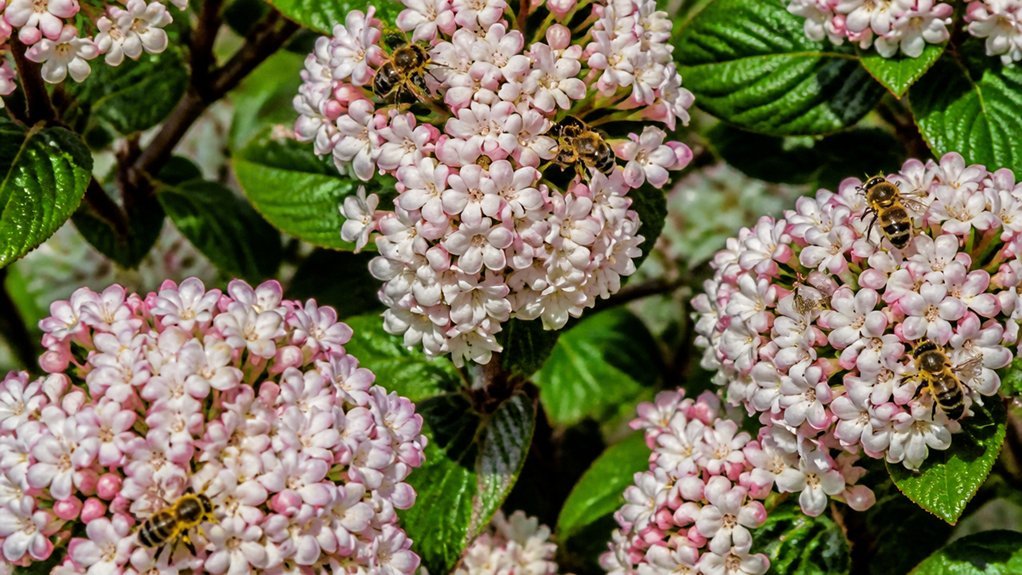
Viburnums earn their place in pollinator-friendly gardens by offering clusters of nectar-rich flowers that draw bees, butterflies, and other beneficial insects in spring. You can count on their blossoms to provide an easy landing pad and a steady food source during a busy season. Their blooms often arrive in white or creamy shades, creating a bright display that pollinators can spot quickly. Many viburnums also add berries later, giving your garden extra wildlife value. Additionally, planting viburnums with the right nesting habitat in mind can further support wild pollinators and beneficial insects. 1. Masses of small flowers tempt searching bees. 2. Fragrant clusters help butterflies find the shrub. 3. Dense branches offer shelter while insects feed. Choose viburnums with your climate in mind, and you’ll support pollinators without sacrificing beauty.
How To Plant Bee-Friendly Shrubs
Start by choosing a sunny spot with well-drained soil, since bee-friendly shrubs thrive best where they can get enough light and airflow.
Prep the planting area by loosening the soil and mixing in compost to help roots settle in quickly.
After you plant, water deeply and keep the soil evenly moist while the shrub gets established.
Site Selection Basics
Before you plant bee-friendly shrubs, pick a site that gives them the right mix of sun, drainage, and room to grow. You’ll help pollinators most when you place shrubs where they get enough light for strong blooms and easy access. Watch how the space looks through the day, then choose a spot that stays open and uncluttered.
- Give the shrub at least six hours of direct sun.
- Avoid low spots where water lingers after rain.
- Leave space for mature width so branches won’t crowd paths or nearby plants.
Choose a location near other flowering plants, and bees will find it faster. A well-placed shrub also makes your garden easier to maintain and enjoy.
Soil Preparation Tips
Healthy soil helps flowering shrubs settle in fast and bloom well for pollinators. You should loosen the planting area to at least twice the width of the root ball, then break up compacted ground so roots can spread easily.
Mix in finished compost to improve texture, drainage, and nutrient availability without overfertilizing. If your soil drains poorly, raise the bed slightly or work in coarse organic matter to keep roots from sitting in soggy ground.
Check the pH for the shrubs you choose, and adjust it only if a soil test shows a real need. Remove rocks, weeds, and old roots before you plant. A clean, friable bed gives bee-friendly shrubs the strong start they need to grow, flower, and support more visiting pollinators.
Watering After Planting
Water your newly planted bee-friendly shrubs deeply right after planting so the soil settles around the roots and air pockets disappear.
Then keep the root zone evenly moist for the first few weeks, especially during warm, windy weather. You don’t want soggy soil, but you also shouldn’t let the roots dry out before they’ve anchored.
- Water slowly at the base so moisture reaches the full root ball.
- Check soil with your finger; if the top inch feels dry, water again.
- Apply mulch to hold moisture and reduce stress while the shrub establishes.
As the plant settles in, you can stretch watering intervals, but still watch for drooping leaves or dry soil. Consistent moisture helps your shrub bloom stronger and support more pollinators.
Frequently Asked Questions
Which Flowering Shrubs Attract Butterflies as Well as Bees?
You’ll attract butterflies and bees with butterfly bush, spirea, viburnum, ninebark, and summersweet. Plant them in sun, skip heavy pesticides, and you’ll give both pollinators nectar-rich blooms all season long.
How Much Sun Do Bee-Friendly Shrubs Need?
You’ll usually give bee-friendly shrubs at least six hours of sun daily; some tolerate partial shade, but more light boosts blooms, nectar, and bee activity. Match each shrub’s needs to your garden conditions.
Can Flowering Shrubs Grow Well in Containers?
Yes, you can grow flowering shrubs in containers if you choose compact varieties, use a large pot, water regularly, and feed them well. You’ll need good drainage and enough sun for strong blooms and healthy growth.
When Is the Best Time to Prune Pollinator Shrubs?
You’ll usually prune pollinator shrubs right after they finish blooming, so you don’t remove next season’s flower buds. For spring bloomers, wait until late spring; for summer bloomers, prune in late winter.
Are Any Bee-Friendly Shrubs Deer Resistant?
Yes—you can choose bee-friendly shrubs like butterfly bush, rosemary, and ceanothus; deer usually avoid them. You’ll still want to protect young plants, since hungry deer may browse almost anything when food’s scarce.
In Summary
If you want to help pollinators, flowering shrubs are a smart place to start. By choosing bee-friendly options like forsythia, blueberry, lavender, spirea, summersweet, and viburnum, you can give bees nectar and pollen through much of the season. Plant shrubs in sunny spots, group them together, and avoid pesticides when you can. With a little planning, your landscape can support bees, brighten your yard, and keep your garden buzzing all year long.