In late summer, you need bloomers that keep nectar and pollen flowing as spring flowers fade. Plant asters, goldenrod, sunflowers, sedum, borage, and joe-pye weed, plus long-blooming perennials like coneflower and Russian sage. Add native late-season shrubs or vines, and place shallow water nearby for cooling and hive work. Stagger blooms in patches so forage lasts into fall. With a few smart choices, you can keep your bees active and strong right into autumn.
Why Late-Summer Bee Forage Matters
As summer winds down, late-season forage becomes essential because your bees still need nectar and pollen to build up strength before fall. A diverse array of pollinator-friendly plants can ensure a continuous supply of nectar, supporting both the health of your hive and local biodiversity. You can’t treat August and September as a pause in the nectar flow; your colony still needs steady food sources to keep brood rearing moving and young workers emerging. When blooms fade too soon, bees may burn through stored honey faster and face added stress from heat, drought, and shrinking forage. Late-summer plants help you bridge that gap, supporting foragers and keeping the hive active while you prepare for autumn. By choosing blooms that open late, you give your bees a better chance to stay productive, maintain momentum, and head into the next season in stronger condition.
What Bees Need Most in Late Summer
In late summer, your bees need steady nectar sources to keep energy flowing and hives active. They also need enough pollen to support brood care and strong colony health. A diverse array of pollinator-friendly plants like lavender can provide vital nectar and pollen during this time. Don’t overlook clean water, since it helps bees cool the hive and process food.
Nectar Sources
Late-summer bees need a steady flow of nectar to keep colonies strong as the season winds down. You can support them by planting or preserving blooms that still reward foraging in heat and drought.
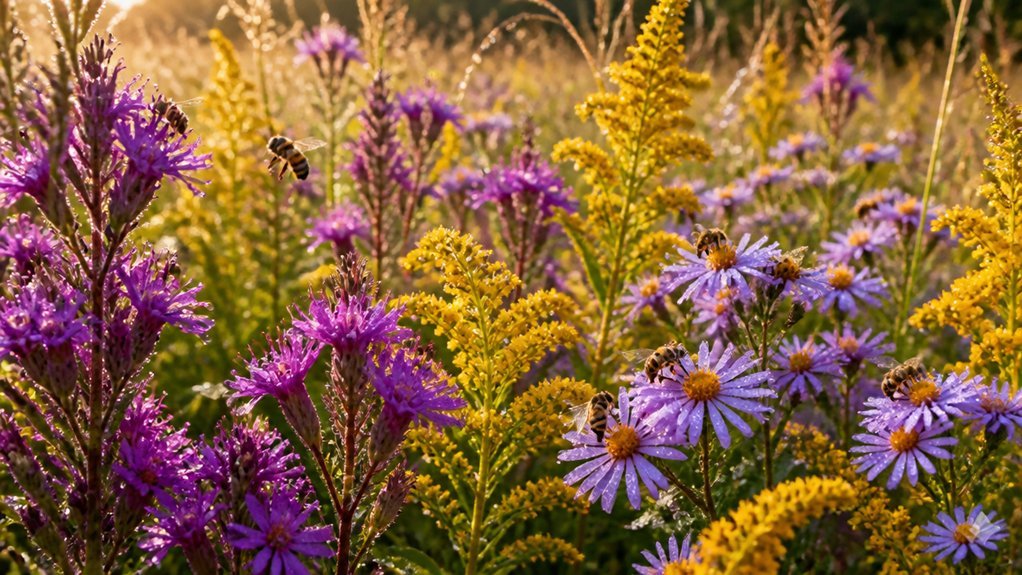
Goldenrod, asters, sunflowers, borage, and sedum often keep producing when earlier flowers fade. Choose staggered bloom times so nectar keeps coming from late summer into fall.
If you can, avoid mowing every patch at once; leave flowering borders, clover, and wild edges in place. Water stressed plants during dry spells, because a thirsty plant gives less nectar.
You’ll help bees most by offering diverse, reliable blooms close to the hive, so workers spend less energy searching and more time storing food for the colony’s last big push. Incorporating native wildflowers that bloom throughout the season can further ensure a continuous nectar supply.
Pollen Availability
Pollen matters just as much as nectar in late summer, because bees need protein to raise healthy brood and build the young workers that will carry the colony into fall. You should look for plants that keep shedding fresh, abundant pollen when many spring flowers have faded.
A balanced amino acid profile is essential in pollen sources to ensure proper larval development and colony health. Goldenrod, asters, sunflowers, bee balm, and late clovers can help fill that gap. Watch your hives closely; if pollen stores look thin, your bees may start conserving brood and shifting focus away from growth. Choose bloomers with open flowers and accessible anthers, since those give foragers an easier harvest.
Diverse pollen sources also improve nutrition, so you’ll support stronger larvae and better overwintering potential. Keep your forage plan flexible, because late-summer weather can change bloom timing quickly.
Water Access
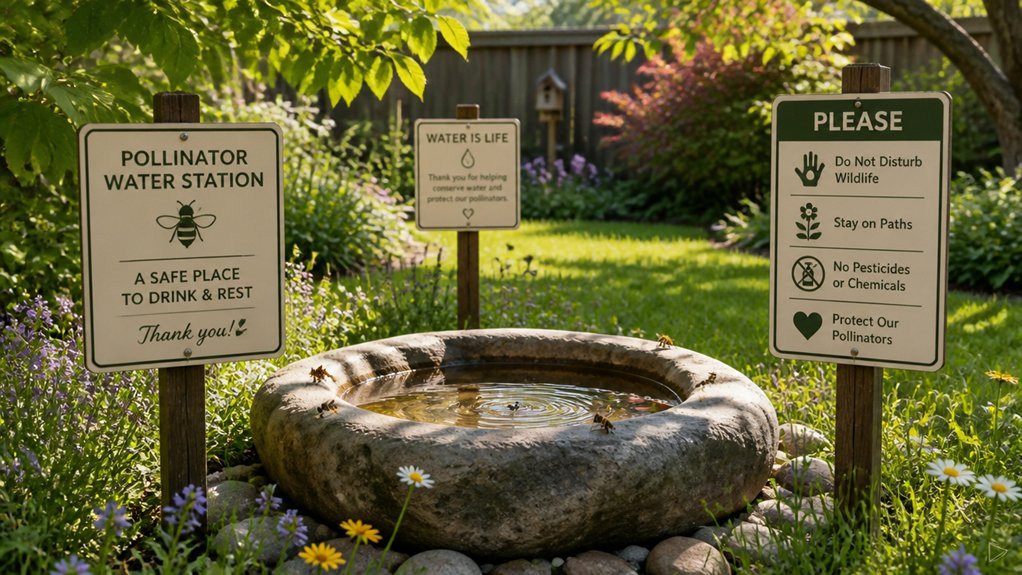
Even more than blossoms, bees need reliable water in late summer to cool the hive, dilute honey, and prepare food for growing brood. You can support them by keeping a shallow, clean source nearby, such as a birdbath, bucket, or trough with pebbles, corks, or sticks for landing spots. Using weather-resistant materials for water sources helps ensure durability during hot and unpredictable weather. Refill it often, since hot weather dries it out fast. Place it where bees can find it quickly, but away from heavy foot traffic and pesticide drift. If you already irrigate late-season flowers, let some runoff collect safely instead of forcing bees to travel far. When drought hits, water matters more than extra nectar. By offering steady access, you help your colony regulate temperature, feed larvae, and stay strong through the final forage gap.
Best Nectar Plants for Late Summer
When your hives need a final nectar push before autumn, focus on plants that keep blooming through the heat and still offer abundant forage. You can rely on these dependable choices to bridge the summer gap and extend the flow. A diverse range of plants with essential oils can also enhance bee health and calmness during foraging, ensuring stronger colonies come fall.
Best Pollen Plants for Bees
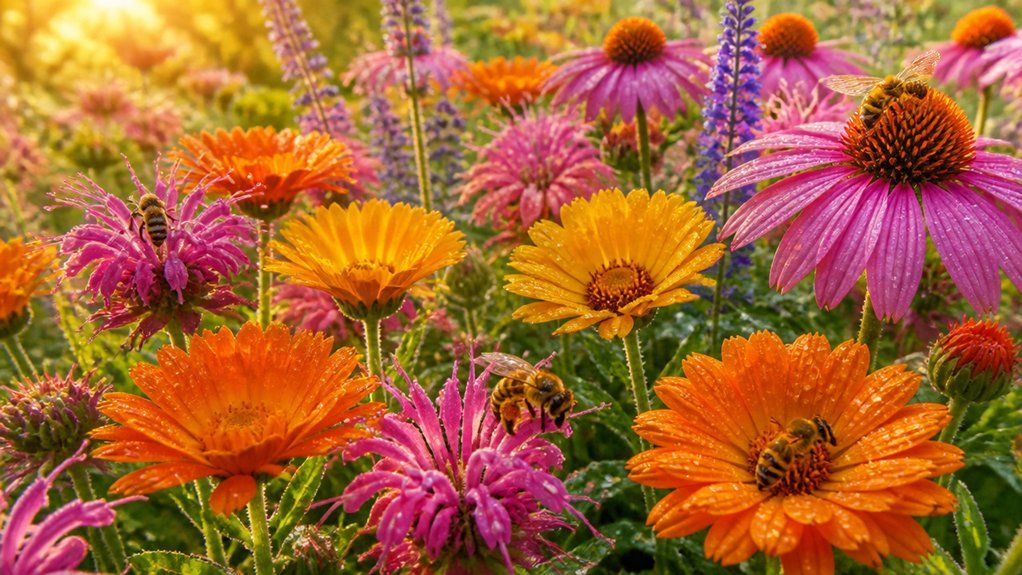
For strong late-summer brood rearing, you’ll want plants that provide plenty of protein-rich pollen, not just nectar. You can boost colony growth by planting or protecting late bloomers that dust your bees with workable pollen.
Strong late-summer brood rearing depends on protein-rich pollen, not just nectar, from late-blooming plants.
Focus on blooms that shed freely and stay open through warm afternoons. Good choices include:
- Asters
- Goldenrod
- Sunflowers
- Sedum
- Sneezeweed
You’ll notice bees working these flowers hard when other sources fade. Keep patches clustered so foragers can collect efficiently, and avoid spraying anything that could contaminate pollen.
If you manage space well, these plants help young bees develop, support winter bee quality, and reduce pressure on stored feed. Consistent pollen access matters most when colonies need to raise healthy brood before fall.
Best Native Late-Summer Forage Plants
Native late-summer forage plants can give your colonies a dependable bridge between the main nectar flow and fall dearth. You can rely on goldenrod, asters, joe-pye weed, ironweed, mountain mint, and native sunflowers to keep bees working when many other blooms fade. These plants often offer nectar, pollen, or both, and they fit well into hedgerows, field edges, and pollinator strips. When you choose natives, you support local bee behavior, soil health, and seasonal resilience. Selecting forage that is compatible with your region’s moisture and sunlight ensures optimal bloom success and bee access Jar Compatibility. Plant several species together so blooms overlap, and pick varieties suited to your region’s moisture and sunlight. If you manage apiaries near meadows or woodland openings, you’ll often see stronger foraging activity and steadier hive stores before autumn arrives.
Annual Flowers That Feed Bees Fast

If you need quick bloom cover before fall, annual flowers can fill gaps fast and keep bees foraging while perennials wind down. You can sow them in open beds, borders, or containers, and many bloom in just weeks.
Choose nectar-rich, pollen-rich types that bees visit enthusiastically. Space them well, water during dry spells, and deadhead often to extend flowering. Mix colors and heights so you get steady forage and easy access for pollinators.
- Sunflowers
- Zinnias
- Cosmos
- Buckwheat
- Borage
These annuals give you rapid payoff, strong bee traffic, and flexible planting options. If you stagger sowing, you can stretch bloom time and keep your yard useful through late summer.
Perennials That Bloom Into Fall
You can keep your hives busy well into autumn by planting long-blooming perennials that hold steady when other flowers fade. These tough plants give bees reliable fall nectar sources right when they need them most. A variety of resilient hive environment monitoring devices can help you track and optimize hive conditions during this critical period. Choose a mix that blooms late, and you’ll extend forage and support stronger colonies heading into winter.
Long-Blooming Perennial Picks
For beekeepers looking to stretch forage past midsummer, a handful of long-blooming perennials can keep nectar and pollen coming well into fall. You can plant them in sunny beds, borders, and hive paths to give foragers reliable support. Choose sturdy growers that rebloom after deadheading and tolerate dry spells.
- Coneflower
- Black-eyed Susan
- Russian sage
- Bee balm
- Coreopsis
Each one offers extended color and easy maintenance. You’ll help your bees by spacing plants for airflow, watering until established, and cutting back spent blooms to trigger more flowers.
Mix several types so you extend bloom time and create a steadier forage window.
Fall Nectar Sources
As summer winds down, fall-blooming perennials help bridge the nectar gap and keep bees working before the first frosts. You can count on asters, goldenrod, sedum, Russian sage, and Joe-Pye weed to deliver late-season nectar and pollen when many beds fade. Plant these in sunny, sheltered spots so bees can forage longer on warm afternoons. Incorporating natural, untreated fibers into your hive management can also promote healthier colonies during this critical period.
| Plant | Value |
|---|---|
| Asters | Rich nectar |
| Goldenrod | Heavy pollen |
| Sedum | Reliable blooms |
| Russian sage | Long season |
| Joe-Pye weed | Late abundance |
You’ll boost forage by grouping each plant in drifts, avoiding pesticides, and leaving spent stems standing. That simple setup helps your hive stock up for winter and supports native pollinators too.
Shrubs and Vines Bees Love
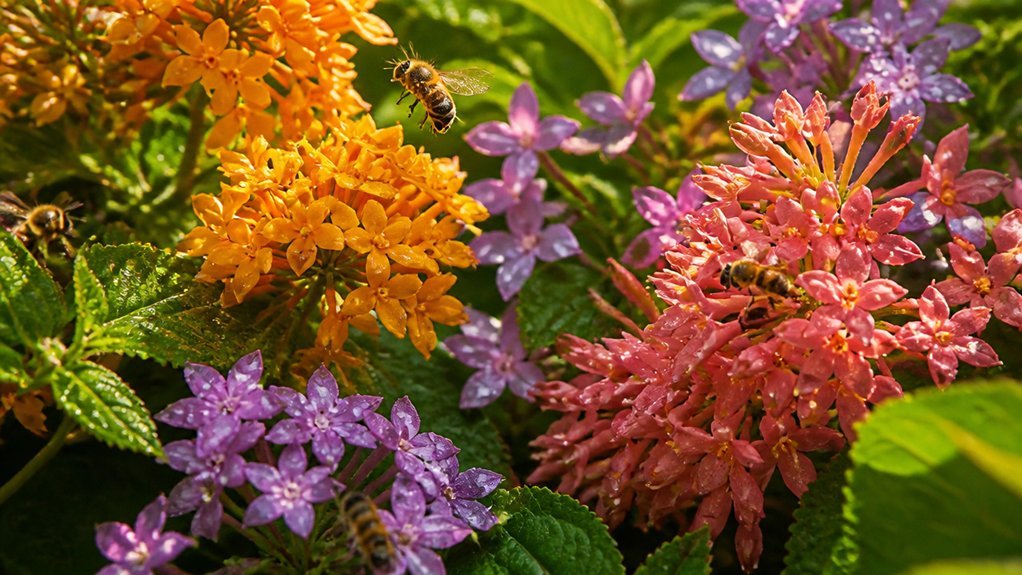
Shrubs and vines can turn the late-season garden into a nectar buffet, filling the gap when other blooms begin to fade. You’ll give bees rich forage when you plant varieties that keep pumping out pollen and nectar in warm weather. Look for:
Shrubs and vines can turn the late-season garden into a nectar buffet for hungry bees.
- beautyberry
- clethra
- abelia
- trumpets of honeysuckle
- blue leadwort vine
These plants offer clusters or tubes that invite steady visits from foragers. You’ll also add structure to your yard, since shrubs anchor borders and vines soften fences, trellises, and arbors. Selecting plants with strong pheromone signals can enhance attraction and encourage busy foraging bees. You’ll support your hive while boosting garden color. When blooms open in waves, bees can work them hard, and you’ll see more activity around your landscape.
How to Stagger Blooms Through Fall
To keep bees fed well into autumn, you’ll want a mix of plants that open at different times, so nectar and pollen don’t dry up all at once. Choose early, mid, and late fall bloomers so one crop hands off to the next.
You can plant asters, goldenrod, and sedum for late-season color, then pair them with mums, Japanese anemones, and Russian sage for overlap. Place clumps in sunny spots and group the same species together, so bees can forage efficiently.
Deadhead spent flowers only when you need to tidy, since leaving some heads can slow the bloom cycle a bit. Watch your garden weekly and note which plants start fading; then add replacements that flower just before the gap appears.
Extend Bee Forage Into Autumn

You can keep nectar coming by planting late-summer sources that bloom right as other flowers fade.
Add pollen-rich autumn plants, so your bees still find protein when they need it most. If you stagger your plantings, you’ll stretch forage well into fall and help your colony stay strong.
Late-Summer Nectar Sources
As summer winds down, late-blooming flowers can keep your bees supplied with nectar when many spring sources have already faded. You can bridge the gap to fall by planting dependable nectar plants that bloom steadily in warm weather and often rebound after light deadheading.
Choose species with open flowers and long flowering periods, and place them where bees can work them easily.
- Anise hyssop
- Basil left to flower
- Borage
- Russian sage
- Sweet alyssum
Water new plantings during dry spells, and avoid spraying blooms with insecticides. Grouping several nectar sources together helps bees forage efficiently and supports stronger late-season honey gathering.
Pollen-Rich Autumn Plants
When nectar flow starts to taper off, pollen-rich autumn bloomers can keep your bees collecting the protein they need for brood rearing and winter preparation. You can rely on these plants to support strong colonies as days shorten and brood patterns shift. Choose species that bloom through cool weather and offer abundant, accessible pollen.
| Plant | Bloom Time | Bee Value |
|---|---|---|
| Asters | Late summer to frost | Heavy pollen |
| Goldenrod | Fall | Reliable forage |
| Sedum | Late season | Easy landing |
Plant them near hives, and your bees’ll forage longer with less stress. Watch for fresh yellow or orange pollen loads on returning workers; they signal active brood support and healthy autumn stores.
Staggered Bloom Planting
Want forage that carries your bees deeper into autumn? Plant in stages so blooms overlap and nectar never stops.
You can seed and set transplants every one to three weeks, mixing early, mid, and late varieties to bridge gaps after summer flowers fade. Focus on species with different bloom windows and don’t crowd them.
- Sow quick-bloom annuals first
- Add midseason perennials next
- Include late asters and sedums
- Repeat planting in small patches
- Water well to reduce bloom stress
This staggered approach keeps your apiary supplied when weather cools and forage thins.
You’ll support brood rearing, strengthen winter stores, and reduce the risk of a dearth.
Plan now, and your bees won’t face an empty field when autumn arrives.
Frequently Asked Questions
How Can I Tell if My Bees Are Nectar or Pollen Deficient?
Watch your bees: if they’re frantic, cannibalizing brood, or bringing little pollen, they may be deficient. Check brood patterns and stores; if honey or pollen’s low, feed accordingly and add forage.
Should I Feed Bees if Late-Summer Blooms Are Scarce?
Yes—if blooms are scarce, you should feed bees so they don’t starve. Use sugar syrup for nectar shortages and pollen supplements if brood rearing drops. Check stores often and feed sparingly.
Which Late-Blooming Plants Suit Container Gardens Best?
You’ll do best with sedum, asters, salvias, agastache, and dwarf sunflowers; they bloom late, fit pots, and attract pollinators. Choose compact varieties, use rich drainage, and water regularly for steady flowers.
How Do Weather and Drought Affect Late-Summer Nectar Flow?
Weather and drought can cut your late-summer nectar flow fast; heat shrinks blooms, and dry soil reduces nectar. You’ll get better results if you water deeply, mulch, and choose drought-tolerant flowers that keep blooming.
Can Pesticides on Bloomers Harm Bees During Forage Season?
Yes—pesticides on bloomers can harm your bees during forage season. You’ll see poison exposure, weakened foraging, and colony losses. You should avoid treated plants, spray at night, and choose bee-safe products whenever possible.
In Summary
Late-summer bloomers help you bridge the gap between spring abundance and fall scarcity. By planting a mix of nectar-rich flowers, pollen plants, native species, and long-blooming perennials, you give your bees the fuel they need to stay strong through autumn. You can also stagger blooms with shrubs and vines to keep forage flowing longer. A thoughtful late-season planting plan supports healthier colonies, better winter prep, and a thriving apiary.