You can fill shady garden spots with five pollinator-friendly plants: astilbe, lungwort, foamflower, columbine, and coral bells. These shade lovers offer nectar and pollen that bees can reach easily, especially when you plant them in clusters. Choose dappled light or bright shade, and mix early and midseason bloomers for longer food supply. With the right planting and care, your shaded bed can keep buzzing all season and beyond, if you want the full plant-by-plant details.
Best Shade-Loving Plants for Bees
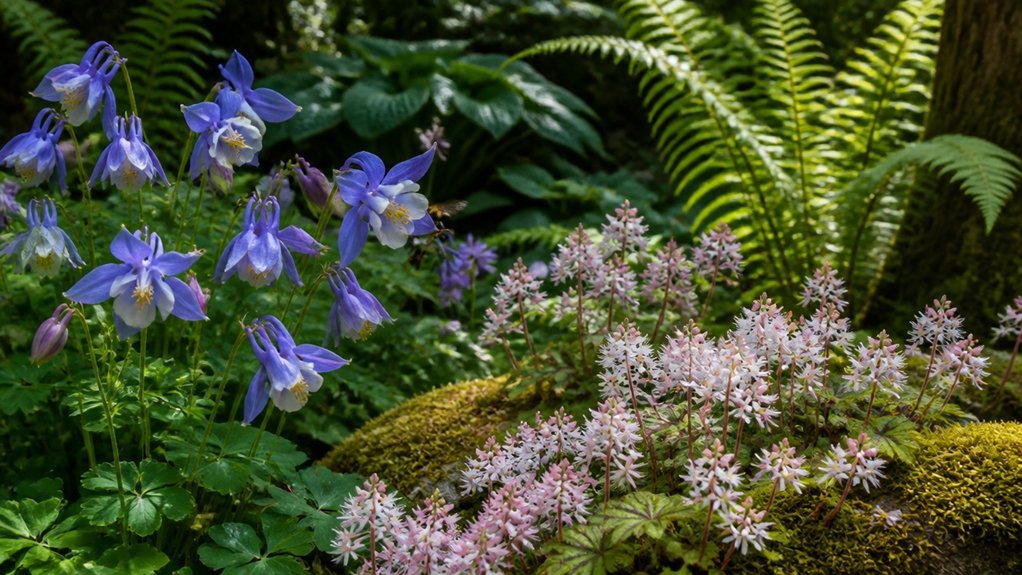
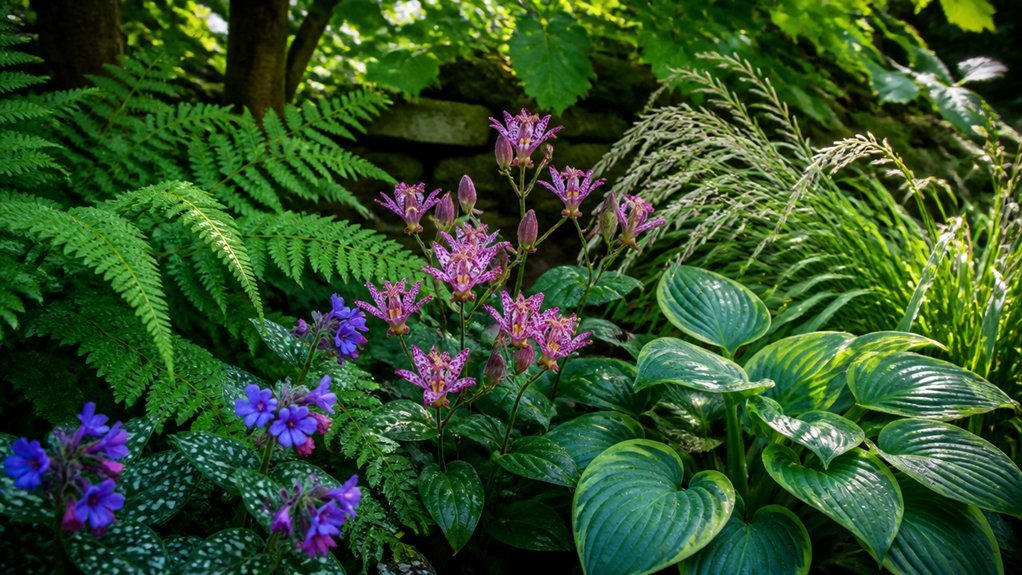
If your garden stays partly shaded, you can still support bees by choosing plants that thrive without full sun. Start with woodland favorites like astilbe, lungwort, and foamflower; they offer nectar and pollen while handling dappled light.
You can also plant hellebores, columbine, and coral bells for long bloom windows and easy access. In wetter spots, try Japanese anemone or Siberian bugloss. Herbs such as mint and chives flower well in partial shade, and bees visit them often.
Implementing native, bee-attracting plants supports pollinator health and encourages biodiversity in your garden as well. Make sure to group several of the same plant together to make it easier for bees to find and work your garden efficiently.
What Makes Shade Flowers Bee-Friendly?
What makes shade flowers bee-friendly is a combination of accessible blooms, steady nectar or pollen, and the right flower shape for foraging in lower light.
You’ll help bees most when flowers open wide enough for easy landing and offer rewards they can reach without strain. Soft colors can still guide them, but scent and bloom density matter too. Shorter petals and shallow tubes often work best because they don’t hide the food source.
- Provide easy landing surfaces
- Choose flowers with visible centers
- Favor nectar-rich blooms
- Include pollen-rich options
- Pick forms suited to small bees
When you match these traits, you support efficient visits and keep bees moving through shaded spaces with less effort.
How to Plant a Shade Pollinator Garden
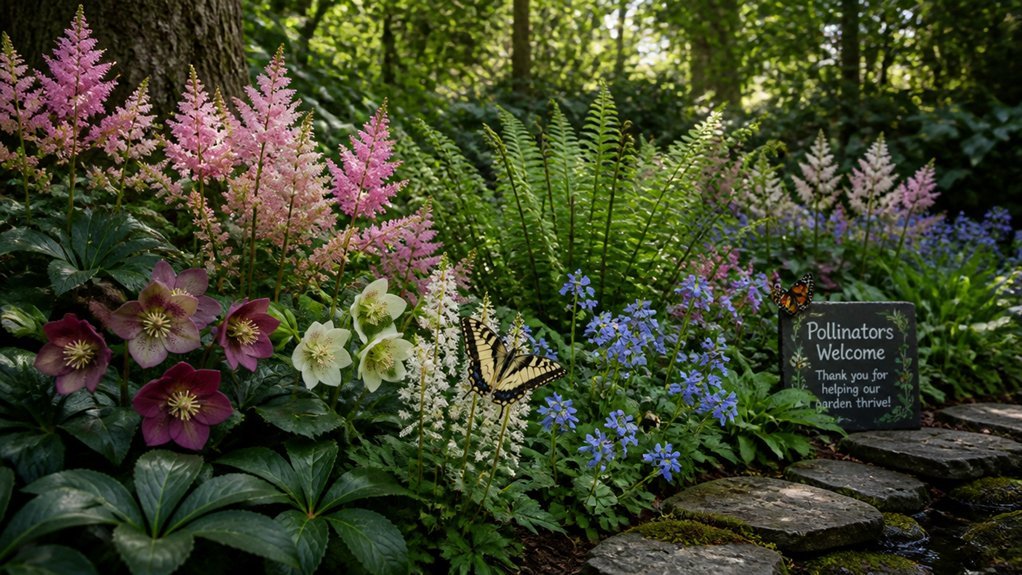
Once you know which shade flowers attract bees best, you can turn that knowledge into a planting plan that fits your space. Start by mapping light patterns across your yard, then choose spots with dappled sun, morning light, or bright shade.
Improve the soil with compost so roots can spread and moisture stays even. Group plants in clusters of three or more, since massed blooms help pollinators find food faster. Mix heights by placing taller plants behind shorter ones, and leave small open areas for easy flight paths.
Water deeply after planting, then mulch lightly to hold moisture and suppress weeds. Skip broad-spectrum pesticides, and let native plants anchor the design. Incorporate native wildflowers into your garden to support local pollinator species, ensuring a thriving and resilient ecosystem.
Repeat a few favorite species for a unified look that bees can navigate quickly.
When Shade-Loving Plants Bloom
Shade-loving plants often bloom in waves, so your pollinator garden can offer nectar from early spring through late summer. You’ll notice each species adds a different season of interest, and that staggered timing keeps bees, hoverflies, and butterflies visiting longer.
Spring bloomers like foamflower and bloodroot wake up first, then midseason favorites such as columbine and wild geranium take over. By late summer, toad lily and monkshood can extend the show in cooler corners.
- Early bloomers feed emerging pollinators.
- Midseason flowers support peak activity.
- Late blooms bridge seasonal gaps.
- Mixed bloom times build steady forage.
- Shaded beds stay useful for months.
Track bloom windows in your yard, and you can choose plants that keep the nectar flowing when sunny borders have already faded. Native species are especially beneficial for supporting regional pollinators year-round.
How to Care for Shade-Loving Bee Plants
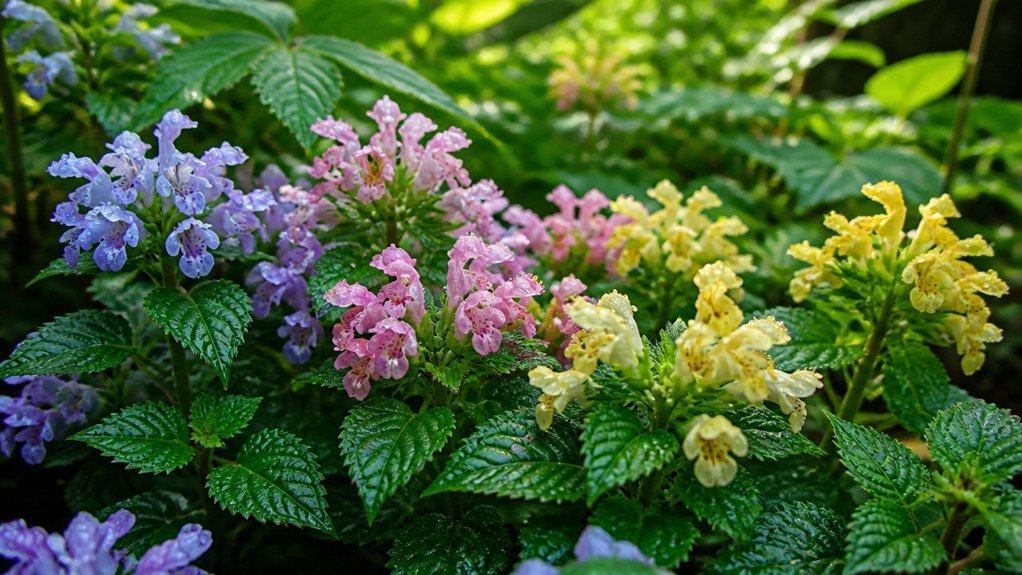
To keep shade-loving bee plants thriving, you’ll want to give them the right balance of moisture, mulch, and light. Water deeply when the top inch of soil feels dry, and let drainage prevent soggy roots.
Add two to three inches of organic mulch to conserve moisture, cool the soil, and suppress weeds, but keep it away from stems.
Choose partial shade with dappled sun, since too much darkness can reduce blooms. Feed lightly with compost in spring, because rich soil supports steady growth without forcing weak, leafy plants.
Prune spent flowers to encourage more nectar-rich blossoms, and watch for pests in damp corners. If plants start leaning toward light, rotate or trim nearby branches so they stay healthy and accessible to pollinators.
For optimal health, selecting beesafe finishes that provide additional protection and longevity can help your plants withstand environmental stresses.
Frequently Asked Questions
Which Shade Plants Attract Butterflies as Well as Bees?
You can plant bee balm, astilbe, foxglove, toad lily, and coral bells; they’ll draw butterflies too. Choose nectar-rich blooms, keep them moist, and you’ll support both pollinators in shadier spots.
Can Shade-Loving Plants Support Hummingbirds Too?
Yes, you can attract hummingbirds with shade-loving plants if you choose nectar-rich blooms like columbine, coral bells, and impatiens. You’ll also want tubular flowers and a steady bloom season for reliable visits.
Do Shade Gardens Need Companion Plants for Better Pollination?
Yes, you do need companion plants if you want better pollination. You’ll attract more bees, butterflies, and hummingbirds by mixing bloom times, flower shapes, and nectar sources, even in shady spots, for steadier visits.
Are Native Shade Plants Better for Local Pollinators?
Yes, you’ll usually help local pollinators more with native shade plants because they’ve coevolved with them. You’ll provide familiar nectar, pollen, and habitat, though some nonnatives can still offer useful forage.
Which Shade Flowers Provide the Most Nectar?
You’ll usually get the most nectar from bee balm, foxglove, columbine, and coral bells in partial shade. Plant them where they thrive, and you’ll support more pollinators with steady, rich nectar.
In Summary
You can still support bees, even in low light. By choosing shade-loving plants that offer nectar, pollen, and steady blooms, you give pollinators a reliable food source where many gardens fall short. Plant a mix of species, keep the soil healthy, and water wisely so your shade garden thrives. With a little care, you’ll create a cool, colorful space that bees will return to all season long.