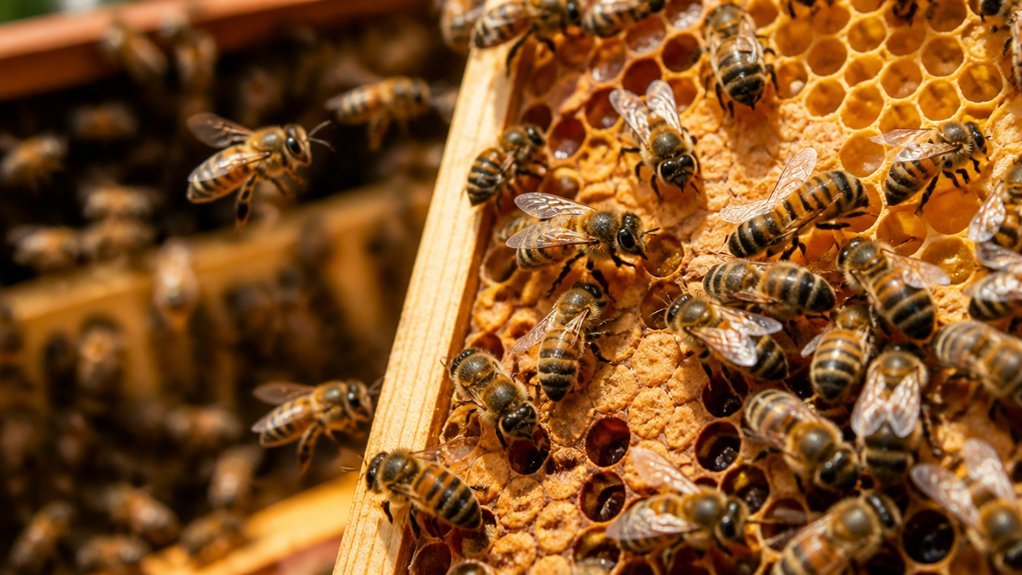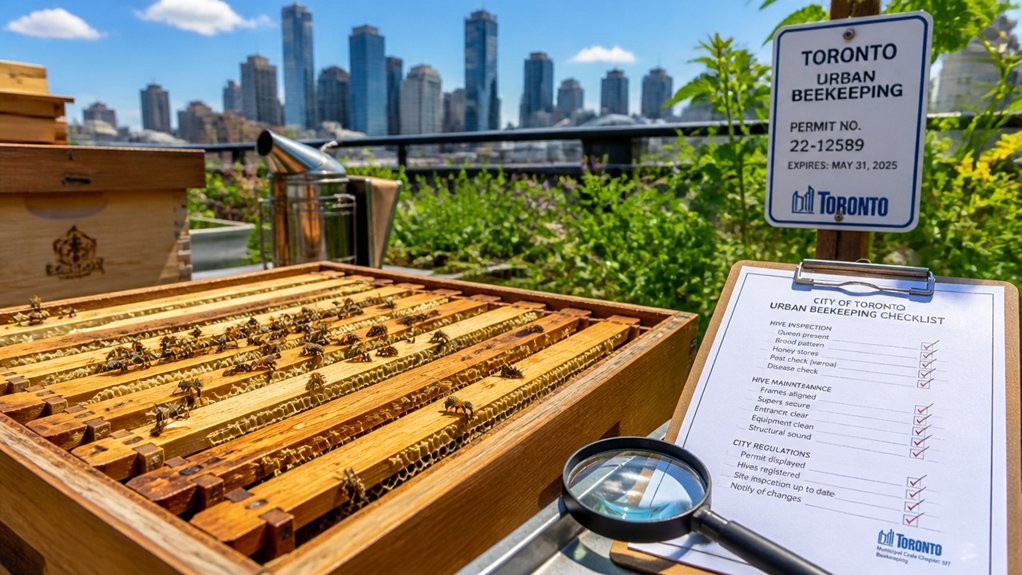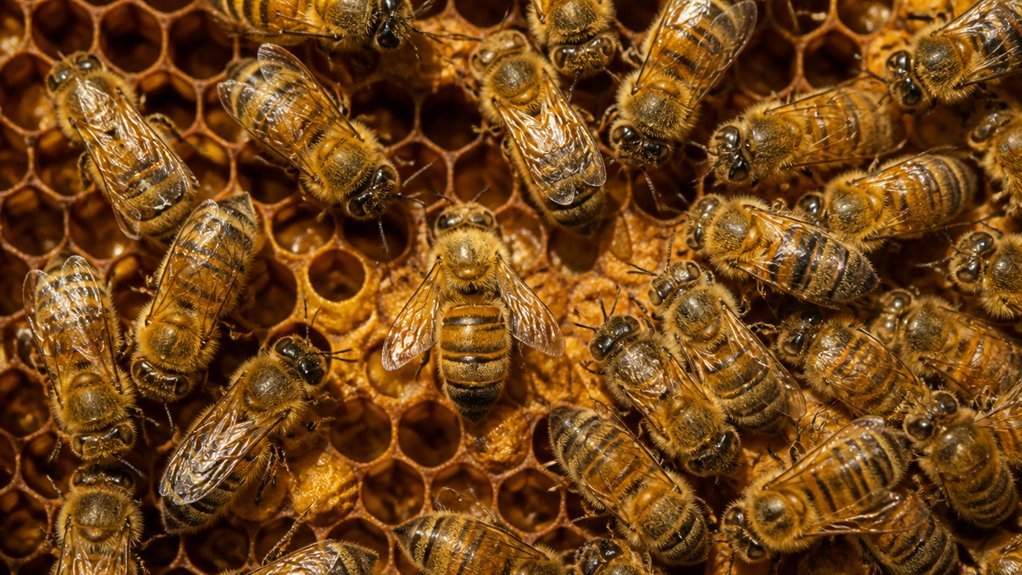
Honey bees communicate in colonies in at least 10 ways you can spot: the waggle dance, round dance, pheromones, tremble vibrations, antenna taps, body contact, trophallaxis, buzzing, piping sounds, and food sharing. They use these signals to direct foraging, warn of danger, care for brood, and keep the hive organized. If you want a clearer picture of how each message works, there’s plenty more to uncover below.
How Honey Bees Communicate
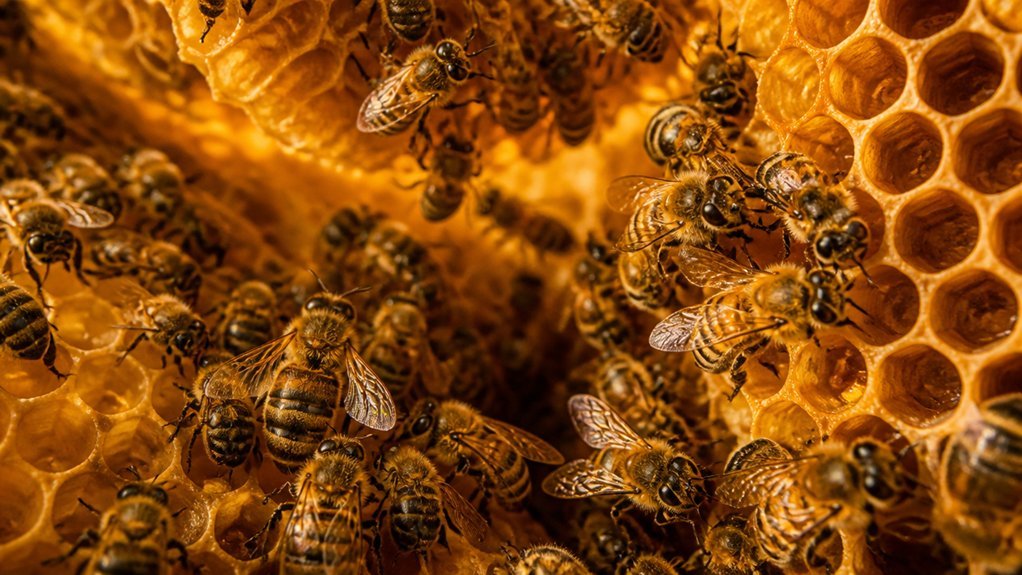
Honey bees communicate through a mix of dances, chemical signals, and sounds that help the colony work as one. You can watch them share important updates by vibrating their bodies, releasing pheromones, and touching antennae. These signals let you learn how a hive stays organized without chaos.
When danger appears, alarm scents spread quickly, and nearby bees react fast. Workers also use subtle movements to guide one another during routine tasks, like caring for young or defending the nest. Each message is brief but effective, so the colony saves time and energy.
If you observe closely, you’ll see that every bee plays a role in passing information, helping the whole group respond as a single, connected community.
The Waggle Dance for Food Sources
When a worker bee finds a rich patch of nectar or pollen, it returns to the hive and performs the waggle dance to show others where to go. You can think of this dance as a living map.
When a worker bee finds rich nectar or pollen, it returns to the hive and performs the waggle dance as a living map.
The bee waggles its body in a straight run, then loops back and repeats, and the angle of that run tells you the direction of the food in relation to the sun. The longer the waggle, the farther you should fly.
Bees nearby watch closely, touch the dancer, and sense the vibrations she makes. By reading these signals, you learn where profitable flowers grow and how far away they are.
This precise communication helps your colony save time, share resources, and gather food efficiently. Understanding colony communication allows beekeepers to better appreciate how bees coordinate their foraging efforts.
The Round Dance for Nearby Nectar
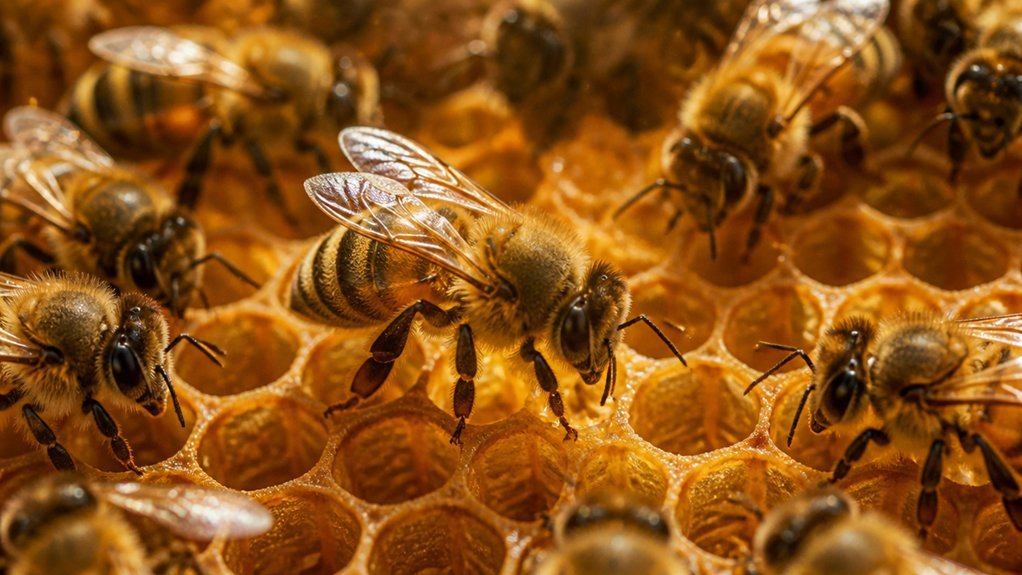
For food that’s very close to the hive, bees use the round dance instead of the waggle dance. You can think of it as a simple message: “Come look nearby.” A forager runs in a small circle, then reverses direction and keeps looping, over and over. She doesn’t need to point out a precise angle or distance because the nectar lies close enough that your colony can find it through scent and local searching. Other bees follow the dancer, watch the movement, and then leave the hive to inspect the surrounding area. The round dance tells you the target is near, so the colony can act quickly without extra detail. The strength of the pheromone blend in the dance also helps attract nearby scouts, indicating the importance of pheromone consistency for successful communication. It’s brief, direct, and perfectly suited to easy-to-reach flowers close by.
How Pheromones Coordinate Hive Activity
You can see how pheromones keep the hive working as one, with the queen’s mandibular signals helping maintain order. When danger hits, alarm pheromones spread fast and trigger a rapid defense response. Brood pheromones also guide worker bees, telling you when to feed, clean, or care for the young. Additionally, the use of Varroa mite treatments can influence colony health and communication by reducing mite infestations that disrupt normal hive activity.
Queen Mandibular Signals
Although the queen bee never gives orders in the human sense, her mandibular pheromones quietly shape nearly everything in the hive. You can think of these chemical signals as the colony’s steady background message.
Worker bees touch, feed, and groom the queen, then spread her scent through the nest. That scent helps suppress worker egg laying, guides caregivers, and keeps the colony organized around her presence.
You’ll also notice that a strong queen signal supports smooth brood care and signals that the colony is functioning well. When her pheromone levels change, workers respond quickly by adjusting their behavior and attention to the queen.
In this way, you can see how one bee influences thousands without a single sound.
Queen Pheromone Cages help maintain consistent release of her signals, ensuring stable colony communication.
Alarm Pheromone Alerts
The queen’s steady pheromones help keep the hive calm, but bees also rely on a very different chemical signal when danger strikes. When you disturb a worker, she releases alarm pheromone, and nearby bees instantly read the warning. You’ll notice them shift from routine tasks to defense, buzzing harder and targeting the threat.
This chemical message spreads fast, so the colony can react before damage grows. Natural, untreated fibers are often preferred for fuels because they produce clean, mild smoke that calms bees rather than agitating them.
- You detect danger through scent, not sight.
- You trigger teamwork without a leader’s command.
- You help the hive focus energy where it’s needed most.
Because the signal is so sharp, it can also recruit more guards and intensify the response. In this way, pheromones don’t just inform bees; they coordinate action and protect the colony.
Brood Pheromone Guidance
Brood pheromones act like a nursery signal inside the hive, telling worker bees where help is needed most. You smell these chemical cues and respond by feeding larvae, cleaning cells, and keeping brood warm.
As the brood grows, its scent helps you judge when to gather more pollen and nectar, since developing young need protein and energy. You also use these signals to balance labor across the colony, so more nurses stay near the brood nest while foragers head out.
This chemical guidance keeps the hive organized without wasted effort. By reading brood pheromones, you support healthy development, steady growth, and the colony’s ability to adapt quickly to changing needs. Additionally, consistent pheromone communication ensures the bees efficiently coordinate tasks, especially during periods of colony stress or resource scarcity.
Vibrations and Tremble Signals
When you watch honey bees use tremble signals, you see them use vibrations to tell nestmates to slow down food handing and rebalance work.
These vibrations spread through the hive as a clear message that other bees can feel and react to quickly. As a result, the colony shifts its activity and adjusts how workers share tasks.
Using precise and reliable hive thermometers and hygrometers, beekeepers can monitor environmental conditions, helping ensure the colony’s health and stability during these adjustments.
Tremble Signal Purpose
A subtle buzz can change the rhythm of a hive. When you watch worker bees tremble, you’re seeing a signal that asks for action, not alarm. The tremble signal tells nest mates to slow down, shift tasks, and prepare for new work.
You can think of it as a quick instruction from one bee to another, helping the colony stay balanced.
- It nudges bees to increase food-handling effort.
- It helps idle workers become active again.
- It supports smooth teamwork during busy times.
- These signals are often transmitted through beekeeping tools, ensuring effective communication within the colony.
You’ll notice that this behavior matters most when the colony needs order. Instead of chaos, the hive responds with coordination, and each bee adjusts its role.
Vibration Message Spread
As tremble signals ripple through the hive, nearby bees pick up the message through tiny vibrations in the comb. You can think of the comb as a living signal network: one worker shakes her body, and the wax transmits that motion to bees a few cells away.
Each pulse travels fast enough that you’ll notice how quickly the message spreads across crowded surfaces. Other bees feel these cues through their legs and antennae, then keep the chain moving by responding to the same motion.
Because the hive stays tightly packed, the vibration doesn’t need much distance to reach many nestmates. You’re watching a simple system that turns body movement into shared information, letting one bee broadcast a clear signal without using sound or odor.
Colony Response Changes
Once the tremble signals start circulating, the colony’s behavior changes fast. You can watch workers shift from routine tasks to urgent coordination, as vibrations tell them to slow down, fan out, or prepare for incoming nectar.
The signal doesn’t just warn; it reshapes the hive’s tempo and priorities.
- You see foragers pause and unload food sooner.
- You notice receivers recruit more workers to process nectar.
- You feel the hive tighten its focus on shared needs.
These body cues help you understand that bees don’t rely on one message alone. They combine touch, movement, and vibration to guide action.
When the colony responds this way, it stays flexible, efficient, and ready for changing conditions.
Additionally, the use of smart features in hive tools can aid beekeepers in monitoring hive activity and vibrations more precisely.
How Bees Use Food to Communicate
Inside a hive, food can become a message. When you watch worker bees share nectar or honey, you’re seeing more than feeding; you’re seeing information transfer. The taste, smell, and quality of the food help tell other bees where flowers bloom and how rich the source may be. A bee can sample what’s brought in and adjust its search, saving time and energy. Additionally, different essential oils used in supplements are known to help bees communicate health and colony needs through scent.
| Food trait | What it signals |
|---|---|
| Sweet, strong nectar | Better forage nearby |
| Thin, weak nectar | Less rewarding source |
You also notice that this sharing helps the colony focus effort on useful blooms. By moving food around, bees guide each other’s choices and keep the whole hive working toward the same goal.
Touch Cues Inside the Hive
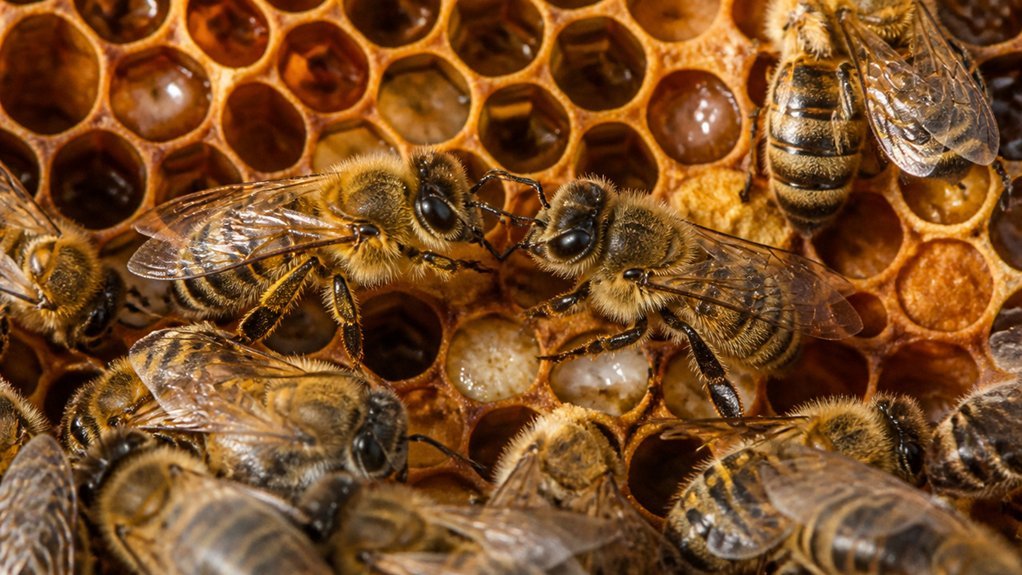
Inside the hive, you can see bees use antenna tapping signals to share quick messages.
You’ll also notice body contact messages that help them coordinate work and respond to changes.
Even the hive dance uses vibrations, letting bees feel directions and updates through touch.
Antenna Tapping Signals
When you watch bees moving through a crowded hive, you’ll notice that touch matters as much as scent and sound. With antenna tapping, you can see how bees quickly share signals in close quarters. One bee brushes another’s antennae, and that brief contact can ask, warn, or direct without noise. You’re observing a fast, precise language that works when space is tight.
- A tap can confirm identity and readiness.
- Repeated touches can guide movement toward food, brood, or space.
- Gentle antenna contact helps the colony stay coordinated.
You don’t need grand gestures to understand the hive; you just need to notice these tiny exchanges. Antenna taps let bees react instantly, keep order, and reduce confusion in a busy colony.
Body Contact Messages
Body contact messages let bees communicate through brief bumps, nudges, and presses as they move through the hive. You’ll notice these touch cues when one bee brushes past another, pauses, or shifts its body to signal direction, need, or status.
A worker can nudge nestmates to make space, guide them toward food, or alert them to a task nearby. Bees also use contact to share urgency without wasting time. Because the hive stays crowded, every touch counts.
You can think of these messages as fast, physical reminders that keep traffic organized and cooperation smooth. Instead of speaking loudly, bees rely on close-range contact to coordinate daily work, maintain order, and respond quickly to changing conditions inside the colony.
Hive Dance Vibration
Beyond simple bumps and nudges, bees also communicate through dance vibrations inside the hive. You can watch a forager press her body against comb and shake so quickly that nearby workers feel the signal through their feet and antennae.
These vibrations don’t just announce food; they can rally nestmates, calm tension, and guide attention to fresh nectar or danger. When you understand this touch-based language, you see a hive as a living network, not a noisy crowd.
- You read location through rhythm.
- You sense urgency through stronger pulses.
- You coordinate action without words.
Each buzzed motion matters because it lets you trace how bees share direction, energy, and purpose in tight darkness.
What Bee Buzzing Means in the Hive
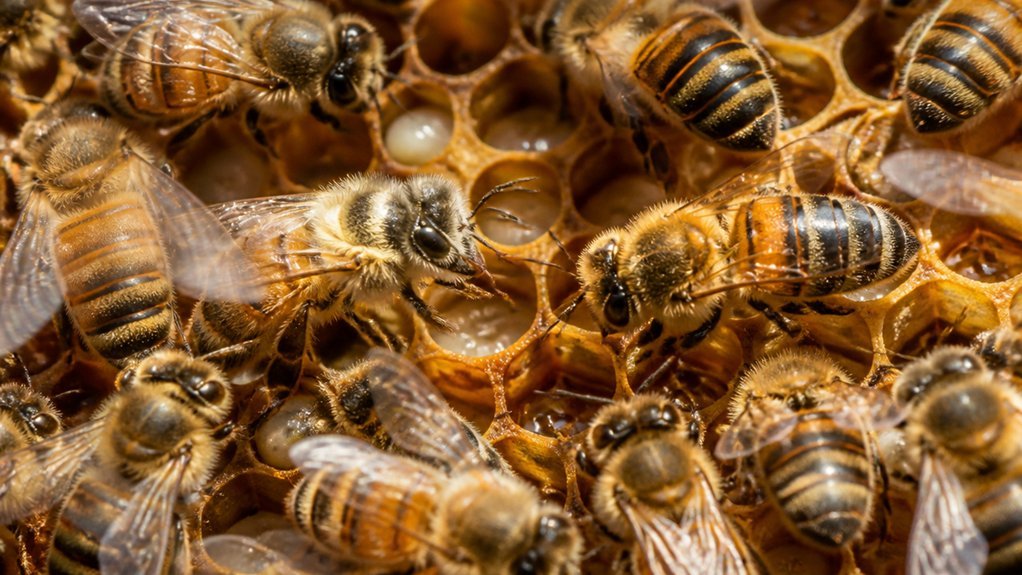
Inside the hive, buzzing is far more than background noise—it’s a working signal that helps bees coordinate daily life. You can hear workers change pitch when they’re alarmed, excited, or busy fanning air through the comb.
Quick, sharp buzzes often tell nearby bees to move aside or pay attention, while steadier vibrations can support grooming, feeding, or cleaning. You’ll also notice that buzzing helps transmit energy through the colony, letting bees respond fast without needing touch alone.
When the hive grows tense, the sound can rise and spread, giving you a clear clue that the colony is alert. By listening closely, you can read the hive’s mood and understand how bees stay organized, responsive, and ready for action.
How Bees Share Nesting Information
That same hive communication helps bees share nesting information when a colony needs a new home. You can watch scouts return and describe promising sites through repeated signals, letting other bees compare options without confusion. They don’t vote with words; they build confidence through urgency, repetition, and shared attention.
This system keeps the colony organized when choices matter most.
- Scouts search for spaces that feel safe, dry, and roomy.
- They report their finds with dance patterns and contact inside the hive.
- More bees inspect the site, then join the strongest choice.
You benefit from this process because it shows how a swarm reaches agreement fast. Instead of chaos, you see a coordinated search that turns scattered discoveries into one clear decision.
How To Read Bee Behavior In Your Hive
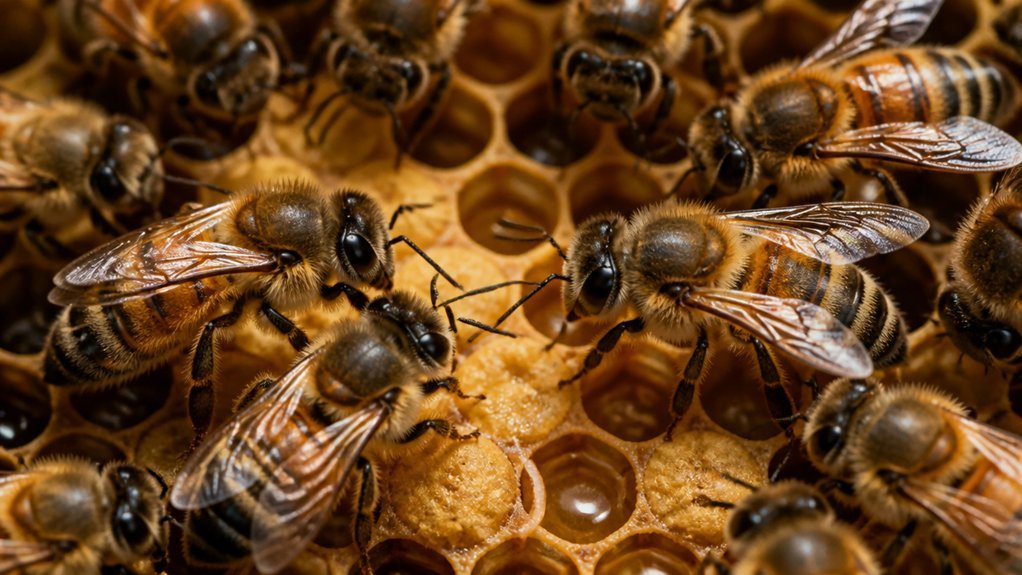
When you watch your hive closely, you can read bee behavior by looking for patterns in movement, sound, and posture. If bees fan near the entrance, they’re likely cooling the hive or spreading scent. If you see quick, jerky runs across the comb, they may be signaling food, a queen issue, or crowding. Listen for a steady hum; sharp rises can point to stress. Watch how bees face one another, touch antennae, and cluster.
| Behavior | What it may mean |
|---|---|
| Fanning at entrance | Cooling or scent sharing |
| Fast zigzag movement | Recruitment or agitation |
| Tight clustering | Brood care or swarming prep |
You’ll learn faster if you compare these clues with weather, nectar flow, and hive checks.
Frequently Asked Questions
How Do Scout Bees Decide Which Flowers Are Worth Reporting?
You judge flowers by nectar richness, pollen quality, scent, color, and ease of access. If a patch pays off well and keeps you safe, you’ll report it; weak blooms aren’t worth your effort.
Can Honey Bees Communicate With Different Species of Bees?
Yes, you can see honey bees signal other bee species indirectly through scents and shared flowers, but they don’t truly speak their dances across species. Each bee species mainly understands its own communication system.
Do Bees Change Their Signals During Rainy or Windy Weather?
Yes, you’ll notice bees change signals in rain or wind. They often shorten dances, use more touch, and delay flights. You might see less waggle signaling because weather makes sound and motion harder to read.
How Far Can Hive Vibrations Travel Through the Comb?
You can detect hive vibrations through the comb for several inches to a few feet, depending on comb density, hive structure, and signal strength. Stronger vibrations travel farther, while weaker ones fade quickly inside the colony.
What Happens if a Bee Misreads Another Bee’s Message?
You’ll usually see confusion, slower responses, or a wrong flight direction. Other bees can correct the mistake with more signals, and you might notice less efficient foraging until the message clears up.
In Summary
Now that you’ve explored how honey bees communicate, you can see how every waggle, buzz, touch, and scent helps the colony work as one. If you’re watching your hive, pay attention to these signals, because they can tell you when bees are finding food, organizing tasks, or reacting to change. The more you observe, the better you’ll understand your bees and support their health and success throughout the season.