The three qualities you want in an ideal breeder queen are strong egg-laying, a calm temperament, and reliable trait transmission. You need a queen that builds a solid brood pattern, keeps the hive easy to manage, and passes on useful genetics to her daughters. Good breeder queens also support steady colony growth and better disease resistance. If you keep going, you’ll see how to spot these traits in your hive and choose smarter replacement stock.
What Is a Breeder Queen Bee?
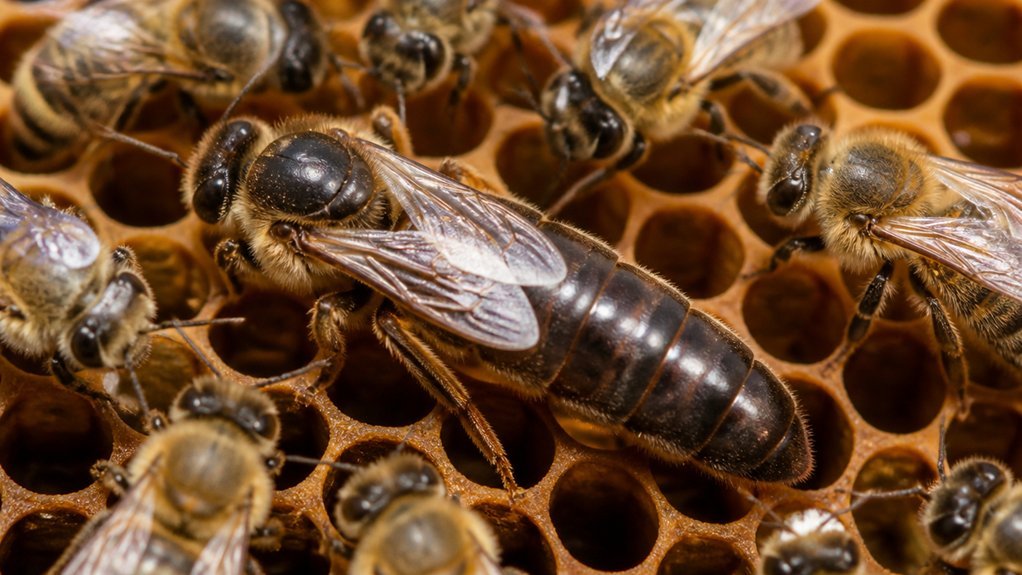
A breeder queen bee is a carefully selected queen used to produce the next generation of bees with desirable traits. You choose her to pass on genetics that support your beekeeping goals, such as colony strength, temperament, and productivity. A well-maintained breeder queen can contribute to queen rearing success and ensure healthier, more colony-efficient offspring. Unlike an ordinary queen, she serves as a foundation for planned breeding, so her offspring can help shape future colonies. You may raise her from eggs or larvae, then mate her under controlled conditions or from managed stock. In practice, you rely on a breeder queen to guide improvement across your apiary. She isn’t just a colony leader; she’s a genetic starting point. When you understand her role, you can make smarter decisions about queen replacement, stock selection, and long-term hive performance.
3 Traits of a Good Breeder Queen Bee
The best breeder queens usually stand out for three core traits: strong productivity, steady temperament, and reliable mating success. You want a queen that lays plenty of healthy eggs day after day, because high productivity supports a vigorous colony and gives you better stock to select from.
The best breeder queens stand out for productivity, calm temperament, and reliable mating success.
You also want calm behavior; a steady queen often helps keep her colony manageable, which matters when you’re raising drones and daughters for future breeding.
Finally, you need dependable mating success, since a queen that mates well can pass on traits more consistently. When you focus on these three qualities, you improve your chances of producing strong, balanced bees.
Maintaining optimal queen cage conditions is crucial to ensure successful introductions and reduce stress during colony integration.
Keep your attention on performance, behavior, and reproduction, and you’ll spot better breeder candidates faster in your apiary.
How Do You Evaluate a Breeder Queen Bee in Your Hive?
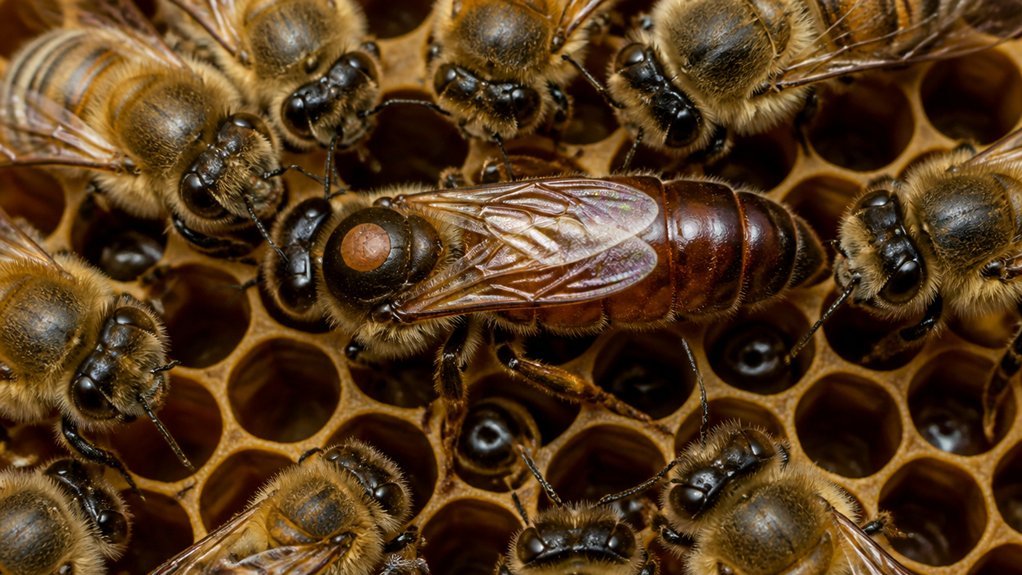
To judge a breeder queen in your hive, you need to look beyond reputation and check how she performs in real conditions. Watch these signs:
- Brood pattern: You want solid, even brood with few gaps, because that shows strong fertility.
- Population growth: You should see the colony expand steadily when forage is available.
- Temperament: You need a calm hive, since aggressive colonies can signal poor genetics.
- Disease resistance: You should inspect for hygienic behavior, low mite levels, and healthy workers.
- Queen excluder compatibility: Ensuring the queen doesn’t slip into honey supers often depends on effective excluder fit, which is crucial for maintaining brood-free honey supers.
Also, compare her daughters with other lines in your apiary. If they produce well, overwinter strongly, and stay manageable, she’s earning breeder status.
Track records, not guesses, and replace queens that don’t keep up.
Frequently Asked Questions
How Old Should a Breeder Queen Bee Be?
You should use a breeder queen that’s about one to two years old, ideally in peak laying condition. She’ll usually produce stronger, more consistent offspring, though you can select younger queens if they perform well.
What Time of Year Is Best for Selecting Breeder Queens?
Spring and early summer’s best, when you can choose vigorous queens from booming colonies. You’ll see peak brood patterns, strong nectar flow, and better mating conditions, so your selections’ll be more accurate.
Can Breeder Queens Improve Honey Production?
Yes, you can improve honey production by selecting breeder queens with strong productivity traits, good foraging behavior, and healthy colonies. They’ll pass those advantages to offspring, helping your bees gather more nectar efficiently overall.
How Many Drones Should Mate With a Breeder Queen?
You should aim for 10 to 20 drones to mate with your breeder queen. That gives you enough genetic diversity for strong colony performance while keeping her offspring fairly consistent and predictable.
Should Breeder Queens Come From Different Genetic Lines?
Yes, you should source breeder queens from different genetic lines to boost diversity, reduce inbreeding, and strengthen colony traits. You’ll usually get healthier, more resilient offspring when you pair varied, well-selected lines.
In Summary
Choosing the right breeder queen can make a big difference in your hive’s future. You want a queen that lays strongly, stays calm, and helps produce healthy, productive bees. When you evaluate her in your own hive, watch for consistent patterns, not just one good day. If she shows the qualities you need, she’s worth breeding from. Keep selecting carefully, and you’ll strengthen your colonies for seasons to come.