Queen pheromones help your hive stay calm, organized, and productive by signaling that a fertile queen is present. They guide worker tasks, support brood care, suppress worker egg laying, and reduce swarming pressure. When those signals are strong, you’ll see steady feeding, clean comb, and better colony balance. If the queen’s scent weakens, workers can become restless and disorganized, which often warns you that the hive needs attention and more insight follows.
What Do Queen Pheromones Do in the Hive?

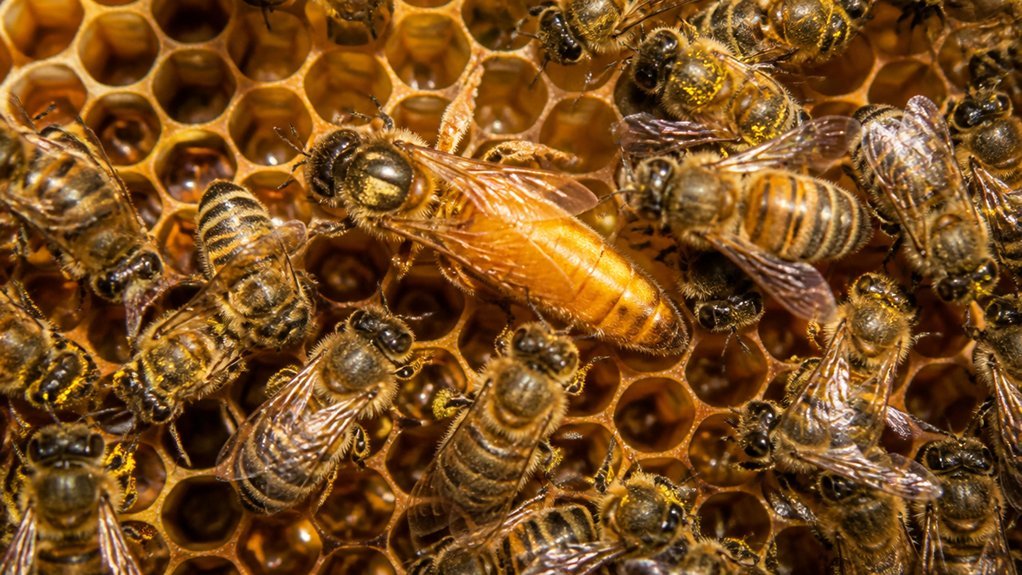
Queen pheromones help keep the hive organized by sending chemical signals that guide worker behavior. You can think of them as the queen’s invisible message system, and they tell the colony that a fertile leader is present.
Queen pheromones help organize the hive by signaling a fertile leader and guiding worker behavior.
These scents help maintain stability, support brood rearing, and reduce chaos inside the nest. When you sense a strong queen signal, you’re seeing a hive that’s more likely to stay coordinated and productive.
The pheromones also help workers recognize their social role and keep the colony focused on survival. Without these signals, the hive can become less orderly and more stressed, which can weaken overall health. Using specialized queen cages during introductions ensures these vital signals are maintained, promoting acceptance and colony wellbeing.
In short, queen pheromones act like a constant status update that keeps the colony functioning smoothly.
How Queen Pheromones Control Worker Behavior
Because of these chemical cues, worker bees adjust what they do throughout the day. You can think of queen pheromones as a steady signal that helps you see how the colony stays organized.
When the queen releases them, workers keep brood care, feeding, comb building, and foraging in balance. You’ll notice that these cues also help workers coordinate who stays inside and who leaves to gather nectar or pollen.
The signals suppress unnecessary reproductive activity, so you don’t get energy wasted on egg laying by workers. They also encourage grooming and close contact, which spreads the message through the hive.
In this way, queen pheromones don’t just influence one bee; they guide the behavior of many bees at once, keeping tasks aligned with colony needs. Effective pheromone signaling is also essential for maintaining hive stability and preventing drone development in worker bees, colony regulation.
What Are the Signs of Weak Queen Signals?
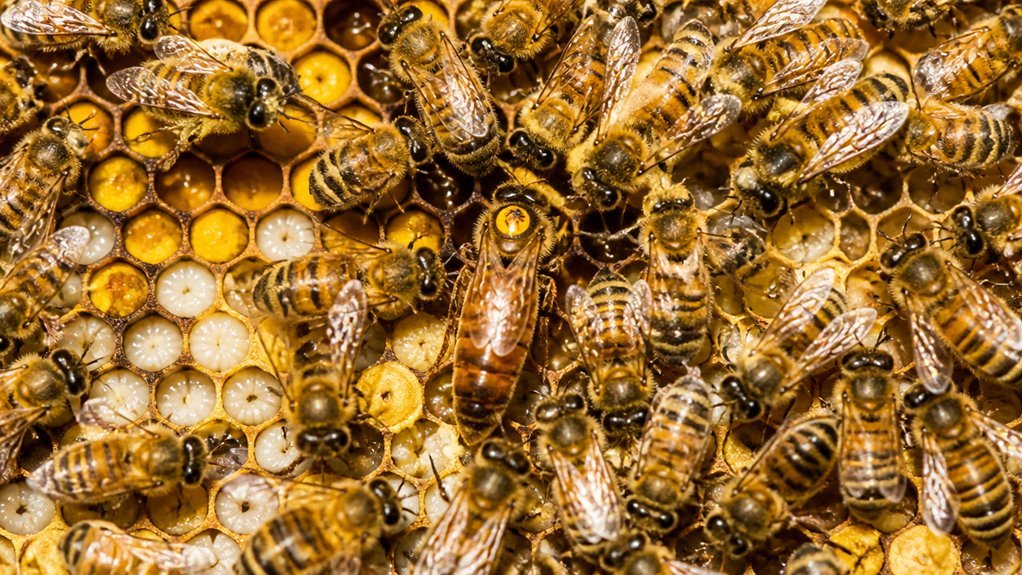
When queen pheromones weaken, you’ll usually notice the hive’s order start to fray. You may see workers move more erratically, hesitate at tasks, or ignore normal cues from the center of the colony. The bees can seem restless, noisy, or less coordinated than before.
You might also spot a drop in grooming and a rise in aimless wandering across combs. Another clue is uneven attention to the queen herself; attendants may cluster less tightly or switch off quickly. In strong colonies, workers respond with steady purpose, but weak signals leave the hive feeling disorganized and uncertain. Pheromone blend strength and composition plays a critical role in maintaining the colony’s cohesion and overall health.
If you watch closely, these behavioral changes often appear before more serious colony problems, giving you a chance to assess the queen’s condition early.
How Queen Pheromones Affect Brood and Swarming
Strong queen pheromones help keep brood rearing steady and swarming in check. When you have a well-signaled queen, worker bees keep feeding larvae, cleaning cells, and maintaining a tight brood pattern. Her scent tells them the colony has a fertile leader, so they don’t rush to raise replacement queens.
That steady message also lowers the urge to swarm, because bees read strong queen signals as a cue that space and leadership are adequate. When those pheromones fade, you may notice scattered brood care, more queen cells, and a sharper push toward swarming. Proper excluder fit ensures that the queen remains in the brood area, helping to maintain consistent pheromone levels throughout the hive.
You can treat these changes as warning signs that the colony’s reproductive rhythm is slipping, and you should inspect promptly to see what’s driving the shift.
How Queen Pheromones Support Colony Health
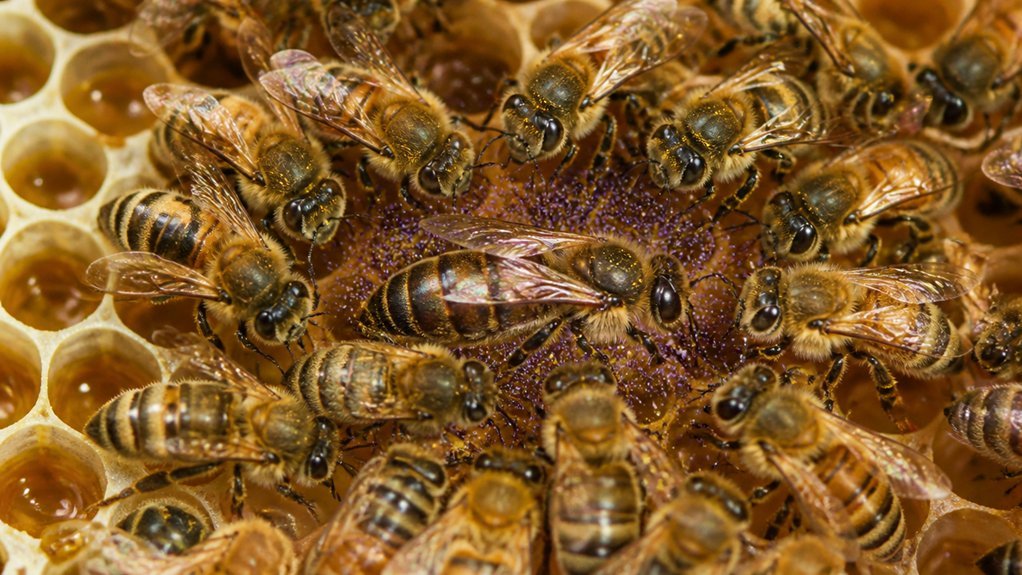
Queen pheromones do more than guide reproduction—they help hold the whole colony together. When you sense them, you see how they calm workers, reduce stress, and keep everyone focused on hive duties. These signals suppress unnecessary queen rearing, so your colony doesn’t waste energy on conflict.
They also support brood care by keeping nurse bees attentive and organized. With a strong queen scent, foragers, cleaners, and feeders work in sync, which helps the hive stay productive and resilient. Maintaining balanced microflora is essential for colony health, and queen pheromones contribute to this harmony.
If the pheromone level drops, you can expect confusion, unrest, and a higher risk of disease or poor brood care. In that way, queen pheromones act like a health signal, telling the colony it’s stable, coordinated, and ready to thrive.
Frequently Asked Questions
How Long Do Queen Pheromones Remain Effective in a Hive?
You’ll usually get effective queen pheromones for a few days to weeks in a hive, depending on queen strength, colony size, and ventilation; they fade quickly once the queen’s presence drops or she’s removed.
Can Queen Pheromones Be Artificially Replicated by Beekeepers?
Yes, you can’t fully replicate queen pheromones, but you can use synthetic lures or pheromone blends to influence bees. You’ll mimic some signals, yet they won’t match a living queen’s complex chemical profile.
Do Different Bee Species Respond to Queen Pheromones Differently?
Yes, you’ll see differences across bee species because each one detects and reacts to queen pheromones differently. You should expect variation in attraction, colony regulation, and signaling strength, depending on species, genetics, and social structure.
Can Environmental Stress Change Pheromone Distribution Inside the Hive?
Yes, you can see stress alter pheromone spread inside the hive. Crowding, heat, poor ventilation, and low food change bee movement and airflow, so signals mix differently and reach fewer workers effectively.
How Do Queen Pheromones Interact With Diseases or Parasites?
You’ll see queen pheromones help suppress worker reproduction and coordinate care, but diseases or parasites can disrupt signaling, weaken those effects, and sometimes make your colony less responsive, increasing stress and spread.
In Summary
When you understand queen pheromones, you can better read your hive’s health. Strong queen signals help keep workers calm, focused, and caring for brood, while weak signals can trigger restlessness, poor brood care, and swarming. By checking for these clues early, you can act fast and support a thriving colony. Pay attention to behavior, brood patterns, and hive temperament, and you’ll help your bees stay balanced, productive, and healthy all season long.