You can spot five key differences between young and old queen bees. Young queens move briskly, with workers clustering tightly around them, while older queens walk slower and less steadily. Young queens lay more eggs in tight, even brood patterns; older queens leave gaps and scattered brood. Younger queens also trigger calmer colony behavior, while older queens can raise swarm risk. If you keep going, you’ll see what these signs mean for hive health and management.
Why Queen Age Matters in a Hive
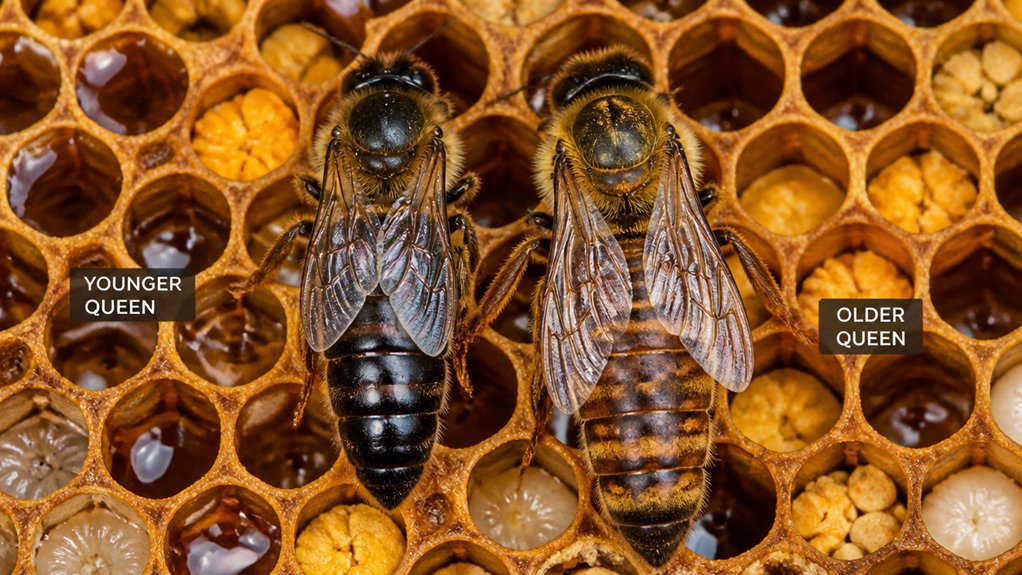
A queen’s age matters because it directly affects how well she can keep the hive organized and productive. You depend on her to lay enough eggs, release strong pheromones, and steady colony behavior. A healthy, mature queen will also have a better queen rearing capacity, ensuring the colony remains robust and resilient against diseases or seasonal challenges. When she’s younger, you usually get a more vigorous brood pattern, which helps the hive replace workers quickly and stay strong through seasonal demands. As she ages, her egg-laying often slows, and her chemical signals can weaken, so your bees may become less coordinated and more likely to drift into poor performance. If you keep track of her age, you can anticipate changes before they hurt honey production or swarm control. That awareness lets you plan timely requeening and protect the hive’s long-term health and stability.
How to Tell a Young Queen From an Old One
You can usually tell a young queen from an old one by looking at how she moves, lays, and holds the hive together. A young queen often walks briskly, with a smooth, confident pace, and workers cluster around her tightly. An older queen may move more slowly and seem less steady.
Watch for these signs:
- She fills comb with a strong, even pattern of eggs.
- She stays calm while workers attend her.
- She keeps the colony unified with little agitation.
You’ll also notice that young queens usually trigger a more active response from the hive. Older queens can still function well, but the colony may seem less lively around them. Additionally, inspecting these signs is often easier when the queen is properly secured in a cage or frame, ensuring safe and accurate assessment.
How Age Affects Egg Laying and Brood
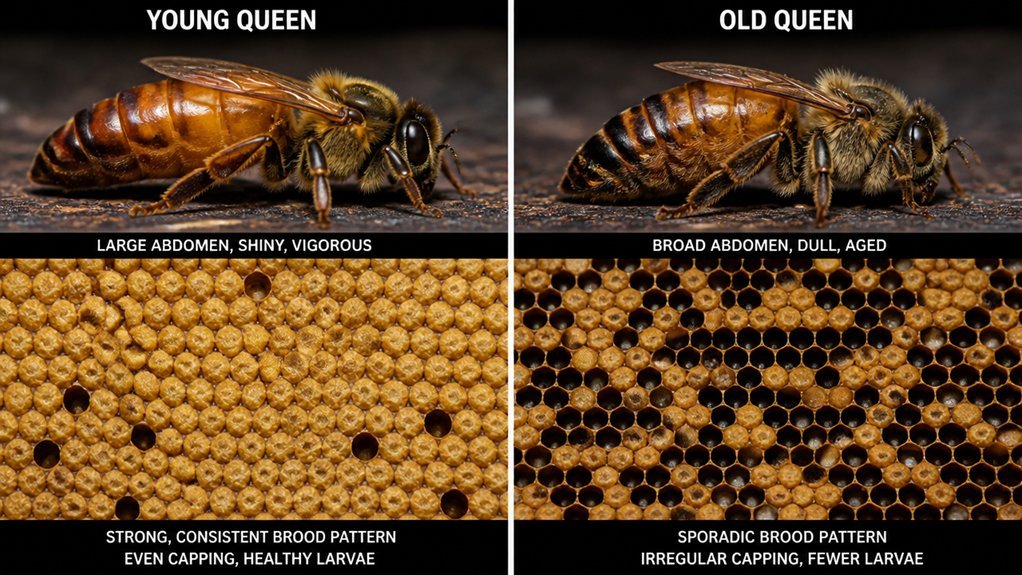
Age shows up most clearly in a queen’s egg laying and brood pattern. When you inspect a young queen, you’ll usually see a tight, solid patch of eggs, larvae, and capped brood. She lays with strong consistency, so the comb looks full and orderly. Foundation quality also influences the alignment and straightness of the comb she produces. As she gets older, you may notice gaps in the pattern, fewer eggs per frame, and a thinner brood nest. Her laying can become uneven from frame to frame, and you might find more empty cells between stages. You can also see brood that’s scattered instead of compact. That shift means she isn’t filling the colony’s needs as well as she once did, and the overall brood area often shrinks over time.
Signs of Swarm Risk and Requeening
Even a productive queen can start showing signs that a colony is preparing to swarm, especially when the brood nest becomes crowded and queen cells appear along the frame edges. You’ll also notice more bees clustering near the entrance, reduced space for the queen to lay, and a calmer, less productive brood pattern.
These clues tell you the colony may be shifting its focus from growth to division.
- Look for multiple queen cells, especially on lower frame edges.
- Check whether brood patterns have become spotty or uneven.
- Watch for congestion, crowded comb, and a drop in fresh eggs.
If these signs keep building, you may need to replace the queen before the colony splits. A younger queen usually signals stronger brood rearing and helps keep the hive organized and focused.
In addition, pheromone balance plays a crucial role in either maintaining colony cohesion or encouraging swarming behaviors.
How to Manage Young and Old Queens
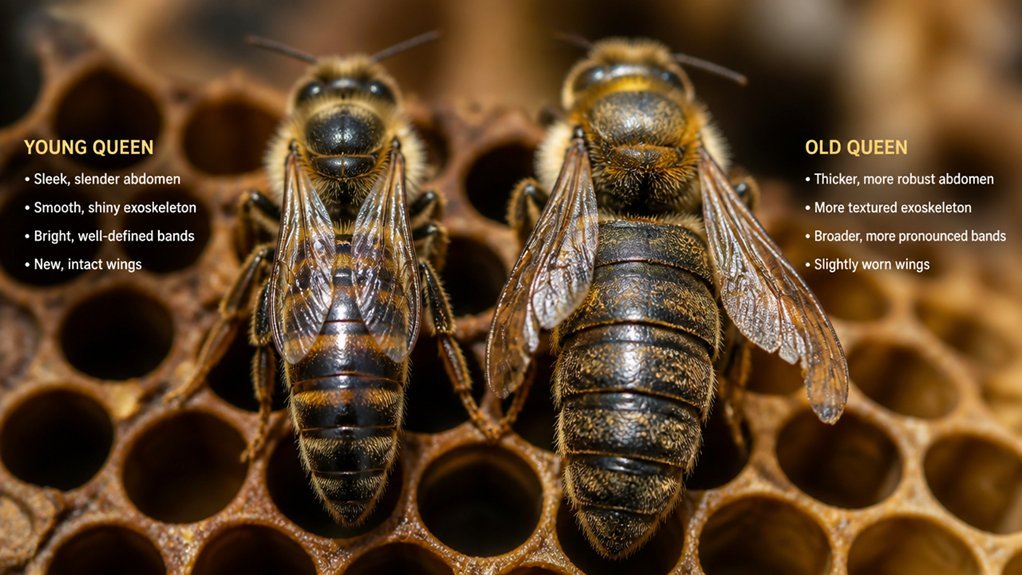
Once you’ve spotted swarm pressure or a slipping brood pattern, the next step is deciding how to work with the queen you have or replace her. With a young queen, you can often keep the colony steady by giving space, monitoring eggs, and avoiding unnecessary disruption. With an old queen, you should watch for spotty brood, slower buildup, and failing temperament. If she’s still productive, you can support her with strong nutrition and room. If she’s fading, requeen sooner rather than later. Using queen marking kits can help you quickly and easily identify her status during inspections.
Frequently Asked Questions
How Long Do Queens Usually Live?
Queens usually live about 15 to 20 years, though some can reach 30 with good care. You’ll need to watch their health, since aging can shorten their lifespan and reduce productivity.
Do Young Queens Produce Better Pheromones?
Yes, you’ll often find younger queens produce stronger, more consistent pheromones because they’re more fertile and active. Older queens can still signal well, but their pheromone output may decline over time.
Can an Old Queen Still Survive Winter?
Yes, an old queen can survive winter if you keep the colony strong, well fed, and insulated. You should monitor her health, because age lowers longevity and winter stress can still kill her.
When Should a Hive Be Requeened?
You should requeen when your colony becomes weak, aggressive, brood patterns turn spotty, or the queen’s laying drops. If she’s failing, replace her in spring or early fall for smoother recovery.
Are Young Queens Easier to Supersede?
Yes, you’ll usually find young queens easier to supersede because they’re more active and productive, so workers replace them less often. Older queens lose pheromone strength faster, making supersedure more likely.
In Summary
Knowing the age of your queen helps you manage your hive with confidence. A young queen usually lays more steadily, keeps brood patterns strong, and supports a calmer colony. An old queen may slow down, leave gaps in the brood, and raise swarm risk. By watching her size, behavior, and egg-laying, you can decide when to replace her. Stay observant, act early, and you’ll give your bees the best chance to thrive.