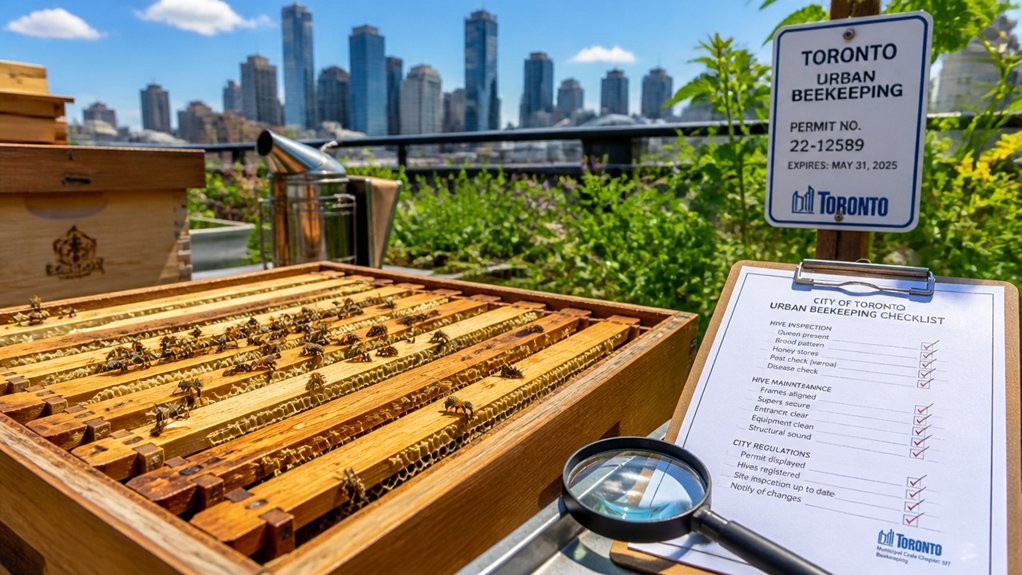
If your queen is laying irregularly, you’re usually seeing stress in the hive, poor queen health, or unstable brood conditions. A healthy queen lays a tight, compact brood pattern with few gaps, while an unhealthy one leaves patchy frames, scattered eggs, or mixed brood ages. Weather swings, low nutrition, pests, or disease can all disrupt laying. Check the brood pattern, watch for mites or crowding, and you’ll see what’s likely driving the problem.
What Normal Queen Laying Looks Like
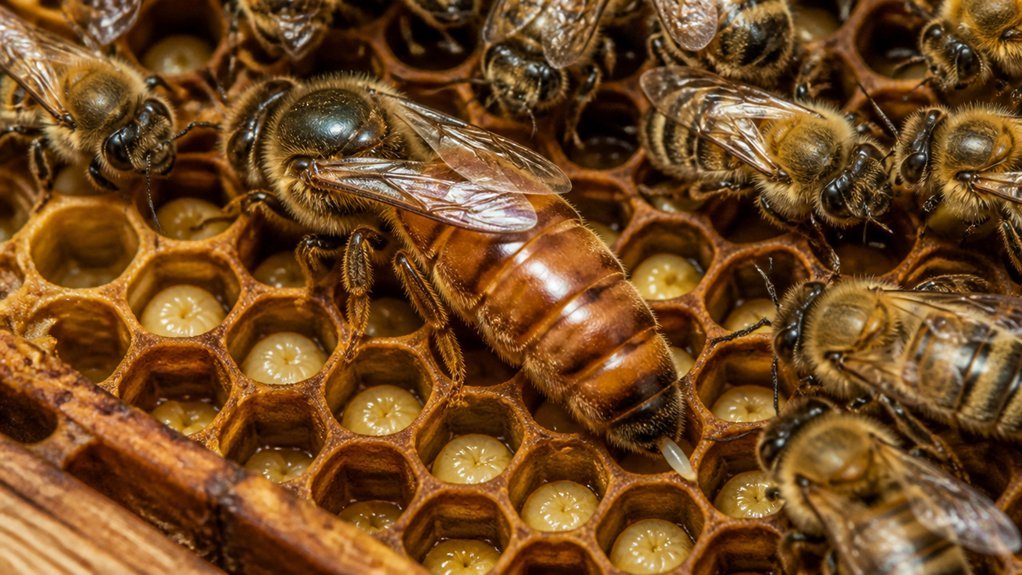
A healthy queen usually lays in a steady, dense pattern, with eggs placed neatly in the center of the brood nest. You should see a compact oval of brood that expands outward as new workers emerge.
She moves across each frame methodically, placing one egg in each cell, and you’ll notice very few empty gaps inside the pattern. Her laying usually follows the brood nest’s warmest area, where nurse bees surround her and care for developing larvae.
You can expect the brood to show clear stages: eggs, larvae, and capped brood arranged in a balanced sequence. Proper ventilation within the hive also supports healthy laying behavior by maintaining optimal humidity and temperature conditions. When your queen is laying normally, the colony looks organized, productive, and consistent, with brood coverage that reflects strong pheromone signaling and good hive conditions throughout the nest.
Signs of Irregular Queen Laying
When a queen isn’t laying normally, the brood pattern quickly stops looking neat and uniform. You may see scattered capped cells, empty patches, or a mix of eggs, larvae, and pupae that feels uneven.
A failing queen leaves brood uneven, with scattered capped cells, empty patches, and mixed stages throughout the frame.
The colony can seem restless, and you might notice workers moving with less purpose than usual. These changes can make you feel uneasy, because the hive no longer looks steady.
- Broken brood pattern — Your frames show gaps that shouldn’t be there.
- Uneven age groups — You spot brood stages mixed in a disorganized way.
- Reduced momentum — You sense the colony losing its usual energy and focus.
Pay attention to these clues early. They often tell you the queen’s performance has shifted, and your hive needs closer observation now. Using queen rearing kits that support healthy and consistent brood production can help reinforce the queen’s laying habits.
Common Causes of Irregular Queen Laying

You may notice your queen laying irregularly when poor nutrition limits her energy and egg production. Weather changes can also disrupt laying patterns, especially when temperatures swing or daylight shifts. If the problem continues, queen health issues may be the real cause and need prompt attention. Additionally, disruptions in colony feeding or inadequate supplement support can impact the queen’s laying cycle.
Poor Nutrition
Poor nutrition can quickly throw off a queen’s laying pattern because she needs a steady supply of protein, carbohydrates, vitamins, and minerals to maintain egg production.
When you skimp on pollen, syrup, or quality feed, she may slow down, lay spottily, or stop altogether. Weak nutrition also leaves young workers underfed, and they can’t support her properly.
You can improve her chances by checking stores and boosting balanced feed. Watch for these warning signs:
- Fewer eggs than usual
- Patchy brood that makes you worry
- A colony that feels fragile and stressed
If you act fast, you can help your queen recover before the whole hive feels the loss. Proper pollen substitutes ensure a complete amino acid profile and vital nutrients, crucial for maintaining healthy egg production.
Weather Changes
Weather can shift a queen’s laying pattern fast, especially during cold snaps, prolonged rain, or sudden swings in temperature. You may notice fewer eggs when your colony can’t keep brood nest conditions steady.
Bees must warm or cool the hive, and they often reduce foraging and brood rearing when weather turns harsh. Short stretches of bad weather usually pass, but longer periods can slow nectar flow and limit the resources your colony needs to support strong laying.
You can help by keeping the hive dry, sheltered from wind, and well ventilated. Check that the entrance stays clear so workers can move freely. Proper ventilation, including appropriate inner covers, can significantly influence hive climate and termite moisture buildup, helping bees maintain optimal brood conditions.
When conditions improve, the queen often resumes a more regular pattern as the colony stabilizes and stores recover.
Queen Health Issues
If the weather has settled and your queen still lays unevenly, her own health may be the problem. You should watch for signs of stress, injury, parasites, or infection, because these issues can disrupt her rhythm and leave you worried.
A young or aging queen can also slow down, and poor mating can cause spotty laying patterns. Inspect the colony calmly, and don’t ignore sudden changes in brood quality.
- Parasites can weaken her and make you feel helpless.
- Disease or injury may cut her laying short and trigger panic.
- Poor genetics or age can leave you facing a fading colony.
- Proper queen excluder fit and maintenance can prevent disruptions in hive traffic that may impact her laying behavior.
If you notice a pattern, act quickly. Replacing a failing queen often protects your bees and restores confidence.
Check Brood Pattern for Problems
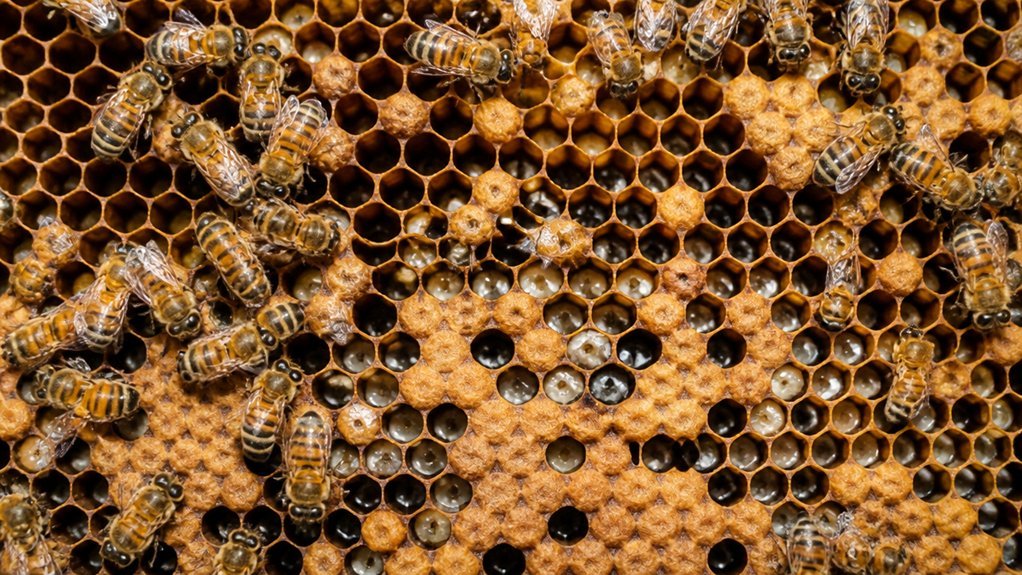
A healthy brood pattern tells you a lot about your queen’s performance, so take a close look at the frame and see whether the eggs and larvae are laid in a solid, even pattern or scattered with empty spots.
If you spot patchy brood, you should inspect whether the queen is missing cells, laying multiple eggs per cell, or failing to keep a tight pattern. Look for sunken cappings, irregular ages of larvae, and clusters of empty cells around developing brood. You can compare several frames to see if the problem repeats or stays isolated.
A strong pattern usually means the queen is laying well and the workers are caring for brood properly. If the layout looks weak across frames, the issue likely goes beyond normal variation and needs closer attention.
Monitoring your hive for signs of irregular laying, like brood pattern, can help you spot issues early and take corrective action.
Rule Out Weather and Nectar Dearth
Cold snaps, sudden heat, heavy rain, or a long nectar dearth can all make a queen seem irregular even when she’s healthy. When weather shifts, your colony may slow foraging, reduce brood rearing, and leave empty cells that look troubling. Don’t panic right away; watch whether conditions improve and laying rebounds after a few fair days. Using insulation wraps can help stabilize hive temperature and reduce stress during these fluctuations. Check the weather trend, inspect available forage, and note whether stores are shrinking. If the pattern matches poor flow or bad weather, give the bees time before you blame the queen.
Check Queen Age and Mating Problems

Older queens often start laying less steadily, so check her age first. If she’s two or more years old, you may see patchy brood, slower buildup, or longer gaps between eggs. That doesn’t always mean she’s failing, but age can reduce her sperm use and laying consistency. Regularly marking kits ensure you can easily monitor her condition and identify aging queens quickly.
Next, look at mating quality. If the queen never mated well, you might notice a drone-heavy pattern, poor brood coverage, or repeated supersedure attempts. You can inspect the brood nest for scattered eggs and spotty frames, then compare that with the colony’s strength.
If the pattern fits an aging or poorly mated queen, replace her sooner rather than later. A younger, well-mated queen usually restores steady laying and helps your hive recover faster.
How Pests Affect Queen Laying
Pests can stress your queen and throw off her laying pattern, especially when the colony feels under attack. You may also notice brood damage from mites, beetles, or other invaders that weakens healthy development. When pests build up, your queen often lays less consistently and the whole hive suffers. A Varroa mite infestation can significantly disrupt the normal reproductive cycle of your queen, leading to irregular laying patterns.
Pest Stress On Queen
When mites, lice, or beetles harass a queen, her egg laying can slow down or become erratic because the stress disrupts her normal behavior and weakens the colony around her.
You may notice her moving less, pausing more, or avoiding areas where pests cluster.
That pressure can make her respond unpredictably, which leaves you wondering why the pattern changed so quickly.
Your best move is to stay alert and reduce the pest load fast.
- You feel uneasy seeing activity drop around the queen.
- You worry when her rhythm shifts without warning.
- You gain confidence when you act early and protect the colony.
A calm, pest-free environment helps her focus on laying steadily again, and it gives you a better chance of restoring balance before the problem grows.
Brood Damage From Pests
If pests damage brood, the queen may slow down because the colony has to divert energy to repair, clean, and replace what’s been lost. When mites, beetles, or wax moths chew through larvae and pupae, your workers spend more time guarding cells and removing injured brood instead of feeding the queen. That strain can reduce her laying rate and make her pattern look spotty.
You may also see fewer healthy nurse bees, which means less royal jelly and weaker support for egg production. Check frames for punctured cappings, slimy larvae, or scattered dead brood. If you catch the infestation early, you can protect the brood nest, ease colony stress, and help your queen return to a steadier, more consistent laying cycle.
How Disease and Brood Stress Affect Laying
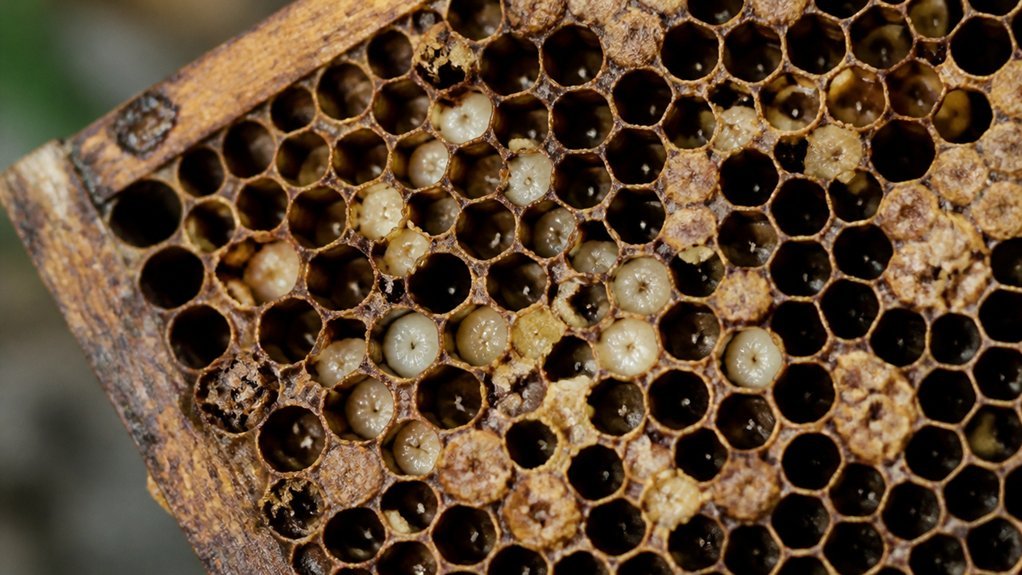
Disease can quietly throw off a queen’s laying pattern, because infection drains her energy and can disrupt the signals that keep egg production steady. You may notice fewer eggs, uneven brood, or long pauses between lays when her body fights bacteria, fungi, or viruses.
Brood stress adds more strain: if larvae are crowded, chilled, or overwhelmed by sick nestmates, the colony’s care system wobbles, and your queen can slow down. That slowdown isn’t random; it’s her response to pressure inside the hive. Watch for these emotional warning signs:
- Sparse brood that makes you worry
- Patchy laying that feels unsettling
- A weak colony tone that signals trouble
When disease and brood stress stack up, your queen can’t maintain her normal rhythm, and the whole hive feels the impact.
How to Improve Conditions for Better Laying
To help your queen lay more steadily, start by making the hive easier to manage: keep brood nest conditions warm, dry, and uncrowded, and give the colony enough space, food, and ventilation to stay balanced.
Keep the brood nest warm, dry, and uncrowded, with enough space, food, and ventilation for steady laying.
You can improve laying by checking for crowded comb, adding supers before the bees run short on room, and keeping frames centered so the brood nest stays organized.
Make sure nectar and pollen stores stay adequate, because a food shortage can slow egg production.
Reduce drafts and excess moisture, since damp, chilly brood areas can disrupt normal activity.
Handle the hive gently and avoid unnecessary interruptions, so the workers can keep feeding and warming the queen efficiently.
When conditions stay stable, your queen can focus on laying consistently.
When to Requeen Your Hive
You should requeen your hive when you see clear signs of queen decline, like spotty brood, fewer eggs, or weak laying.
If the queen’s performance keeps dropping despite good conditions, a replacement can help restore brood pattern and colony strength.
Time the requeen before the hive loses momentum, so your bees can recover quickly.
Signs Of Queen Decline
If your queen starts laying irregularly, the hive usually gives you a few clear warning signs before she fails completely. You may spot patchy brood, scattered eggs, or many empty cells where solid patterns should be.
Workers can grow restless, make more supersedure cells, and seem less coordinated around the brood nest. You might also notice fewer young bees emerging, which leaves your colony feeling thin and uneasy.
- Patchy brood: You see broken patterns and feel the loss of momentum.
- Queenless behavior: The hive gets noisy, tense, and disorganized.
- Weak replacement signals: Workers start raising new queens because they no longer trust her.
When you notice these signs, act quickly. A failing queen can drain your hive’s strength fast, and you deserve a colony that feels stable, productive, and alive.
Timing A Requeen
Requeening works best before the hive slides too far backward, so watch the colony’s pattern, temperament, and growth instead of waiting for a complete collapse. If the queen lays spotty brood, the population shrinks, or workers turn defensive, you should act while the hive still has enough strength to raise a new queen or accept one.
Spring and early summer usually give you the best results because nectar flow and warm weather help the colony recover quickly. Don’t wait until drone brood dominates or disease spreads through weak comb.
If you see repeated failures after your checks, replace the queen sooner rather than later. A timely requeen keeps brood production steady, supports honey buildup, and gives your colony a better chance to rebound fast.
How to Prevent Future Laying Problems
To keep your queen laying steadily, focus on the basics every season: provide a strong, healthy colony, maintain adequate food stores, and inspect regularly for pests, disease, or signs of stress. You can prevent most laying problems by acting early, not after brood gaps appear.
Keep comb clean, reduce overcrowding, and replace failing queens before the colony weakens. Feed when nectar dries up, and don’t let mites build up unnoticed.
A calm hive lays better than a stressed one, so handle frames gently and avoid unnecessary disruption.
- Check brood patterns often so you catch trouble fast.
- Support the colony before shortages trigger panic.
- Protect your queen from mites, disease, and neglect.
Frequently Asked Questions
Can a Queen Lay Fewer Eggs During a Honey Flow?
Yes, she can lay fewer eggs during a honey flow if your bees divert nectar-processing effort. You might still see strong foraging and stored nectar, while brood rearing briefly slows because conditions or colony needs change.
Does a Virgin Queen Lay Irregularly Before Mating?
Yes, you’ll often see a virgin queen lay irregularly before mating. She may start and stop, produce scattered eggs, or delay laying altogether until she mates and her egg-laying becomes steadier.
Can a Split Hive Cause Temporary Laying Gaps?
Yes, you can see temporary laying gaps after a split hive. You’ve disrupted brood nest cohesion, so your queen may pause briefly while workers reorganize, settle, and she resumes steady egg-laying.
Should I Worry if Only One Frame Has Brood?
Not necessarily; you should watch closely. You may only have a small colony or a recently split hive, and your queen can still expand brood soon. Check for eggs, food, and space, then reassess in a week.
Can Transportation Stress Affect Queen Egg Laying?
Yes, transportation stress can briefly disrupt your queen’s egg laying. You may see a short pause or spotty brood after moving hives. Keep her undisturbed, provide food, and she’ll often recover soon.
In Summary
If your queen is laying irregularly, don’t panic. First, check whether the brood pattern is normal for the season and make sure weather, nectar flow, and colony stress aren’t affecting her. Look for signs of disease or poor brood health, too. If conditions improve but the pattern still looks spotty, it may be time to requeen. With regular inspections and good hive management, you can help your colony stay strong and productive.