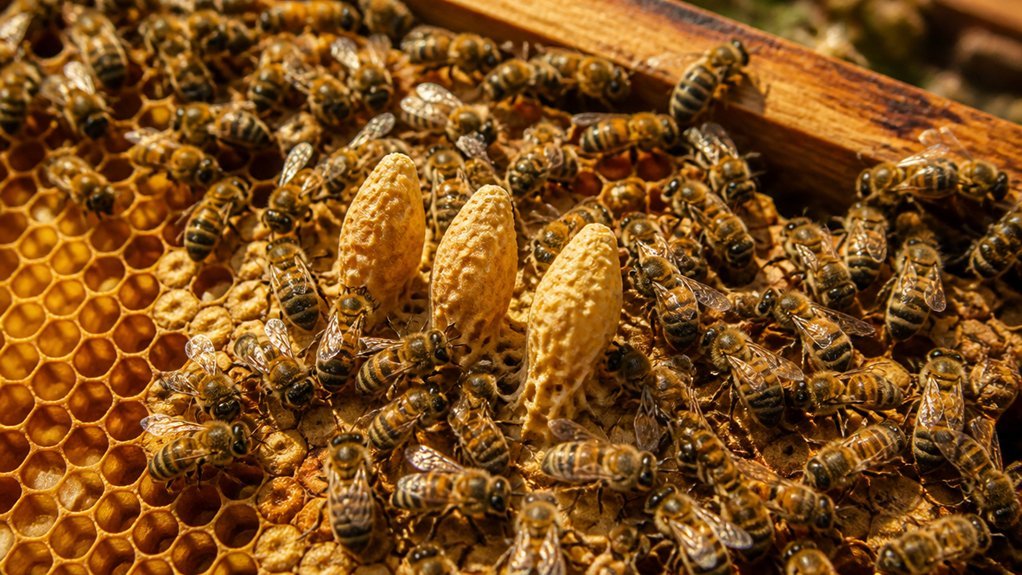
During nectar flow, you should watch for swarm signs like polished queen cups, crowded brood, and bees clustering at the entrance. Give your queen room to keep laying by adding drawn comb or empty frames near the brood nest before space gets tight. Check queen cells often, and if the colony is pressing hard, reduce congestion with extra space or splits. Keep conditions open and organized, and you’ll see why these moves matter.
Spot Swarm Signs Before Nectar Flow

Before the nectar flow hits, can you spot the early signs that your colony is preparing to swarm? You can if you check frames regularly and watch bee behavior.
Look for queen cups that bees keep polished, especially when they add eggs or larvae. Notice a crowded brood nest, reduced space between bees, and workers hanging in clusters at the entrance. You may also see a drop in comb building and a restless mood inside the hive.
The queen often moves less decisively, and foragers may return with less urgency. Active swarm trap monitoring can help detect early signs of colony movement. Act early by making notes on each inspection so you catch changes fast. When you spot these signals, you can intervene before the colony splits and your nectar flow momentum slips away.
Keep the Queen Laying Without Overcrowding
Once you’ve spotted swarm pressure, your next job is to give the queen room to keep laying. Add space before the brood nest feels cramped, and keep empty combs near the center where she can use them quickly. If you’ve got drawn frames, place them beside the brood pattern so workers can polish and ready them.
Pull capped honey from the brood area and move it above the excluder or into supers, because tight clusters slow her down. You should also keep plenty of forage coming in by checking that supers aren’t full.
When the hive stays open and organized, the queen keeps expanding brood instead of stalling, and the colony stays focused on growth rather than crowding. Using medium supers with practicality regarding assembly and size can help support steady hive expansion during peak nectar flow.
Stop Swarming by Managing Queen Cells
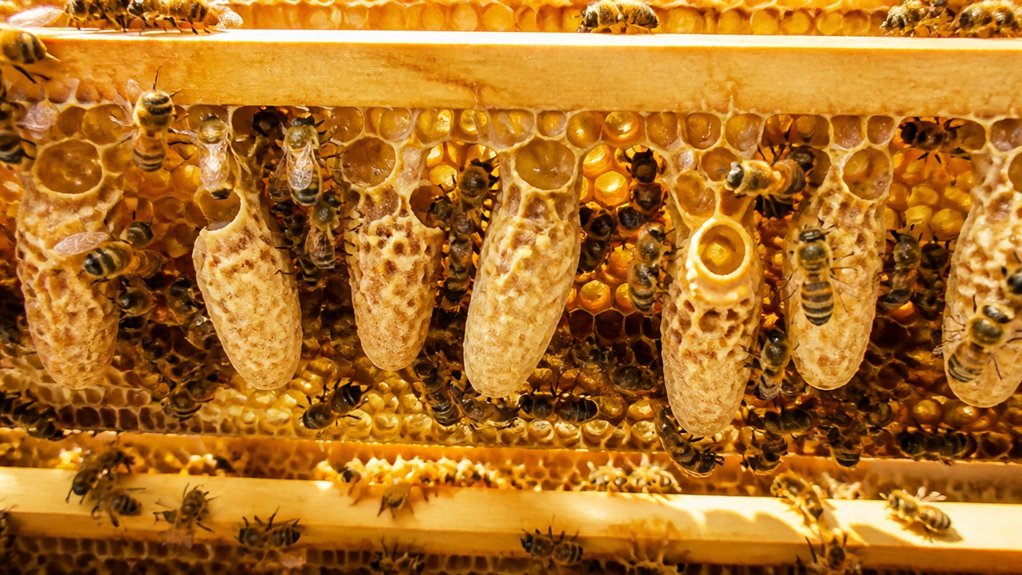
Even with room in the hive, you still need to watch queen cells closely, because swarm preparations can continue in hidden pockets of comb. Inspect frames every few days, especially along the lower edges and near brood.
If you find charged cells, act fast: remove queen cells only if you’ve confirmed the colony isn’t already committed to swarm. Better yet, reduce congestion by adding space, pulling capped brood, or making a split. You can also move the queen to a new box if the colony’s pressure is high.
Don’t leave multiple ripe cells in place, because one missed cell can trigger a swarm. After you intervene, check again within a week. Stay consistent, and you’ll keep the queen laying while the colony keeps working the flow.
Additionally, using queen cages during manipulations can help monitor and ensure the health of the queen throughout the process.
Frequently Asked Questions
How Often Should I Inspect Queen Health During Nectar Flow?
You should inspect queen health every 7 to 10 days during nectar flow. That lets you catch failing queens, spotting brood issues early while minimizing disruption to productive foragers and colony momentum.
What Queen Marking Methods Help During Heavy Nectar Production?
You can mark queens with bright, non-toxic paint or numbered discs, and you’ll find clips or opalith tags help too. Choose visible colors, work quickly, and you’ll spot her faster during bustling nectar flows.
Can Weather Changes Affect Queen Performance in Nectar Flow?
Yes, weather changes can affect queen performance during nectar flow. You’ll see slower laying in cold, wet spells, while warm, stable weather boosts brood rearing, foraging, and colony momentum, helping your queen stay productive.
Should I Replace an Older Queen Before Peak Nectar Flow?
Yes, you should if she’s slowing brood production or laying spottily; you’ll maximize workforce before the flow. If she’s still strong, leave her. Requeening early gives you time for acceptance and buildup.
What Feeding Adjustments Support Queens During Nectar Flow?
You should reduce feeding and stop syrup when nectar flow starts, then offer only light supplemental pollen patties if stores dip. Keep water available, and avoid heavy feeding that can overcrowd brood nest space.
In Summary
By watching for swarm signs early, keeping your queen laying without crowding the hive, and managing queen cells before they become a problem, you’ll stay ahead of the nectar flow. A little attention now can save you from losing half your bees later. Check your colonies often, make room when needed, and act fast when you spot trouble. With these simple habits, you’ll help your hive stay strong, productive, and ready for the season ahead.