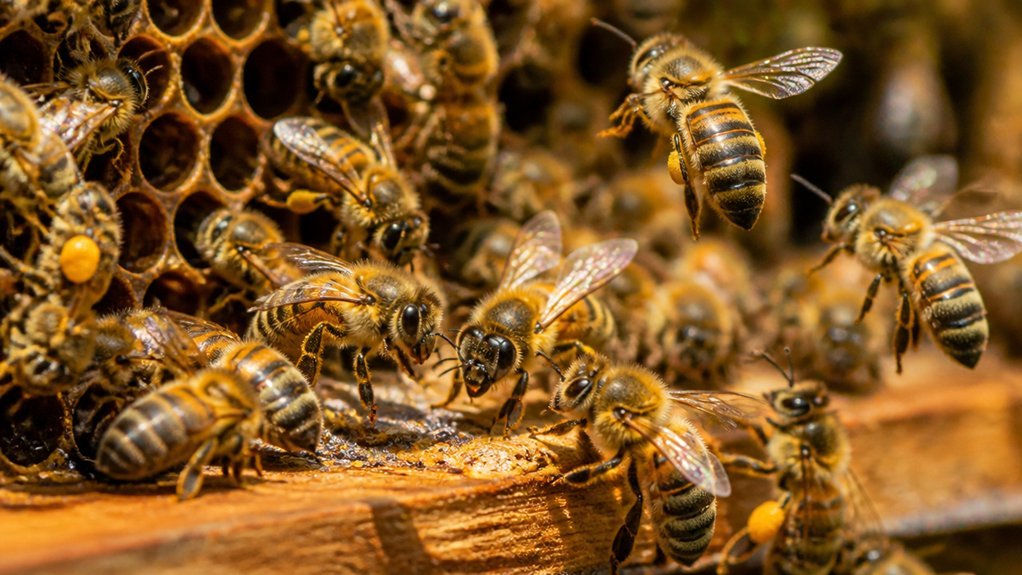
Natural pollen matters in early season because it gives your bees the protein, amino acids, vitamins, and minerals they need to rebuild after winter. It fuels nurse bees, supports royal jelly production, and helps brood grow fast and strong. With fresh pollen, your colony can raise more young bees, expand sooner, and stay active as blooms open. If you want to spot good sources and shortage signs, there’s more to uncover.
Why Spring Pollen Matters for Bees
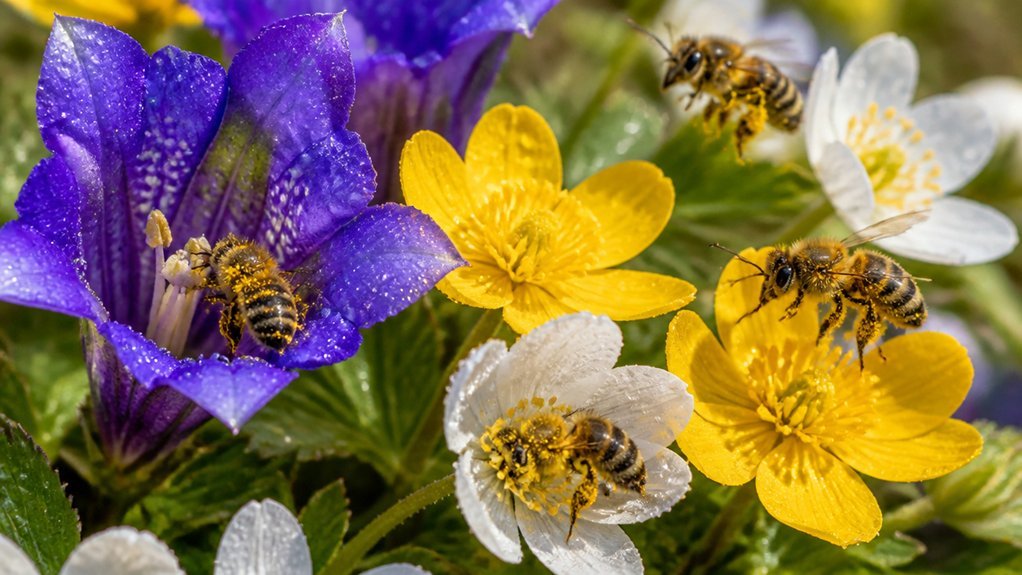
As spring arrives, bees need pollen more than ever because it gives them the protein and nutrients they use to raise brood and rebuild the colony after winter. You’ll see foragers rush from flower to flower, collecting fresh pollen when temperatures rise and blooms open.
This seasonal resource helps your colony recover from scarcity, especially after cold months when stores run low. Pollen also adds variety to the bees’ diet, which supports stronger adults and steadier hive activity.
When you understand how valuable spring pollen is, you can better judge forage conditions around your apiary. If nearby flowers bloom early and abundantly, your bees can gather what they need to start the season with momentum and keep the hive active. Crude protein content in pollen substitutes further supports colony health during times of dearth when natural pollen is scarce.
How Pollen Supports Brood Development
When pollen is plentiful, nurse bees can produce the protein-rich food they feed to larvae, which lets brood grow fast and develop properly. You give your colony the amino acids, lipids, vitamins, and minerals young bees need for steady growth. That nourishment helps larvae build healthy tissues, molt on schedule, and reach the pupal stage with fewer setbacks.
It also supports strong royal jelly production, so queens can keep laying while brood nests expand.
- Better larval feeding
- Faster, even development
- Stronger body formation
- Healthier brood survival
When you offer fresh pollen, you’re helping bees raise robust young and maintain brood quality through early-season change.
How Pollen Helps Colonies Grow

Healthy brood is only part of the story; plenty of pollen also fuels colony growth as a whole. When you give your bees steady pollen access, you help them build more nurse bees, strengthen wax production, and support faster population increase. That extra protein lets workers produce jelly, feed larvae, and keep the hive’s internal work moving without strain. You’ll also see better balance between foraging, nursing, and maintenance, which helps the colony handle early-season pressure. Providing real pollen or irradiated pollen can maximize nutritional quality, supporting overall colony vitality.
Best Spring Plants for Pollen
Early spring blooms give your bees the pollen they need to recover from winter and ramp up brood rearing. You can support them by planting species that open early and shed abundant pollen. Choose a mix that blooms in waves so your bees always find fresh forage.
- Willow: one of the earliest reliable pollen sources
- Crocus: small flowers that offer quick spring fuel
- Maple: strong early pollen when temperatures rise
- Fruit trees: apple, cherry, and plum add rich pollen
You’ll get the best results when you cluster these plants near the apiary and avoid pesticides during bloom. Add native wildflowers too, and your bees can build reserves fast while the season is still young. Incorporating diverse native species can also enhance pollinator habitat diversity.
Signs Your Hive Needs More Pollen

How can you tell if your hive is running short on pollen? Watch for patchy brood patterns, fewer nurse bees feeding larvae, and a noticeable drop in bright pollen stores around the brood nest.
You may also see adult bees working longer foraging trips or returning with legs less packed with pollen. If brood looks thin, capped cells outnumber open ones, or larvae appear smaller than usual, your colony may need more pollen soon.
In early season, cold snaps can limit foraging, so your hive can slip into a protein shortage fast. Check frames regularly, and if natural pollen stays scarce, consider offering a pollen supplement to support brood rearing and steady colony growth.
Additionally, using a pollen trap can help monitor and increase pollen collection effectively, ensuring your hive remains well-nourished during critical times.
Frequently Asked Questions
How Does Pollen Diversity Affect Bee Nutrition?
Pollen diversity boosts your bees’ nutrition by supplying a broader mix of proteins, fats, vitamins, and minerals. You’ll help them build stronger immune systems, improve brood development, and reduce nutritional stress when forage is scarce.
Can Pollen Supplements Replace Natural Spring Pollen?
No, you can’t fully replace natural spring pollen with supplements. You’ll give bees some nutrition, but fresh pollen offers diverse proteins, lipids, and micronutrients that supplements usually miss, supporting stronger brood rearing and colony health.
Does Pollen Quality Vary Between Plant Species?
Yes, pollen quality varies widely between plant species. You’ll find differences in protein, amino acids, lipids, and micronutrients, so some plants feed bees better than others, especially when they need rich early-season nutrition.
How Soon Should Bees Start Collecting Pollen in Spring?
You should see bees start collecting pollen as soon as blooms open and daytime temperatures stay warm enough, often in early spring. They’ll gather it quickly to feed brood and build colony strength.
What Weather Conditions Limit Early Pollen Foraging?
You’ll find cold, windy, rainy, or frosty weather limits early pollen foraging because bees can’t fly well, flowers stay closed, and pollen dries or washes away, so they’ll wait for calmer, warmer, sunnier days.
In Summary
Natural pollen is one of the biggest reasons your hive thrives in early spring. When you give your bees access to rich pollen sources, you help fuel brood rearing, strengthen young bees, and support steady colony growth. Planting the right flowers and watching for pollen shortages can make a real difference. If you want stronger, healthier hives all season, start by making sure your bees have plenty of natural pollen right when they need it most.