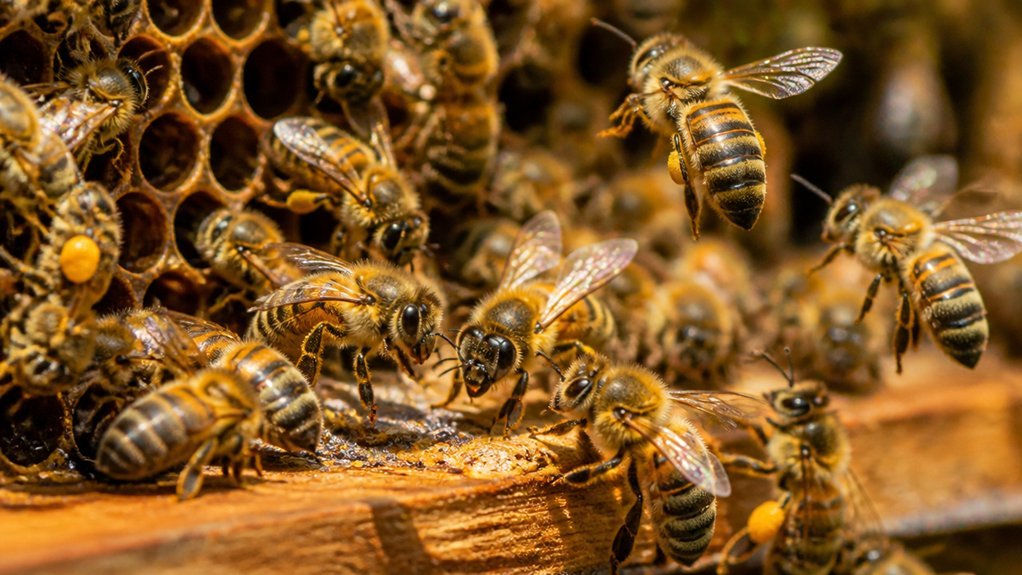
During a nectar dearth, you should keep hives strong by combining weak colonies, reducing entrance size, and removing extra space. Feed plain white sugar syrup in clean internal feeders, and stop once natural nectar returns. Use pollen supplements only when stores are low and brood is shrinking. Provide fresh water with safe landing spots near the apiary. Watch for light hives, low flight, or bees headfirst in cells, and you’ll spot the warning signs before trouble grows.
What to Do During a Nectar Dearth
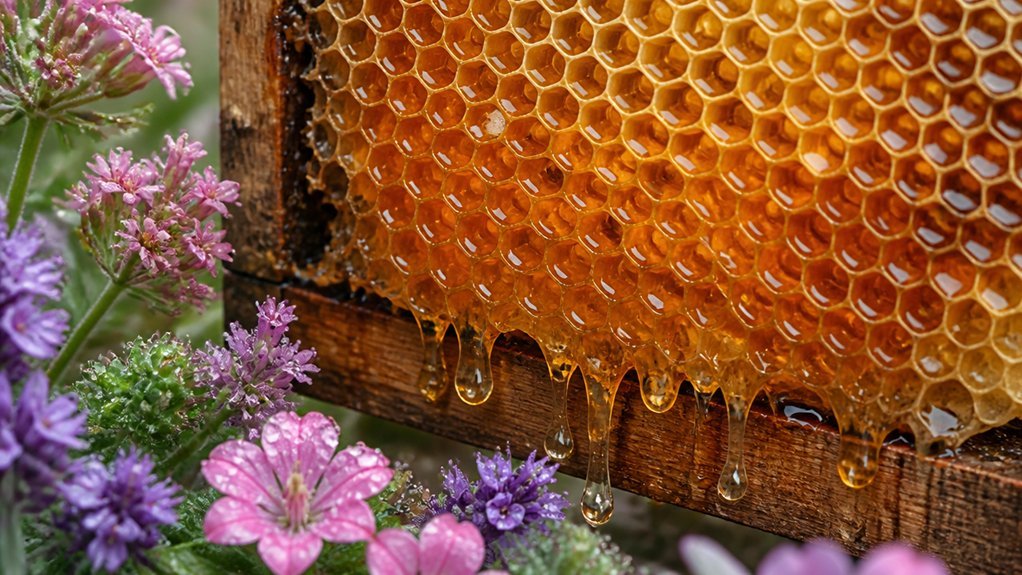
When a nectar dearth hits, you need to support your bees quickly and with purpose. First, inspect each hive and judge colony strength, brood pattern, and food stores. If a colony looks weak, combine it with a stronger one before it slips further.
Reduce the entrance so guard bees can defend the hive and keep robbing pressure down. Make sure the brood nest stays compact and healthy, and remove extra empty space that wastes heat and effort.
Keep water close by so foragers don’t waste energy searching. If nearby blooms are scarce, move hives to better forage when you can. Using low-moisture fondant supports winter resilience and provides essential energy without adding humidity.
Watch daily for stress signs, because early action helps your bees stay productive, stable, and ready for the next flow.
Feed Sugar Syrup Safely
If natural nectar is scarce, sugar syrup can help your bees bridge the gap until forage improves. Mix plain white sugar with clean water, and keep the ratio consistent so bees can process it easily.
Feed in internal feeders or protected stations to reduce robbing and ant problems. Place equipment close to the hive, and avoid spilling syrup around the apiary.
Use fresh batches, because stale syrup can ferment and spoil quickly. Clean feeders often, and inspect them for mold, drowned bees, or leaks.
Offer enough for the colony’s needs, but don’t overfill spaces that could trigger moisture issues. Remove leftover syrup when natural nectar returns, so you won’t encourage unnecessary crowding or waste.
Choosing large-volume feeders that support seasonal feeding needs can also help ensure your colony gets enough nutrition without frequent refills.
When to Use Pollen Supplements
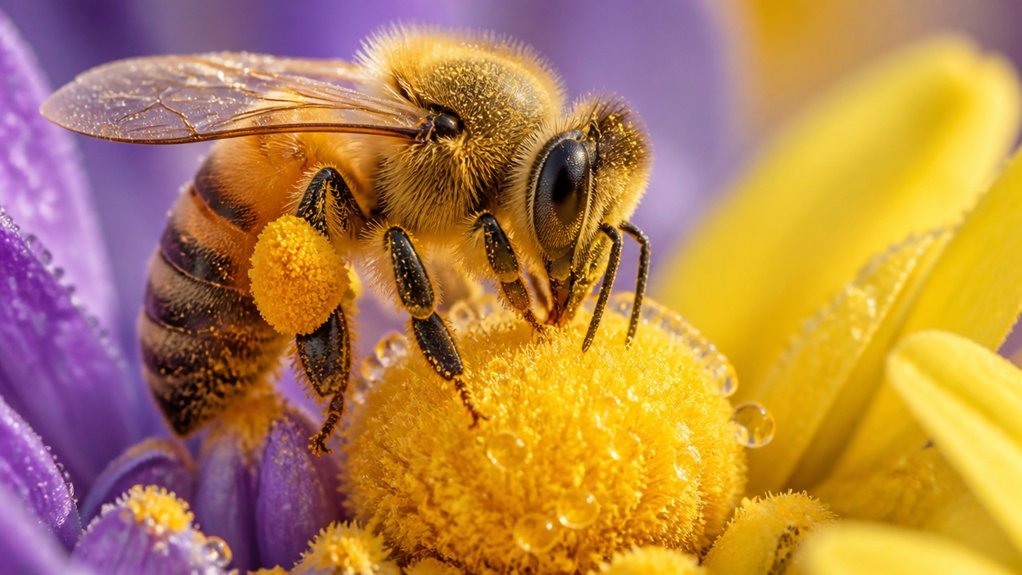
Pollen supplements make sense when natural pollen is limited and your colony needs a protein boost to raise brood, maintain young bees, or recover from a dearth. Use them when you inspect frames and see little incoming pollen, shrinking brood patterns, or pale, thin larvae. Don’t rely on supplements if stored pollen already supports strong growth. Incorporating probiotics and beneficial microflora can further enhance gut health and boost colony resilience during these times.
Keep Water and Feed Stations Ready
Along with pollen, bees need steady water and easy-to-reach feed during a dearth. You should place clean water near the hive so foragers don’t waste energy flying far, and refresh it often so it stays safe and inviting. Use shallow containers, floating corks, pebbles, or mesh to help bees land without drowning. Incorporating textured honeycomb patterns in water stations can also improve bee footing and reduce drowning risks.
Keep feed stations close enough that workers can find them quickly, but don’t crowd the entrance or trigger robbing. If you use syrup, choose a feeder that limits spills and gives bees steady access. Check stations daily, especially in heat or wind, because evaporation and contamination can cut supply fast.
Watch for Starvation Signs

Even with water and feed available, a colony can still slip into starvation during a long nectar dearth. Watch your bees closely so you catch trouble early. If you see reduced flight, quiet hives, scattered dead bees, or workers headfirst in cells, act fast. Check stores by lifting the hive, then feed immediately if comb feels light. Jar compatibility is crucial for easy refilling and monitoring. | Sign | Meaning |
| — | — |
|---|---|
| Low flight | Bees aren’t foraging well |
| Quiet entrance | Activity has dropped sharply |
| Pollen loss | Brood care may suffer |
| Headfirst bees | Hunger is urgent |
| Light hive | Stores are nearly gone |
Frequently Asked Questions
How Can I Tell if My Local Nectar Flow Is Ending?
You can tell your nectar flow’s ending when you see fewer returning foragers, lighter hive weights, less fresh white comb, and bees spending more time robbing or searching. Check daily stores and brood patterns.
What Syrup Ratio Works Best in Cold Weather Dearths?
You should use a 2:1 syrup ratio in cold weather dearths; it’s thicker, stores better, and your bees can process it with less energy. Feed warm syrup late afternoon and monitor consumption closely.
Should I Add Essential Oils to Sugar Syrup for Bees?
No, you shouldn’t add essential oils to sugar syrup for bees unless a vetted beekeeper guide recommends it. You can harm bees or contaminate stores. Stick with plain syrup and good hive management instead.
How Often Should I Replace Water During a Dearth Period?
You should replace it every day, and more often if it turns cloudy, warm, or dirty. During a dearth, clean water helps your bees stay healthy and prevents disease, drowning, and contamination.
Can Nectar Dearth Nutrition Affect Queen Laying Patterns?
Yes, you can see changes in queen laying during a nectar dearth; your colony may reduce brood rearing as food drops. You’ll improve laying by keeping stores adequate and avoiding unnecessary disturbances.
In Summary
When nectar gets scarce, you can still keep your colony strong. Feed sugar syrup safely, offer pollen supplements when needed, and keep clean water and feed stations ready. Check your bees often so you can catch starvation signs early and act fast. A little planning during a dearth can make a big difference in hive health, brood rearing, and survival. Stay alert, stay prepared, and you’ll help your bees through the toughest stretch.