

You can keep your honey bees healthier by watching for weak brood, small or pale adults, and spotty comb, since these can signal nutrient gaps. Give them diverse pollen, nectar, and fresh water, and keep the hive dry, airy, and clean. When forage is scarce, feed plain sugar syrup in safe feeders. Add fresh protein patties near the brood nest, and use mineral supplements only when the colony truly needs them, as there’s more to know.
Spot Signs of Honey Bee Nutrient Deficiency

How can you tell if your honey bees aren’t getting the nutrients they need? Watch for weak brood patterns, slow colony growth, and adults that look small or worn. You may notice bees spending more time idle or struggling to forage efficiently.
If your hive has spotty brood, fewer capped cells, or larvae that don’t develop evenly, nutrition could be part of the problem. You might also see reduced honey storage and lower resistance to stress after poor weather or limited blooms.
Check for pale, brittle, or malformed young bees, since those signs can point to a deficiency. When you spot these changes early, you can act fast and prevent the colony from falling behind. Keep notes, compare frames over time, and stay alert for patterns that repeat. Using probiotics and bee supplement blends, you can support gut health and strengthen your colony’s resilience.
What Honey Bees Need to Stay Healthy
Healthy honey bees need a steady mix of food, water, and a clean, supportive hive environment. You should give them access to diverse pollen and nectar sources so they can build strong bodies and raise brood. Fresh water helps them cool the hive and dilute stored food. Good airflow, dry comb, and regular hive checks lower stress and disease pressure. Keep the colony space tidy, because clutter and mold invite problems. Using appropriate bee waterers ensures a reliable water supply, further supporting hive health.
Feed Honey Bees With Sugar Syrup
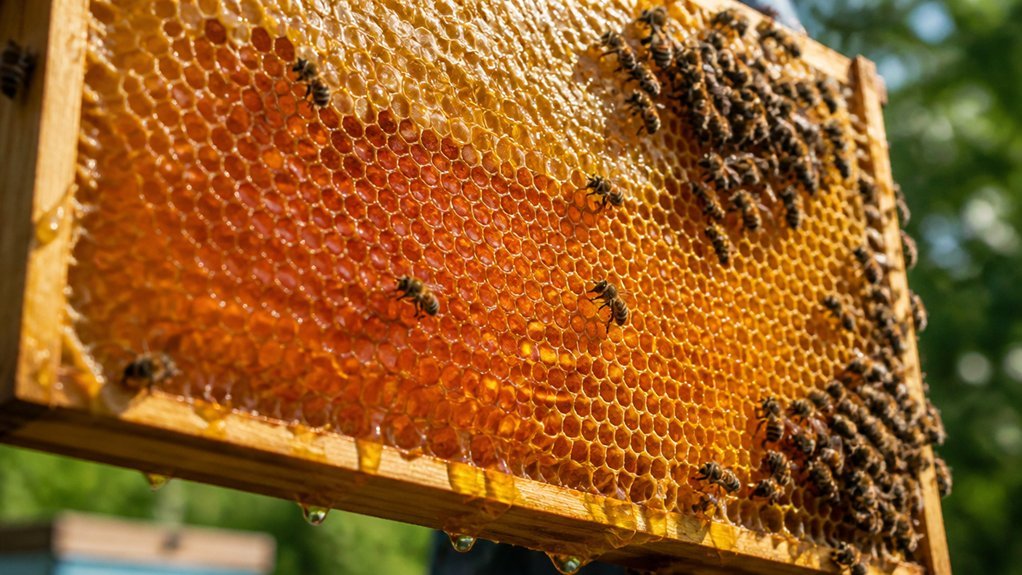
When natural nectar runs short, you can feed your bees sugar syrup to help keep the colony strong and active. Mix plain white sugar with clean water, then offer it in a feeder your bees can access safely.
Use a thinner syrup in spring to mimic nectar flow, and a thicker mix in late season if you want them to store food. Keep the feeder clean, refill it regularly, and place it where it won’t attract pests.
Avoid using brown sugar, honey, or flavored syrups, since they can contaminate the hive or spread disease. Check the weather too; if temperatures turn cold, your bees may stop taking syrup. Ensuring the bees receive adequate protein levels supports brood expansion and overall health. You should also watch the colony’s stores so you can stop feeding once natural food becomes available again.
Add Protein Patties for Brood Rearing
If your colony still needs a boost after sugar syrup feeding, you can add protein patties to support brood rearing. Place the patties near the brood nest so nurse bees can reach them quickly without chilling the hive.
Choose fresh patties and replace them before they dry out, mold, or get hard. You should monitor consumption and adjust placement if the bees ignore them.
During early spring or other dearth periods, this extra protein can help young bees develop and can encourage the queen to keep laying.
Don’t overfeed patties, though, because too much can attract pests and waste your money. Use them as a targeted aid, not a year-round habit, and always keep the hive clean, dry, and well ventilated for best results.
When Bees Need Mineral Supplements

Sometimes bees need more than nectar, pollen, and water to stay strong. You may notice this during nectar dearths, heavy brood rearing, or after long periods of poor forage.
In those times, your bees can benefit from mineral supplements that help support digestion, brood development, and overall resilience. Offer supplements only when you suspect a real gap, not as a routine fix.
Use clean feeders, follow label directions, and keep the supply fresh so you don’t attract pests.
You should also watch for signs of stress, such as weak brood patterns, low activity, or sluggish colonies. Healthy forage still matters most, but targeted minerals can help your hive recover when natural sources fall short and conditions turn harsh. Incorporating nutrient additives like vitamins and amino acids can further bolster colony health during these critical periods.
Frequently Asked Questions
How Can I Tell if My Honey Is Raw or Processed?
You can tell by checking the label, color, and texture. Raw honey’s often cloudy, thick, and may crystalize; processed honey looks clearer and smoother. If you’re unsure, ask the producer directly.
What Storage Conditions Keep Honey Fresh Longest?
You’ll keep honey freshest in a tightly sealed container, away from heat, sunlight, and moisture. Store it at room temperature in a cool, dark pantry, and don’t refrigerate it unless you prefer crystallization.
Can Honey Crystallization Mean It Has Gone Bad?
No, crystallization usually doesn’t mean your honey’s gone bad. You can warm it gently to redissolve the crystals. If it smells off, foams, or tastes sour, you shouldn’t eat it.
Is Local Honey Better for Allergies Than Imported Honey?
Local honey might help you a little, but evidence is weak. You’ll probably get more benefit from standard allergy treatments. Imported honey isn’t clearly worse; the pollen exposure usually differs, not the honey’s quality.
What Tools Help Measure Honey Moisture Content?
You can measure honey moisture with a refractometer, which you’ll use to read water content quickly. You can also use a moisture analyzer or hydrometer, though a refractometer’s usually the most accurate.
In Summary
By watching your bees closely, you can catch nutrient problems early and keep your colony strong. Make sure they have enough nectar, pollen, and clean water, and step in with sugar syrup, protein patties, or mineral supplements when needed. These small actions can support brood rearing and help your hive recover faster during tough times. Stay consistent, and your bees will have a better chance of staying healthy, productive, and ready for the season ahead.



