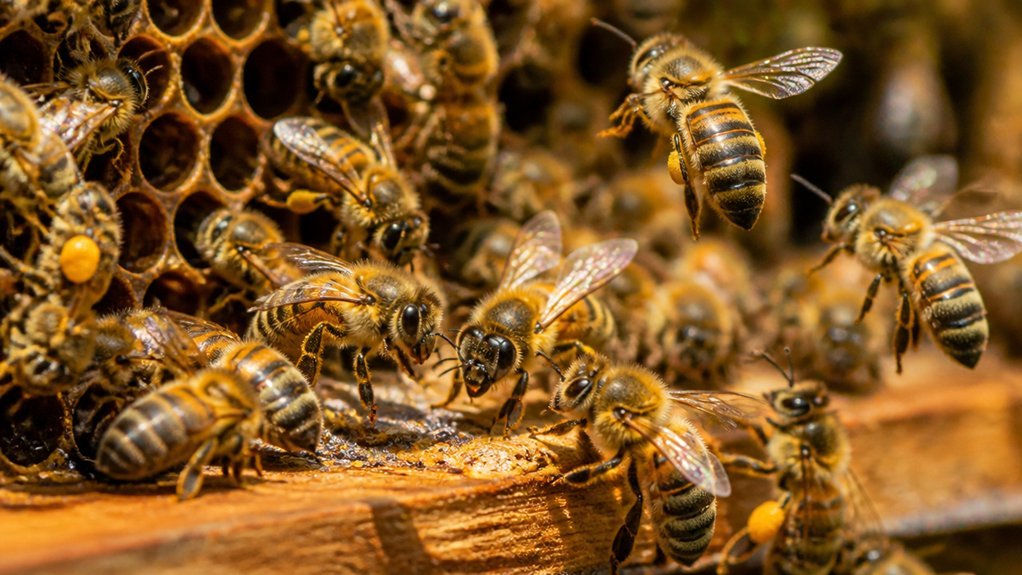
Watch for early swarm signs like restless bees, loud hive hum, clustering at the entrance, queen cells, and extra drone activity. Then inspect the brood nest for overcrowding, with tight capped brood and little open comb. Add space fast by placing supers or empty frames. If needed, requeen or split the colony to ease pressure. Split before they leave by moving brood and food frames to a new box, and there’s more you can do next.
Spot the First Swarm Warning Signs
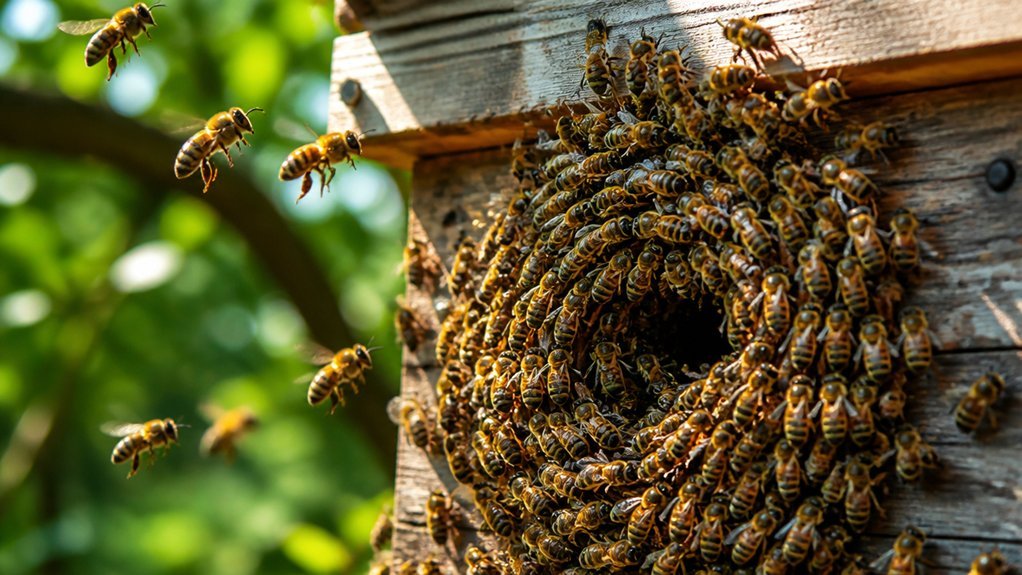
How can you tell a hive is gearing up to swarm? You’ll notice bees acting restless and hanging in unusual clusters near the entrance.
Guard bees may seem less focused, and you might see more workers fanning or running across the landing board. Listen for a louder, more agitated hum than usual.
Outside the hive, watch for bees exploring every direction instead of flying straight out to forage. You may also spot queen cells, which signal the colony is preparing for a split.
Check for a sudden drop in nectar storage, since swarming often shifts the colony’s priorities. When you catch these warning signs early, you can move fast and reduce the chance of losing half your bees.
Additionally, visual signs like increased drone activity or a sudden increase in colony scent can be telltale signs of imminent swarming.Swarm Lure Effectiveness]
Check the Brood Nest for Crowding
If you’re seeing swarm warning signs, check the brood nest next, because crowding there often pushes a colony toward splitting. Open the hive and look for a solid block of capped brood, eggs, and nurse bees packed tightly together.
Check the brood nest for a tight block of brood, eggs, and nurse bees packed together.
You want to see how much open comb remains around the brood area and whether bees spill into every gap.
- Notice if frames feel jammed with brood and bees.
- Watch for little open cells where the queen can still lay.
- Check whether workers cluster thickly over the brood instead of moving freely.
- Pay attention to congestion in the center of the nest.
When the brood nest looks compressed, the colony can feel boxed in and restless, so you need to act fast and track conditions closely.
Proper frame size is essential for preventing crowding and maintaining comb straightness, which helps reduce swarm triggers.Add Space With Supers and Empty Frames

Adding space is one of the fastest ways to calm a hive headed toward swarming. You can give the colony breathing room by adding a super above the brood nest and sliding in empty frames where bees can expand. Work quickly and gently so you don’t crush bees or chill brood. Place drawn comb if you have it, because bees usually use it faster than foundation. Proper box configuration and providing adequate space help manage colony pressure effectively.
| Action | Effect | Result |
|---|---|---|
| Add a super | Creates room | Reduces pressure |
| Insert empty frames | Opens space | Encourages expansion |
| Use drawn comb | Speeds use | Frees congestion |
| Work calmly | Limits alarm | Keeps bees settled |
| Check again soon | Confirms change | Prevents panic |
Give them space now, and you’ll often see the crowding ease before the urge to swarm grows stronger.
Requeen or Split the Hive
Sometimes space alone won’t stop a strong swarm impulse, so you may need to make a bigger change by requeening or splitting the hive.
If your queen is old, failing, or overly swarmy, replace her with a young, productive queen that can rebuild brood patterns and calm the colony. If the hive still feels crowded, split it so you relieve pressure and keep bees working instead of marching out.
- Inspect brood for crowded frames and queen cells.
- Choose a gentle, healthy replacement queen.
- Move frames to form a smaller, balanced colony.
- Watch for fresh brood, steady foraging, and calmer behavior.
- Ensure proper ventilation and airflow to reduce stress and support queen rearing efforts.
Split the Hive Before They Leave
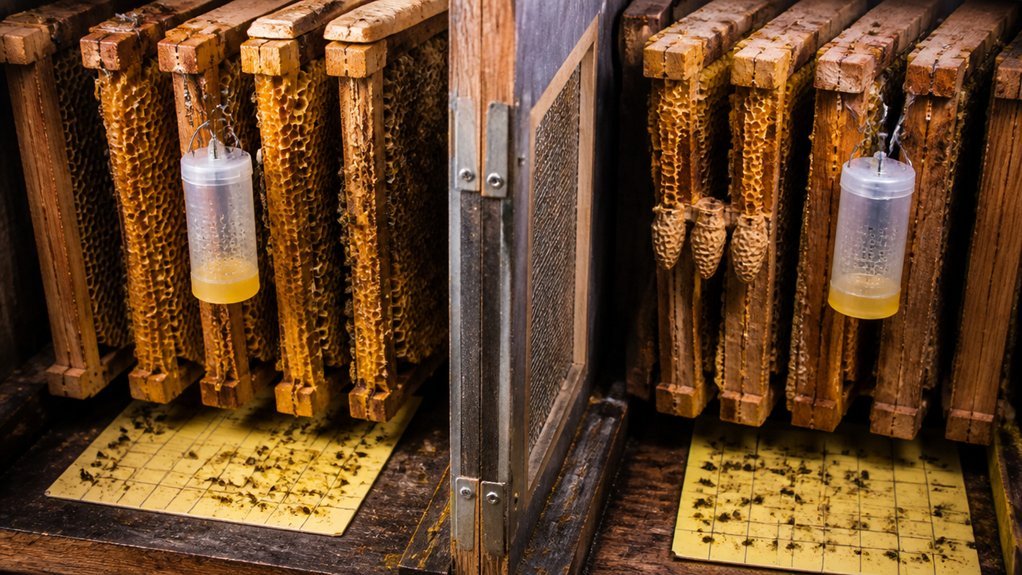
When a colony is packed and building swarm cells, split it before the bees decide to leave on their own. Move several frames of brood, food, and adhering bees into a new box, then add a queen or let the split raise one if you’ve checked that it has eggs and larvae.
Leave the parent hive with enough space, drawn comb, and fewer crowded bees so they can reset their urge to swarm. Place the split in a different location if you can, or at least give it a separate entrance to reduce drifting.
You’ll relieve congestion fast, protect your honey flow, and keep both colonies productive. Proper trap placement and regular inspections will also increase your chances of successfully managing swarms and preventing colony loss.
Check both hives a week later, then adjust space, feed if needed, and watch for fresh swarm cells.
Frequently Asked Questions
How Often Should I Inspect for Swarm Cells?
Inspect your hive every 7 to 10 days during swarm season, and weekly if conditions look risky. You’ll catch queen cells early, manage congestion, and reduce swarming before it starts.
What Protective Gear Is Best During Swarm Prevention?
You’ll want a veil, gloves, long sleeves, and sturdy boots. Add a smoker and eye protection if you’re working near active bees. You’ll stay calmer, reduce stings, and handle inspections more safely.
Can Weather Changes Trigger Sudden Swarming?
Yes, weather changes can trigger sudden swarming; you’ll notice bees react to heat, humidity, pressure shifts, or rain. You should stay alert, inspect hives promptly, and reduce crowding before conditions push colonies to swarm.
Should I Feed Bees While Preventing Swarms?
Yes, you can feed bees sparingly if they’re short on stores, but don’t overdo it. You should also avoid stimulating brood rearing. Use light syrup only when necessary, and monitor queen cells and congestion closely.
How Do I Safely Move a Hive During Swarm Season?
You can safely move the hive at dusk or dawn, when most bees are inside. Close the entrance, secure the boxes, lift gently, and relocate it a short distance to reduce stress and swarming.
In Summary
When you spot swarm warning signs early, act fast. Check the brood nest for crowding, add space with supers and empty frames, and requeen or split the hive when needed. If the colony is still pushing to swarm, split it before the bees leave. Staying ahead of swarm pressure keeps your hive calmer, healthier, and more productive. A little timely attention now can save you a big loss later.