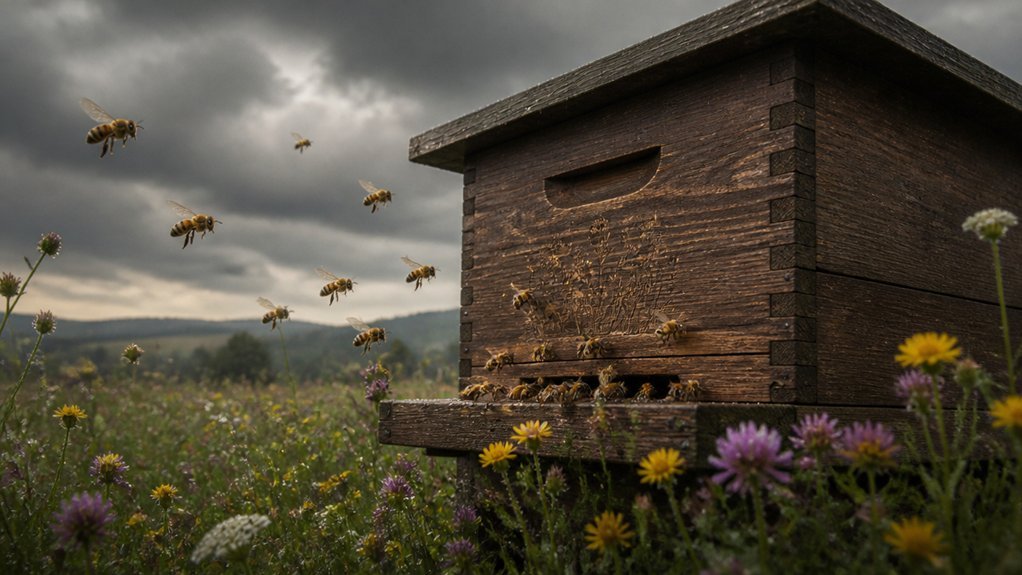
Keep your bees healthier by matching care to the season. In spring, add space, inspect gently, and watch for swarming. In summer, provide supers, water, shade, and ventilation during nectar flow. In fall, reduce entrances, protect stores, and treat Varroa mites. In winter, avoid disturbing the cluster and limit hive openings. Weather matters too, so adjust feeding and management after cold, rain, heat, or wind. These seven tips can help you stay one step ahead all year.
Spring Bee Colony Behavior
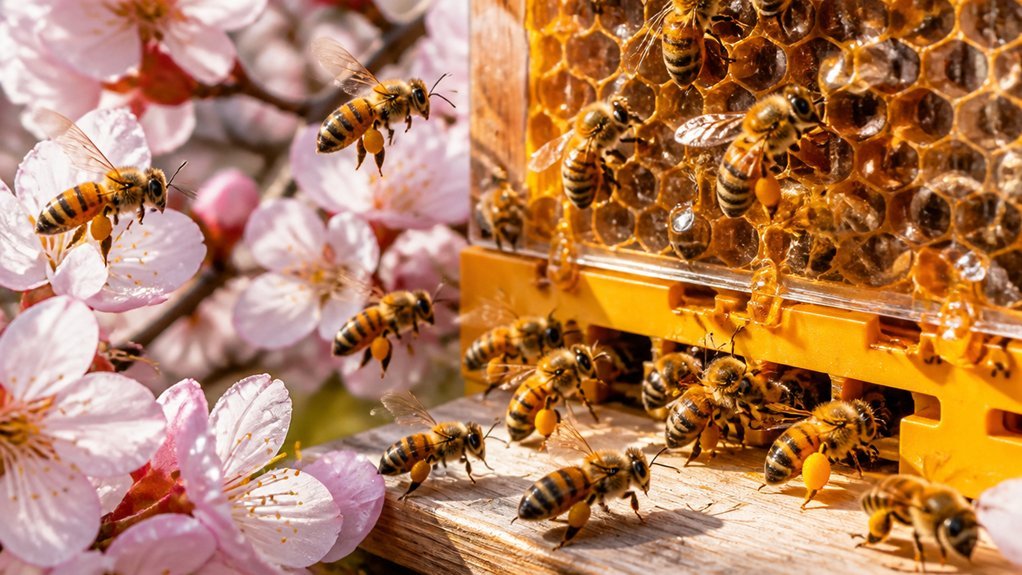
As spring arrives, your bee colony becomes more active as rising temperatures and blooming flowers signal it’s time to expand. You’ll notice the queen laying more eggs, which quickly increases brood size and colony demand. Ensure your colonies receive appropriate pollen substitutes to support brood development during early buildup stages. Inspect the hive regularly, but move gently so you don’t chill the developing young. Check for enough space, since crowded comb can trigger swarming. Add empty frames or another box when bees start packing brood and nectar near the center. Keep an eye on food stores, too; late cold snaps can still limit forage, so a light emergency feed may help. Watch for pests and disease during each inspection, and remove damaged comb promptly.
How Bees Forage in Summer
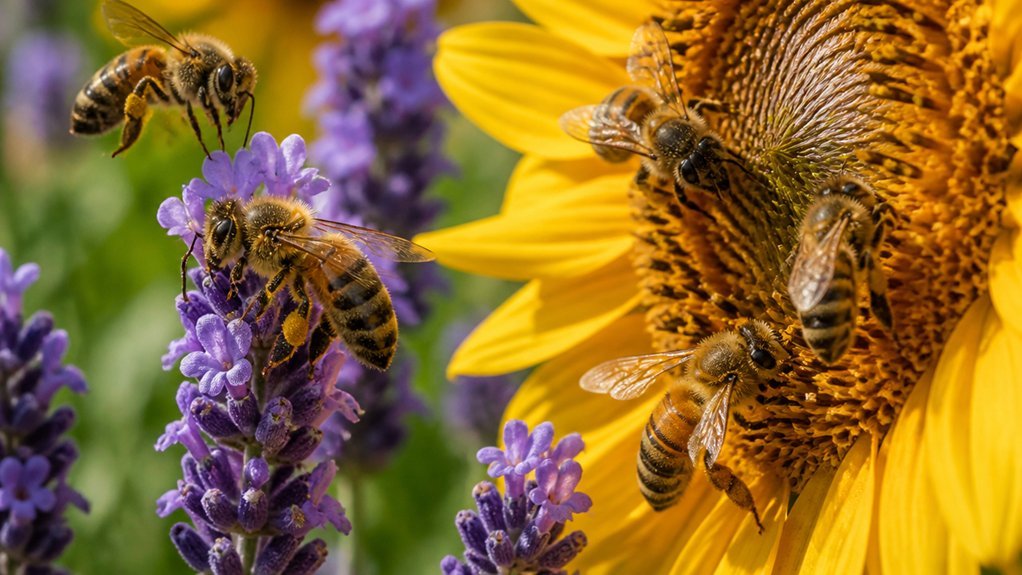
By summer, your colony’s spring buildup shifts into full-time foraging, and worker bees range farther and longer to collect nectar, pollen, water, and propolis. You’ll see steady traffic as scouts locate nearby blooms, then recruit others through dances and scent cues. Hot weather pushes bees to spread out, so you should keep water available and shade the hive if needed. Ensuring a variety of pollinator-friendly flowers can greatly enhance their foraging success during this busy season.
What Happens During Nectar Flow
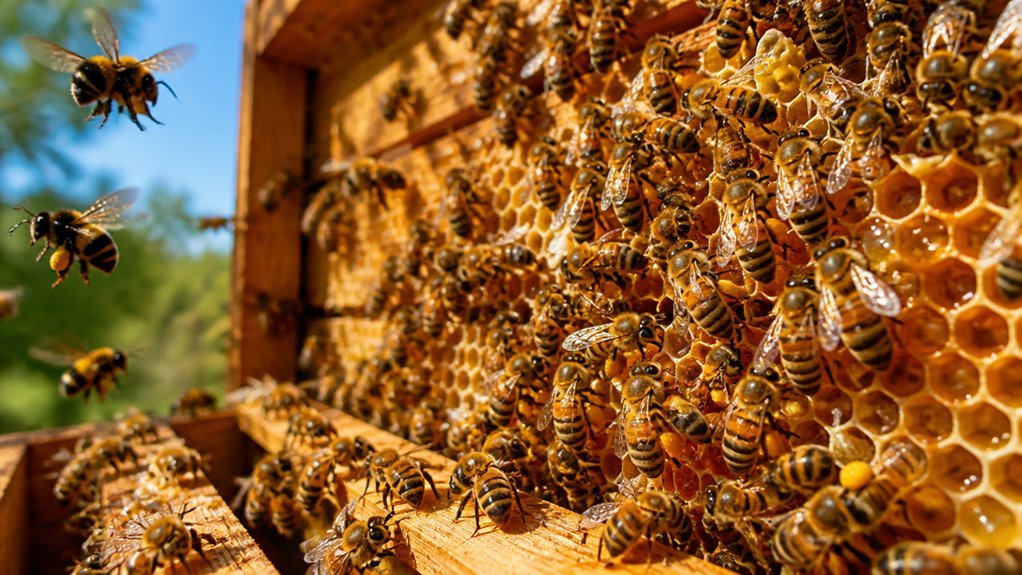
During a nectar flow, your bees shift into high gear as blossoms pour out more sugar-rich nectar than the colony can use right away. You’ll see foragers leave earlier, return heavier, and recruit nestmates with stronger waggle dances.
Inside the hive, house bees receive nectar, fan it, and spread it into thin layers so water can evaporate. The colony also expands brood care and stores surplus in comb, building reserves for later dearth periods. Low-moisture fondant can serve as an emergency feed during these times of scarcity.
If the flow is strong, brood nests may feel crowded, and you might notice busy comb building. Give them space, clean water, and room for supers so they can process nectar efficiently. Watch entrance traffic closely; it’ll tell you when the flow is peaking and when it starts to fade.
Fall Bee Colony Behavior
When fall settles in, your colony starts shifting from rapid buildup to survival mode. You’ll see fewer foragers, tighter brood rearing, and stronger focus on conserving stores. As nectar dries up, guard bees become more alert, and you should check that entrances stay defended.
| Sign | What you notice | Your response |
|---|---|---|
| Less flight | Bees leave and return less often | Don’t assume trouble; watch patterns |
| More clustering | Bees stay closer to brood frames | Keep inspections brief |
| Pollen changes | Incoming pollen often drops | Confirm enough food remains |
You’ll also notice bees sealing cracks and reducing waste inside the hive. Inspect quickly, avoid chilling the brood, and make sure the colony has enough room without excess space. Proper fit and compatibility of mouse guards can help maintain ventilation and prevent pests during the season. Balanced management now helps your bees enter the cold months strong, organized, and ready for the next season.
Winter Cluster Behavior
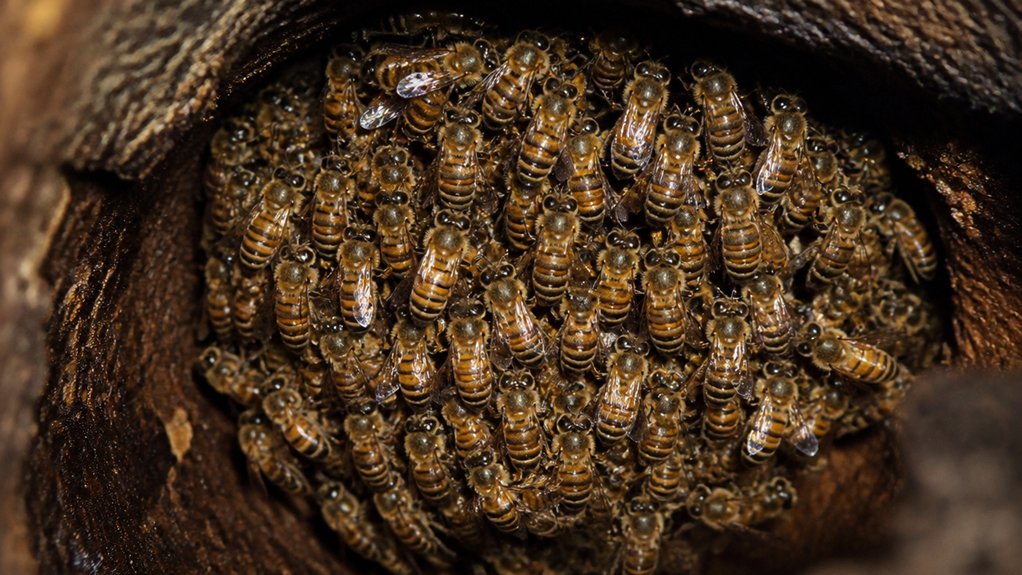
When winter sets in, you’ll see the colony gather into a tight cluster around the queen and brood. The bees shift positions to share warmth and keep the center of the cluster safe. They also conserve heat by eating stored honey and minimizing movement. Proper ventilation controls are essential to prevent moisture buildup and ensure the colony remains healthy during cold months.
Cluster Formation Basics
As temperatures drop, your bees form a tight winter cluster to stay alive and conserve heat. You’ll see workers gather around the queen and form a living ball that shifts as the colony changes position. Bees on the outside link together, while those inside stay closer to the center, and the group slowly repositions across the comb. This clustering isn’t random; your bees respond to cold, brood needs, and colony size. A healthy cluster stays compact enough to protect the queen, yet flexible enough to let more bees move in when conditions demand it. You don’t need to disturb them often. Instead, watch for steady clustering behavior, because it tells you your colony is organized, active, and preparing for the months ahead. Proper hive ventilation and insulation play crucial roles in supporting this natural behavior by reducing moisture buildup and maintaining optimal internal temperatures.
Heat Conservation Strategies
Inside that winter cluster, your bees conserve heat by sharing body warmth and limiting exposure to cold air. You’ll see them pack tightly around the queen, with outer workers forming an insulating shell and inner bees rotating outward as they warm up. This movement keeps the cluster alive without wasting energy.
A water-resistant beeswax coating on their hive helps prevent moisture buildup, which can chill the colony quickly.
Give them steady shelter from drafts, because wind strips heat fast. Avoid opening the hive often, since each inspection dumps warmth and forces them to burn more stores.
Provide enough honey near the cluster so they don’t break formation to reach food. If moisture builds up, your bees can chill quickly, so keep the hive dry and well ventilated.
When you protect their heat, you help them survive winter with less stress and loss.
How Weather Affects Bee Activity
Weather can shift bee activity quickly, so you’ll often see fewer foragers on cold, rainy, or windy days. You’ll notice bees stay inside longer when temperatures drop, because flight takes more energy and returns less nectar. On warm, calm days, they leave in greater numbers and move with purpose between flowers and the hive. Humidity also matters, since damp air can slow drying pollen and reduce efficient travel. Bright sunlight encourages orientation flights, while sudden clouds may pause traffic at the entrance. Proper hive monitoring with accurate thermometers and hygrometers helps detect environmental changes that impact bee behavior.
Seasonal Tips for Backyard Beekeepers
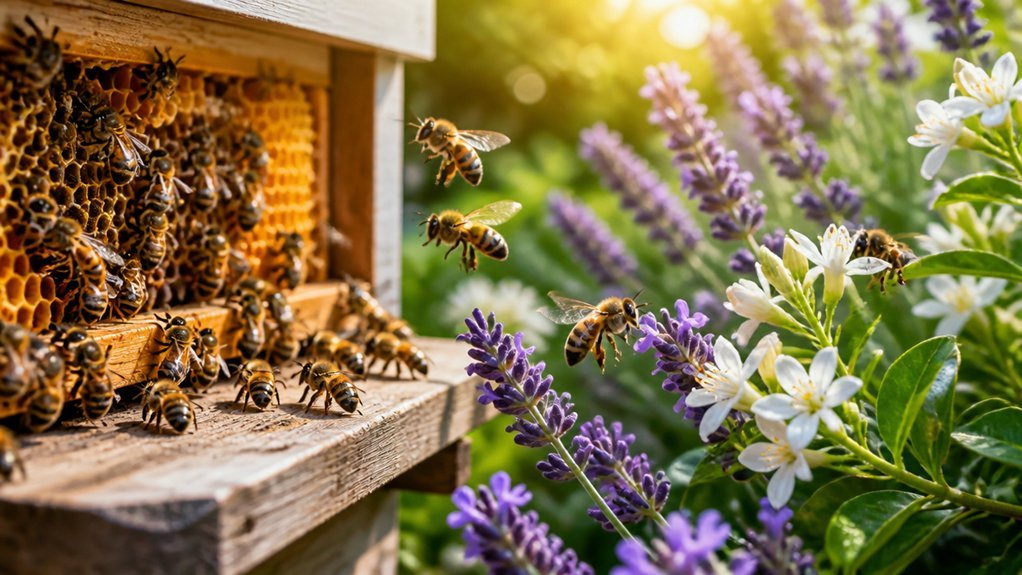
Seasonal changes can guide how you care for your hive, so adjust your checks and tasks as temperatures and forage patterns shift.
In spring, inspect brood patterns, add space early, and watch for swarm signs as colonies build fast.
During summer, provide water, shade, and ventilation, and check that honey stores support nectar gaps.
In fall, reduce entrances, treat for mites if needed, and leave enough capped honey for winter survival.
In winter, limit disturbances, lift the lid only when necessary, and monitor moisture so condensation doesn’t chill the cluster.
You should also match your feeding, splitting, and harvesting decisions to local bloom times.
Implementing effective Varroa Mite Treatments at appropriate times enhances colony health and resilience through the seasons.
When you respond to each season’s needs, you help your bees stay healthy, productive, and ready for the next cycle.
Frequently Asked Questions
How Do Bees Choose a New Queen?
You’ll see worker bees select a new queen by feeding several larvae royal jelly; you watch them raise the best candidate, then they let her emerge, mate, and replace the old queen quickly.
What Causes Bees to Swarm Unexpectedly?
You’ll see unexpected swarming when you give bees crowding, a strong nectar flow, or a failing queen. They’ll raise new queens, then split fast, so inspect hives often and add space early.
How Can I Tell if My Hive Is Queenless?
You’ll notice scattered brood, no fresh eggs, a weak buzz, and aggressive behavior. Check for queen cells and listen closely. If you don’t see eggs after a week, your hive’s likely queenless.
Do Bees Sleep During Cold Nights?
Yes, bees do rest on cold nights. You’ll often find them clustered together, conserving heat and energy. They don’t sleep like you do, but they become much less active until temperatures rise again.
When Should I Add a Second Brood Box?
You should add a second brood box when your first box is 70–80% full of brood, stores, and bees. Check weekly in spring; if they’re crowded, expand quickly to prevent swarming.
In Summary
By watching your bees through the seasons, you can better support their health and productivity. In spring, help them build up. During summer and nectar flow, make sure they have room and resources. In fall, prepare them for colder days, and in winter, protect their cluster. Pay attention to weather changes, and adjust your care as needed. With a little seasonal awareness, you’ll give your colony the best chance to thrive year-round.