You protect colonies from winter pests because even small invaders can drain honey, spread debris, and force bees to break their tight cluster. Cold already slows their movement and weakens their defenses, so mice, beetles, and wax moths can do serious damage fast. Good hive security, dry conditions, and sealed gaps help your bees save energy and stay warm through winter. Keep going, and you’ll see how to spot and stop these threats.
Why Winter Hive Protection Matters

When winter arrives, your hive faces more than just the cold: pests and moisture can weaken bees, disrupt cluster formation, and increase winter losses. You need strong hive protection because winter stress can compound fast.
Winter brings more than cold—pests and moisture can weaken bees, disrupt clustering, and raise winter losses.
A properly fitted and durable mouse guard provides essential barrier against rodents, helping to prevent uninvited guests from entering and disturbing your colony.
If you leave gaps, dampness, or poor insulation unchecked, bees burn more energy staying warm, and that extra effort shortens their reserves. A protected hive helps your colony conserve heat, maintain a tight cluster, and stay dry through long cold spells.
You also give bees a better chance to reach spring with enough strength to resume brood rearing. By preparing now, you reduce avoidable losses and support healthier overwintering.
Careful winter protection isn’t optional; it’s a key part of keeping your colony stable, efficient, and alive.
Common Winter Pests in Bee Colonies
Even in winter, your hive isn’t pest-free: mice, small hive beetles, and wax moths can still cause damage when colonies are stressed and clustered tightly. You should treat these pests as winter threats, not summer annoyances. Mice slip into cozy hives for warmth and crumbs, gnawing comb and insulation. Small hive beetles hide in protected corners and steal stored resources. Wax moths usually weaken in cold weather, but they can survive in sheltered boxes and ruin unattended comb. Ensuring proper hive security can help prevent pests from gaining access during the cold months.
Signs Your Hive Has Winter Pests

You can spot winter pests by watching how your bees cluster; if the group looks uneven or scattered, something may be disturbing the hive.
You might also notice chewed comb, which often points to rodents or other pests feeding inside. Catching these signs early helps you act before the colony weakens further.
Additionally, monitoring for beetle activity is crucial, as small hive beetles can hide in corners or under debris, weakening the hive from the inside small hive beetle traps.
Uneven Cluster Activity
If your hive’s cluster looks patchy or keeps shifting unevenly across the comb, winter pests may be forcing the bees to break from their normal tight pattern. You should watch how quickly the cluster recenters after cold snaps and whether bees abandon one side of the box without good reason. Uneven movement often means the colony can’t hold heat well or must keep reacting to intruders. Check these clues:
| Observation | What it may mean |
|---|---|
| Cluster splits apart | Bees are stressed and regrouping |
| Bees drift to one corner | They’re avoiding disturbance or cold spots |
| Frequent reshaping | The colony is fighting pressure |
| Slow re-clustering | Winter pests may be draining energy |
A careful inspection can help identify Varroa mite activity, which can weaken the colony during winter. When you spot this behavior, inspect calmly and act before the colony weakens further.
Chewed Comb Damage
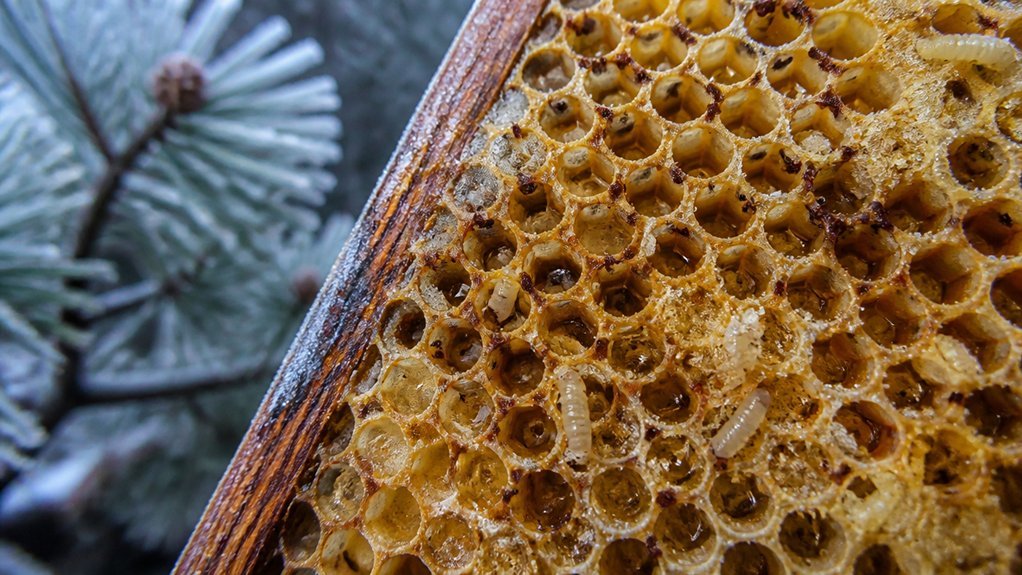
Chewed comb is a clear warning that something in the hive has been gnawing where it shouldn’t. You’ll often find ragged edges, torn cappings, or tunneled wax around stored honey and brood areas. Mice, wax moths, and beetles leave this kind of damage as they feed, hide, or nest in weakened colonies. These pests often exploit poor insulation or protection, making your hive more vulnerable during winter months. Check the lower boxes, corners, and frames near dead clusters, since pests usually attack the easiest spots first. If you see frass, webbing, or spilled pollen with the chewing, act fast. Remove damaged frames, reduce entrances, and strengthen the colony’s defenses. Clean up debris so pests don’t keep spreading. Early detection helps you limit winter losses and gives your bees a better chance of surviving until spring.
How Winter Pests Weaken Colonies
Winter pests weaken colonies by draining the bees’ energy, food, and warmth when the hive is already under stress. You may notice moth larvae, mice, or beetles consuming wax, stored pollen, and honey, leaving less for your bees to survive on.
Winter pests drain bees’ energy, food, and warmth, leaving colonies with less to survive on.
As pests move through frames, they force workers to spend precious time cleaning, repairing, and guarding instead of clustering and resting. That extra labor wears them down and reduces the colony’s ability to maintain order.
If pests infest brood areas, they can disrupt development and create more work for nurse bees. You’ll also see more waste and debris inside the hive, which adds to the colony’s burden. Proper hive management, including the use of robbing screens, can help prevent pests from gaining easy access and reduce the stress on your colonies.
Over time, these pressures can shrink the population and leave your bees less able to bounce back in spring.
How Cold Hurts Bee Defenses

When cold sets in, your bees’ stress levels rise and their immunity drops. They also move less, so they can’t defend the hive as well. A low-moisture, easy-to-apply fondant provides necessary energy while preventing excess humidity that could promote mold or spoilage.
Winter Stress Weakens Immunity
Cold snaps don’t just make the hive uncomfortable—they can weaken a colony’s defenses. When your bees face prolonged chill, their bodies divert energy from immune work to survival. That means fewer resources for producing antimicrobial compounds, repairing tissue, and fighting off bacteria, fungi, and viruses.
Stress also disrupts normal physiology, so a colony that should be resilient can become easier to infect. If pests or pathogens are already present, winter pressure gives them an opening to spread faster.
Proper hive elevation on supportive beehive stands can help prevent excess moisture buildup, further reducing exposure to mold and damp-related issues. You can’t stop the temperature, but you can reduce strain by keeping the hive dry, well-fed, and protected from drafts. When you limit winter stress, you help your bees preserve the immune strength they need to make it through the season.
Reduced Movement Limits Defense
As temperatures drop, bees slow their movement to conserve energy, and that reduced activity makes it harder for them to defend the hive. You’ll see fewer workers patrolling the entrance, grooming nestmates, or removing intruders and debris.
When the cluster stays tight, individual bees can’t shift quickly to meet a threat, so pests gain more opportunities to slip past guards. Your colony also can’t mobilize as many defenders at once, which weakens its front line.
Even small disturbances demand more effort when cold has already limited motion. You can help by keeping the hive sheltered from wind and moisture, reducing extra openings, and avoiding unnecessary disruption. Less movement means less coordination, and that makes winter defenses easier to overwhelm. Additionally, reducing access points with ant guards can further prevent pest entry during these vulnerable months.
Cold Slows Pest Response
Icy temperatures don’t just slow the bees down—they also slow how fast they can react to threats. When you keep a colony warm, you help bees spot and confront pests before they spread.
In the cold, their muscles work less efficiently, so grooming, biting, and pushing intruders away all take longer. That delay gives mites, beetles, and microbes more time to settle in and multiply.
You’ll also notice that chilled bees can’t coordinate as well, which weakens the hive’s shared response. A colony that reacts slowly can lose precious energy trying to recover instead of defending itself.
Additionally, cold temperatures can impair the bees’ immune responses, making it even harder for them to combat invading pests effectively hive health.
Why Small Pests Cause Big Damage

Even the tiniest winter pests can overwhelm a colony because they multiply fast, hide well, and target weakened bees when the hive is already under stress. You might dismiss a few mites or small scavengers, but each one drains energy, spreads irritation, and steals resources your bees need to stay warm. In winter, your colony can’t spare those losses.
Pests crowd brood, weaken individuals, and make it harder for bees to cluster tightly and conserve heat. Even minor damage adds up because your bees work with limited food and less mobility. When you ignore small invaders, you give them time to sap strength, reduce survival, and turn a manageable nuisance into a serious threat before you notice the full impact.
Start Winter Pest Checks Early
Start your winter pest checks before cold weather settles in, because early inspection gives you time to spot trouble before the colony is too stressed to handle it. You can catch signs of mice, wax moths, beetles, or weakened combs while the weather still lets you work comfortably.
Walk around each hive, look for gaps, chew marks, unusual debris, and uneven activity at the entrance. Check nearby brush, stacked equipment, and storage areas too, since pests often hide close by. If you find anything suspicious, act right away so the problem doesn’t grow when the bees are clustered and less able to defend themselves.
Early checks help you stay ahead of damage, protect food stores, and enter winter with stronger colonies.
Winter Hive Inspections That Work
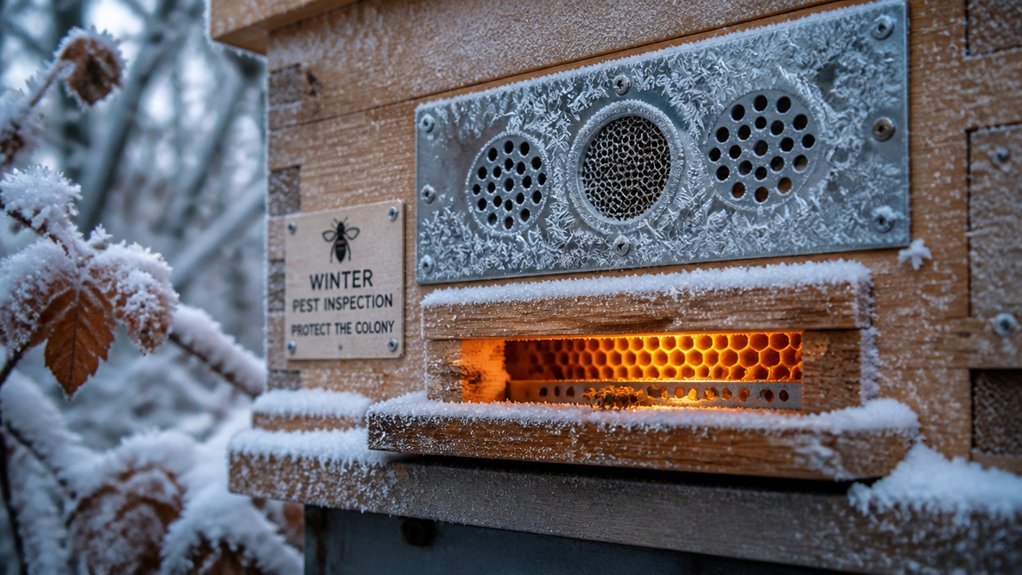
You should inspect hive entrances for dead bees, debris, and signs of pests blocking airflow.
Then check food stores to be sure your colony has enough honey to last through cold spells.
Finally, monitor moisture levels so you can keep the hive dry and reduce winter stress.
Inspect Hive Entrances
When winter settles in, a quick look at the hive entrance can tell you a lot about colony health. You should watch for dead bees, mouse droppings, chewed wood, or debris blocking airflow.
Clear away snow, ice, and grass that crowd the opening, because pests love sheltered access points. Keep an eye out for signs of robbing, such as frantic bees, wax scraps, or fighting near the entrance.
If you notice holes or gaps, you can reduce the opening with an entrance reducer or screen to make it harder for intruders to get in. Stay calm and move slowly so you don’t chill the cluster.
A clean, guarded entrance helps your bees stay protected, conserve energy, and handle winter stress more effectively.
Check Food Stores
After checking the entrance, make sure the colony has enough food to carry it through winter. You can lift the back of the hive to judge weight, or open it briefly on a mild day and inspect the frames.
Look for solid bands of capped honey near the cluster, since bees need easy access when cold keeps them inside. If stores look thin, feed fondant, candy boards, or dry sugar so you don’t spark fermentation or robbing. Place food above the bees, where they can reach it without breaking cluster. Don’t rely on empty outer frames; winter bees need nearby reserves.
Record what you see so you can adjust your plan before hard weather settles in and the colony runs short.
Monitor Moisture Levels
Moisture can do as much damage as cold, so check for dampness during winter hive inspections. Look under the inner cover, around the cluster, and along the hive walls for condensation, mold, or wet comb.
If you find excess moisture, improve ventilation with a slightly raised outer cover or a moisture quilt, but don’t create drafts that chill the bees. Keep the entrance clear so humid air can escape, and make sure snow or debris isn’t blocking airflow. Dry hive wraps and sound insulation help too.
When you monitor moisture regularly, you reduce stress, protect broodless bees, and lower the risk of disease. A dry hive gives your colony a better chance to survive until spring.
Moisture Issues That Draw Pests In
Even in winter, damp spots around your colony can act like a magnet for pests. When condensation collects on lids, walls, or frames, you create easy drinking spots for mice, ants, and other intruders. Wet insulation, leaking covers, and pooled water near the entrance also weaken the hive’s defenses.
Cold, damp air slows the bees’ ability to stay dry and clustered, so they spend more energy managing the chill. You should check for gaps that let rain, snow, or meltwater seep in, then fix them fast. Improve ventilation enough to reduce moisture without chilling the colony. Keep landing areas dry and clear. When you cut down excess dampness, you make the hive less attractive and help your bees conserve strength through winter.
Stored Honey Mistakes That Invite Pests
If you leave honey supers, wax scraps, or extracted frames sitting around, you’re practically sending pests an invitation. You give mice, ants, wasps, and moths easy food and shelter, and they’ll keep coming back. Store every sticky item promptly, and keep your yard from becoming a buffet.
- Stack empty supers off the ground
- Remove cappings and wax crumbs
- Clean extractor spills right away
- Cover stored comb tightly
- Check storage areas often
When you ignore residue, pests spread fast, chew comb, contaminate stores, and stress nearby colonies. You also make winter inspections harder because hidden infestations can build in silence.
Handle extracted equipment like valuable bait, not trash, and you’ll cut off one of the easiest pest pathways before cold weather tightens its grip.
How to Seal Hive Gaps and Openings
Seal every crack, seam, and loose opening before winter sets in, because pests only need a small gap to slip into a hive. You should inspect the bottom board, inner cover, telescoping cover, and box joints for spaces that let mice, beetles, or wasps enter.
Press weatherproof foam, wood shims, or caulk into the largest gaps, but keep ventilation paths clear so moisture can escape. Replace warped boards and tighten loose hardware so parts sit flush. Install a mouse guard over the entrance and make sure it fits snugly against the landing board. Check around feeders, feeder holes, and accessory attachments too.
After you seal everything, watch for new gaps after storms, freeze-thaw cycles, or shifting equipment, and repair them quickly.
Safe Winter Pest Treatments for Bees
Once you’ve blocked off entry points, the next step is choosing winter pest treatments that won’t harm your bees. You should favor bee-safe options and apply them only as directed.
Cold-weather pests can linger on frames, cluster edges, and hive surfaces, so target the problem without disturbing the colony.
- Use screened bottom boards to let debris fall away.
- Place approved mite treatments only when temperatures fit the label.
- Remove dead pests and dropped wax promptly.
- Check ventilation so moisture doesn’t help pests survive.
- Wear gloves and limit hive opening time.
You’ll protect your bees by avoiding harsh chemicals and overuse. Read product labels carefully, and choose treatments designed for winter colony conditions. Keep each application precise, calm, and brief.
How to Prevent Future Infestations
To keep winter pests from coming back, you’ll need a steady prevention routine that starts before cold weather sets in. You should inspect your hive boxes, frames, and entrances for cracks, gaps, and damp spots, then repair them right away.
Keep colonies strong by leaving enough healthy bees, adequate food stores, and clean comb. Reduce clutter around the apiary so pests don’t find hiding places. Set colonies on stands to limit moisture and discourage rodents. Use tight-fitting entrances and hardware cloth where needed, but don’t block ventilation.
After each season, clean tools, remove debris, and replace damaged equipment. Monitor weekly during winter thaws so you can spot trouble early. If you stay consistent, you’ll cut off repeat infestations before they start.
Frequently Asked Questions
What Honey Bee Breeds Resist Winter Pests Best?
Carniolan and Russian bees resist winter pests best; you’ll also find Buckfast lines hardy. You should choose queens from local survivor stock, because they’re adapted, vigorous, and often better at handling mites and cold stress.
Can Winter Pests Spread Diseases to Nearby Hives?
Yes, winter pests can spread diseases to nearby hives when you let them move between colonies. You should monitor infestations, reduce drift, and treat promptly, because mites and contaminated debris can carry pathogens quickly.
Should Weak Colonies Be Combined Before Winter Arrives?
Yes, you should combine weak colonies before winter arrives so you can reduce stress, conserve food, and improve their chances of surviving cold weather. Don’t leave tiny colonies struggling alone if they can’t cluster well.
How Often Should Winter Pest Traps Be Checked?
Check winter pest traps every one to two weeks. You’ll catch problems early, replace bait when needed, and keep pests from building up around your colonies during cold weather.
Do Winter Pests Harm Honey Quality or Taste?
Yes, winter pests can harm your honey’s quality and taste by stressing colonies, contaminating comb, and encouraging mold or off-flavors. You’ll protect cleaner, better-tasting honey when you control pests early and keep hives healthy.
In Summary
Protecting your colonies from winter pests helps you keep bees healthy, strong, and ready for spring. When you check for signs early, seal gaps, and avoid honey mistakes, you give pests fewer chances to spread. Cold weather already makes bees work harder, so a secure hive matters even more. By using safe treatments and good winter care, you protect your colony now and prevent bigger problems later. Your bees will thank you.