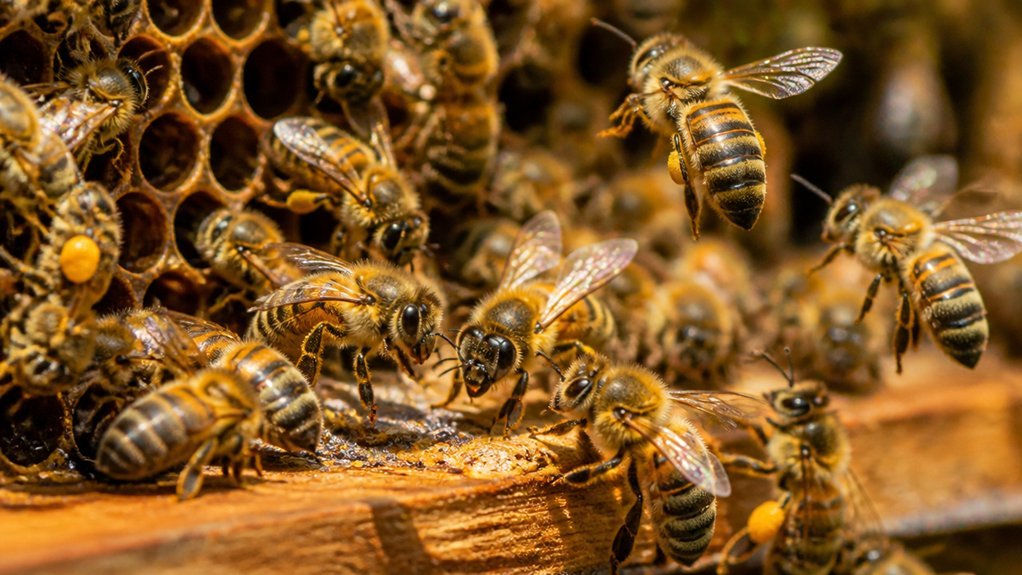
Aggressive colonies swarm faster because crowding, heavy brood rearing, and constant agitation build pressure quickly. You should inspect for a solid laying pattern, open comb for the queen, and any charged queen cells or polished cups. Relieve congestion by removing swarm cells, shifting brood frames, and adding space or open brood. If the hive stays hot and crowded, split it early or requeen it before it commits to swarming, and you’ll see why timing matters.
Why Aggressive Colonies Swarm Faster
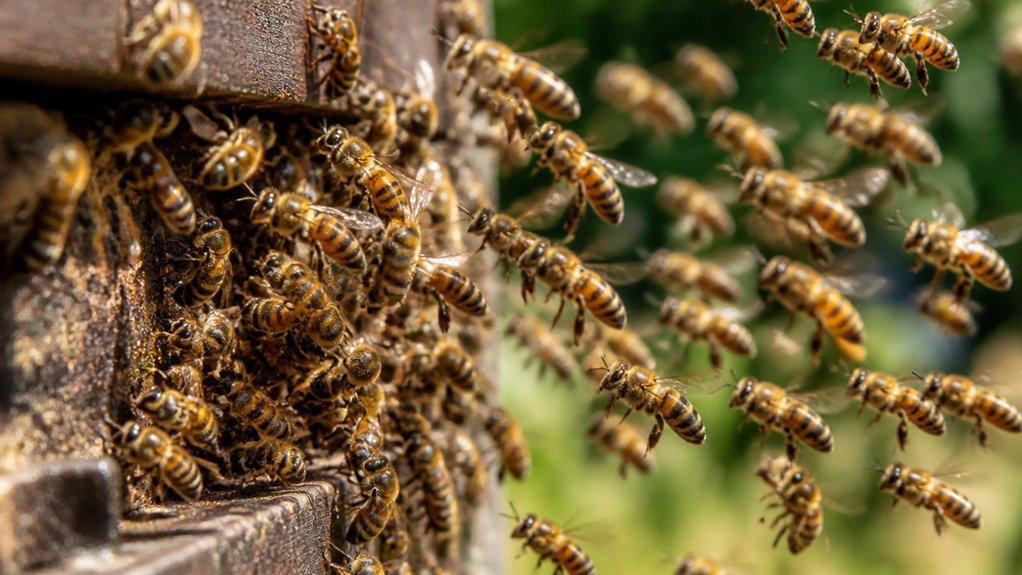
Aggressive colonies often swarm faster because strong crowding pressure and frequent interactions can push them to split sooner. You’ll notice workers move more sharply, defend resources harder, and disrupt normal space use inside the hive. That constant tension can make the colony feel unstable, so bees react by preparing to divide.
When you keep handling these colonies, you may also trigger even more agitation, which adds to the pressure. Strong brood rearing and heavy congestion can amplify the urge to leave, especially when the colony can’t relax. You should watch for this fast buildup of stress and respond early.
Check Queen Space and Laying Pattern
After you’ve watched for signs of crowding and rising tension, check whether the queen still has enough open comb to lay in. You want to see a broad, clean patch of cells, not a tight ring of nectar or backfilled brood.
Check whether the queen still has enough open comb to lay in.
Walk the frame slowly and imagine the queen moving like a dark brush across polished wax. Look for:
- Fresh eggs centered in tidy rows.
- Even brood arcs with no gaps.
- Open cells beside and below brood.
- A solid, steady laying pattern across several frames.
If the pattern looks spotty or squeezed, the colony may be running out of usable space. Keep your notes precise, because queen space tells you how comfortably the hive is functioning right now, and that snapshot helps you judge whether pressure is building toward swarming. Be sure to assess the queen’s laying pattern regularly to maintain a healthy, non-swarming colony.
Use Brood Management to Relieve Swarm Pressure
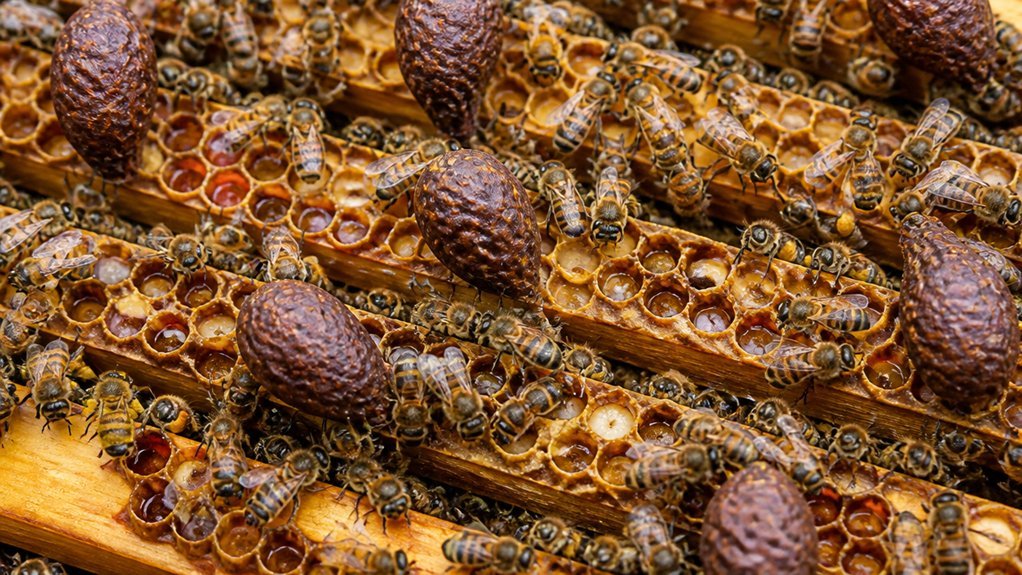
You can ease swarm pressure by removing any swarm cells you find so the colony doesn’t keep building toward a split.
Add frames of open brood to redirect nurse bees and give the queen more room to expand her laying.
This simple brood management helps the hive stay focused on growth instead of swarming.
Using modular hive layers allows for better weight management and easier inspection routines.
Remove Swarm Cells
When swarm cells appear, remove them only as part of a broader brood-management plan that eases pressure inside the colony. Inspect the combs carefully, then scrape out every capped or charged cell you find. Work methodically so you don’t miss hidden pockets along the lower bars, corners, or frame edges.
A good understanding of trap placement can aid in managing swarm pressure and monitoring hive health.
- Lift each frame and catch the light on the wax.
- Trace the queen cups with your finger.
- Pry out the swollen, peanut-shaped cells.
- Return the frames in the same order.
After you clear them, monitor the hive closely. If you leave any cells behind, the colony can still cast a swarm. Keep your movements calm and deliberate, because rough handling can agitate bees and undo your efforts.
Add Open Brood
Slide in a frame of open brood to give the colony more space to nurse and reduce swarm pressure. You’ll shift young larvae into the hive, and the workers will focus on feeding instead of hanging around the entrance. That extra duty slows swarm buildup and keeps the queen’s lay rate steady. Place the frame near the center of the brood nest, but don’t add capped brood if you want the strongest effect. Using frames that promote comb stability can further support healthier colony development.
| Brood type | Main effect | Best use |
|---|---|---|
| Open brood | Boosts nursing | Lowers swarm drive |
| Emerging brood | Adds bees soon | Strengthens buildup |
| Capped brood | Delays action | Less useful here |
Check back in a few days. If the colony still feels crowded, repeat brood management before they set off.
Open Up the Brood Nest to Reduce Congestion
Open the brood nest by giving the queen more laying space and the workers more room to move, which helps ease crowding before it triggers swarming. You can shift frames to open gaps and keep brood centered where bees can fan, feed, and circulate freely.
Open the brood nest to give the queen space, relieve crowding, and keep bees moving freely.
Watch for a tight cluster pressing against capped brood, nectar, and pollen. Then make small, careful adjustments:
- Move one brood frame outward.
- Insert an empty drawn comb near the center.
- Keep food stores from boxing in the nest.
- Leave clear lanes for bees to pass.
When you open the brood nest, you reduce pressure, improve ventilation, and signal the colony that it has space to expand without splitting.
Split Aggressive Colonies Before They Swarm
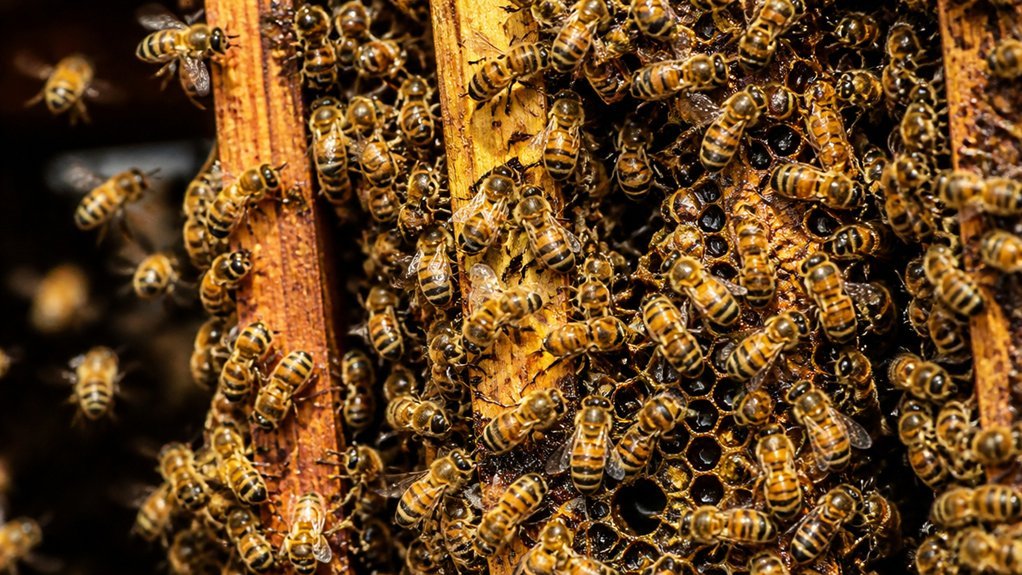
When you spot a hot, crowded colony, split it before swarm cells appear.
Choose healthy brood and food frames for the new split so it can build up fast. Requeen the split right away to steady the colony and keep it productive.
Implementing a proper starter kit setup can also make hive management easier and reduce the chances of swarming.
Timing The Split
If a colony is getting hot, crowded, and increasingly defensive, don’t wait for visible swarm cells to make your move. Split early, while foragers still fly steadily and the brood nest still feels orderly.
Watch the rhythm of the hive, not a single dramatic sign. A timely split can calm pressure before the colony tips toward departure.
- Early morning: bees cluster quietly on comb.
- Midday: traffic thickens at the entrance.
- Warm afternoons: the brood area feels tight.
- Sudden agitation: guards rush and buzz harder.
When you see this pattern, act fast. Move with purpose, separate the colony, and create breathing room before instinct takes over.
The goal is simple: interrupt swarm momentum while the colony can still recover smoothly. Paying attention to bee space and hive organization can help you better identify the optimal timing for intervention.
Choose Healthy Frames
Choose healthy, brood-rich frames from the strongest part of the colony so your split has the resources it needs to settle fast. You should pick frames with capped and open brood, plus plenty of young nurse bees clinging to them. Include one frame with honey and one with pollen to support feeding and development.
A new frame with proper sizing ensures easy management and reduces the risk of damaging the brood during handling.
Avoid frames with signs of disease, heavy drone brood, or poor pattern, since weak comb can slow recovery. Inspect each frame carefully before moving it, and keep the brood nest balanced so you don’t strip the parent colony too hard.
Work gently to protect larvae and queens cells. When you choose strong frames, you give the new split a solid start and reduce stress on both colonies.
Requeen The New Split
Requeen the new split right away if you want to calm a colony that’s showing aggressive or swarm-prone behavior. Remove the old queen, then introduce a young, well-mated queen to redirect the bees’ energy from crowding and fighting to building comb and raising brood.
You’ll often see the hive settle within days as scent, posture, and traffic change. A well-designed queen cage can facilitate a smooth introduction, minimizing stress and increasing acceptance queen safety features.
- Picture workers fanning a fresh queen’s pheromone through the entrance.
- Picture calmer bees moving in smooth lines across the frames.
- Picture capped brood replacing restless buzzing and hanging clusters.
- Picture a split box filling with ordered, purposeful activity.
Watch for Swarm Signs After Every Inspection
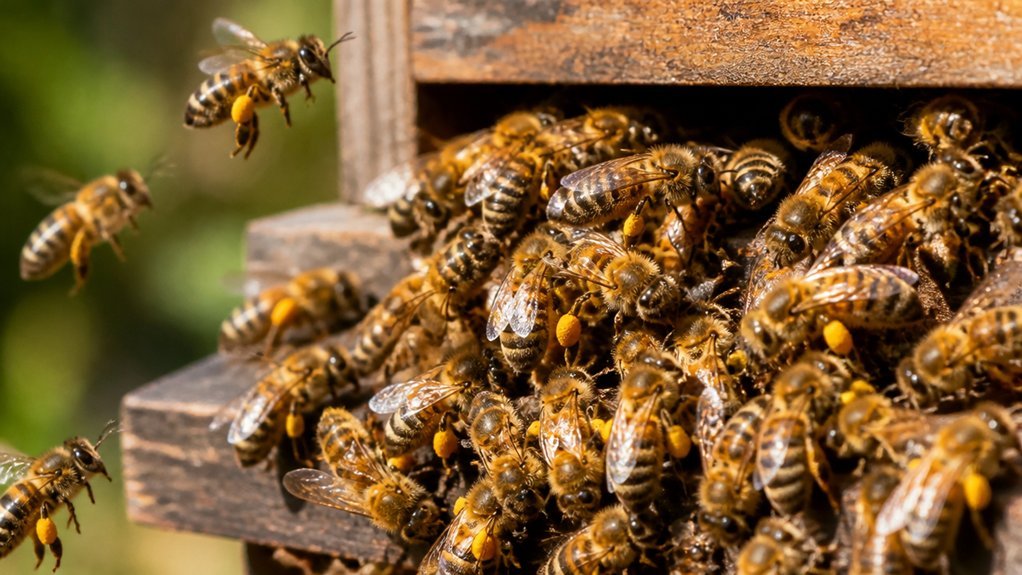
After every hive inspection, watch closely for early swarm signs so you can act before your colony commits to leaving. Check for charged queen cells, crowded frames, reduced brood nest space, and bees clustering near the entrance or under the lid. Listen for a calmer, thinner hive tone, which can signal that the colony’s swarming impulse is building.
A thorough understanding of pheromone signals can help you interpret colony behavior and anticipate swarming tendencies.
If you spot polished queen cups or swarm cells, don’t ignore them; they often appear before the bees commit. Review your notes from each visit so you can compare changes in brood pattern, food stores, and congestion.
When you catch these clues early, you can add space, split the colony, or requeen before swarming takes off. Consistent observation gives you the best chance to stay ahead of a strong hive.
Frequently Asked Questions
What Weather Conditions Trigger Swarming in Aggressive Colonies?
Warm, humid, calm days with a dearth of nectar often trigger swarming in aggressive colonies. You’ll see it after several sunny spells, especially when hive congestion builds and ventilation stays poor.
How Does Genetics Affect Swarm Tendencies in Bees?
You’ll see genetics shape swarm tendencies strongly: some bee lines inherit high reproductive drive, crowdedness sensitivity, and queen replacement behavior. You can’t fully eliminate swarming, but you can select calmer, less swarm-prone stock.
Can Feeding Practices Increase or Reduce Swarm Risk?
Yes—your feeding practices can raise or lower swarm risk. If you overfeed syrup during nectar flows, you’ll crowd the hive. Instead, feed only when needed, keep stores balanced, and avoid stimulating heavy brood buildup.
What Equipment Helps Monitor Swarm Cells Efficiently?
You’ll monitor swarm cells best with a hive tool, flashlight, inspection mirror, frame grip, and magnifying lens. Add a smartphone camera or endoscope, and you can spot queen cups quickly without disturbing the colony much.
When Is the Best Time of Day to Inspect Swarm-Prone Colonies?
You’ll inspect swarm-prone colonies best on warm, calm late-morning to early-afternoon days, after most foragers leave. You can spot queen cells more easily, and your colony stays less defensive during checks.
In Summary
Keeping aggressive colonies from swarming means staying ahead of pressure before it builds. Check queen space, watch the brood pattern, and open the nest when it starts to crowd. If brood is stacking up, manage it fast and give the bees more room. Don’t wait for swarm signs to become a crisis. When a colony stays strong and crowded, splitting it early can save your bees and your season.