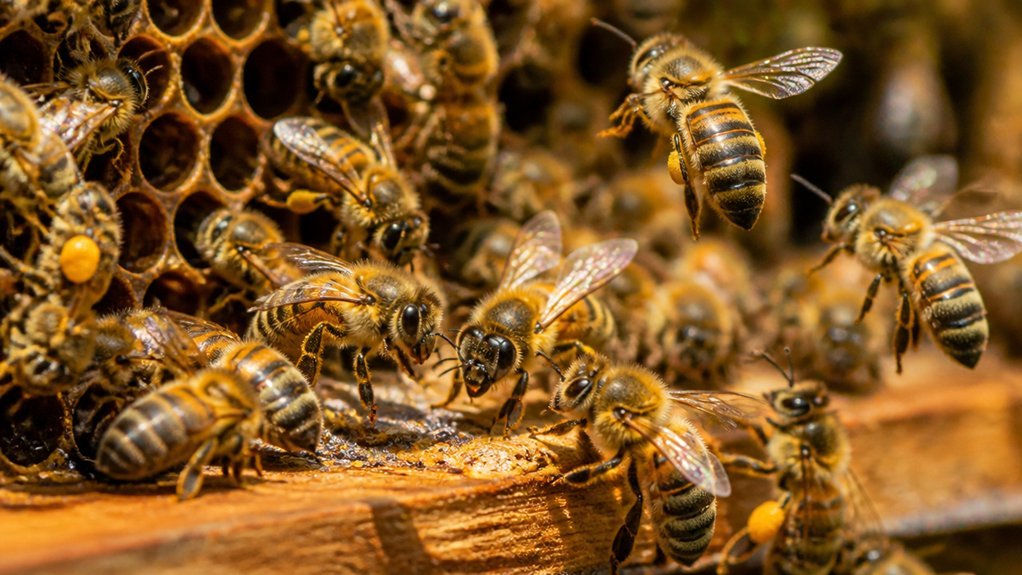
Late-season swarm prevention tactics mean you keep your hive uncrowded, queen-right, and well balanced. You should inspect for tight clustering, spotty brood, queen cells, and honey or nectar blocking the brood nest. Add space, clear burr comb, and improve airflow before cooler weather worsens congestion. If the queen’s failing, requeen early so the colony stays calm and productive. Keep watching through fall, because the warning signs usually tell you what to do next.
What Causes Late-Season Swarming

Late-season swarming usually happens when your hive feels crowded, stressed, or unbalanced after a strong nectar flow. You may see it when your bees recover from a heavy buildup and then face sudden shifts in forage, weather, or colony activity.
As nectar dries up, workers can become restless, and your queen’s pheromones may not spread as effectively through the colony. If you’ve allowed the hive to grow too quickly, bees can interpret that pressure as a signal to split.
You’ll also see more swarming when mites, disease, or poor nutrition weaken the colony and disrupt normal organization. In late summer and early fall, these stressors combine, pushing bees toward reproduction instead of stability. Proper mite management, especially monitoring with varroa mite testing kits, is essential to prevent such issues from escalating into swarming.
Inspect Hive Space and Brood Pattern
Start by opening the hive and checking whether the bees have enough room to expand. Look at each box for crowded frames, burr comb, and bees packed tight between combs.
Open the hive and check for crowding, burr comb, and bees packed tightly between frames.
If you see brood spread across only a few frames, your colony may be concentrating work in a way that raises swarm pressure. A healthy brood pattern should look solid, even, and consistent, with capped brood surrounding open brood and food stores balanced nearby. Spotty brood can signal stress, poor queen performance, or a shifting colony dynamic that needs attention.
You should also note whether the bees are storing nectar in the brood area, since that can limit laying space. Ensuring your frames are properly assembled and fit well in the hive, with proper frame size compatibility, helps prevent comb misalignment and promotes straight, solid comb building.
Keep your inspection calm and quick so you don’t add unnecessary disturbance to the hive.
Reduce Swarm Risk Before Fall
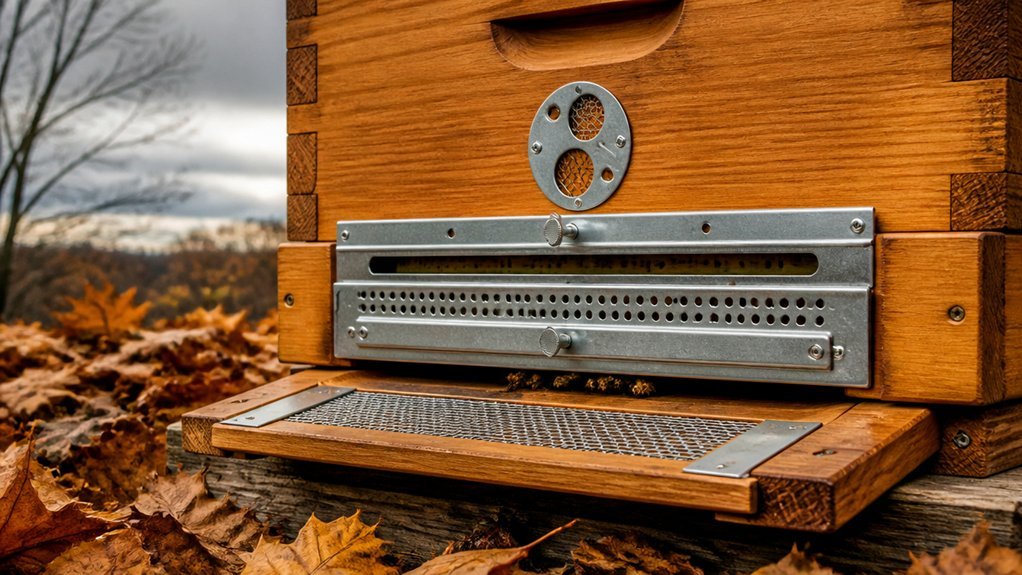
Before fall arrives, you can lower swarm pressure by giving the colony room to breathe and cutting off the conditions that trigger crowding. Add an empty super if boxes are packed, and keep entrance traffic moving so bees don’t bunch up inside.
Remove excess burr comb and unused frames that limit circulation. Then check food stores; if nectar flow’s slowing, you don’t want a congested hive full of backlogged workers.
A proper swarm trap placement can also help divert swarming behavior away from your main hive.
- Open space with extra drawn comb.
- Improve airflow by clearing obstructions.
- Avoid leaving crowded queen cups unaddressed.
- Reduce repeated disturbance that can spike agitation.
Work quickly, then close the hive cleanly. Small adjustments now can keep bees focused on winter prep instead of swarm behavior.
Requeen Crowded or Failing Colonies
If you spot spotty brood, a shaky laying pattern, or bees acting restless, your queen may be failing. Requeening can steady the colony, improve brood production, and cut swarm pressure in a crowded hive. Properly queen marking kits can also help monitor queen health and facilitate easier requeening procedures. You’ll get the best results if you time the queen swap before the colony slips further and spring buildup starts to stall.
Signs of Queen Failure
How do you know when a colony’s queen is failing? You’ll spot warning signs during inspections, and you need to act fast. Look for:
- Patchy brood patterns with too many empty cells.
- A sudden drop in eggs, larvae, and capped brood.
- Excessive drones or drone brood in worker areas.
- Restless behavior, roaring sounds, or queen cells in strange places.
You may also notice the bees running around nervously instead of forming a calm, orderly nest.
If the brood nest shrinks and the queen’s pattern looks weak, the colony can’t keep pace with late-season pressure. Check carefully, confirm the problem, and decide whether the queen still has enough strength to keep the hive stable through the season. Properly rearing queens can help prevent these issues before they arise.
Benefits Of Requeening
Requeening a crowded or failing colony can quickly reset the hive’s momentum and reduce swarm pressure. You give the bees a younger, more productive leader, and that often improves brood pattern, calmness, and overall organization.
A strong queen can restore pheromone strength, which helps hold workers together and reduces the impulse to build queen cells. You also improve egg laying, so the colony spends less energy on disruption and more on gathering stores.
If the hive has grown restless or patchy, a new queen can stabilize behavior before late-season congestion turns into a cast. You’ll often see better population balance, fewer pauses in brood rearing, and a colony that stays focused on finishing the season strong.
Additionally, selecting the right queen stock and timing requeening carefully can further enhance colony resilience and productivity during the critical late-season period.
Timing The Queen Swap
Timing matters when you swap queens in a crowded or failing colony, because a late move can leave you with too little time to settle the hive before swarm pressure peaks. You should act before brood nests choke the box or egg laying drops. A quick requeen can calm workers, reduce congestion, and restore order. Watch for these signals:
- Heavy bearding on warm afternoons
- Spotty brood patterns or poor brood viability
- Aggressive temperament or queen cells in progress
- Slowing population growth despite strong stores
When you replace the queen early, you give the new brood cycle time to build before late-season stress hits. Check acceptance after a few days, then keep feeding and trap placement steady so the colony can reset without triggering swarming.
Balance the Brood Nest and Stores
When you keep brood nest pressure and honey stores in balance, you give the colony less reason to crowd the brood area and prepare to swarm. You can do this by opening enough comb for the queen to lay while leaving the bees ample space above and beside brood frames for nectar storage.
If honey plugs the center of the nest, move capped frames outward and give drawn comb where you can. Avoid overusing excluders or stacking surplus too close to the brood chamber, since that can tighten space and trap bees below.
Instead, keep food within reach but not packed into the brood area. Your goal is a roomy, functional nest that lets workers circulate, feed brood, and store incoming nectar without forcing congestion or tension. Proper wood material quality and beeswax coatings also help create a stable, insulated environment that discourages swarming tendencies.
Watch for Swarm Signs Through Fall

As fall sets in, you should watch for late-season queen cells, since they can signal a last push to swarm. Check for hive congestion and make sure the bees still have room to move and store food.
You should also watch the brood pattern for changes, because a spotty or shrinking pattern can point to swarm pressure. Monitoring frame stability can help identify signs of instability that lead to swarming behavior.
Spot Late-Season Queen Cells
Late-season queen cells can still signal swarm trouble, so check your hives closely through fall. You should inspect frame edges, bottoms, and comb faces for peanut-shaped cells, especially after warm spells.
If you spot fresh larvae in multiple cells, treat it as a warning sign.
- Look for capped or uncapped queen cells each visit.
- Note whether cells appear in clusters or just one or two.
- Check if the colony has young queens emerging.
- Mark the hive and recheck it within a few days.
- Use proper hive tools to carefully pry apart frames without damaging the comb or encouraging additional swarm behavior.
Don’t assume cooler weather ends swarm risk; bees can still make moves when conditions stay mild. Quick, regular checks help you catch queen-cell changes early and act before your colony splits.
Monitor Hive Congestion
Even in fall, a crowded hive can still push bees toward swarming, so you need to watch for congestion as temperatures stay mild. Open the hive on warm, calm days and look for bees packed tightly across every frame, especially at the entrance and along the top bars.
If workers spill outside in clusters, the colony may be running short on space. Add room with an extra box only when the hive can still manage it, or remove unused comb that’s taking up valuable space. Keep entrances clear so traffic flows smoothly, and avoid stacking equipment in ways that trap heat.
Check Brood Pattern Changes
A crowded hive isn’t the only sign that swarming pressure is building, so you should also inspect the brood pattern closely.
When you lift frames, look for solid, even bands of eggs, larvae, and capped brood. If you see scattered brood, empty cells in the center of the nest, or a sharp drop in brood volume, your colony may be shifting toward swarm preparation or weakening for fall.
- Check for patchy brood.
- Note queen-right consistency.
- Watch for queen cups or charged cells.
- Compare brood size weekly.
Keep records so you can spot changes fast. If the pattern breaks down, reduce stress, improve space, and verify the queen’s performance.
Early detection helps you act before the colony commits to swarm behavior.
Frequently Asked Questions
How Do Late-Season Swarms Affect Winter Survival?
Late-season swarms weaken your colony by draining bees, honey, and brood-rearing energy. You’ll likely face fewer winter bees, poorer stores, and reduced insulation, so your hive may struggle to survive cold months.
Can Swarm Prevention Work During a Nectar Dearth?
Yes, you can still prevent swarming during a nectar dearth if you manage congestion, replace queens early, and add space. You’ll need to monitor closely, because stressed colonies may still attempt swarm preparation.
Should Honey Supers Stay on After Swarm Season Ends?
Yes, you can leave honey supers on if bees still need space and nectar’s flowing, but you’ll usually remove them before treatment or harvest. Check colony strength, inspect brood space, and keep inspections regular.
Do Drone Populations Influence Fall Swarm Behavior?
Yes—your drone populations can influence fall swarm behavior, because lots of drones signal strong reproductive readiness. You’ll want to monitor colony congestion, queen status, and brood patterns, since drones alone don’t usually trigger late swarms.
What Equipment Helps Monitor Swarm Pressure in Autumn?
You’ll monitor autumn swarm pressure with hive scales, brood frames, a smoker, inspection tool, queen excluder, sticky boards, and an entrance reducer. Use them to check congestion, brood buildup, and scout activity quickly.
In Summary
Late-season swarming can still catch you off guard, so keep checking your colonies as fall approaches. Inspect hive space, brood patterns, and food stores, and give crowded hives room before they feel the need to split. If a queen is failing or the brood nest is out of balance, act quickly to reset the colony. By staying alert and making small adjustments now, you’ll lower swarm risk and help your bees head into fall stronger.