You use supers to give your hive extra room above the brood chamber, which helps prevent swarming by easing crowding and giving foragers space to store nectar and honey. When bees start filling brood frames, hanging in clusters, or running out of laying space, add a super before congestion builds. Drawn comb works fastest, and shallow or medium supers are easy to manage. Keep going, and you’ll see how to time them and spot swarm pressure.
What Is a Super in Beekeeping?

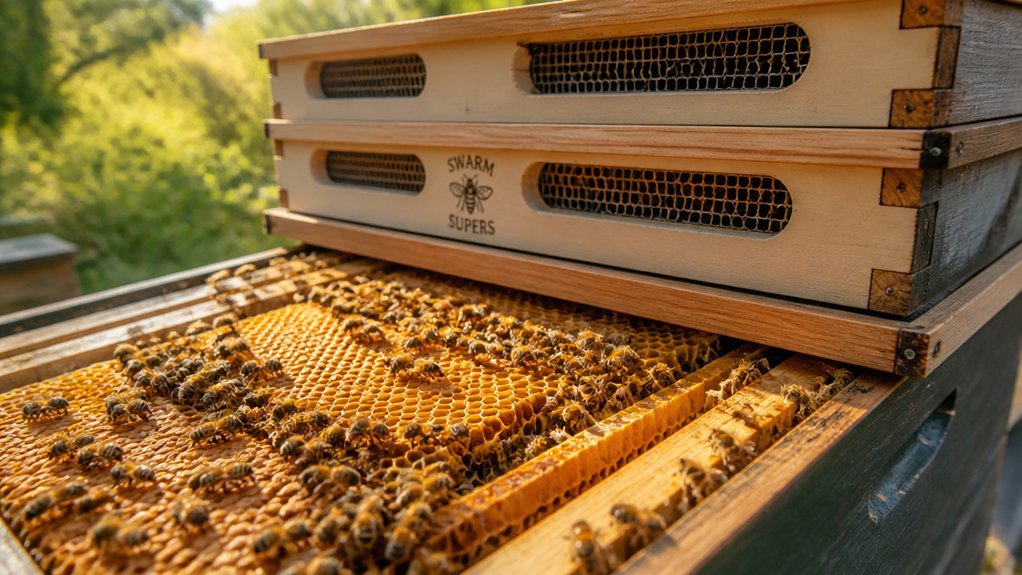
A super is an extra hive box you add above the brood chamber to give your bees more room to store honey and nectar. You stack it on top of the lower boxes, and you usually fit it with frames so your bees can build comb and store surplus honey. Proper frame compatibility ensures smooth integration and efficient space utilization within your hive. In most hives, you choose shallow, medium, or deep supers based on your setup and your lifting comfort. You can add one when the existing boxes fill up and the bees need more storage space. A super helps you organize honey production and keeps the brood area separate from the honey you plan to harvest. By understanding this part of the hive, you’ll manage your colony more confidently and keep your equipment working efficiently.
Why Supers Help Prevent Swarming
When your hive starts to feel crowded, adding supers gives the colony more room to expand instead of triggering swarm behavior. You let bees spread out, store nectar, and keep working without feeling boxed in.
Adding supers gives your bees room to expand, helping reduce crowding and swarm pressure.
That extra space eases congestion around the brood nest and helps maintain a steadier rhythm inside the hive. When bees have room, they’re less likely to signal that it’s time to leave.
- You reduce crowding in key hive areas.
- You give foragers and nectar handlers more workspace.
- You support the colony’s natural growth without forcing a split.
- Utilizing supers made of high-quality cedarwood and beeswax coatings enhances natural insulation and moisture control, further discouraging swarming behaviors.
How to Tell Your Hive Needs More Space
If you see brood frames packed tight with bees and little open room for new eggs, your hive likely needs more space. A larger frame count provides more room for brood and colony expansion, helping to prevent overcrowding. When you notice this pressure building, you can add a super before swarming starts.
Crowded Brood Frames
Crowded brood frames are one of the clearest signs your hive is running out of room. You’ll see the brood pattern squeezed tight, with nurse bees packed shoulder to shoulder and little open comb left for the queen to lay in.
When every frame looks busy, your colony can’t expand naturally, and that pressure can push swarm behavior.
Watch for these clues:
- Bees covering most brood cells
- Fresh nectar stored around brood
- The queen struggling to find empty space
If you lift a frame and see capped brood, larvae, and few vacant cells, pay attention. You don’t need to panic, but you do need to act soon.
A cramped brood nest tells you the bees are feeling boxed in, and they’re ready for more breathing room. Optimal hive space is essential for preventing swarming and maintaining a healthy colony.
Expanding Comb Space
More comb space can calm a hive that’s starting to feel boxed in. When you see bees crowding every frame, hanging in beard-like clusters, or filling cells with nectar instead of brood, they’re telling you they need room. If the queen has fewer places to lay, brood nest expansion slows and swarm pressure rises. Using pre-assembled hive parts with dovetail joints can help ensure the hive structure remains strong enough to accommodate this growth. Add a super before they start packing the brood chamber tight. You’ll know it’s time when fresh wax appears at the top bars, foragers return with strong nectar flow, and traffic builds at the entrance. Give them space early, and you help the colony stay focused on growth instead of splitting. Check frames often so you can spot congestion before it turns into a swarm call.
When to Add a Super
You’ll know it’s time to add a super when your bees crowd the brood nest, draw comb quickly, and start packing nectar into every available cell. A standard Langstroth dimension hive setup facilitates proper space management and expansion. Don’t wait until the hive feels cramped; add it before they run out of room and start thinking about swarming. The best time is during a strong nectar flow, when your colony can expand into the extra space right away.
Signs You Need Supers
How do you know it’s time to add a super? Watch your hive’s behavior closely. If brood cells are crowded, the queen’s space is shrinking, or bees are packing nectar into every open frame, you’ve got a warning sign.
You may also notice fewer empty comb cells for eggs, more congestion at the entrance, and a restless, booming hive. These clues mean your colony can outgrow its current setup quickly.
- Frames are packed with brood or nectar
- Bees cluster densely across multiple boxes
- The queen has limited room to lay
When you spot these signs, act before the colony feels squeezed. Adding a super gives workers room to expand and helps reduce pressure that can lead to swarming. Maintaining proper modular layers and ensuring ergonomic handling can also make hive management easier during these times.
Best Times To Add
The best time to add a super is before the hive runs out of room, not after it starts to crowd. You should act when you see brood nest expansion, heavy nectar coming in, and bees filling the outer frames fast.
If your local flow is about to start, place the super early so the colony can move up without delay. Add one when the bees cover most of the brood frames and begin storing nectar above the brood area.
Don’t wait for swarm cells if you can help it. Watch weather, strength, and forage, because a strong colony can outgrow space in days. When you stay ahead of congestion, you give the queen room to lay and lower swarm pressure before it builds. Pollinator support is essential for healthy hive growth and preventing swarming.
Best Super Types for Swarm Control

When swarms start to pile up, the best supers are the ones that hit wide, fast, and often. You want boxes that give bees room and keep brood nest pressure low.
Shallow supers work well because you can stack them quickly and remove them before congestion builds. Medium supers also help if you already use them consistently, since they’re easier to fill and manage. Avoid oversized equipment that slows colony expansion.
- Use drawn comb first to speed storage.
- Choose uniform supers so you can swap them easily.
- Add enough space to match nectar flow without crowding.
- Selecting plastic foundation sheets can improve comb building efficiency and hive health, supporting swarm prevention efforts.
Your goal is simple: spread bees out, reduce bottlenecks, and keep the hive from feeling packed.
How to Add a Super Without Disturbing Bees
Slip the super on during a calm part of the day, and you’ll keep the hive disturbance low. Choose a warm, dry window, and move slowly so you don’t trigger defensiveness. Set the super within reach before opening the hive, then smoke lightly at the entrance and under the cover.
Lift the lid gently, and avoid banging frames or tilting boxes hard. Place the super directly above the brood chamber, keeping the queen excluder aligned if you use one. Work smoothly, then close the hive and secure the cover without shaking the stack.
If you can, add the super when nectar flow is active, because bees usually stay calmer and accept the new space more readily. Using properly designed ventilation features can also help minimize stress during hive manipulations.
How to Know the Super Is Working
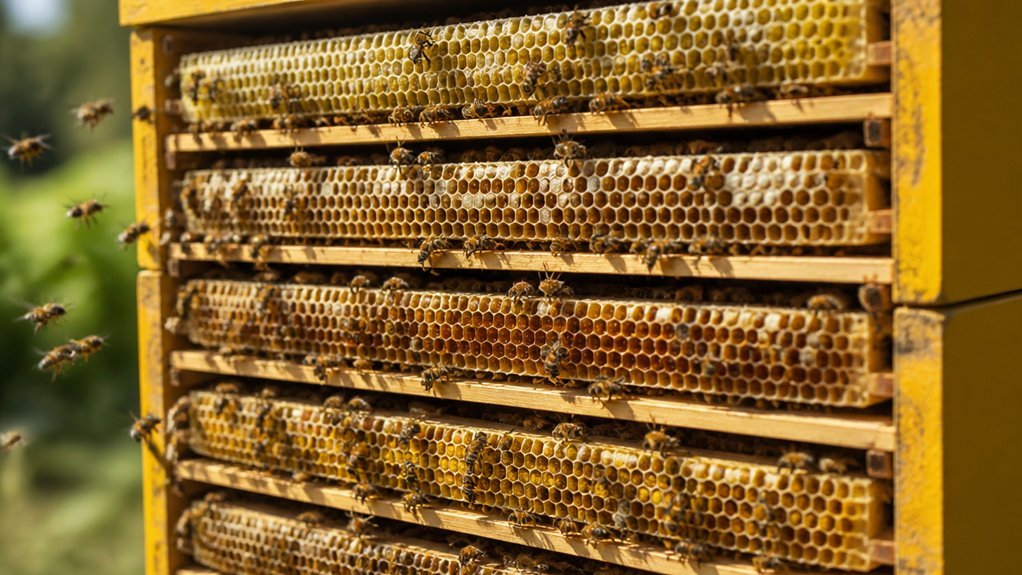
After you add the super, watch how the colony responds over the next several days. If the bees spread out into the new box, you’re on the right track. You should also see less crowding on the brood frames and more room for nectar storage.
- Bees start drawing comb in the super.
- Workers move nectar and pollen upward.
- The brood nest looks less packed and congested.
Check the entrance and top bars for steady traffic, but don’t expect dramatic changes overnight. A working super won’t stop every urge to swarm, but it gives the colony space to grow and relieves pressure inside the hive.
If you see bees calmly using the extra space, your setup is helping. Keep monitoring the hive regularly so you can confirm the colony keeps expanding instead of feeling cramped.
What to Do If Swarming Starts Anyway
If swarming starts anyway, act fast to reduce the colony’s urge to leave. Inspect the hive for swarm cells and the queen, then split the colony if possible.
Act quickly: inspect for swarm cells and the queen, then split the colony if possible.
Move the queen and several frames of brood, food, and bees into a new box, and leave the original hive with enough space and resources. Add drawn comb or foundation to both units so each has room to expand.
If you find the queen missing, use a caged replacement or a ripe queen cell to restore order. Keep entrances open for ventilation, and provide shade and water during hot weather.
Check again within a few days, because quick follow-up helps you confirm the bees have settled and prevents another swarm from developing.
Common Mistakes That Trigger Swarms
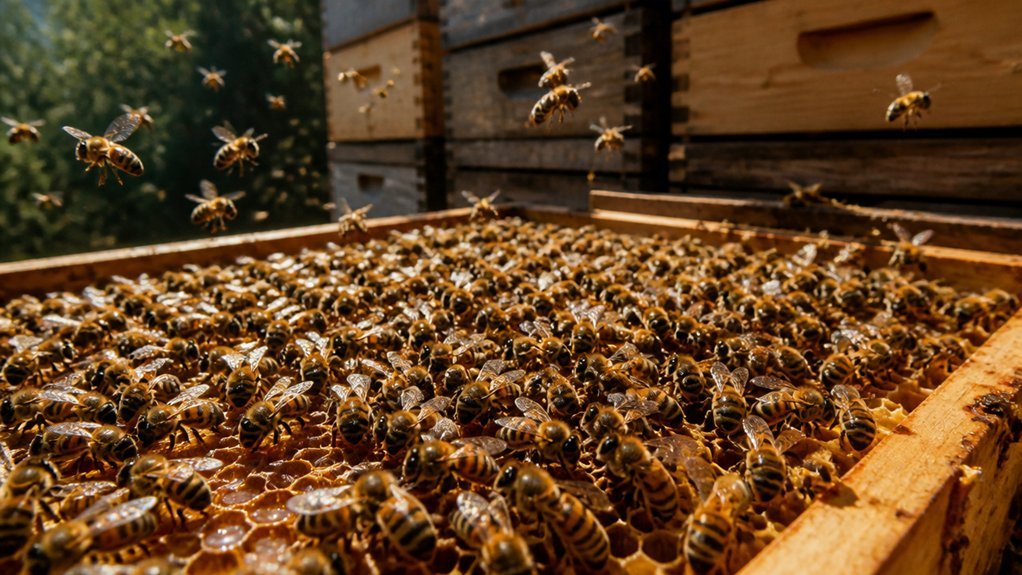
Even careful beekeepers can trigger swarming by making a few avoidable mistakes. You can push a colony toward congestion if you delay adding supers, inspect too roughly, or leave queen cells unchecked.
When you crowd brood frames, the bees feel boxed in and start planning to leave. If you split boxes too late, you’ll also miss the window to relieve pressure.
- Add space before the hive feels packed.
- Handle frames gently and avoid crushing bees.
- Watch for queen cells and act quickly.
You should also avoid overfeeding when nectar is already flowing, because excess stores can worsen crowding. Keep entrances clear, maintain strong ventilation, and check colony growth regularly so you can stay ahead of swarm impulses instead of reacting after they begin.
Frequently Asked Questions
How Many Supers Should a Strong Hive Have?
You should usually give a strong hive two supers during a nectar flow, then add a third if they’re crowded, booming, and storing quickly. You’ll avoid congestion and give bees room to expand.
Can Supers Be Added During a Nectar Dearth?
Yes, you can add supers during a nectar dearth, but you should only do it if bees can still draw comb and need space. Otherwise, you’ll waste equipment and may invite robbing.
Do All Hive Breeds Need the Same Super Strategy?
No, you shouldn’t use the same super strategy for every hive breed. You’ll need to match space, temperament, and nectar flow to each colony, because some bees build fast and others swarm more readily.
Should Supers Be Removed Before Winter?
Yes, you should usually remove supers before winter so you don’t leave excess space and cold comb behind. You’ll inspect stores first, then leave the colony with enough honey and a snug, winter-ready setup.
Can Honey Supers Affect Queen Excluder Use?
Yes, honey supers can affect queen excluder use because you’ll usually place the excluder below them. If you add or remove supers, you need to keep hive space and brood access properly arranged.
In Summary
Adding supers at the right time gives your bees the extra space they need to stay calm and productive. When you watch for crowding, use the right super, and add it carefully, you can lower the chances of swarming and keep your colony strong. Still, if your bees start showing swarm signs, act fast so you don’t lose your workforce. Stay ahead of hive buildup, and your bees will thank you with steady growth and honey.