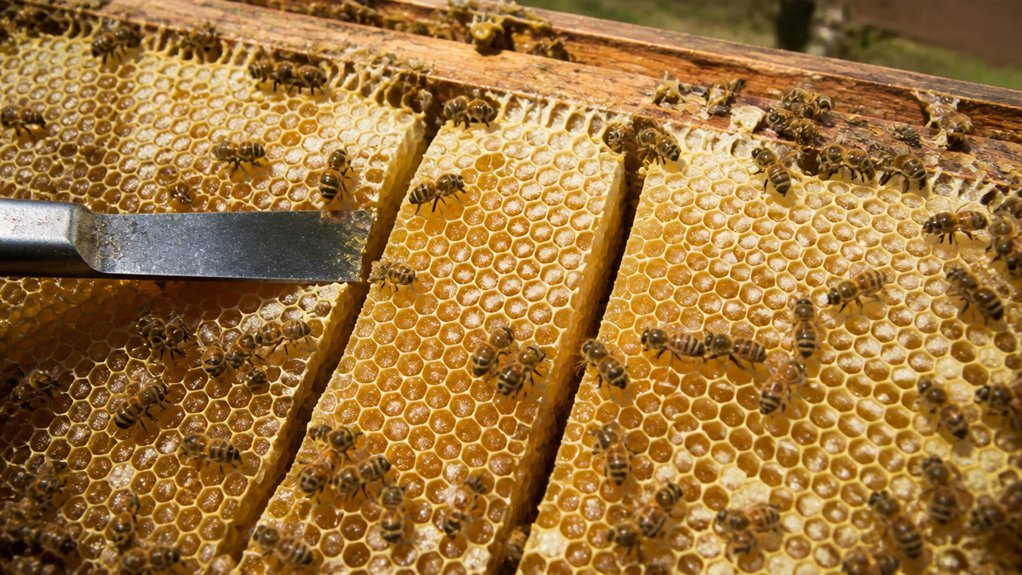
Watch for crowding, reduced brood space, queen cells, entrance clustering, and less comb work so you can act early. Set up a new hive nearby with drawn comb, foundation, a level bottom board, and enough room for brood and stores. Split the colony when swarm cells are open or just starting, not capped. Move capped brood and nurse bees to balance both hives, then feed, reduce entrances, and keep watching for what comes next.
How to Spot Swarm Signs in a Hive
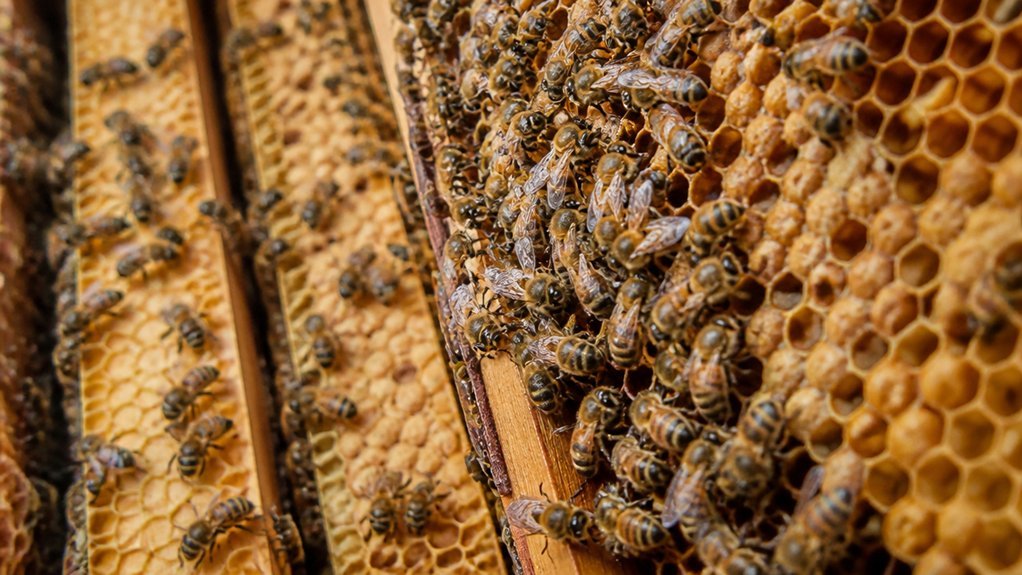
To spot swarm signs in a hive, start by watching for crowding, reduced space for brood, and a sudden spike in queen cell building. You’ll also notice bees clustering at the entrance, hanging in long beards, or fanning more aggressively than usual. A trap-ready swarm may indicate that the colony is preparing to leave. Check for a drop in comb work, because a crowded colony often stops expanding brood nest space. You may see the queen lose weight and move faster, while workers become restless and less focused on nectar storage. Inspect frames for capped swarm cells along the bottom or edges, since those often signal preparation to split naturally. If you catch these signs early, you can act before the hive swarms and keeps part of your workforce from leaving with the old queen.
Prepare a New Hive Before the Split
Before you move any bees, set up the new hive so it’s ready to receive a split without delay. Place the box on a solid stand in the same apiary or a nearby spot with similar sun and wind exposure.
Add frames with drawn comb if you’ve got them, plus a few frames of foundation. Make sure the entrance is clear, the bottom board sits level, and the cover fits snugly. Provide enough space for brood, food, and future expansion, but don’t overcrowd it.
Keep your smoker, hive tool, and feeder within reach so you can work fast. If you’re using a queen excluder, leave it out for now.
Using beeswax coating] on the hive components helps protect the wood, resist warping, and supports bee health.
A ready hive helps you keep the transfer smooth, calm, and efficient.
Split the Hive Before Swarm Cells Are Capped
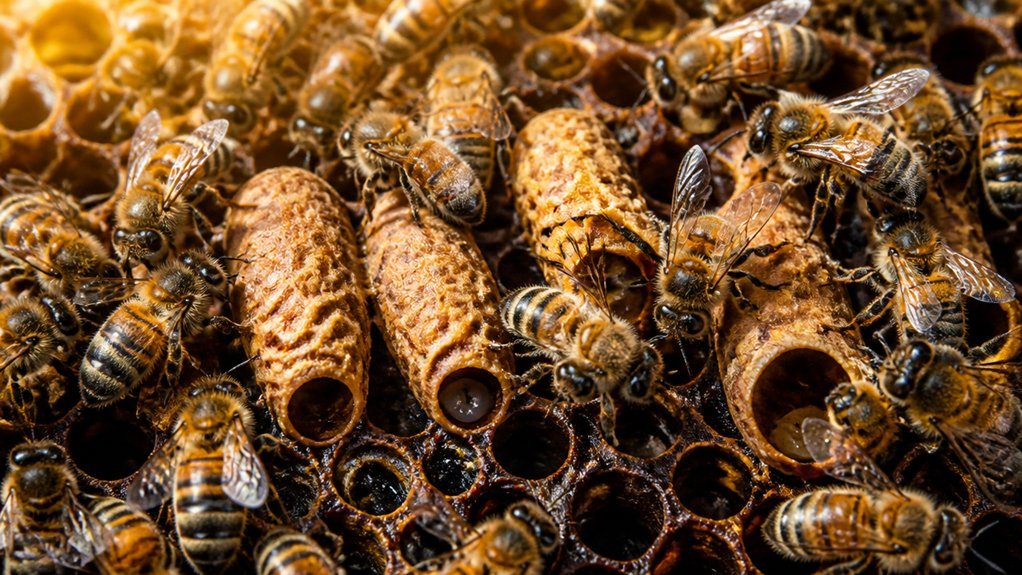
Once you spot swarm cells and see they’re still open or just starting to develop, split the colony right away. Don’t wait for them to cap, because by then the bees may already be committed to swarming and you’ll lose control of the process.
Act while the colony is still responsive, and you can redirect that energy into two manageable hives. Queen cell capacity is crucial for effective rearing and managing your colonies during this process.
- Check frames for multiple open cells.
- Confirm the queen’s location before you split.
- Move calmly to avoid stressing the bees.
- Close both hives securely after the split.
You’ll reduce swarming pressure and give each colony time to settle. Early action also helps preserve brood nest stability and keeps your intervention simple.
Move Frames to Balance Both Colonies
After you split the colony, balance the two hives by moving frames so each one has a workable mix of brood, bees, and food. Check the parent hive first, then shift one or two frames with capped brood and adhering nurse bees into the new hive.
If the original colony looks crowded, give it an open brood frame or a drawn comb to keep field bees engaged. Match food stores too: add a frame with honey or pollen if one side seems light. Place frames tightly together so the bees can cover them well.
Keep queen cells only in the colony you want queenless. As you move frames, avoid shaking bees off brood unless you must. Your goal is simple: both colonies should feel strong enough to rear brood and stay organized.
Using beehive frames with proper foundation ensures that the comb remains straight and solid, making inspection and management easier during this process.
Care for Both Colonies After the Split
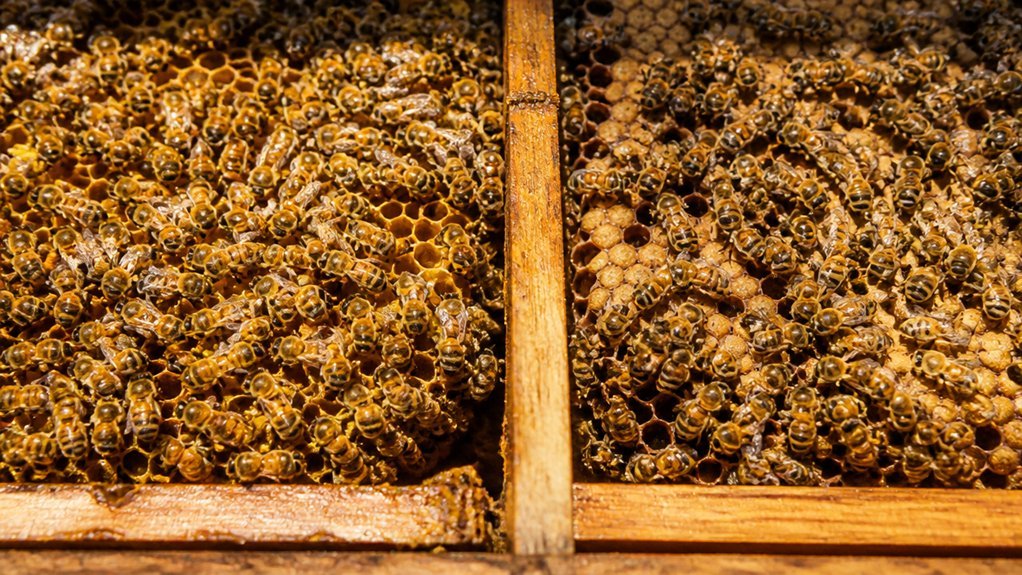
For the first few weeks, keep a close eye on both colonies so you can catch problems early and help them settle in. Check each hive for eggs, larvae, and a laying queen in the parent colony, and confirm the split has enough food and brood to grow.
- Feed weak colonies if stores look light.
- Watch for queen cells and successful mating.
- Keep entrances reduced to limit robbing.
- Inspect for mites, pests, and disease.
- Maintain proper pollen nutritional balance to support brood rearing and colony health.
You should avoid heavy disturbance, but don’t skip inspections. Give the bees time to organize, yet act quickly if you spot agitation, dwindling brood, or a failing queen. Balanced support now helps both colonies recover faster and build strong populations before the next nectar flow.
Frequently Asked Questions
What Legal Permits Are Needed to Split Colonies?
You usually don’t need a special permit to split colonies, but you should check local beekeeping, zoning, and disease-control rules. If you’re moving bees or selling nucs, you may need registration or transport permits.
How Long Does a Split Colony Take to Recover?
You’ll usually see a split colony recover in 2 to 6 weeks, depending on nectar flow, queen quality, and weather. You should expect weaker honey production first, then steady brood buildup.
Can I Split Colonies During a Nectar Dearth?
Yes, you can, but you shouldn’t unless your colonies are strong and well-fed. You’ll need to provide syrup and monitor closely, because a nectar dearth stresses bees and can weaken both splits.
Which Bee Species Are Best for Colony Splitting?
You’ll usually get the best results with honey bees, especially Italian and Carniolan strains, because they split reliably and rebuild fast. You can split bumble bees too, but they’re harder to manage successfully.
What Equipment Helps Locate the Queen Quickly?
You’ll find the queen faster with a marked queen, smoker, hive tool, frame grip, and queen catcher. Use bright light and a magnifying lens, then inspect brood frames slowly, watching for her longer abdomen.
In Summary
By spotting swarm signs early, you can act before your bees leave on their own. When you prep a new hive, split before swarm cells are capped, and move frames to balance each colony, you give both groups a strong start. After the split, keep checking food, space, and brood so each hive stays healthy. With quick action and careful follow-up, you can prevent swarming and grow two thriving colonies instead of losing one.