To stop swarms, give your brood nest more room before the colony feels packed. Watch for a tight brood pattern, heavy traffic, and nectar backing up near the brood. Add drawn comb early, then move open brood and capped brood outward to open laying space for the queen. Keep inspections frequent during strong flows, and check for queen cells, bearding, and solid brood bands. A few smart moves now can save you a bigger problem soon.
Why Colonies Swarm
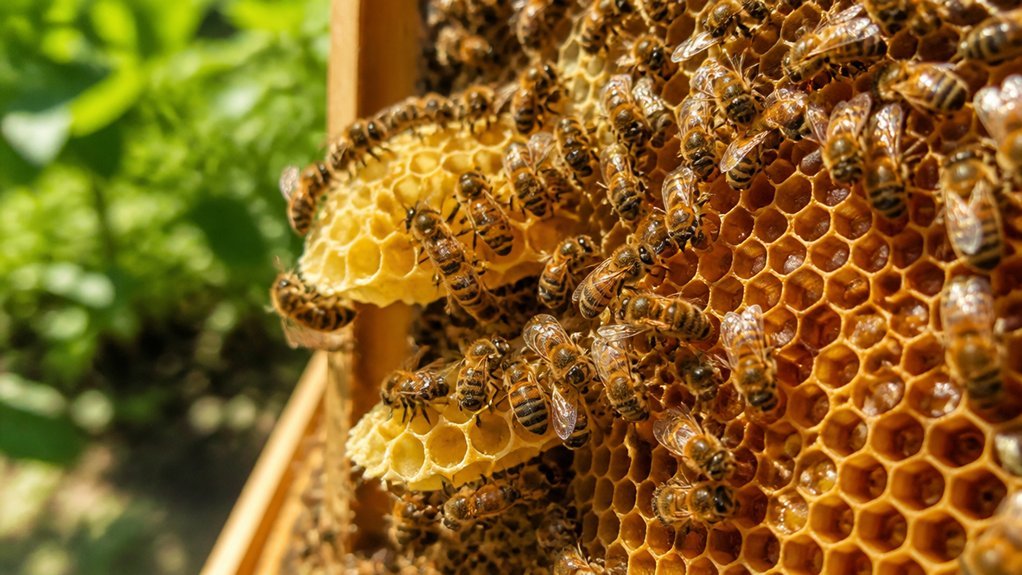
Swarming happens when a colony outgrows its current space and the bees begin to feel crowded. You’ll usually see this when the queen’s pheromones can’t reach every bee well, and the colony starts to divide its attention.
As brood area fills, worker bees shift from growth to reproduction, and they prepare to raise a new queen. Warm weather, strong nectar flows, and a booming population can speed this process.
If you let congestion build, the hive loses its urge to expand and starts planning an exit instead. Your job is to give the colony room before that happens.
Providing enough space helps prevent swarming by reducing the colony’s instinct to branch out and create a new hive. When you understand this instinct, you can act early, keep the bees focused, and reduce the chance of losing a swarm.How to Spot Brood Nest Crowding
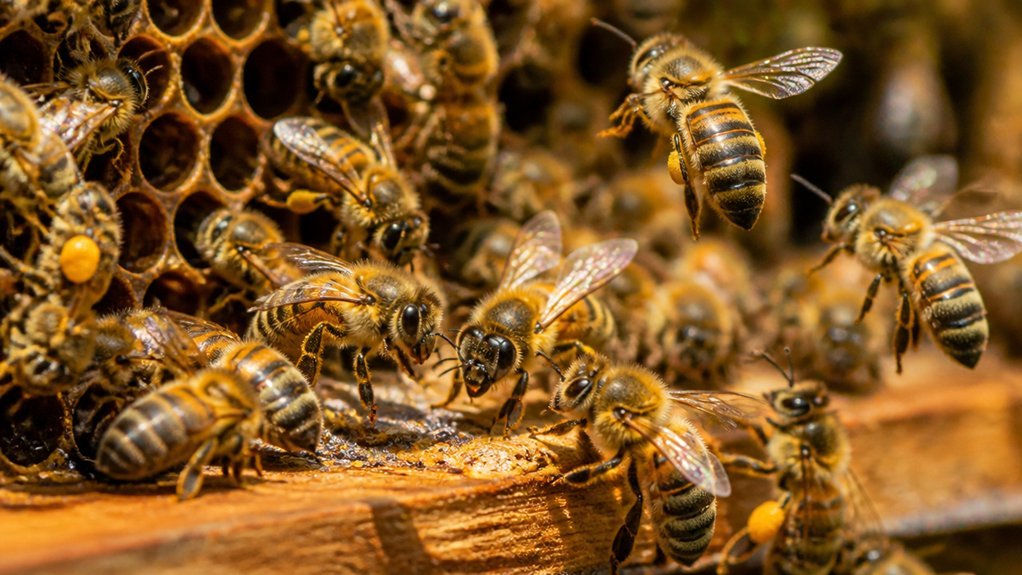
You can usually spot brood nest crowding before the colony commits to swarming. You’ll see the queen’s laying pattern tighten, with solid bands of brood pressed against frames and little open comb left for new eggs. Nurse bees may pack the brood area so tightly that you notice heavy traffic, fewer empty cells, and bees clustering in every gap.
Watch for pollen and nectar creeping into brood frames, because that storage pressure shrinks the queen’s usable space. You might also find bees hanging outside the brood nest instead of moving freely through it.
If you inspect regularly, you’ll catch these signals early and understand the colony’s need for more room before crowding turns into swarm preparations.
Add Space Before Swarm Cells Form
Once brood nest crowding starts, add space right away instead of waiting for swarm cells to appear. You can relieve pressure by giving the colony more room before bees feel forced to split.
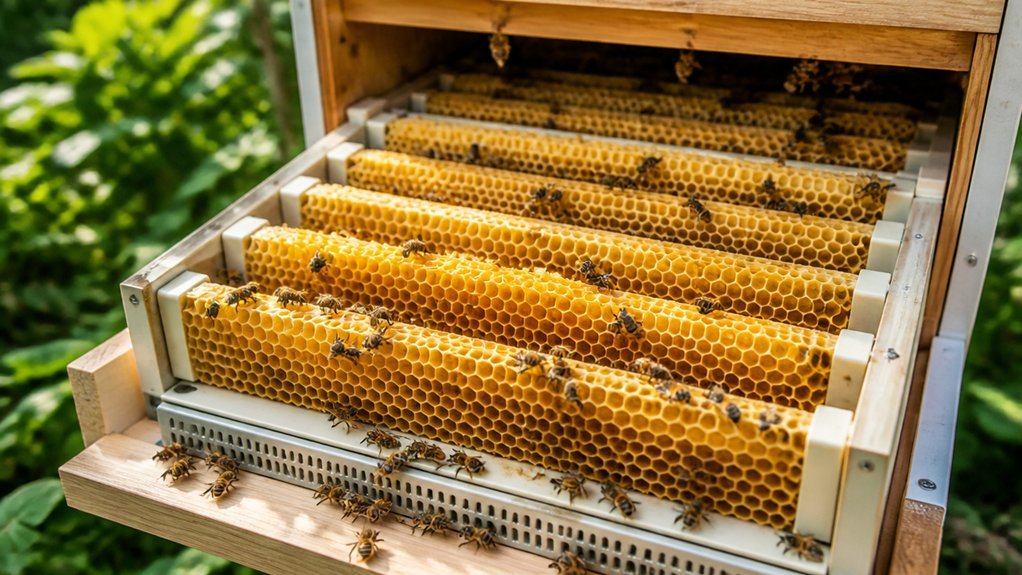
A well-structured hive with pre-cut dovetail joints can make expansion easier, reducing stress on the colony during busy periods.
Watch for a tight brood pattern, heavy traffic, and backed-up nectar near the brood area. When you act early, you keep the queen laying and give nurse bees room to work. Don’t let congestion build for days; a small delay can trigger swarm preparation fast.
Check your hives often during strong nectar flows, because expansion needs can change quickly. The goal is simple: stay ahead of crowding so the bees keep expanding the brood nest naturally, without reaching the point where swarm instincts take over.
Move Frames to Expand the Brood Nest
When the brood nest starts to press against the available space, move drawn frames or open brood outward to give the queen room to lay.
You’ll keep the brood pattern more flexible and reduce congestion by placing these frames next to the cluster, not at the edge of the hive. Work one frame at a time, and keep the comb orientation the same so bees can resume quickly.
If you have empty drawn comb, use it first because the queen can use it immediately. You can also shift capped brood slightly outward and slide a frame of pollen or nectar away from the center.
Always replace frames carefully so you don’t crush bees or cool the brood. This small rearrangement helps the colony breathe and keeps expansion moving smoothly.
Additionally, ensuring the frame size matches your hive box is crucial for straight comb and smooth expansion.
Check for Swarm Signs After Expanding
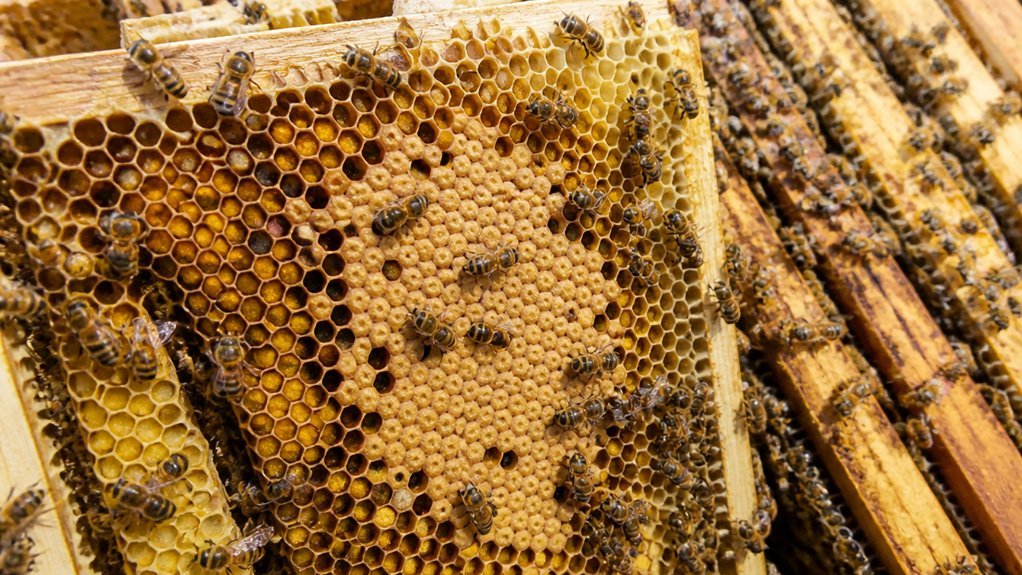
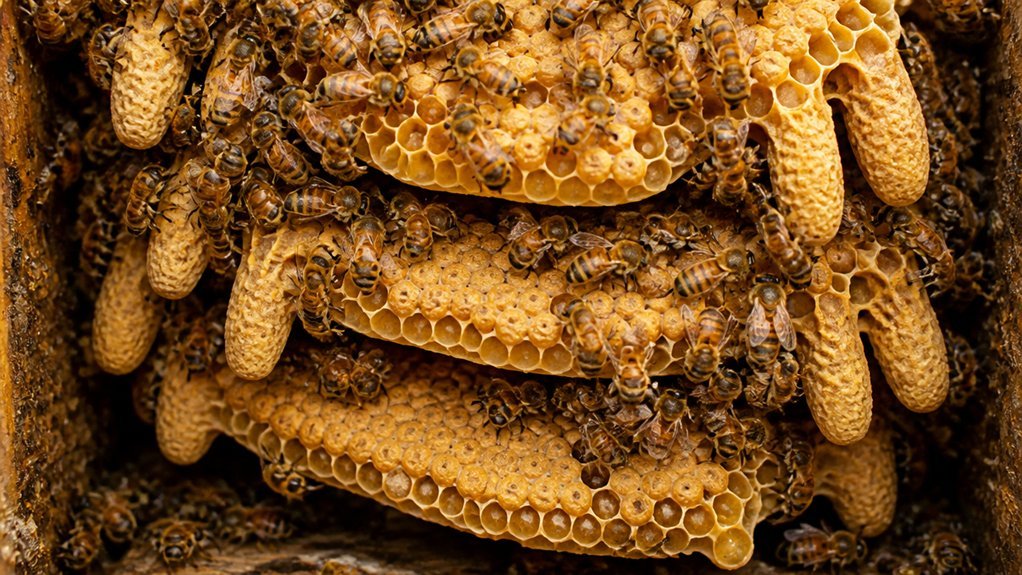
After opening up the brood nest, take a close look for swarm pressure so you can catch problems early. Inspect every frame for queen cells, especially along the bottom edges and lower corners.
If you see multiple charged queen cells, your colony may still be preparing to swarm. Check brood pattern too; a crowded nest with solid brood and little open comb can signal trouble.
Watch the bees’ behavior as well. Restless bees, bearding at the entrance, and heavy congestion inside often mean they need more room.
If you find clear swarm signs, act fast. Add another frame or super, remove extra queen cells if appropriate, and give the colony space to spread out before swarm season advances.
Frequently Asked Questions
How Often Should I Inspect Brood Nest Space in Spring?
Inspect brood nest space every 7–10 days in spring. You’ll catch congestion early, add room before the bees feel cramped, and reduce swarm pressure. Check frames, brood pattern, and stores each visit.
Can Weather Affect How Quickly Colonies Crowd Their Brood Nest?
Yes, weather can change it fast. You’ll see colonies crowd sooner during warm, nectar-rich spells because brood rearing ramps up. Cold snaps or rain can slow expansion, but they won’t always relieve pressure quickly.
Should I Expand Brood Space During a Nectar Dearth?
Yes, you can, but you should be cautious. You’ll usually avoid big expansions during a nectar dearth, since bees may struggle to heat or defend extra space. Add only if they’re clearly crowded.
Does Hive Equipment Type Change Brood Nest Expansion Timing?
Yes—your equipment type changes timing a bit. You’ll expand earlier in smaller hives, while larger setups give you more room. Watch brood congestion, beespace, and queen laying; then add space before they backfill it.
Will Queen Age Affect How Much Brood Nest Space Is Needed?
Yes, you’ll often need more brood space for a young, vigorous queen because she lays faster. An older queen usually needs less, since her brood pattern and rate often slow down.
In Summary
If you stay ahead of brood nest crowding, you can often stop a swarm before it starts. Give your colony room early, watch for tight brood patterns and queen cells, and keep checking after each adjustment. By expanding the brood nest before the bees feel boxed in, you help them stay productive and calm. A little attention now can save you a lot of lost bees later, so keep looking, moving frames, and adding space as needed.