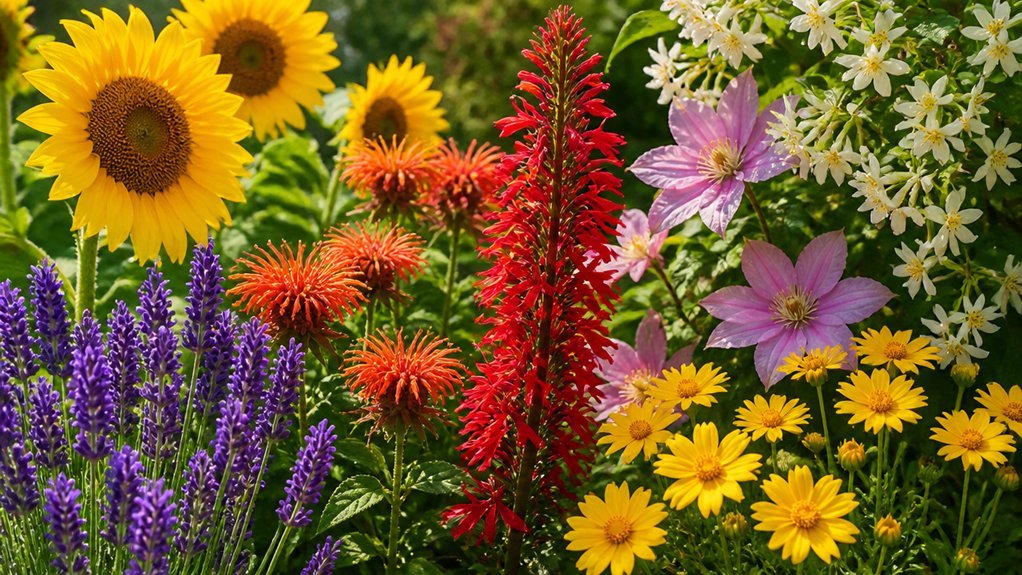
To boost honey production, you should plant nectar-rich species that bloom in waves from spring to fall. Choose clover, fruit trees like apple and cherry, lavender, sunflowers, and native wildflowers for steady forage. Add other bee favorites such as vetch and asters to fill gaps. Group the same plants together, give them full sun, and keep soil well drained. If you keep going, you’ll see how to set them up for the strongest nectar flow.
Best Nectar Plants for Honey Production

When you want to boost honey production, the best nectar plants are the ones that bloom generously, offer rich nectar, and match your local climate. You should choose species that stagger flowering through the season so your bees always find food.
Look for plants with open blossoms, easy nectar access, and strong pollen support, because they help colonies build strength fast. Native shrubs, herbs, wildflowers, and trees often perform well since they’ve already adapted to your area’s weather and soil.
You’ll get better results if you plant in sunny spots, avoid pesticides, and group the same species together for easier foraging. Rotate your selections to cover spring, summer, and fall, and you’ll keep your hives working steadily and productively. Additionally, selecting high nectar-producing plants that are well-suited to your designated planting zones can significantly enhance honey yields.
Clover: The Classic Honey Plant
Clover is one of the most reliable nectar plants for honey production, and it’s a favorite for good reason: bees work it enthusiastically, and hives can collect from it in abundance.
You’ll see strong foraging on white, red, and alsike clover when blooms stay open in mild weather. If you want steady nectar flow, plant clover in sunny fields, pasture edges, or lawn areas you manage lightly.
Keep soil moderately fertile and avoid heavy mowing during bloom so flowers can keep producing. You’ll also help your bees by limiting pesticide use and maintaining nearby water. Clover honey often tastes light, sweet, and clean, which makes it a classic choice for beekeepers who want dependable yields and familiar flavor. Incorporating native wildflower mixes can further enhance nectar resources for pollinators throughout the season.
Fruit Trees for Early Nectar
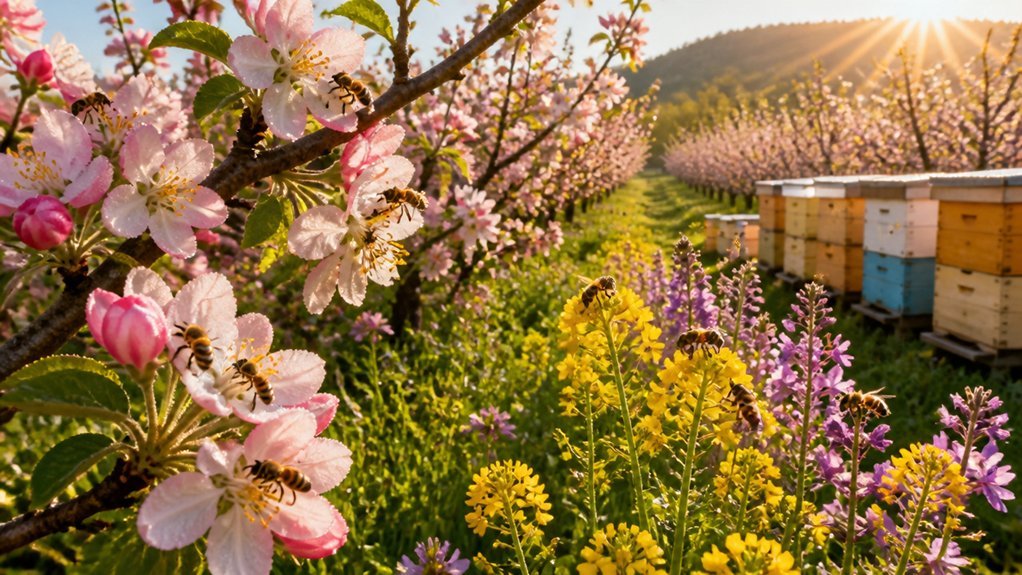
Fruit trees can give your hives an important early nectar boost, especially in spring when other blooms are still scarce. You’ll help your bees most by planting apples, cherries, pears, and plums, since their blossoms often open when colonies need fuel for buildup. Place trees where they’ll get full sun, and choose varieties that bloom reliably in your climate. If you already have an orchard, avoid spraying insecticides while flowers are open, because bees visit those blooms heavily. You can also stagger bloom times by mixing early and midseason cultivars, which stretches forage availability. Keep nearby water available, and watch for cold snaps that may shorten bloom periods. By adding fruit trees, you’ll support strong spring growth and give your apiary a better start. Proper timing and variety selection can also enhance nectar production and ensure consistent foraging for your bees.
Lavender for Strong Nectar Flow
Lavender can be a standout nectar plant if you want a long, dependable summer flow for your bees. You’ll get the best results when you plant it in full sun, give it sharp drainage, and avoid rich, wet soil.
Bees work lavender blooms hard because the flowers open in succession, keeping nectar coming for weeks. Choose fragrant varieties that suit your climate, and let the plants mature before cutting them back. If you set out several clumps together, your bees can forage efficiently and build steadier stores.
- Space plants for airflow.
- Water young plants lightly.
- Deadhead spent blooms sparingly.
- Skip heavy fertilizer.
- Harvest honey after peak bloom.
Sunflowers Bees Can’t Resist
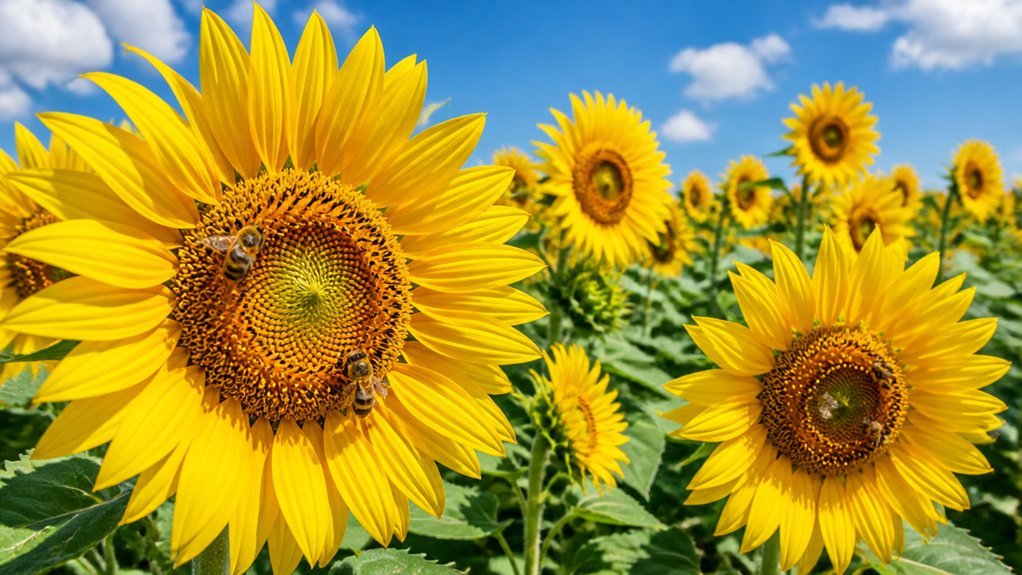
Golden sunflowers can draw bees in fast, turning a patch of blooms into a busy nectar stop during late summer. You’ll notice bees working the broad flower heads from dawn until dusk, gathering nectar and pollen with impressive efficiency. Incorporating native plant species into your sunflower planting can further support local pollinators and enhance biodiversity. Choose pollen-rich varieties with open centers, since they make foraging easier and help your colony spend less energy per trip. Plant them in full sun and well-drained soil, and give them room to stretch tall. You can stagger sowing dates so blooms don’t all open at once, keeping your hives supplied when other sources slow down. Deadhead only if you want longer bloom time; otherwise, let some heads mature for seed and extra wildlife value.
Wildflowers for Season-Long Nectar
Wildflowers can keep your hives fed from spring through fall when you mix species with different bloom times. You’ll give bees a steady buffet, and they’ll reward you with better forage and stronger colonies. Incorporating seasonal bloom succession ensures continuous nectar flow and optimal hive health.
- Early crocus and violets start the flow
- Clover and vetch bridge late spring
- Daisy-like asters support summer gathering
- Goldenrod extends nectar into autumn
- Native mixes adapt to your local climate
When you let diverse wildflowers grow, you reduce nectar gaps and help bees work efficiently across the season. Choose plants that bloom in succession, and you’ll create a reliable source of pollen and nectar without needing a formal garden layout.
The more variety you offer, the more resilient your honey production becomes.
How to Plant Nectar-Rich Flowers
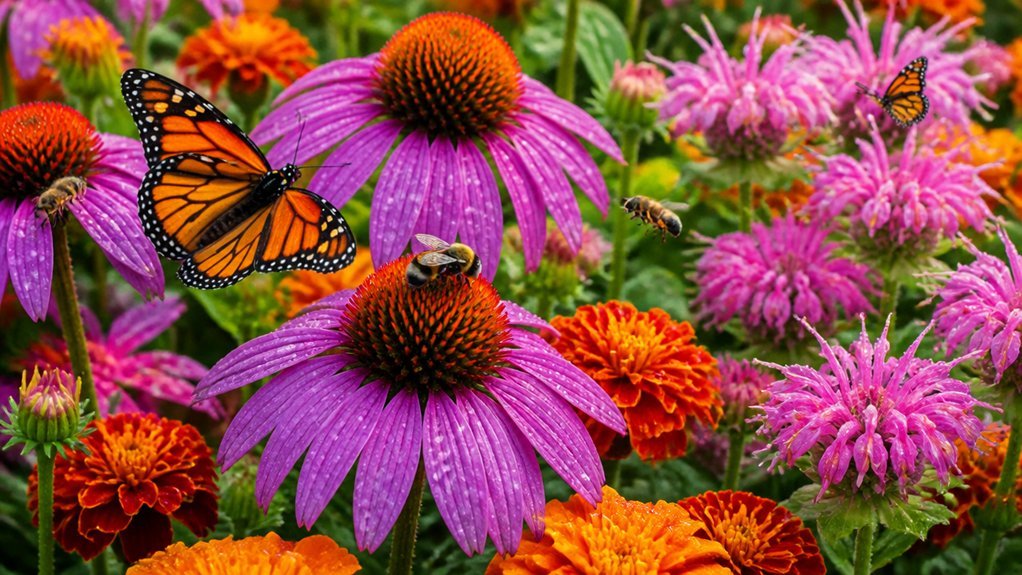
Start by choosing nectar-rich flowers that fit your climate and bloom at different times to keep bees feeding לאורך the season. Prepare the soil by clearing weeds, loosening the ground, and adding compost so roots can spread easily. Then water deeply after planting and space each flower well apart so they grow strong and stay easy for pollinators to reach. Incorporate pollen substitutes as needed to supplement nectar sources and support colony health during dearth periods.
Choosing Nectar Flowers
When you choose nectar flowers for honey production, focus on plants that bloom at different times, thrive in your climate, and offer abundant, accessible nectar for bees. You’ll help your hives by mixing early, mid, and late bloomers, so forage doesn’t vanish between seasons. Choosing plants with low moisture content ensures the nectar remains accessible and reduces risks of mold or spoilage. Pick single-flower varieties when you can, since bees reach nectar more easily. Also favor native species, because they often support local pollinators better and need less fuss from you.
- Plant clover for reliable spring flow.
- Add lavender for steady summer nectar.
- Use borage to attract busy foragers.
- Include asters for late-season support.
- Mix sunflowers for broad, open blossoms.
Choose groupings that keep bees moving through your garden, and you’ll build a stronger, more productive nectar source all season.
Soil Preparation Steps
Once you’ve chosen the right nectar flowers, give them a strong start by preparing the soil well before planting. Start by clearing weeds, rocks, and old roots so young plants won’t face competition.
Then loosen the top 8 to 12 inches with a spade or fork to improve root penetration. Mix in compost or well-aged manure to boost organic matter and feed soil life. If your soil is heavy clay, work in coarse sand or fine bark to improve structure; if it’s sandy, add extra compost to hold nutrients.
Check the pH for your chosen flowers and adjust it if needed. Rake the surface smooth, break up clumps, and create a fine, even seedbed so seeds or transplants can settle in easily and establish quickly. Incorporating soil amendments can further enhance the soil’s ability to support healthy nectar-rich plants.
Watering And Spacing
After planting, water nectar-rich flowers deeply so the root zone stays evenly moist, but don’t let the soil turn soggy. Give seedlings steady moisture during the first few weeks, then water less often but more deeply to encourage strong roots.
Mulch helps you hold moisture and cut down on weeds, which reduces competition for nectar plants.
- Space plants so air moves freely between them.
- Leave enough room for mature blooms to spread.
- Keep taller species from shading shorter ones.
- Group the same flowers together for easier care.
- Follow each plant’s label for exact spacing.
Good spacing also makes watering simpler and lowers disease pressure. When flowers stay healthy, they produce richer nectar, and your bees can forage longer through the season.
Frequently Asked Questions
How Do Weather Conditions Affect Nectar Production?
Weather affects nectar production by changing how much sugar flowers make and how long they bloom. You’ll get less nectar in drought, heat, wind, or cold, but moderate rain and warmth usually boost it.
Can Nectar Plants Improve Honey Flavor?
Yes, you can influence honey flavor by choosing nectar plants with distinct blossoms. You’ll notice floral, fruity, or spicy notes, since bees collect nectar from different sources and blend those flavors into your honey.
Which Soils Produce the Most Nectar-Rich Blooms?
You’ll get the nectar-richest blooms in fertile, well-drained loams with plenty of organic matter and balanced moisture. Avoid compacted, saline, or nutrient-poor soils, since they stress plants and reduce flower nectar production.
How Far Can Bees Travel to Collect Nectar?
You’ll usually see bees travel about 1 to 3 miles for nectar, though they can fly up to 5 miles if food’s scarce. You’ll get better honey when forage stays closer.
Do Native Plants Attract More Bees Than Imported Varieties?
Yes, you’ll usually attract more bees with native plants because they’ve evolved together, so bees recognize them easily and feed efficiently. Imported varieties can help, but you’ll often get better bee visits from natives.
In Summary
By planting these nectar-rich flowers, you can give your bees a steady food source and boost honey production throughout the season. Start with classics like clover and fruit trees, then add lavender, sunflowers, and wildflowers for variety and balance. If you keep your garden blooming from early spring to late fall, you’ll support healthier hives and sweeter harvests. With a little planning, you can turn your space into a bee-friendly honey haven.