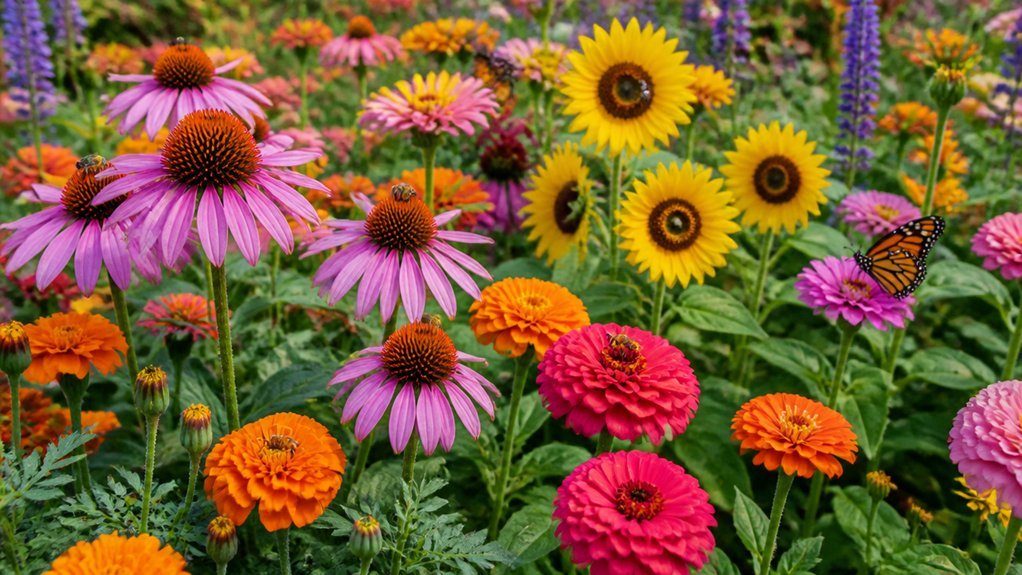
The 5 best annuals for pollinator forage are zinnias, sunflowers, cosmos, calendula, and marigolds. You’ll give bees and butterflies easy-to-reach nectar and pollen with single blooms, bright colors, and long flowering windows. Plant them in sunny, well-drained soil, group them in clusters, and skip pesticides. To keep food coming all season, sow in batches every few weeks, and you’ll discover a simple way to stretch blooms right up to frost.
Best Annuals for Bee Forage
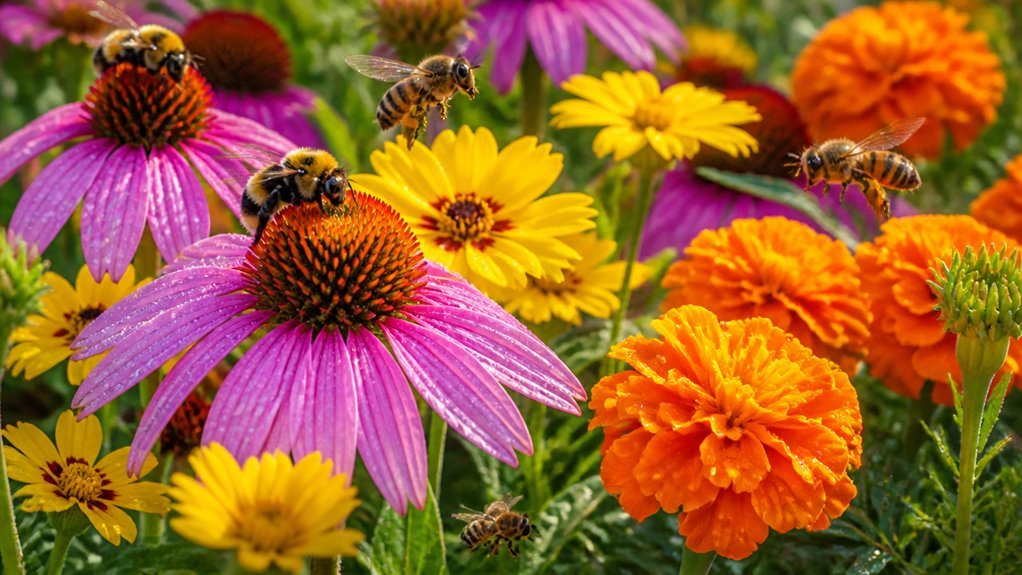
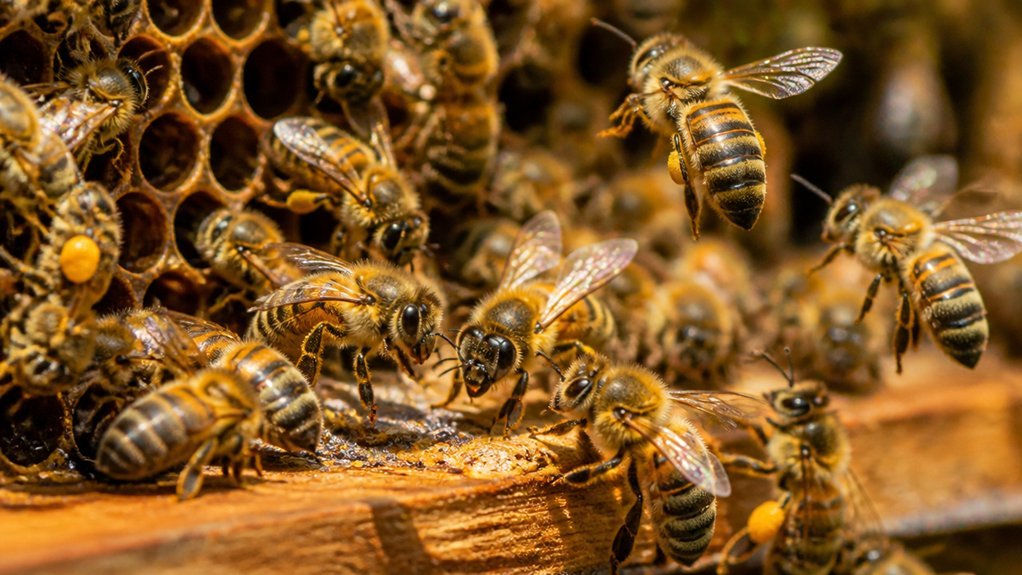
If you want to support bees all season, annuals can give you a fast, reliable source of nectar and pollen. You can fill gaps in your garden with plants that bloom quickly, grow vigorously, and keep producing when you deadhead them.
Choose varieties with open flowers, since bees reach nectar and pollen more easily there. Sunflowers, zinnias, cosmos, and calendula all work well in beds, borders, and containers. You’ll help bees most when you plant in clusters, mix bloom times, and avoid pesticides.
Keep the soil evenly moist during establishment, then let tough annuals carry the load through heat and moderate drought. If you sow a few batches a few weeks apart, you’ll extend flowering and give foragers a steady food source from spring until frost.
Prioritizing nectar-rich annuals and perennials can maximize continuous forage for pollinators.
Annual Flowers That Provide Nectar and Pollen
Some annual flowers feed pollinators with both nectar and pollen, making them especially valuable in a forage plan. You can rely on zinnias, sunflowers, cosmos, marigolds, and calendula to draw bees, hoverflies, butterflies, and beneficial wasps.
Zinnias offer sturdy landing pads and abundant pollen, while single-flowered sunflowers give you rich rewards over a long bloom period. Cosmos produce open blooms that make nectar easy to reach, and marigolds add steady color and a modest food source. Calendula can keep your beds productive when temperatures stay cool. Incorporating native plant species can further enhance habitat support for local pollinators and increase garden resilience.
Choose single forms instead of doubles, since double blooms often hide floral parts. By mixing several of these annuals, you’ll give pollinators a varied buffet that supports foraging through much of the growing season and helps sustain local populations.
How to Plant Annuals for Bees
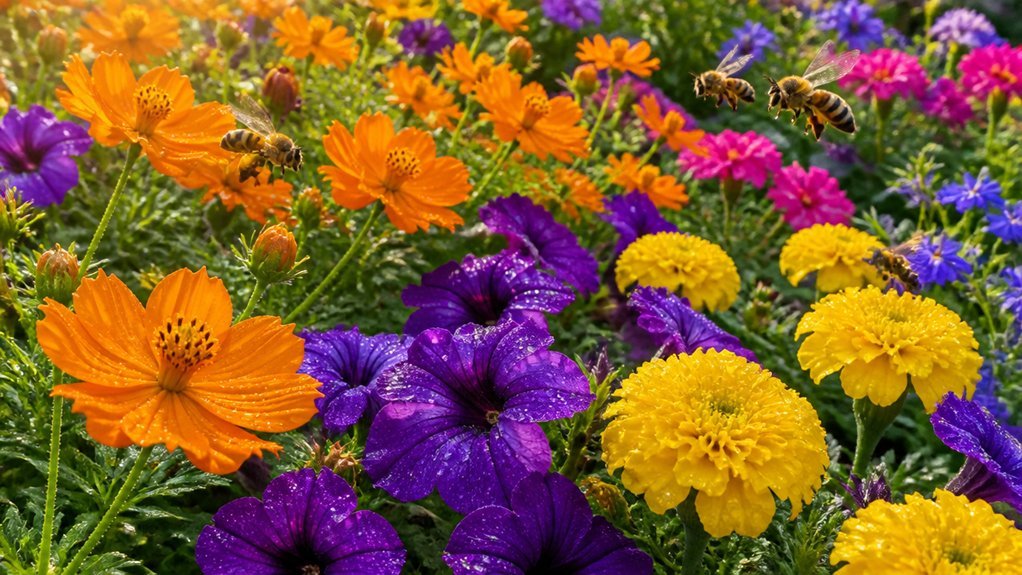
To plant annuals for bees, choose a sunny site and group flowers in blocks so foragers can find them easily. Prepare loose, well-drained soil, then mix in compost to support sturdy roots and steady growth.
Sow seeds at the depth listed on the packet, or set transplants at the same level they grew in their pots. Water gently after planting so you don’t wash seeds away, and keep the soil evenly moist until plants establish. Space each plant for good airflow and easy access. Remove weeds early so they won’t compete for water or light.
If you start seeds indoors, harden them off before moving them outside. By giving your annuals room, care, and sun, you’ll make a welcoming feeding area for bees. Ensuring the plants are properly germinated and suited for your climate will lead to healthier, more floriferous blooms that attract pollinators effectively.
Choose the Best Bloom Times for Bees
For the best pollinator results, choose annuals that bloom in stages so bees have food from spring through frost. Start with early bloomers like alyssum and calendula to welcome emerging bees, then add midsummer standouts such as zinnias, cosmos, and borage for steady nectar.
Choose annuals in stages so bees find food from spring through frost.
Finish with late bloomers like marigolds and sunflowers to keep your beds active when other flowers fade. You’ll help bees by offering consistent color, scent, and pollen across the season.
- Pick varieties with clearly labeled bloom windows.
- Mix fast growers with longer-lasting flowers.
- Favor single blooms over double forms.
- Choose colors bees notice easily, like blue, purple, and yellow.
With the right timing, you create a dependable forage patch that supports busy pollinators all season.
Use Succession Planting to Extend Forage
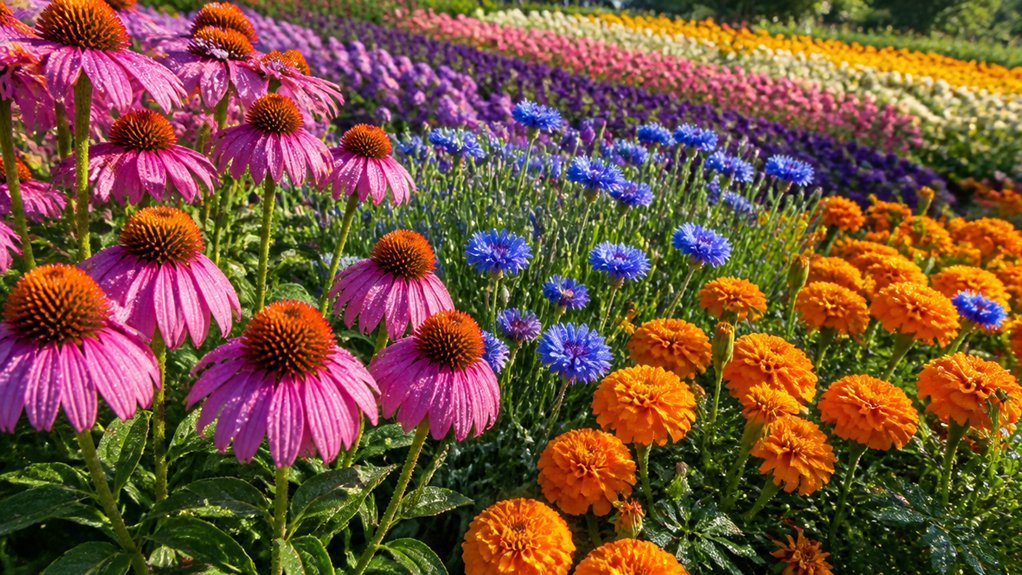
Succession planting keeps your pollinator beds producing fresh forage instead of fading all at once. You can sow quick annuals every two to three weeks, then follow them with longer-blooming varieties so flowers open in waves. A steady supply of high-quality pollen and nectar is essential for supporting hive health during dearth periods, especially when natural forage is limited. Start with early bloomers like calendula, phacelia, and borage, then add zinnias, cosmos, and sunflowers as space frees up. When one planting finishes, pull it, loosen the soil, and seed the next round immediately. This approach gives bees, butterflies, and hoverflies a steady nectar and pollen supply through the season. It also helps you fill gaps caused by heat, rain, or harvests. Keep a simple planting calendar, and you’ll always know what to sow next for nonstop forage.
Frequently Asked Questions
Which Annuals Attract Butterflies as Well as Bees?
You’ll attract both butterflies and bees with zinnias, cosmos, lantana, sunflowers, marigolds, and tithonia. Plant them in full sun, let flowers bloom, and you’ll provide nectar, pollen, and landing spots all season.
Can Annual Pollinator Plants Grow in Containers?
Yes, you can grow annual pollinator plants in containers if you choose roomy pots, use quality potting mix, water often, and place them in full sun. You’ll still attract bees and butterflies beautifully.
Do Annuals for Pollinators Need Deadheading?
Yes, you should deadhead many annual pollinator plants to keep blooms coming. You’ll extend flowering, attract more bees and butterflies, and prevent unwanted self-seeding. Leave some spent flowers if you want seeds.
Are Any Annual Flowers Safe Near Pets?
Yes—some annual flowers are pet-safe, like zinnias, petunias, and snapdragons. You can still avoid trouble by checking each plant first, because toxicity varies, and your pet’s nibbling habits matter a lot.
Which Annuals Tolerate Drought After Establishment?
You’ll do well with zinnias, cosmos, calendula, nasturtiums, sunflowers, and gomphrena; once established, they handle dry spells nicely. Water them deeply at first, then let soil dry between soakings for stronger roots.
In Summary
By choosing the right annuals, you can give bees a steady supply of nectar and pollen all season long. Focus on flowers that bloom at different times, plant them in sunny spots, and keep sowing new seeds to extend the forage window. With a little planning, you’ll support pollinators while adding color and life to your garden. Small choices like these can make a big difference for hungry bees.