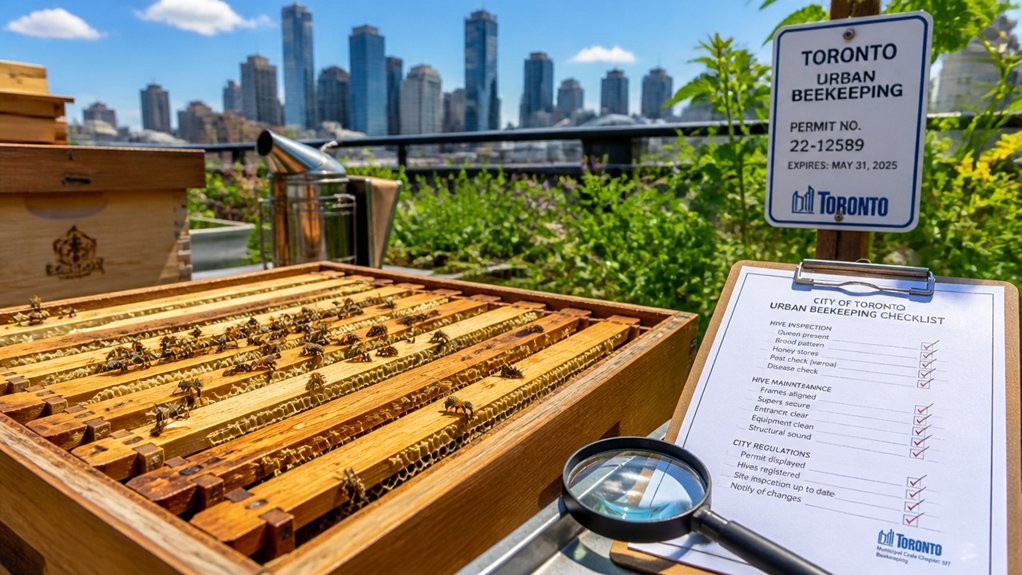
Check that your split has a laying queen by looking for fresh eggs, young larvae, and a tight brood pattern across several frames. Feed it light syrup right away, add an entrance reducer, and keep the hive sealed, warm, and sheltered to limit robbing and stress. Then check brood weekly so you can catch spotty eggs or weak laying early. If brood doesn’t improve after two weeks, requeen with a proven gentle queen and keep going for more tips.
Check for Eggs and a Solid Brood Pattern

Start by checking whether the queen has resumed laying and whether the brood pattern looks solid and even. Open the split carefully and scan the frames for fresh eggs, young larvae, and a tight, consistent pattern of capped brood.
You want to see evidence that the queen is active and that the colony is building normally after the split. If you find scattered brood, empty cells where you expect eggs, or a patchy pattern, treat that as a warning sign. Compare several frames so you don’t judge from one isolated area.
Keep your inspection calm and brief, because unnecessary disturbance can slow the hive’s recovery. When you confirm steady laying and even brood, you know the split is settling in and moving in the right direction.
Feed and Protect the Split Queen Right Away
As soon as you make the split, give the colony enough feed to reduce stress and help the queen keep laying. Offer light syrup or another suitable feeder so the bees can rebuild quickly without wasting energy searching for nectar. Using an appropriately sized entrance reducer can also help control airflow and prevent robbing, ensuring a safer environment for the queen. Keep the entrance reduced and the hive sealed well to limit robbing, drafts, and heat loss. Place the split in a calm, sheltered spot away from heavy traffic and strong wind. Handle the hive gently and avoid unnecessary inspections that can unsettle the queen. You should also make sure the combs stay warm and dry, because a stable environment helps the colony settle faster. Quick feeding and basic protection give the queen the best chance to stay productive and keep the split moving forward.
Monitor Brood and Requeen if Necessary

Once the split has had time to settle, check the brood pattern to make sure the queen is laying well and the colony is developing normally. You should see solid, even brood with few gaps. If you spot spotty eggs, drone-heavy frames, or no fresh brood after two weeks, act fast. Use this guide to decide:
| Sign | Action |
|---|---|
| Tight brood pattern | Keep monitoring |
| Spotty brood | Inspect queen |
| Few eggs | Give more time |
| Queen cells present | Evaluate replacement |
| No brood progress | Requeen |
When you requeen, choose a proven, gentle queen and introduce her carefully. Keep checking weekly so you can catch problems early and keep the split building strength. Additionally, utilizing Queen Rearing Kits can streamline the process and improve success rates in your colony management.
Frequently Asked Questions
How Do I Choose the Best Location for a Split Queen?
Choose a location with enough clearance, level flooring, and easy access on both sides. You’ll want it away from direct sunlight, vents, and heavy traffic so you can move, sleep, and maintain it comfortably.
What Equipment Is Needed Before Splitting a Queen?
You’ll need a sharp hive tool, a smoker, a queen cage, extra frames, a nuc box, feeders, and protective gear. Keep marking paint handy, and set up everything before you split her colony.
How Often Should I Inspect a Newly Split Colony?
You should inspect a newly split colony every 5 to 7 days for the first month. Check brood, queen activity, food stores, and pests so you can catch problems early and adjust quickly.
Can a Split Queen Be Moved to Another Apiary?
Yes, you can move a split queen to another apiary if you protect her brood and workers, keep her well ventilated, and transport her after dusk so you don’t trigger drifting or stress.
What Signs Show the Split Is Too Weak to Survive?
You’ll know it’s too weak if brood stays spotty, bees cover too few frames, food runs low, and they can’t keep warm. If queen laying stalls, pests surge, or bees dwindle, combine or boost it.
In Summary
By checking for eggs and a solid brood pattern, feeding and protecting your split queen right away, and watching brood closely, you give your split colony the best chance to thrive. Keep an eye on queen performance, and don’t wait too long to act if something looks off. With quick care and regular monitoring, you can help the split stay strong, productive, and healthy. Follow these tips, and you’ll set your bees up for success.