You should check three legal requirements first: local permits, HOA or rental rules, and hive placement limits. Many cities require an application, site plan, fee, and sometimes an inspection before you install hives. You also need to follow setback rules, hive counts, and any fencing or flyway barrier rules to protect neighbors. Even if the city allows beekeeping, private covenants can still ban it, so there’s more to know next.
What Local Rules Affect Backyard Beekeeping
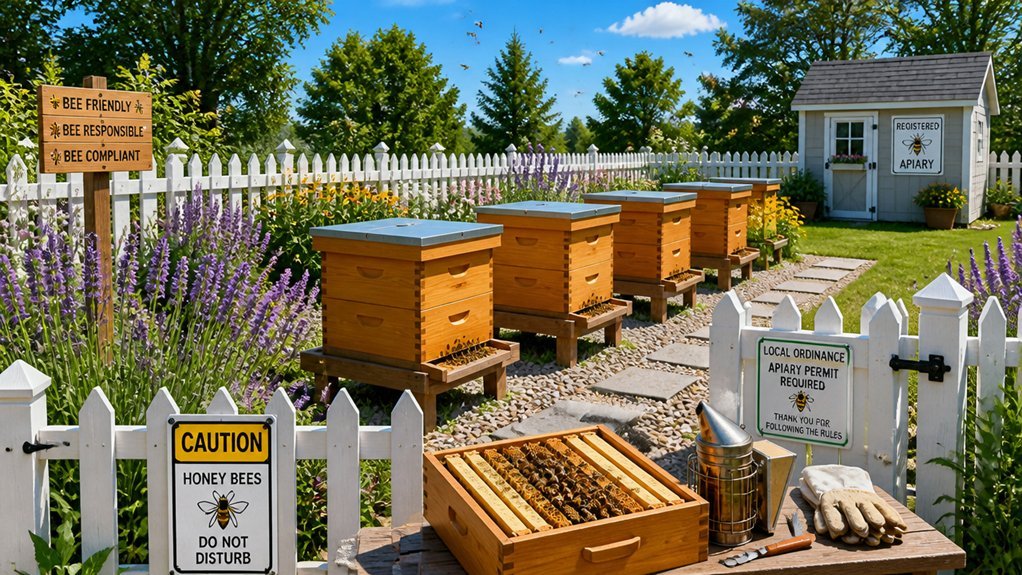
Before you bring home your first hive, you need to check the local rules that apply in your area, because zoning laws, permits, setback requirements, and limits on hive numbers can all affect where and how you keep bees.
You should also review neighborhood covenants, rental agreements, and HOA rules, since they can ban or restrict hives even when the city allows them.
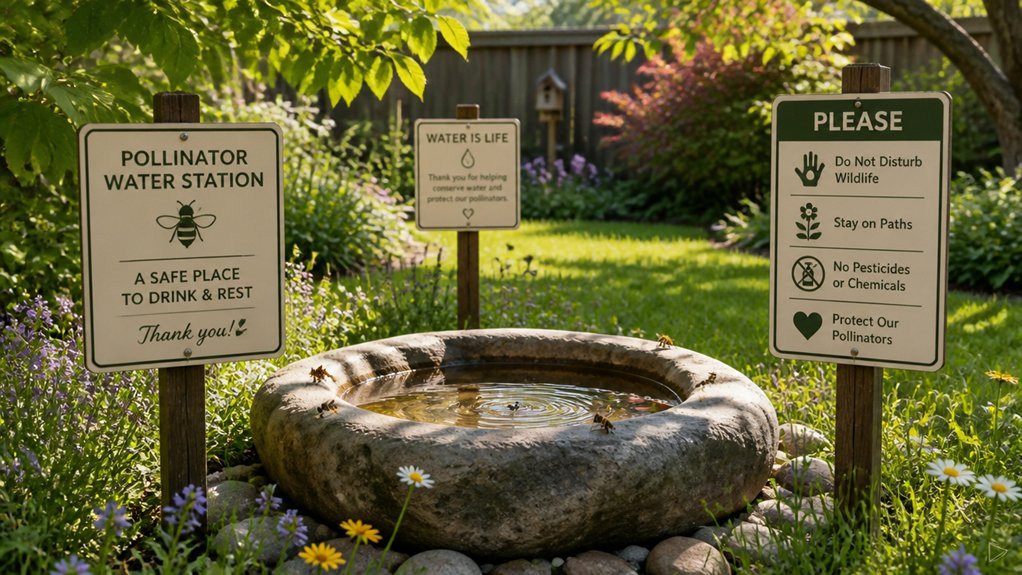
Some places require specific hive placement, fencing, water sources, or flyway barriers to reduce conflicts with neighbors. You may also face rules on hive inspection, swarm control, and sanitary upkeep.
If you keep bees near schools, parks, or public paths, extra restrictions can apply.
Always confirm the current ordinance before you set up your apiary, because local officials can enforce violations and remove noncompliant hives.
Being aware of bee-friendly regulations can help ensure you stay compliant and maintain good relationships with your community.
How to Get a Backyard Beekeeping Permit
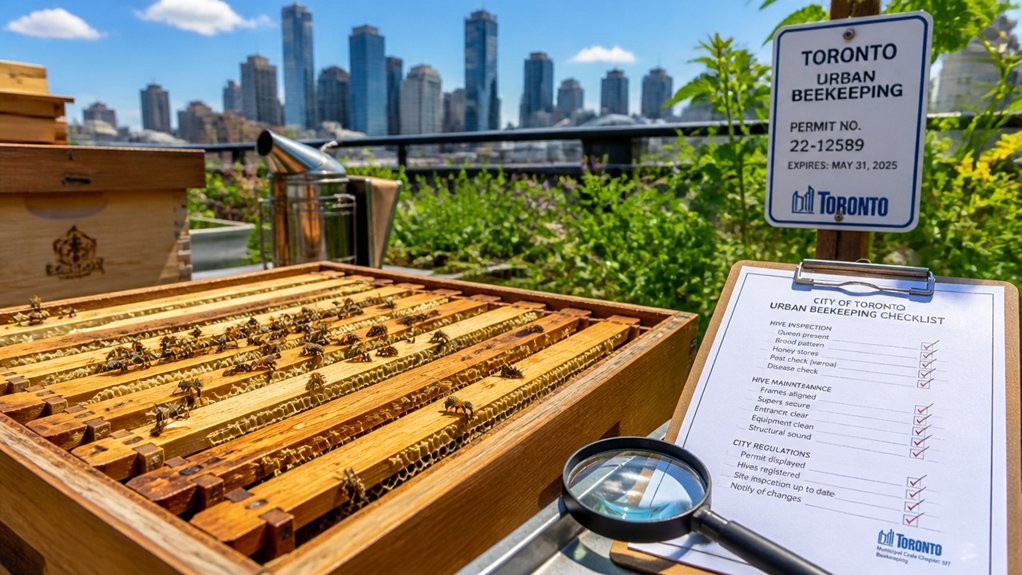
To get a backyard beekeeping permit, you’ll usually start by checking your city or county’s application requirements, which may include a form, site plan, hive count, and proof that you meet setback or enclosure rules.
Check your city or county’s permit requirements, including forms, site plans, hive counts, and setback rules.
Next, gather any supporting documents, pay the fee, and submit everything to the right office. If your area requires inspection, schedule it promptly and keep your records handy. You should also watch for renewal deadlines so your permit doesn’t lapse.
- Fill out the permit form completely.
- Attach your site sketch and required proof.
- Track approval, inspection, and renewal dates.
- Using a long-lasting bee-safe finish, like ones recommended in the best beehive paints, can help ensure your hive remains protected and compliant with local rules over time.
Where to Place Hives for Safety and Compliance
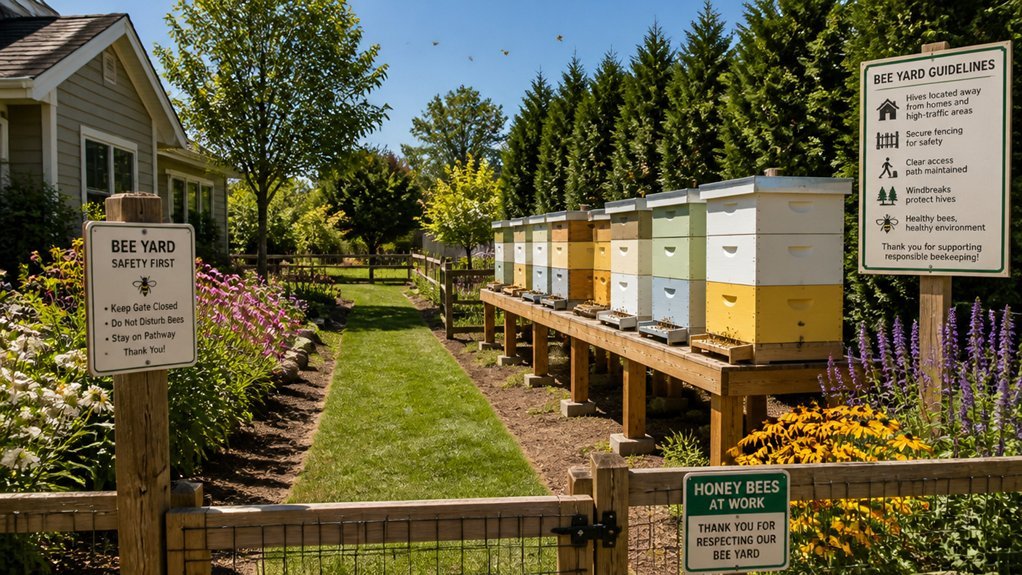
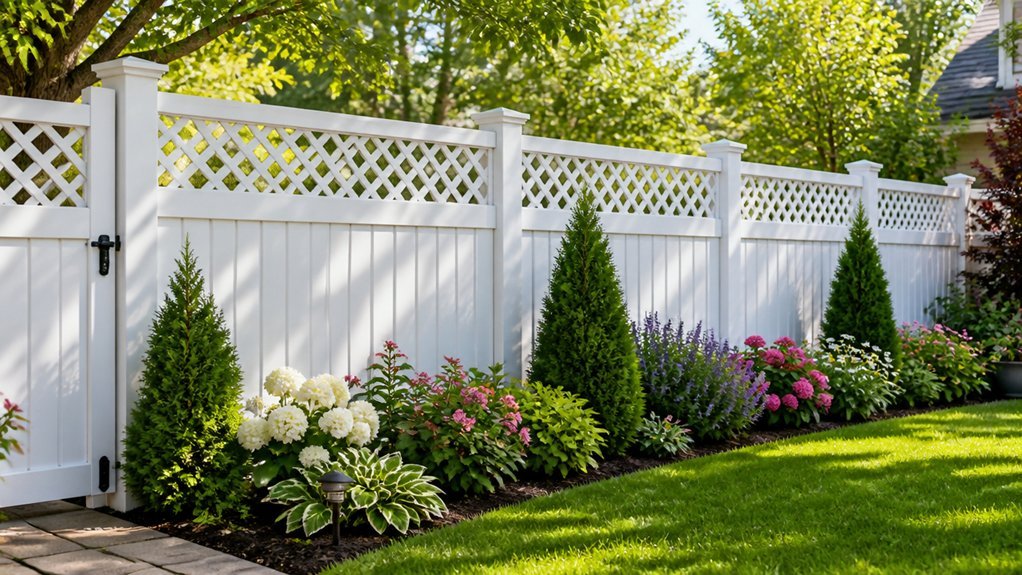
Where you place your hives matters for both safety and compliance, since most local rules focus on setbacks, property lines, walkways, and nearby neighbors. You should position hives where bees won’t routinely cross busy paths, patios, or play areas. A fence, hedge, or other barrier can help guide flight upward and reduce conflict.
Keep entrances pointed away from neighbors and public access points, and leave enough room for inspection and maintenance. Check setback distances for side yards, rear lots, and structures before you install anything. If your area requires screening, height limits, or no-fly buffers, follow them exactly.
You should also avoid damp, shaded spots that attract pests and make management harder. Good placement protects people, supports healthy colonies, and helps you stay within the law. Proper hive strap use can also prevent hive damage during storms and transportation, ensuring your apiary remains compliant and secure.
Frequently Asked Questions
Can I Sell Honey Without a Separate Business License?
Maybe, but you usually can’t sell honey legally without meeting local business rules. You’ll need to check permits, zoning, labeling, and food-safety requirements first, since some places treat honey sales as a separate business activity.
Do I Need Insurance for Backyard Beekeeping?
You may not need it, but you should strongly consider liability insurance for backyard beekeeping. It can protect you if someone gets stung, property gets damaged, or a neighbor files a claim.
Are There Breed Restrictions for Backyard Bees?
Yes, you might face breed restrictions, but they’re uncommon. You’ll usually need to check local ordinances, homeowner rules, or agricultural regulations. Some areas limit aggressive strains or require docile bees for safety.
What Records Should I Keep for My Hive Inspections?
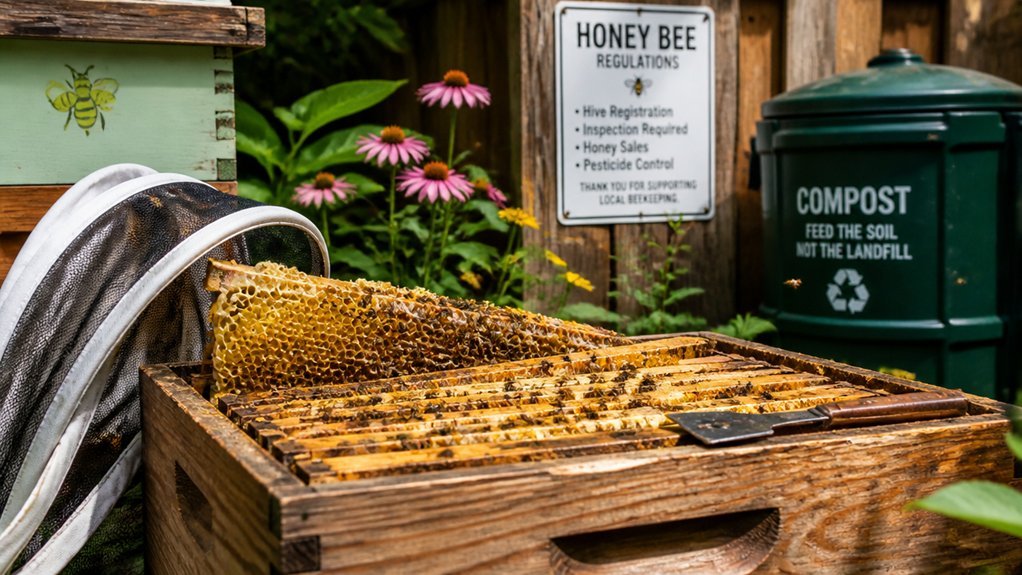
You should keep dated inspection notes, colony strength, queen status, brood pattern, mite counts, signs of disease, feeding, treatments, honey stores, equipment changes, and unusual behavior. These records help you spot problems and track trends.
Can I Keep Bees if I Rent My Home?
Yes, you can sometimes keep bees while renting, but you’ll need your landlord’s written permission and must follow lease rules, local ordinances, and any HOA restrictions before setting up hives on the property.
In Summary
You’ve learned the key legal requirements for backyard beekeeping, so now you can move forward with confidence. Before you bring home your first hive, check your local rules, secure any required permit, and place your hives where they’re safe and compliant. Staying informed helps you avoid fines, protect your neighbors, and keep your bees healthy. When you follow the law from the start, you make beekeeping easier, safer, and more rewarding for everyone involved.