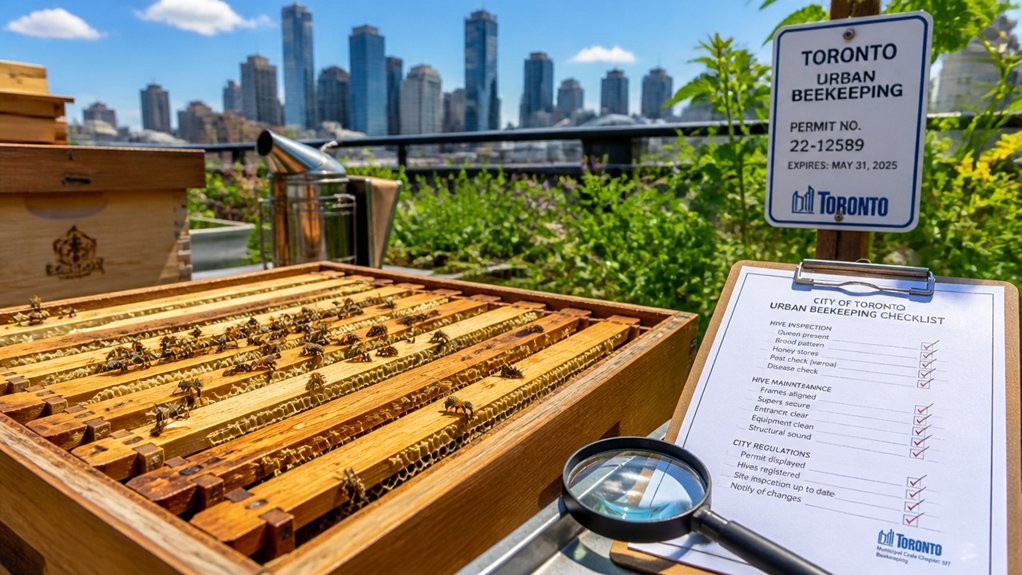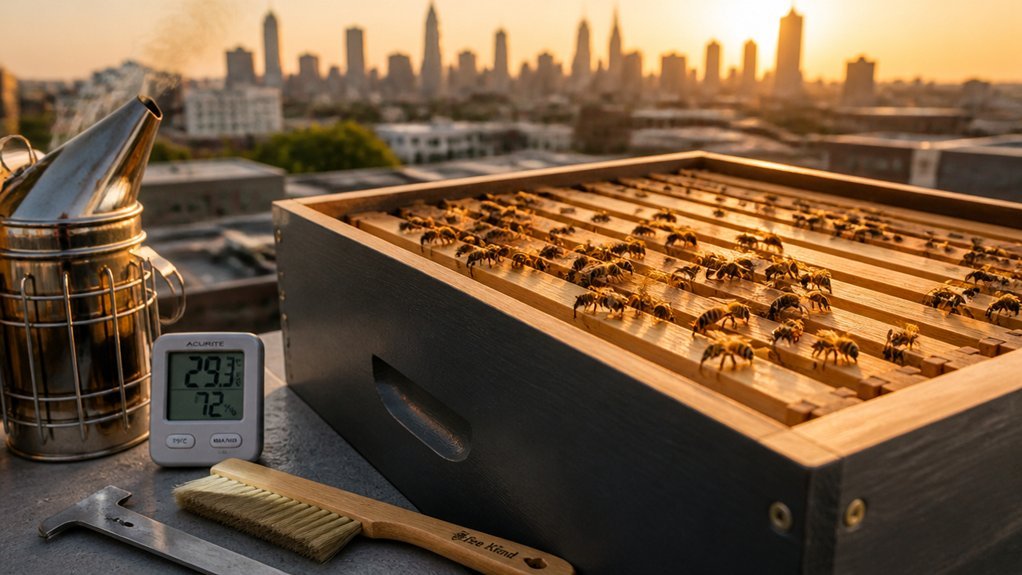
Before you bring bees home, check your city’s hive limit so you don’t start with too many colonies. Then review zoning rules, HOA bylaws, and permit or registration requirements, since local codes can overlap. Measure setback distances from property lines, sidewalks, and neighbors before you place any hives. Keep colonies calm and clean to avoid nuisance issues. If you want to expand later, confirm the rules again and plan each new hive carefully.
Check Your City’s Hive Limit
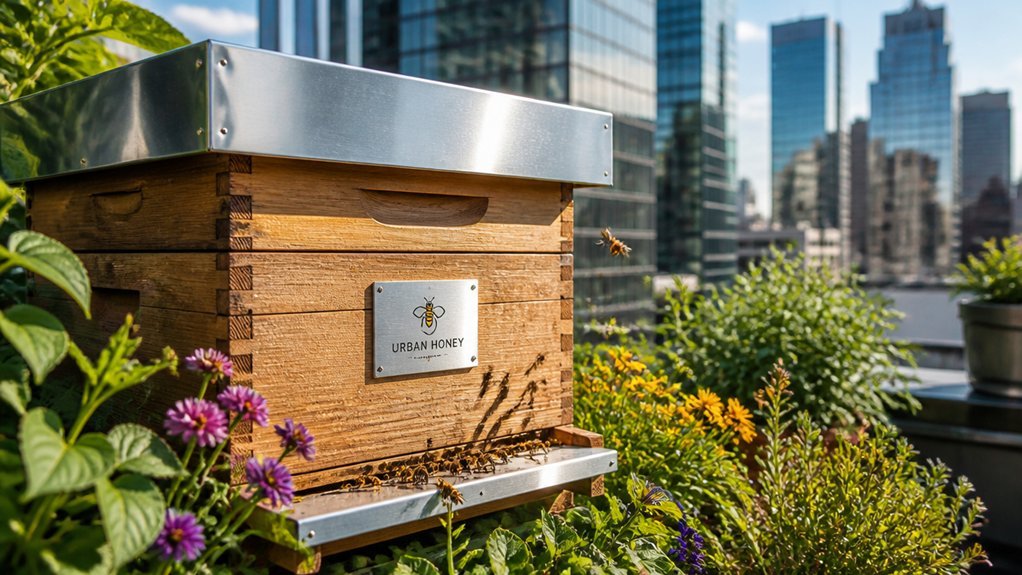
Before you bring home bees, check your city’s hive limit so you don’t start with a violation. You need to know how many colonies your local rules allow on your property, because that number shapes everything else.
If your limit is one hive, plan for a single strong colony rather than adding extras later. If your city allows more, decide how many you can truly manage with your time, space, and budget. A legal limit doesn’t mean you should max it out. Leave room for seasonal growth, equipment, and easy access for inspections.
Call your city office or review its code online, then write down the exact number and any conditions. When you know the limit, you can choose a realistic setup and avoid costly mistakes.
Knowing your hive regulations ensures your beekeeping efforts stay compliant and sustainable.
Review Zoning, HOA, and Permit Rules
After you know your hive limit, make sure the rest of your local rules line up too. Check your zoning code first; it may allow bees only in certain districts or require a special use permit. Then read your HOA bylaws, since they can add approval steps, hive screening, or ownership rules. Don’t assume a city okay means your neighborhood agrees. Also, ask whether you need a permit, registration, or inspection before you place a hive. Be aware of hive size options, which can impact local regulations and space requirements.
| Rule source | What to check | Action |
|---|---|---|
| Zoning | Allowed land use | Confirm beekeeping is permitted |
| HOA | Community restrictions | Get written approval |
| Permit office | Registration or fee | Submit forms early |
Save every email and form. If rules conflict, follow the stricter one and ask for clarification before you buy bees.
Meet Urban Hive Setback Requirements
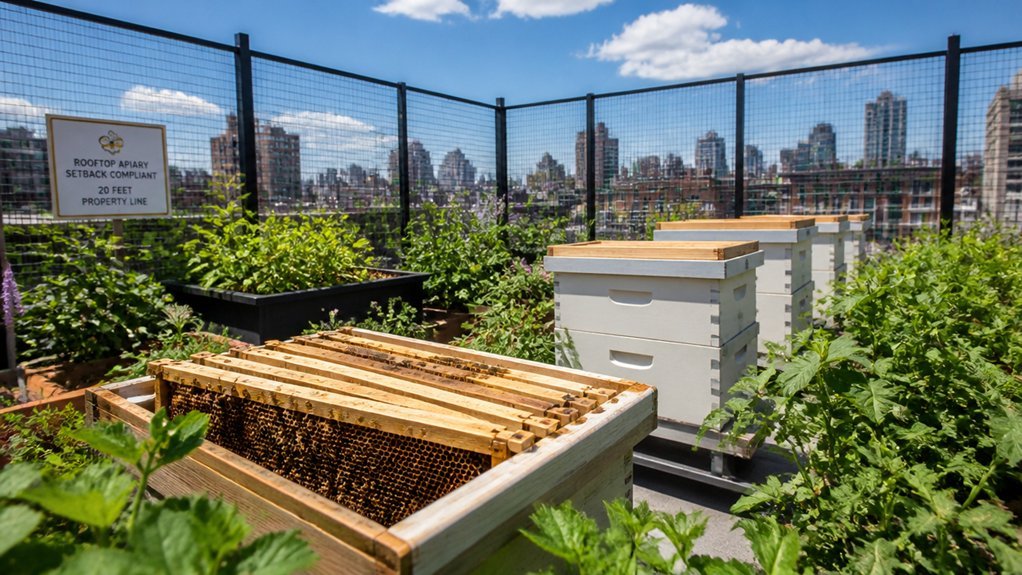
Once your rules are clear, check the required setbacks for each hive. Measure from property lines, sidewalks, and neighboring homes before you place equipment. Many cities require a specific distance from fences or public areas, and some add extra space near schools, parks, or shared walls.
Use a tape measure, mark the ground, and keep a simple site sketch so you can prove compliance. If your yard is tight, choose the most open corner and orient entrances away from walkways.
You can also use barriers or landscaping only if local rules allow them, since they don’t always replace setback distances. Recheck measurements after any move or expansion, because a small shift can put you out of bounds and trigger complaints or fines. Additionally, understanding the setback requirements for hive placement helps protect your colonies from disturbances and ensures legal compliance.
Prevent Nuisance Problems With Hive Care
Good hive care goes a long way toward keeping neighbors happy and complaints low. You can cut nuisance issues by checking colonies often, keeping entrances clear, and removing dead bees or debris before they build up.
If you spot robbing, weak odor, or rough behavior, act fast so problems don’t spread.
One way to encourage beneficial insects and reduce pests is by using pollinator-friendly water stations, which provide a safe and attractive water source for bees.
- Keep forage available: Plant pollinator-friendly flowers nearby so bees stay busy and less interested in neighbors’ yards.
- Provide water: Set out a shallow water source with clean stones so bees won’t visit pools, birdbaths, or pets’ dishes.
- Work calmly: Open hives gently, avoid crushing bees, and use smoke sparingly to limit alarm and agitation.
With steady attention, you’ll help your apiary stay orderly, quiet, and manageable year-round.
Scale Up Without Violating Local Rules
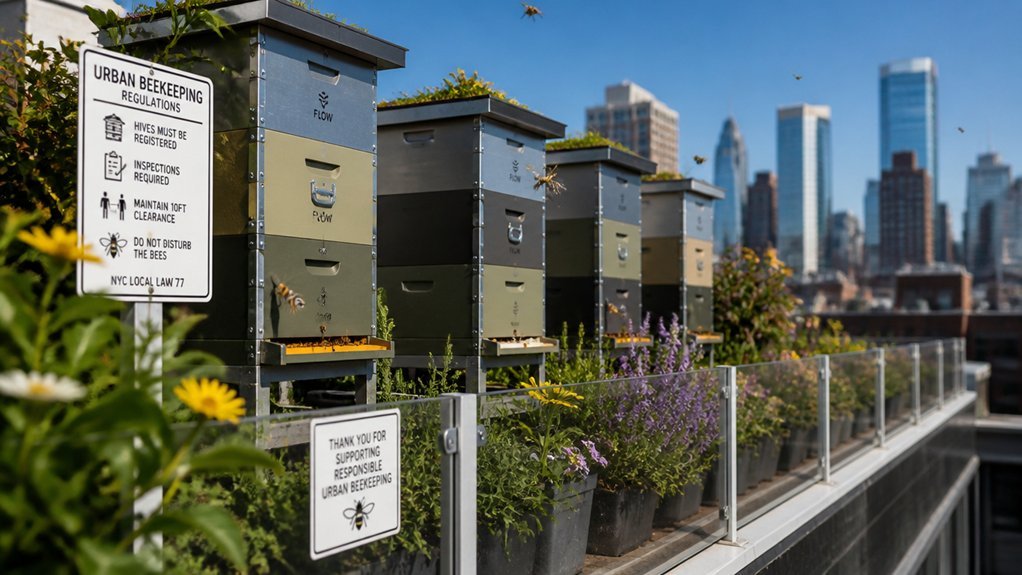
As your apiary grows, keep every expansion within local zoning, permit, and setback rules so you don’t create legal trouble later.
Keep every apiary expansion within local zoning, permit, and setback rules to avoid legal trouble later.
Before you add hives, check whether your city limits hive count, requires registration, or sets minimum distances from property lines, sidewalks, and neighboring homes. If you want to scale, talk with your zoning office and beekeeping association first, then document every approval.
Place new hives where flight paths stay above people and away from shared spaces. Update your water source, fencing, and screening as you grow, since bigger colonies can mean more traffic and attention.
Revisit the rules each season, because ordinances change. If you plan to sell honey or queens, confirm whether business permits, labels, or inspections apply before you expand.
Additionally, ensure your hive stability measures are sufficient, especially in windy conditions, by using reliable straps and fasteners to prevent shifting or accidents during expansion.
Frequently Asked Questions
Can Urban Beehives Affect Nearby Neighbors’ Allergies?
Yes, they can slightly affect your neighbors if bees increase local pollen exposure, but they usually don’t trigger allergies directly. You should reduce hive density, plant low-pollen landscaping, and communicate with nearby residents.
What Flowers Work Best for Rooftop Hives?
You’ll want nectar-rich flowers like lavender, thyme, borage, clover, sunflowers, and sedum. You can mix early, mid, and late bloomers so your rooftop hives get steady forage, even in windy, sunny conditions.
How Do I Safely Winterize City Beehives?
You winterize your city hives by reducing entrances, adding insulation, ensuring enough honey stores, checking ventilation, and shielding them from wind. You should avoid opening boxes often, and you’ll monitor weight during warm spells.
Can I Harvest Honey From a Small Balcony Hive?
Yes, you can harvest some honey from a small balcony hive if you leave enough stores for the bees. You’ll need local permission, careful timing, and gentle handling to avoid stressing your colony.
What Protective Gear Is Essential for Beginner Urban Beekeepers?
You’ll need a well-fitted veil, gloves, long sleeves, long pants, and closed-toe boots. Use a smoker and hive tool too. Start with light-colored clothing, and skip strong scents that might agitate bees.
In Summary
Before you add more hives, make sure you’ve checked your city’s limits, zoning rules, and setback requirements. Stay in good standing with your HOA or permit office, and keep your bees healthy so you don’t create nuisance issues for neighbors. Urban beekeeping can thrive when you follow the rules and plan carefully. If you want to scale up, do it slowly and legally so your apiary stays productive and compliant.