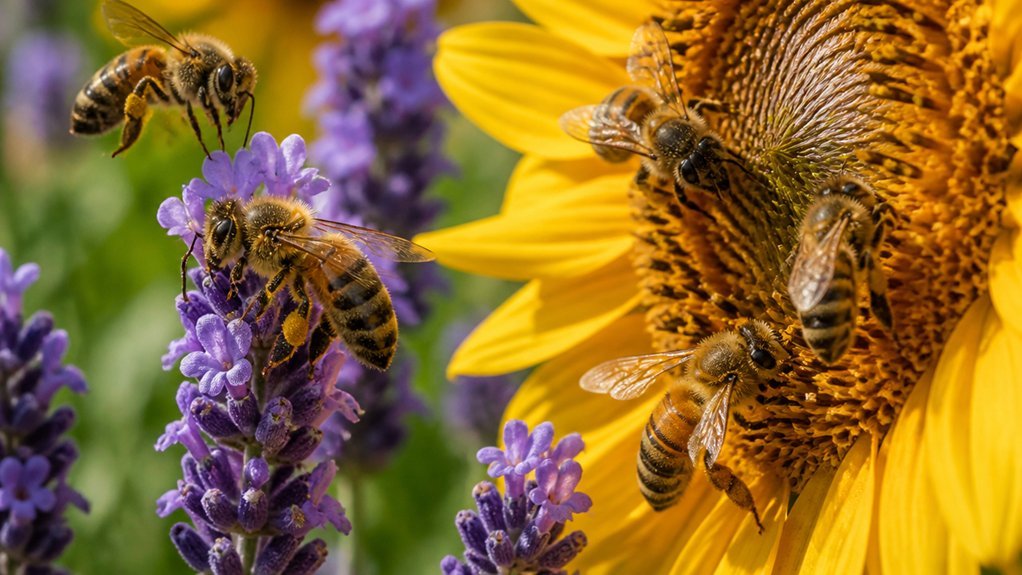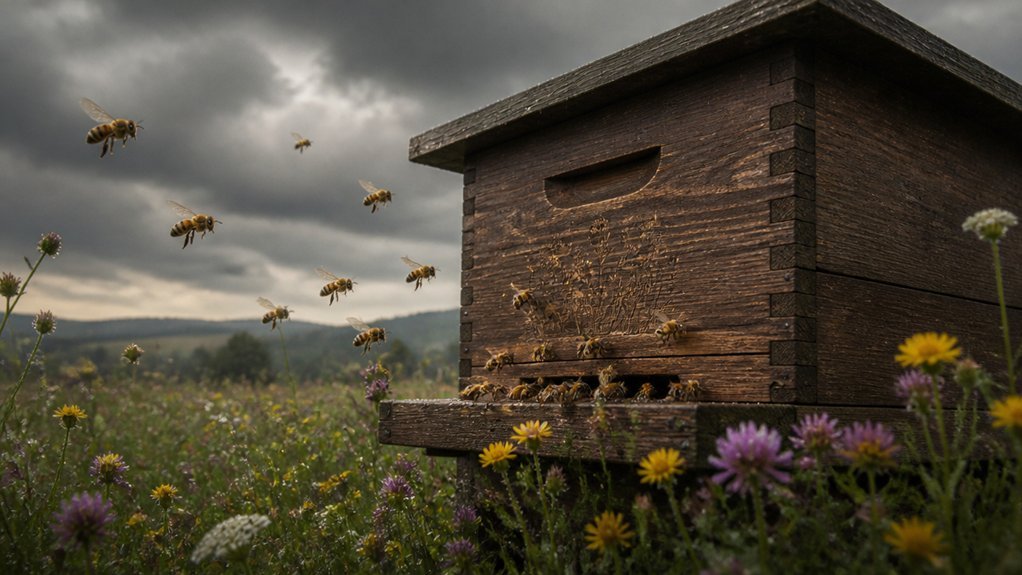
Bees change their behavior fast when the weather shifts. In warm, calm conditions, you’ll see them forage more, dance to share food sources, and visit flowers longer. When it turns cold, wet, windy, hot, or humid, they fly less, cluster to stay warm, fan to cool the hive, and return sooner. They also adjust work times and reduce activity to protect the colony. Keep going, and you’ll see what these changes look like in your hive.
How Weather Affects Bee Behavior
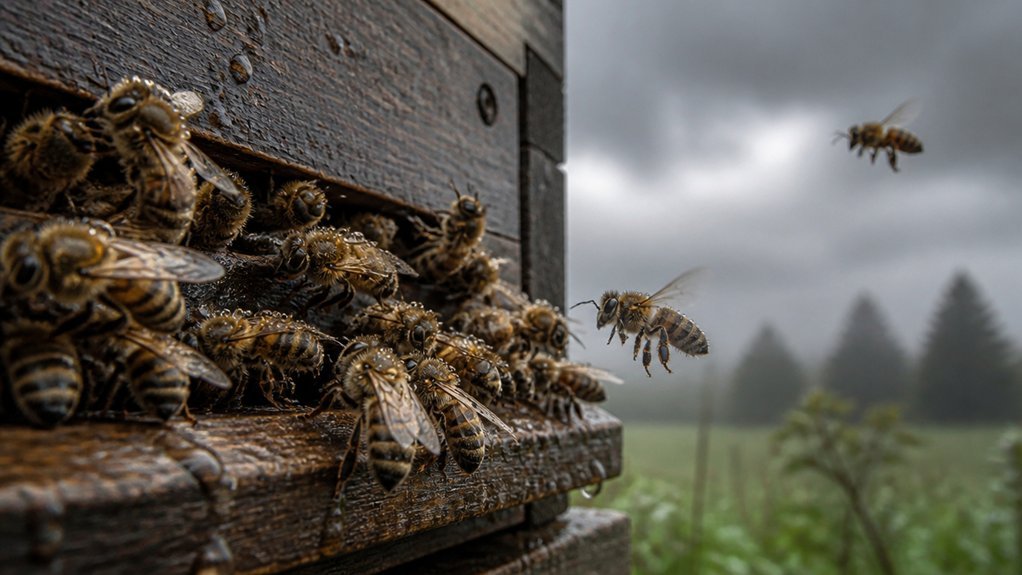
When the weather shifts, bees adjust their behavior quickly to stay safe and efficient. You’ll notice them change flight patterns, forage timing, and communication when conditions become sunny, windy, humid, or rainy.
A water source can help support their hydration needs during extreme weather changes, ensuring their activity remains healthy and productive.
Warm, calm weather usually lets you see more bees leaving the hive, gathering nectar, and visiting flowers with purpose. If clouds thicken or rain threatens, they’ll reduce travel and focus on shorter, safer trips. You may also observe fewer bees dancing inside the hive because they’re sharing less information about distant food sources. Their choices help conserve energy and limit risk.
Bee Behavior in Cold Weather
When cold weather hits, you’ll see bees form a tight winter cluster to share warmth and protect the colony. They also slow down foraging because low temperatures make flight risky and less efficient. Inside the hive, they use insulation tactics like sealing gaps and conserving heat to survive the chill. Additionally, bees often adjust the hive’s ventilation control to balance airflow, preventing moisture buildup and maintaining optimal internal conditions.
Winter Cluster Formation
As temperatures drop, bees gather into a tight winter cluster to stay warm and survive the cold. You can picture thousands of bodies linking together around the queen, with workers on the outside acting like a living blanket. They slowly rotate positions, so no bee stays chilled for long. Inside the cluster, bees vibrate their flight muscles to generate heat, and that warmth spreads through the group. You won’t see them moving much, but they’re constantly adjusting to hold the right temperature. This careful formation helps the colony conserve energy and endure harsh weather, especially when the hive’s insulation rating is high, like R8 or higher.
Slowed Foraging Activity
Cold weather slows a bee’s foraging because flying takes more energy and the chill makes it harder for their muscles to work. You’ll notice bees leave the hive less often when temperatures drop, and they usually wait for brighter, warmer hours before heading out.
Their wingbeats need strong muscle warmth, so cold air can quickly drain the energy they’d use to search for nectar and pollen. If you watch them on a chilly day, you’ll see fewer visits to flowers and shorter trips overall.
This slowdown helps them avoid risk, since low temperatures can make flight unstable and food gathering inefficient. By conserving effort, bees protect their energy until conditions improve, then resume steady foraging when the weather’s more favorable. Maintaining proper hive temperature and humidity is crucial for supporting their activity levels during cold spells.
Hive Insulation Tactics
Even on frigid days, bees work together to keep the hive warm. You can think of them as a living blanket: workers cluster tightly around the queen and the brood, then flex their flight muscles to generate heat. They don’t all huddle in one spot forever; instead, they shift positions so no bee gets too chilled. Proper inner covers help enhance insulation and airflow, supporting their vital heat regulation activities. You’ll also see them seal cracks with propolis, which helps block drafts and trap warmth. Inside the hive, stored honey gives them fuel for this constant shivering heat.
How Bees React to Rain and Wind
When rain starts, you’ll see bees stay close to the hive and wait out the storm in shelter.
Strong wind can limit their flight, making it harder for them to navigate and gather food.
You’ll also notice more bees crowding the entrance as they return quickly and guard the hive.
Entrance size may be adjusted to help regulate airflow and protect against harsh weather conditions.
Rainy Day Shelter
A steady rain or gusty wind sends most bees back home fast, where they cluster inside the hive or nest and wait out the weather. You’ll often see them stay quiet, conserve energy, and keep the brood warm while the storm passes.
Workers may seal gaps with wax or propolis, and they’ll keep food stores close so the colony can ride out damp, cold hours. If you’re watching a hive, you’ll notice little traffic at the entrance and no purposeful foraging until skies improve. Rain also washes scent trails away, so bees can’t rely on them outside.
When conditions ease, they quickly resume their routines, leaving shelter only when they can fly safely and efficiently again without wasting precious effort.
Windy Flight Limits
Wind doesn’t just make a bee uncomfortable; it can make flight unsafe. You may see bees pause when gusts pick up because strong wind throws off their balance and steers them off course.
Their small bodies and rapid wingbeats help them move, but they can’t fight heavy turbulence for long. When wind rises, you’ll notice them flying lower, shorter distances, or staying still until conditions ease.
Rain adds another obstacle, since wet wings lose lift and cold air slows their muscles. If you watch carefully, you’ll see bees choose calmer gaps between gusts or nearby sheltered spots to wait out the weather.
They conserve energy by avoiding risky trips, then resume foraging when the air becomes steadier and safer again. Pheromone blends play a crucial role in how scout bees communicate and respond to environmental cues, including weather changes, to coordinate their activities efficiently.
Hive-Entry Behavior
As rain starts or wind strengthens, bees often head straight back to the hive instead of pushing on. You can watch them veer home in a hurry, conserving energy and avoiding getting soaked or blown off course.
At the entrance, guards usually slow traffic, and returning foragers slip inside with pollen, nectar, or nothing at all. Once inside, they cluster, clean themselves, and wait out the weather.
You’ll notice fewer departures during hard rain because wet wings lose lift and gusts make landing risky.
A robust entrance reducer can help manage airflow and protect the colony during such weather conditions.
If the sky clears, they may resume foraging quickly, but they won’t waste effort fighting bad conditions. Their instinct is simple: stay safe, protect the colony, and return when flying becomes practical again.
Bee Behavior in Hot Weather
When temperatures climb, bees shift their behavior to keep the hive cool and protect the colony. You’ll see more workers fanning at the entrance and inside the hive, beating their wings to move air across the comb.
Others leave earlier in the day to forage before the heat peaks, then return quickly with nectar and water. You may notice bees clustering less tightly, because spacing out helps release warmth. They also bring in water and spread it on surfaces, where fanning speeds evaporation and lowers the temperature.
If the heat persists, you’ll see them reduce activity around midday and rest in shaded areas. These adjustments help you understand how bees stay productive while avoiding dangerous overheating and keeping brood safe.
How Humidity Affects Bee Activity
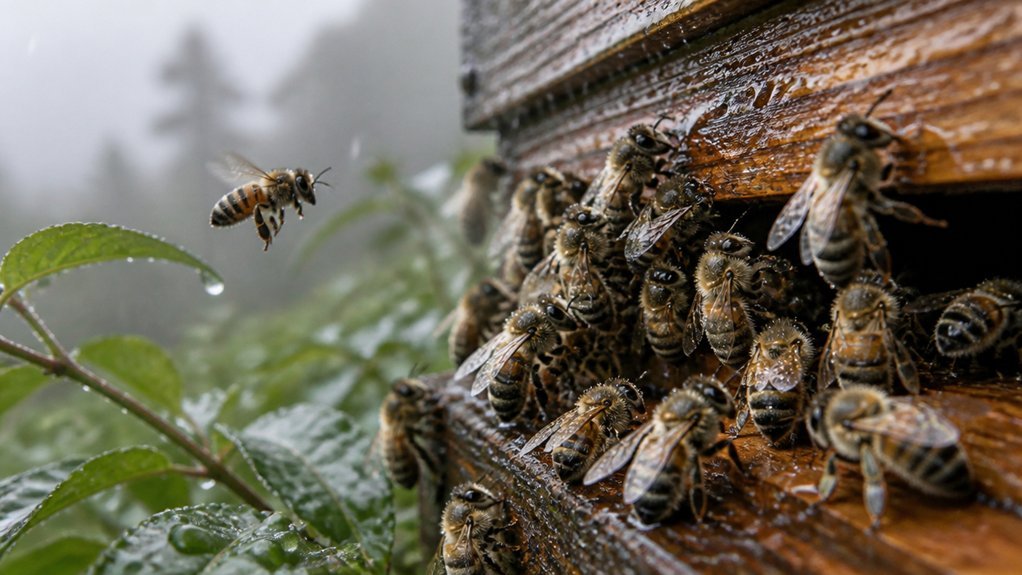
High humidity can slow bees down because moist air makes it harder for sweat-like cooling through evaporation to work effectively. You may notice bees visiting fewer flowers when the air feels heavy and damp. Their flight takes more effort, and they often pause longer before leaving the hive.
Inside the colony, humidity can also affect brood care and honey ripening, so bees adjust ventilation to keep conditions steadier.
- You’ll see more fanning at the entrance.
- Foragers may shorten trips and carry less nectar.
- Bees often work earlier or later when humidity drops.
When humidity stays high, bees don’t stop working, but they conserve energy and shift tasks to protect the hive.
How Bees Handle Sudden Weather Swings
Sudden weather swings can catch bees off guard, but they react quickly to protect the colony.
You’ll see foragers turn back when clouds roll in or wind picks up, because they can’t afford to waste energy far from home. Inside the hive, worker bees tighten their cluster to hold warmth during cold snaps and fan air through the entrance when heat spikes.
They also shift brood care, feeding larvae and moving stored honey where it’s needed most. If rain or a temperature drop lasts, bees slow their flight and wait it out rather than risk exposure. Utilizing ventilation features helps regulate hive temperature and moisture, supporting the bees’ efforts to adapt during abrupt weather changes.
Their teamwork helps them ride out abrupt changes with less damage, keeping the hive stable until conditions settle again.
Signs Weather Is Stressing Your Hive
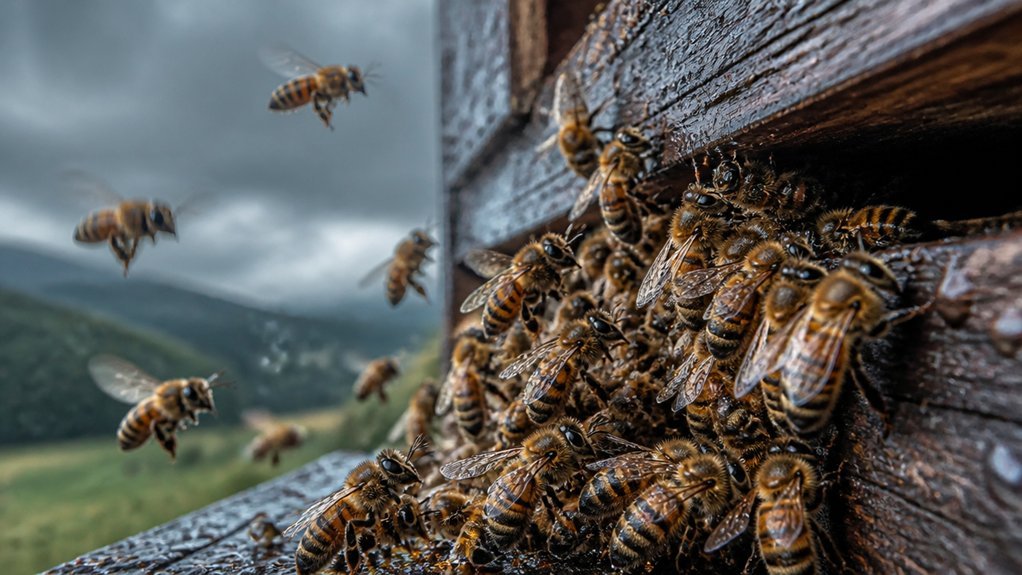
Weather stress doesn’t always hit a hive all at once, but the warning signs usually show up fast. You may notice bees clustering tightly, pacing the entrance, or hesitating before flying out.
Weather stress often shows up fast: clustered bees, restless entrances, and hesitation before they fly.
On rough days, the hive can sound quieter than usual, or you’ll see fewer foragers returning with pollen. Inside, brood patterns may look uneven, and bees might fan more often as they try to steady conditions.
- Bees stay inside longer than normal.
- The entrance looks crowded or unusually calm.
- Foraging drops, and pollen loads shrink.
You can also spot agitation in erratic movement and repeated orientation flights. These shifts don’t prove weather alone is the cause, but they do tell you your colony is feeling pressure and reacting to temperature fluctuations.
How to Help Bees Through Unstable Weather
When conditions turn unstable, you can help bees by reducing extra stress and giving the hive a steadier environment. Place the hive in a sheltered spot that blocks harsh wind and afternoon sun, and keep the entrance clear so bees can move in and out quickly.
If rain, cold, or heat is extreme, check that the colony has enough food and clean water nearby, because foraging may slow down. Avoid opening the hive often, since each inspection can chill brood or disturb the cluster.
Use a windbreak, lift the hive off damp ground, and secure lids against storms. If a nectar dearth follows bad weather, offer emergency feed carefully and monitor pests, since weak colonies need support, not pressure.
Frequently Asked Questions
How Do Bees Sense Changes in Barometric Pressure?
You can think bees sense barometric pressure through tiny hairs, body sensors, and air sacs that detect subtle shifts in air density. These cues help you understand why they alter flight, foraging, and hive behavior.
Do Different Bee Species React Differently to Weather Shifts?
Yes, you’ll see differences: some species keep foraging in cooler, windier weather, while others retreat sooner. You can expect native and honey bees to vary in temperature tolerance, rain avoidance, and activity timing.
Can Weather Changes Affect a Bee’s Honey Production?
Yes, weather changes can affect your bees’ honey production. Cold, rain, wind, or drought can limit foraging, reduce nectar flow, and slow colony activity, so you’ll often see less honey stored overall.
Do Bees Use Weather Cues When Choosing New Nest Sites?
Yes, you’ll see bees use weather cues when choosing nest sites; they favor sheltered, warm, dry places, and they avoid windy or damp spots because those conditions can hurt colony survival and stability.
How Do Night Temperatures Influence Bee Activity Patterns?
You’ll see bees slow down when nights stay warm, because they’re active earlier and later. Cooler nights usually delay foraging, so you’ll notice shorter activity windows and less evening movement overall.
In Summary
You can see that weather shapes every part of bee life, from foraging to hive health. When it’s cold, wet, windy, or too hot, your bees adjust quickly to stay safe and protect the colony. By watching their behavior and giving them extra support during sudden weather swings, you can help them stay strong. With a little care, you’ll give your bees a better chance to thrive through changing conditions.