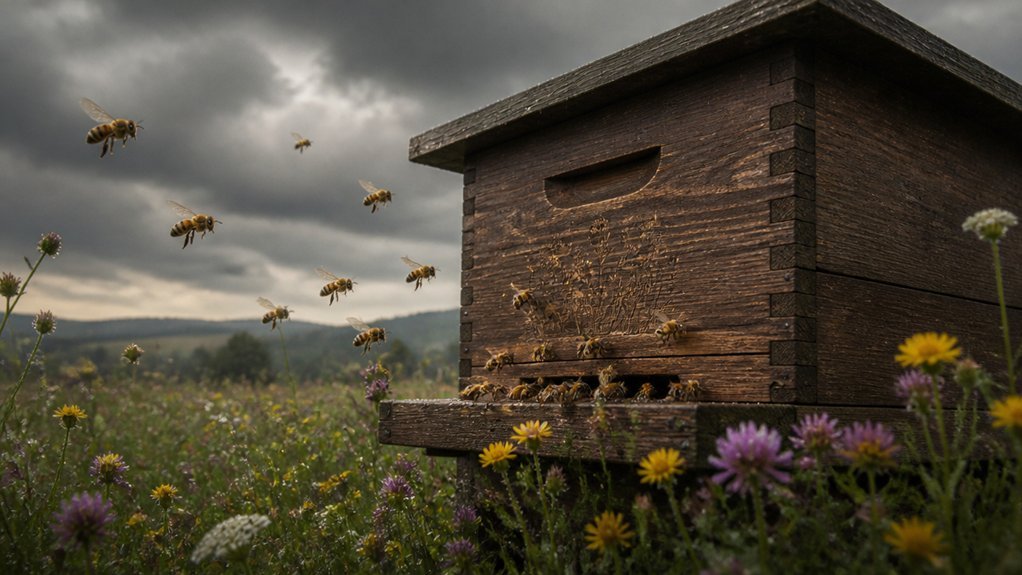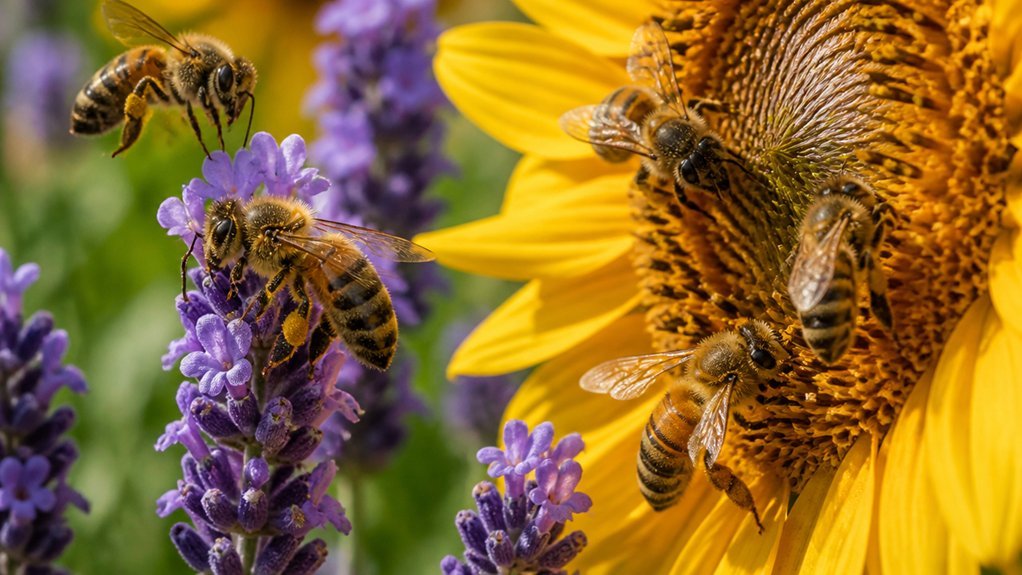
During nectar flow, you’ll see bees forage fast and return in steady waves, especially from sunny, nectar-rich blooms. Inside the hive, workers process nectar quickly, fan the entrance, and store honey in neat layers. Nurse bees shift toward handling nectar and pollen, while guards keep traffic orderly. You may also notice stronger comb building, heavier brood rearing, and less bearding. A strong queen helps keep everything focused, and the signs of a busy flow can tell you even more.
What Nectar Flow Means for Honey Bees
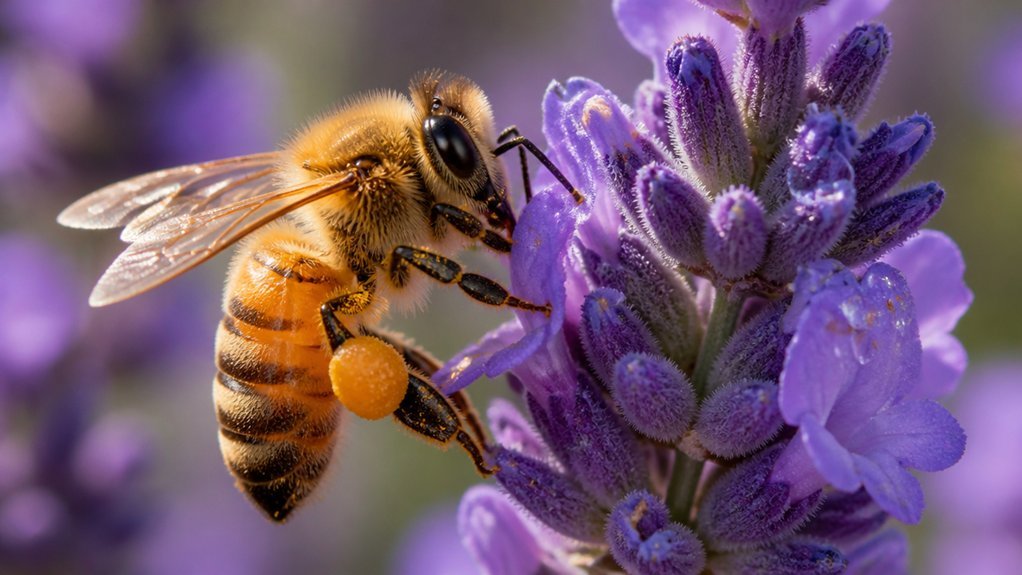
When nectar flow begins, honey bees shift into high gear, because blooming plants suddenly give them a steady supply of nectar and pollen. You’re seeing a seasonal surge in forage availability, when many flowering plants release richer rewards than they do at other times.
Your bees respond by gathering more nectar and pollen, which supports brood rearing and honey production. You’ll notice that this period depends on weather, bloom timing, and local plant species, so it doesn’t last equally long everywhere.
If you manage hives, you should expect your colonies to use this window to build resources fast. Nectar flow matters because it links plant blooming with bee survival, growth, and the honey you harvest later. Supporting colony health during this time can be enhanced with appropriate bee syrup supplements, which improve nutrition and resilience.
How Nectar Flow Changes Hive Activity
During nectar flow, your hive becomes noticeably busier as foragers leave and return more often, and bees inside ramp up their work to process incoming nectar.
You’ll see more traffic at the entrance, with guards adjusting to the heavier stream of nestmates and nectar loads. Inside, workers fan their wings to move air, lower moisture, and help ripen nectar into honey. Nurse bees may shift some effort away from brood care as the colony prioritizes storage and processing.
Combs fill faster, so bees also spend more time receiving, passing, and placing nectar in cells. This surge in activity can make the hive sound louder and feel warmer, showing you that the colony is using the flow efficiently and preparing for a strong honey crop. Effective hive management becomes especially important during this peak activity period to ensure the colony remains healthy and productive.
How Bees Forage During Nectar Flow
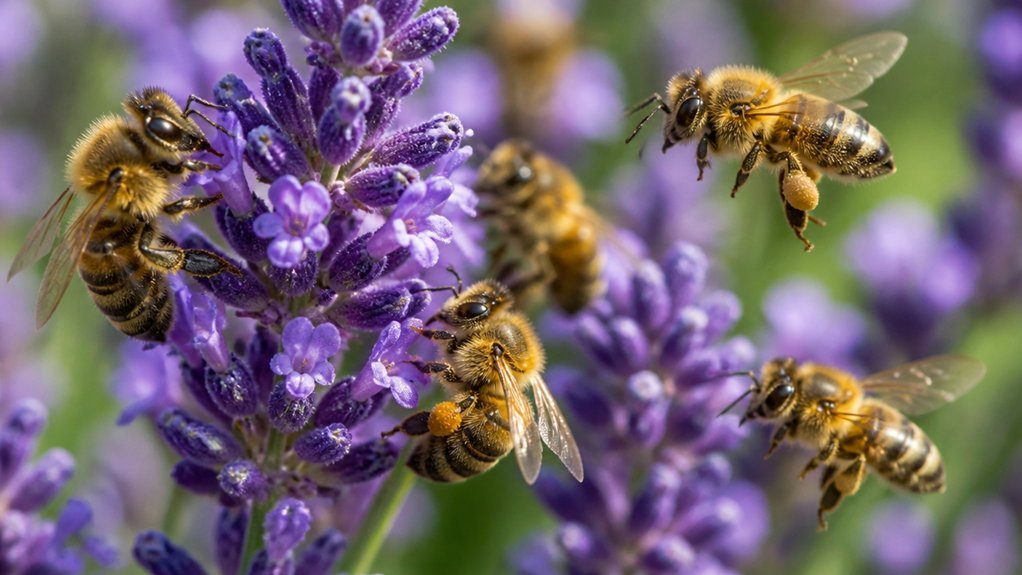
As nectar flow builds, you’ll see more foragers leaving the hive in quick, steady shifts, each one heading for the richest blooms and returning with a full honey stomach.
You can expect them to sample flowers fast, then revisit only those rewarding patches that keep paying off. They’ll spread out across your yard, follow scent cues, and work efficiently to maximize each trip.
Because nectar is abundant, they don’t waste time on poor sources; they focus on high-value blossoms and make repeated runs while the flow lasts.
- Search for dense flower patches
- Favor sunny, nectar-rich blooms
- Return to productive spots quickly
- Carry more nectar per trip
- Adjust routes as flowers change
- Use *water sources* to support hydration and activity during busy foraging periods
How Bees Behave at the Entrance
At the hive entrance, the pace changes from field work to crowd control. You’ll see foragers land hard, then fan their wings to signal incoming nectar and clear the air.
Guards check each bee as she slips inside, and they don’t waste time with strangers. If traffic builds, bees form a living lane, letting loaded workers pass while others wait and dance.
Guards inspect each arriving bee, while traffic forms a living lane for busy workers to pass.
You may notice more scent marking too, which helps nestmates find the right doorway fast. The entrance stays busy, but the colony keeps order by reading movement, smell, and posture in seconds. Proper entrance size control is essential for maintaining hive security and airflow during nectar flow.
When nectar pours in, you’re watching a tight system that balances speed, security, and communication without missing a beat.
Why Bees Build Comb Faster
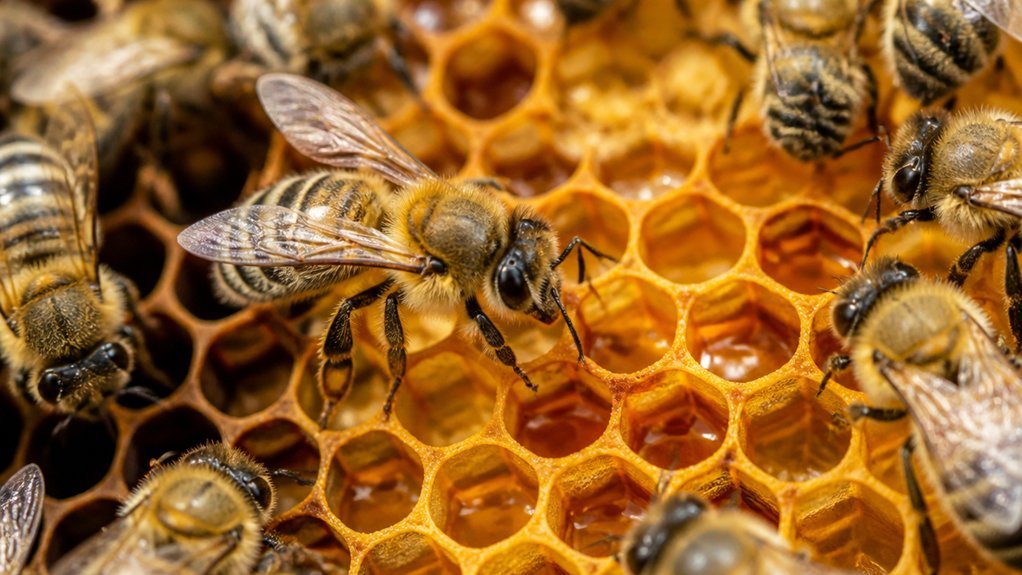
When nectar is pouring in, bees build comb faster because the whole colony has extra fuel to spend. You’ll see workers secrete wax more readily, since they’re getting steady carbohydrates and can divert energy from foraging to construction. Warm temperatures also keep wax soft, so bees shape cells with less effort.
As nectar fills the hive, you notice stronger teamwork and more rapid movement across the frames. Properly assembled beehive frames with precise fit and durable materials help facilitate this increased activity and support the colony’s rapid growth.
- More food means more wax production
- Warm hive conditions soften new wax
- Workers switch from search mode to building mode
- Busy colonies coordinate faster
- Fresh comb creates room for growth
That speed helps you expand storage, raise brood, and keep the colony ready for the next wave of bloom.
How Workers Store Nectar Quickly
You’ll see worker bees handle nectar fast by passing it from mouth to mouth, which speeds up processing.
They then tuck it into wax cells, where it can start drying and thickening. This quick storage helps the hive keep up when nectar is flowing heavily.
Rapid Nectar Processing
As nectar pours in during a strong flow, worker bees move it through the hive with remarkable speed, each one taking a small share from foragers and passing it along to house bees. You’ll see a smooth relay that keeps nectar from piling up at the entrance.
Workers fan their wings to lift moisture, then spread the load among many bees so processing never stalls.
- You notice less congestion at the landing board.
- You see constant exchange between field bees and hive bees.
- You hear a steady hum from active fanning.
- You spot bees tasting and rehandling droplets quickly.
- You get a hive that stays efficient during heavy flow, thanks to the bees’ coordinated balancing of workload.
Wax Cell Storage
Once the hive has a rush of nectar coming in, workers start tucking it into wax cells almost immediately. You’ll see them pass nectar hand to hand, then place it in open comb where it spreads thinly for faster drying. This quick storage keeps the flow moving and prevents congestion at the entrance.
You should notice workers choosing cells near brood or storage areas, filling them in layers instead of packing them full at once. They fan their wings to push out moisture while more nectar arrives.
Because wax cells hold small amounts efficiently, your bees can stash large harvests fast and free up foragers to keep working. The whole system runs smoothly when storage space stays open and workers stay organized. Proper cell size is essential for supporting efficient honey storage and colony health.
How the Queen Affects Nectar Flow Behavior
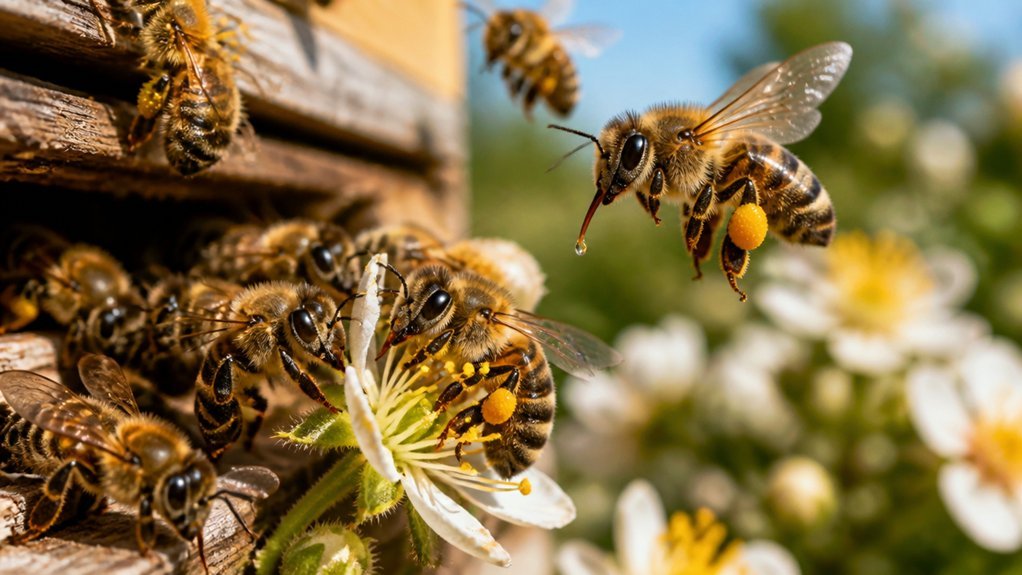
You can see the queen’s pheromones help steady the hive and guide worker behavior during nectar flow. When brood demand rises, you’ll notice more bees pushing nectar gathering and storage to feed the growing colony. Her presence also helps control swarming, so the hive stays focused on collecting nectar instead of splitting up. Proper queen management, including the use of high-quality queen cages, further supports stable hive behavior during this busy period.
Queen Pheromone Signals
At the center of the hive, the queen’s pheromones quietly steer worker behavior during a nectar flow. You’ll see bees move with purpose because her scent signals stability, cohesion, and readiness to work.
When her pheromone levels stay strong, workers keep foraging, cleaning, and feeding the colony efficiently. If that signal weakens, their focus can shift, and you may notice more restless activity.
- Strong queen scent helps maintain order
- Workers respond to chemical cues fast
- A healthy queen supports steady foraging
- Pheromones help align hive activity
- Signal changes can alter bee behavior
- Queen marking kits can help monitor queen health and pheromone production, ensuring her scent remains effective.
Brood Demand Influence
As brood numbers rise, the hive’s urgency rises with them: more larvae mean more mouths to feed, so workers shift harder into collecting nectar and converting it into brood food.
You’ll notice nurse bees drawing more pollen and nectar to the center of the brood nest, while foragers respond by flying more often and unloading faster. The queen drives this pattern indirectly by laying steadily, keeping brood demand high and signaling that the colony should keep building reserves.
That pressure helps you see why nectar flow doesn’t just fill combs; it also supports growth. When brood rearing stays strong, you get a more active, better organized workforce that prioritizes feeding larvae, maintaining warmth, and processing incoming nectar efficiently throughout the flow.
Understanding how queen activity influences worker behavior can help beekeepers optimize their hive management during peak nectar flow periods.
Swarm Control Effects
When a hive is heading toward swarming, the queen’s influence on nectar flow behavior shifts from steady production to crowding control. You’ll notice workers pack the brood nest tighter, reduce foraging pressure, and slow nectar processing when queen pheromone levels dip.
If you manage space early, you keep bees focused on storing nectar instead of preparing to leave. Splitting crowded colonies, adding supers, and removing queen cells can restore balance fast.
- Watch for congestion at the entrance
- Check for queen cups weekly
- Add space before comb fills completely
- Keep young workers drawing wax
- Support strong ventilation during peak flow
How Bee Behavior Differs in Strong and Weak Flow
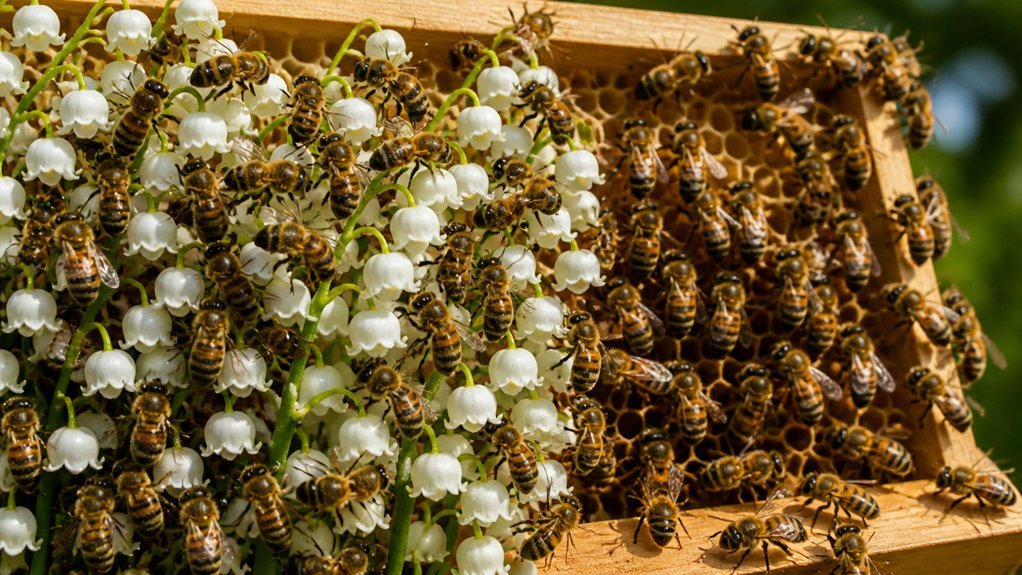
During a strong nectar flow, bees work with urgency and purpose: foragers return quickly, recruits pour out of the hive, and the colony shifts into a high-output mode that can fill frames fast. You’ll see them pack nectar, fan actively, and keep traffic moving with little hesitation.
In a weak flow, they slow down, send fewer foragers, and spend more time waiting, scouting, or conserving energy. You may notice shorter trips, lighter loads, and less crowding at the entrance. Your colony won’t commit to the same storage push, so brood care and maintenance can hold more attention.
Signs Your Hive Is in Full Nectar Flow
When your hive hits full nectar flow, you’ll often see brood nest expansion as the queen lays more and nurse bees cover more cells.
You’ll also notice heavy nectar intake, with foragers returning loaded and the boxes starting to fill fast.
These signs tell you the colony’s working at peak pace.
Brood Expansion Signals
As nectar starts pouring in, your hive often shifts into a brood-building rhythm, and you’ll see the queen lay more heavily while nurses cover the expanding patch of open cells with fresh brood.
You’ll notice brood areas spreading across frames as bees prepare for a larger population. The colony keeps warmth steady, and workers polish cells faster so the queen can continue laying without delay.
Watch for:
- larger brood nests
- more eggs in neat rows
- stronger nurse bee traffic
- fewer idle cells
- steady wax work around brood edges
This growth signals confidence in forage and a healthy balance between incoming resources and young bees. When you see these changes, your hive’s momentum is building.
Heavy Nectar Intake
If the nectar flow is strong, you’ll see foragers coming home loaded and the hive working at full speed. You’ll notice bees bearding less, because workers stay inside to process incoming nectar. Frames may feel heavier, and capped stores can appear quickly as they spread fresh nectar across comb.
Inside the hive, you’ll see intense fanning at the entrance and between frames, which helps evaporate moisture and ripen honey. Nurse bees shift gears too, taking nectar from foragers and passing it along. You may also spot a steady line of bees entering with swollen abdomens and leaving empty.
When you inspect, expect sticky comb, loud buzzing, and little wasted motion. These signs tell you your colony is capturing a strong flow and building stores fast.
How to Support Bees During Nectar Flow
During a nectar flow, you can support bees by making sure they’ve plenty of room, clean water, and minimal disturbance. Open extra boxes before they crowd, so they can store nectar fast and keep working efficiently.
Check water sources daily, and place shallow pans or drip systems nearby if needed. Avoid heavy inspections, smoke, or unnecessary hive moving, because stress slows foraging.
Watch for congestion, and add space before comb fills completely. If you manage nearby flowers, keep blooming plants available and limit pesticide use.
- Add supers early
- Refill water regularly
- Inspect sparingly
- Protect forage areas
- Skip harsh chemicals
Frequently Asked Questions
How Does Nectar Flow Affect Bee Communication Dances?
Nectar flow boosts your bees’ waggle dances; they’ll recruit more nestmates, dance longer, and signal richer sources. You’ll notice faster foraging, stronger directional cues, and more frequent round dances when nearby flowers suddenly bloom.
Do Bees Change Their Sleep Patterns During Heavy Nectar Flow?
Yes, during heavy nectar flow, you’ll often see bees rest less and work longer, because they’re busy foraging, processing nectar, and fanning. Their sleep-like downtime can shrink, but they still need brief recovery periods.
Can Nectar Flow Influence Hive Temperature Regulation?
Yes, nectar flow can influence hive temperature regulation because you’ll see bees fan more, evaporate moisture, and crowd the brood nest. You may need extra ventilation, since incoming nectar can raise internal heat quickly.
Why Do Some Bees Guard the Hive More During Nectar Flow?
You’ll see more guards because nectar flow raises theft risk, attracts robbers, and crowds the entrance. Your bees tighten security, inspect arrivals, and defend stores more aggressively while valuable nectar pours in from nearby blooms.
How Long Does a Nectar Flow Usually Last?
A nectar flow usually lasts anywhere from a few days to several weeks, and you’ll often see it vary by weather, blooms, and location. In your area, it can start and stop quickly.
In Summary
When nectar flow hits, you’ll see your bees work harder, fly faster, and store more food than usual. You can support them by giving them space, checking for swarming signs, and avoiding unnecessary hive disturbance. If you watch closely, you’ll notice stronger foraging, quicker comb building, and a bustling entrance. By staying attentive during this busy season, you’ll help your colony make the most of every bloom and build up for the months ahead.