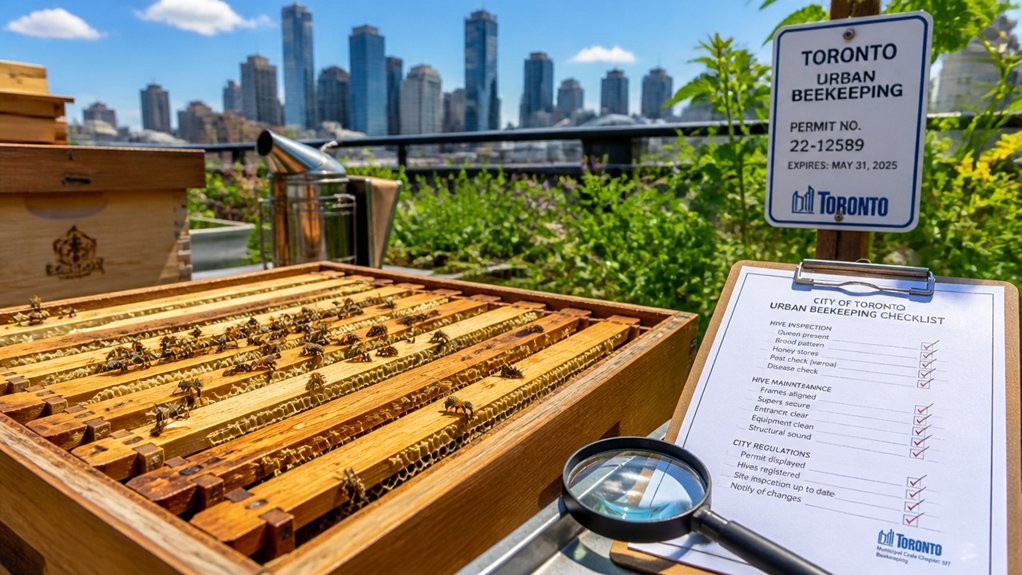
Check your hives on a spring, summer, and fall schedule so you catch Varroa early. In spring, use an alcohol wash or sugar roll and treat before brood builds fast if counts are above threshold. In summer, monitor every few weeks, especially weak or brood-heavy colonies, and recheck after treatment. In fall, test again and act promptly with a label-approved treatment before winter bees are raised, and there’s more to fine-tune your timing.
Spring Varroa Mite Checks and When to Treat

As spring warms up, how do you know when to check for varroa mites and act? You should inspect your hives once brood rearing picks up and daytime temperatures stay mild. Use an alcohol wash or sugar roll to measure mite levels accurately. A sampling method that provides consistent and reliable counts is essential for effective management.
If counts rise above your local threshold, treat promptly before the colony builds more brood. Choose a treatment that fits spring conditions and follow label directions exactly. Remove supers if required, and time applications so you don’t disrupt nectar gathering more than necessary.
Recheck after treatment to confirm the mites dropped. Keeping notes on dates, counts, and results helps you spot trends and plan faster next season. Early spring action protects developing bees and gives your colonies a stronger start.
Summer Mite Checks to Keep Hives Healthy
When summer heat settles in, you should keep checking mite levels so problems don’t build unnoticed. Use a sticky board or an alcohol wash every few weeks, and compare results from hive to hive.
Check mite levels every few weeks in summer with sticky boards or alcohol washes to catch problems early.
Focus on colonies that look weak, brood-heavy, or slower to build up, since mites often show up there first. Inspect drone brood and uncapped worker brood for signs of infestation, and note any twisted wings or spotty brood patterns.
Keep records of each check so you can spot rising pressure early. If counts climb, act quickly with the treatment method you already use in your management plan.
Regular summer monitoring helps you protect brood, maintain strong foragers, and keep your hives productive through the hottest months. Incorporating long-lasting treatments can also provide ongoing protection during peak infestation periods.
Fall Varroa Control Before Winter

Before winter sets in, you need to bring varroa levels down so your bees enter the cold months as strong as possible. Check mite counts in early fall, then treat promptly if levels are above threshold.
You can use an approved treatment that matches your climate, honey flow, and hive conditions. Follow label directions exactly, and don’t cut corners on dose or timing. Remove supers before you treat unless the product is safe for honey supers. Recheck after treatment to confirm it worked.
Also, reduce stress by keeping colonies well fed, queenright, and free from extra pests. Oxalic acid vaporization is a safe and efficient method for mite control during this period when brood is minimal. Strong, healthy bees overwinter better and raise fewer mites.
If you wait too long, winter bees will already be weakened, and your colony may struggle through spring.
Frequently Asked Questions
How Do I Identify Mite Damage in Brood Cells?
You spot mite damage in brood cells by checking for chewed cappings, misshapen pupae, darkened larvae, and mites on developing bees. If you see perforated caps or spotty brood patterns, you’ve likely got mites.
Which Mite-Resistant Bee Strains Are Best for Beginners?
You’ll do best with hygienic, Varroa-sensitive hygiene, and Russian or Minnesota Hygienic bees. They’re hardy, easygoing, and forgiving for beginners. Start with locally adapted stock, then watch their mite levels and temperament closely.
Can Drone Brood Removal Reduce Mite Pressure Naturally?
Yes, you can reduce mite pressure naturally by removing drone brood, since mites prefer it. You’ll need to do it regularly and combine it with other controls, or mites can rebound quickly.
What Monitoring Tools Give the Most Accurate Mite Counts?
You’ll get the most accurate mite counts with alcohol wash or sugar roll tests. You should sample brood frames regularly, record results, and compare trends; sticky boards help, but they’re less precise than direct sampling.
How Do Weather Conditions Affect Mite Treatment Effectiveness?
Weather changes how well you treat mites: heat can speed resistance and vapor loss, rain can wash sprays away, and cold may slow mite activity, so you should time applications for dry, mild conditions and monitor closely.
In Summary
Keep a close eye on your hives all year, and you’ll stay ahead of mite problems before they get out of hand. In spring, check levels early and treat when needed. In summer, monitor often so you can catch rising counts fast. In fall, act before winter to give your bees the best chance to thrive. With a simple, consistent schedule, you’ll protect your colony and support stronger, healthier hives.