First, assess the swarm before you move in: check its size, shape, height, and nearby hazards, and back off if the bees seem agitated. Second, wear proper protection, including a veil, gloves, long sleeves, pants, and closed-toe boots, with snug cuffs and no loose straps. Third, approach slowly and guide the bees gently into a hive without spraying or rushing. If you keep going, you’ll pick up a few more smart ways to stay safe.
Assess Bee Swarm Safety Before Approaching
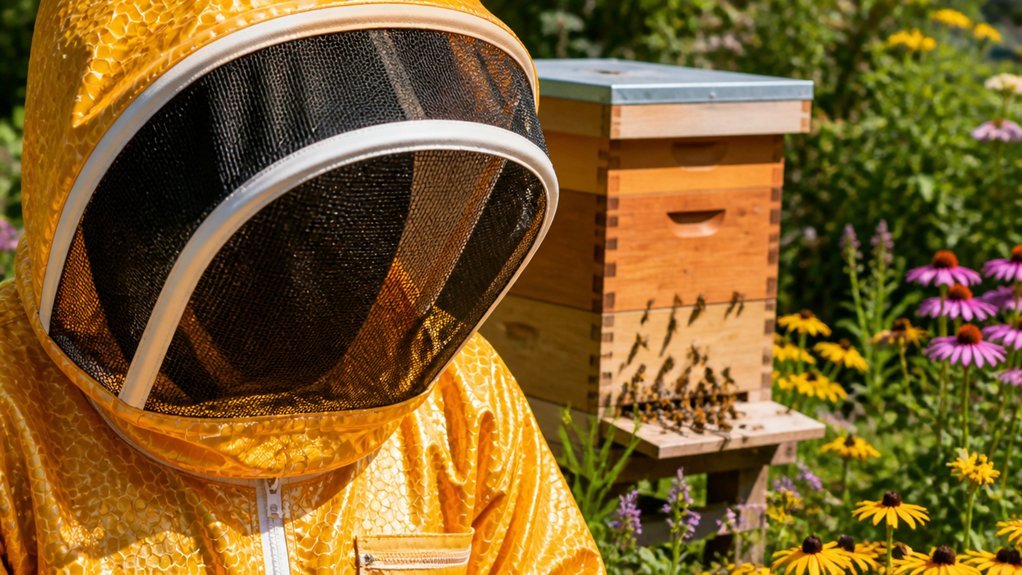
Before you move in on a bee swarm, stop and assess the scene carefully. Look for the swarm’s size, shape, and location, and decide whether it’s hanging calmly or acting agitated. Watch for fast, erratic flight, loud buzzing, or bees spilling toward nearby people, pets, or buildings. A trap design that suits the situation can also influence how safely you approach. If the swarm sits high in a tree, near traffic, or over water, you may need extra help or a different plan. Check the weather too, since wind, rain, or fading light can make the job riskier. Give the swarm space and keep bystanders back so you can judge the situation without stirring it up. If anything seems unstable or unsafe, don’t rush in; wait, reassess, and choose the safest approach.
Wear the Right Swarm-Catching Gear
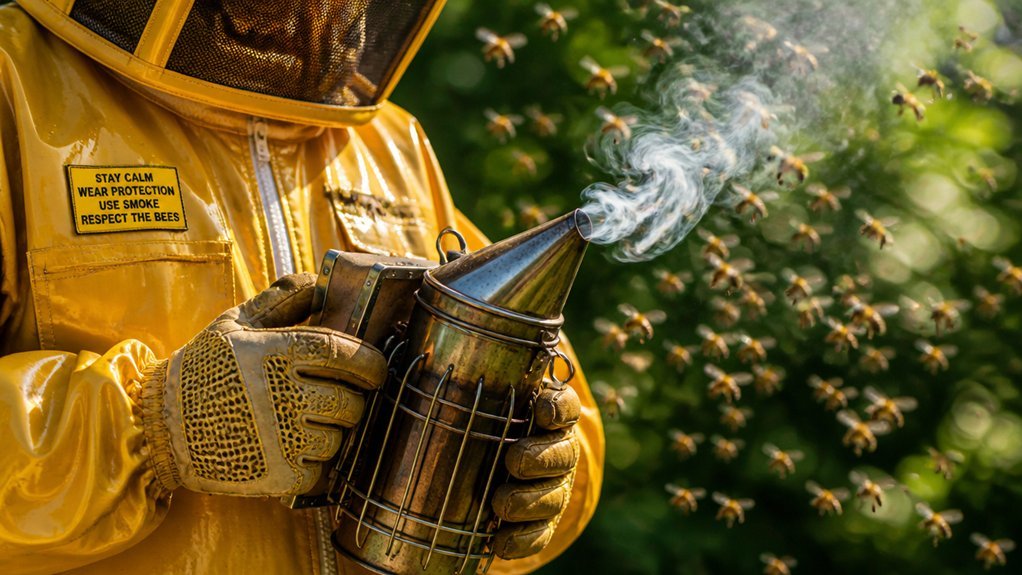
Once you’re ready to catch a swarm, wear protective gear that keeps you covered without limiting your movement. Choose a well-fitted veil, sturdy gloves, long sleeves, long pants, and closed-toe boots. Light-colored clothing helps you stay less noticeable, while smooth fabric gives bees fewer places to cling. Tuck your pant legs into socks and secure cuffs so bees can’t slip inside.
Avoid loose straps, dangling jewelry, and strong scents that can distract or agitate the swarm. If you use a smoker, keep it handy, but don’t rely on it instead of proper protection. Ensure your gear has sting-resistant materials, and regularly check it for tears or gaps to maintain full protection.
Check your gear before you begin, and replace torn items right away. Good equipment lets you work confidently, stay calmer, and reduce the chance of painful stings.
Move the Swarm Calmly Into a Hive
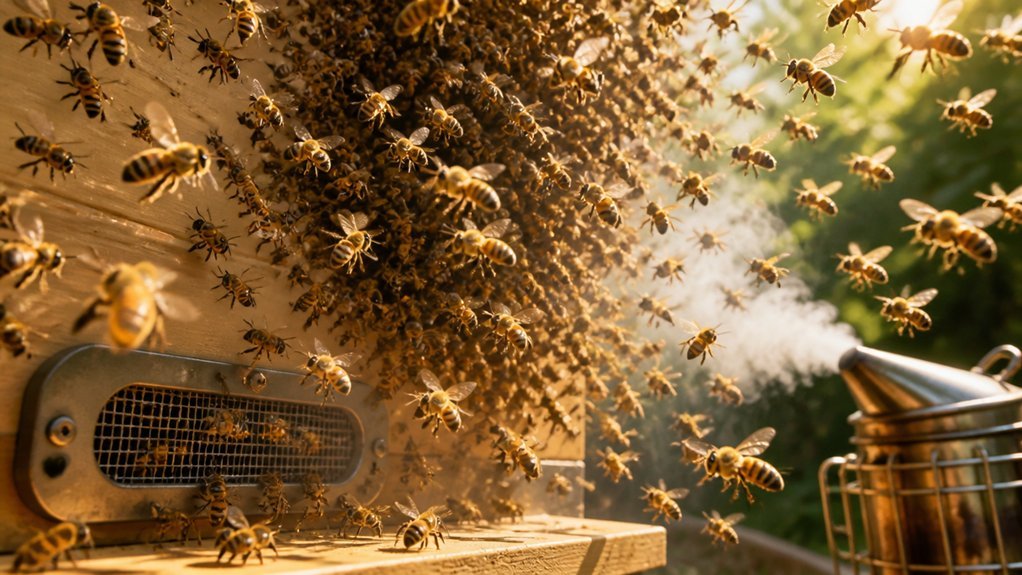
Approach the swarm slowly and keep your movements smooth so you don’t alarm the bees. Set the hive close to the cluster and tip it slightly to guide the bees inside.
Approach slowly and move smoothly, setting the hive close and tipping it gently to guide the bees inside.
If they’re hanging on a branch, shake or brush them gently into the box in one steady motion. Keep the entrance open and let the bees fan out and find the queen.
Don’t spray, pound, or rush them, because agitation can trigger defensive behavior. If bees spill outside, give them time to regroup and crawl in on their own.
Once most of the swarm enters, place the lid on securely and move the hive to its new location carefully. Check again after a few minutes to make sure the queen’s inside and the bees stay settled. Incorporating proper hive size and capacity considerations can help facilitate a smoother transfer process.
Frequently Asked Questions
What Signs Indicate a Swarm Is Too Dangerous to Approach?
You should back off if the swarm’s hanging low, moving fast, roaring loudly, or covering a hidden entrance. If you see aggressive guard bees, rain, darkness, or signs of a stressed colony, don’t approach.
Can I Catch a Swarm Without a Bee Suit?
Yes, you can, but you shouldn’t unless you’re experienced and the swarm stays calm. You need gloves, long sleeves, a veil, and an escape plan, because startled bees can sting fast.
How Far Should I Stand From the Swarm Initially?
You should start about 10 to 15 feet away, then watch the swarm’s behavior. You can move closer slowly if they stay calm, but you shouldn’t rush in or stand directly beneath them.
What Time of Day Is Safest for Swarm Catching?
Late afternoon or early evening is usually safest for you, because bees are calmer and clustered. You’ll still need protective gear, steady footing, and a quick exit path in case the swarm shifts unexpectedly.
Should I Move the Hive Immediately After Collecting the Swarm?
No, you shouldn’t move it immediately. You’ll let the swarm settle first, then move the hive after dark or the next day. Keep entrances open, avoid shaking, and watch for queen acceptance and calm clustering.
In Summary
If you’re dealing with a bee swarm, stay calm and size up the situation before you move in. You’ll protect yourself and the bees by wearing proper gear, keeping your motions slow, and avoiding sudden noise or vibration. Once you’re ready, guide the swarm gently into a hive without rushing or crushing them. When you follow these simple safety steps, you’ll handle swarms more confidently and help the bees settle safely into their new home.