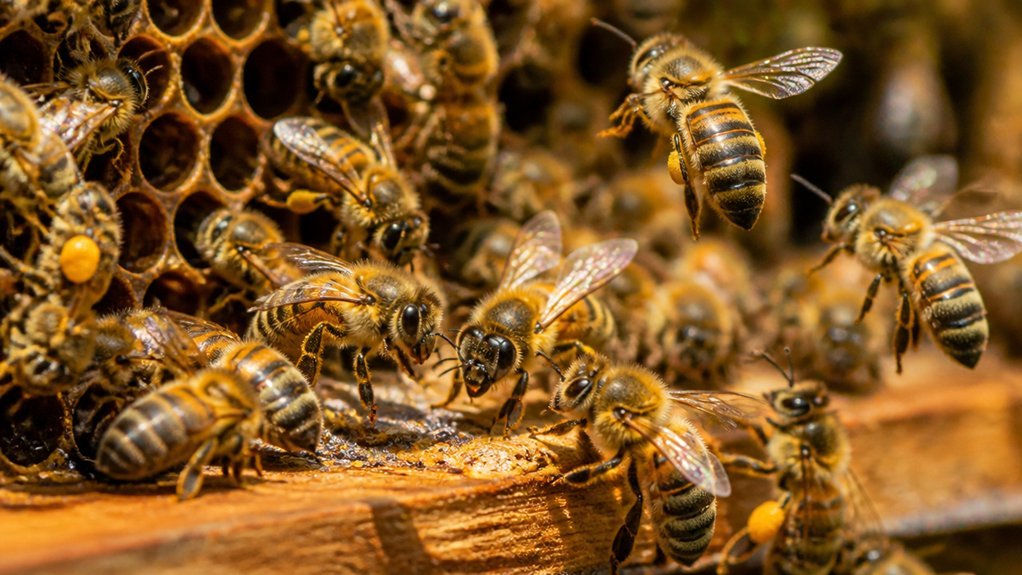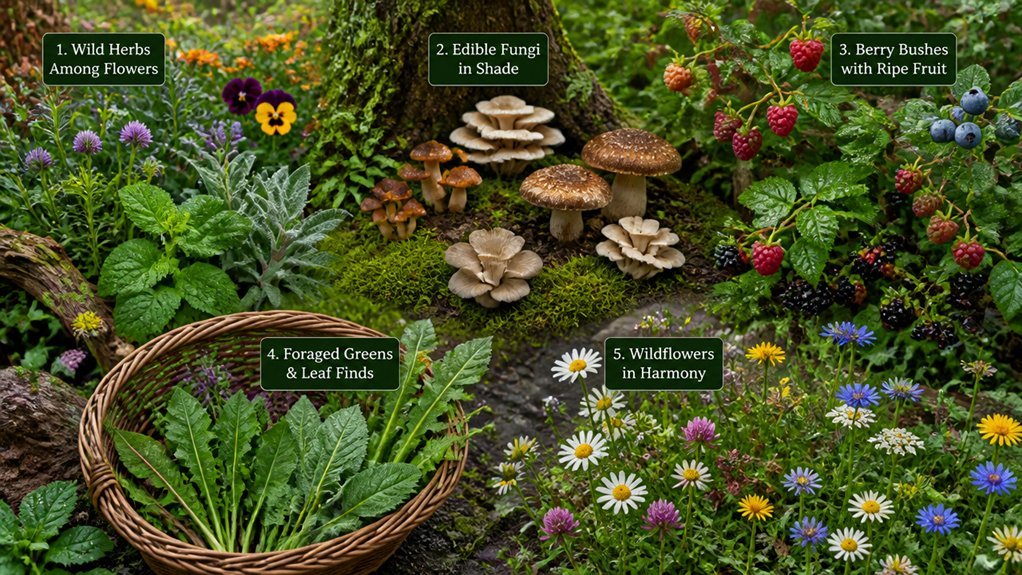
You can spot five garden foraging patterns in bees: they lock onto rewarding blooms, move in efficient zigzags through beds, make quick looping checks near the hive entrance, follow scent cues back to nectar, and shift routes from dawn to dusk. You’ll notice them favor sunny, dense flower patches, then pivot when blooms thin out. These habits save energy and boost success, and there’s even more to uncover if you keep going.
How Bees Forage in Gardens
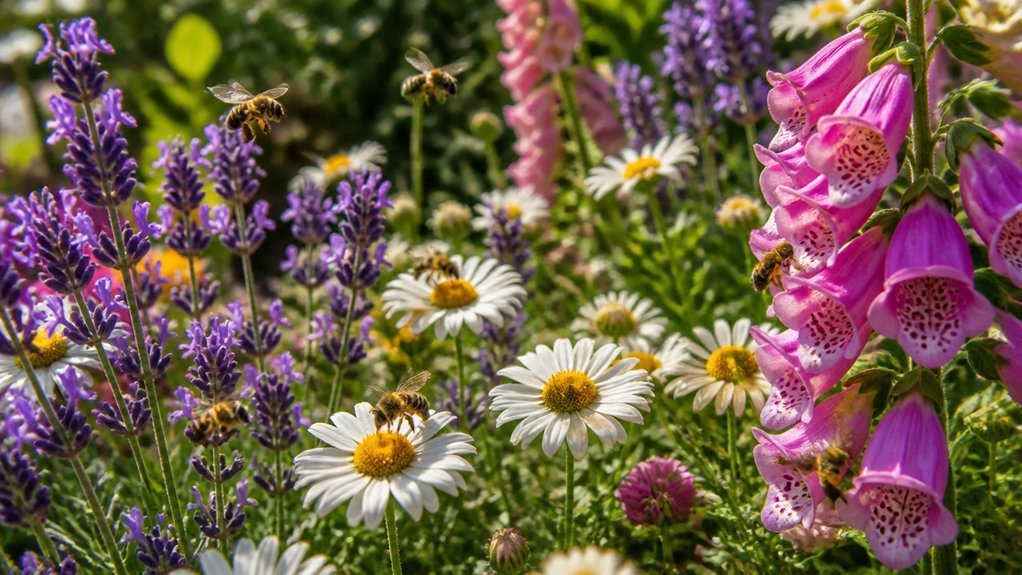
When you watch bees in a garden, you’ll notice they don’t forage randomly; they follow a clear pattern shaped by scent, color, and distance. You can see them lock onto familiar blooms, then move efficiently between flowers that offer the richest nectar and pollen.
Their bodies pick up floral cues, and they return to the same plant type when it keeps paying off. You’ll also notice they favor sunny spots, where blossoms stand out and warm air helps them fly.
As you observe longer, you’ll see repeated routes emerge, almost like a map they’ve built through experience. That consistency saves energy and helps the hive collect more food in less time, so each visit becomes part of a smart, practiced routine. Native species also play a crucial role in supporting regional biodiversity and ensuring reliable nectar sources for pollinators.
How Bees Search Garden Beds
In garden beds, bees don’t just drift from bloom to bloom; they scan the area in short, purposeful flights, checking flower clusters, edges, and gaps for the strongest payoff. You’ll notice them zigzag through patches, then pause to sample a blossom before moving on.
They favor dense groups of matching flowers because those spots save energy and speed up nectar collection. You can see them revisit productive sections, using memory to compare one bed with another. When a cluster thins out, they shift quickly to the next promising pocket.
Pollinator-friendly planting encourages bees to visit more plants by creating continuous nectar sources and optimizing flower arrangements for their search patterns.
This search pattern helps you understand why mixed, colorful beds attract more visits. If you want more bee activity, plant flowers in clear clusters, keep blooms visible, and stagger flowering times so the bed keeps offering rewards.
How Bees Search Near the Hive Entrance
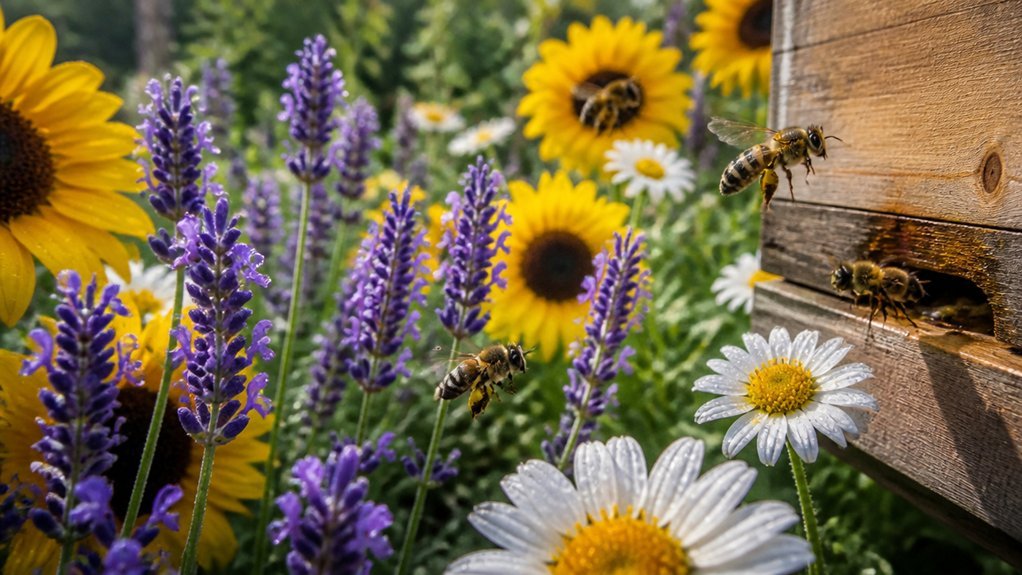
Near the hive entrance, bees search with fast, looping passes, then land briefly to check the air, the landing board, and nearby flowers. You’ll notice they move in short arcs, not straight lines, because they’re sampling the space around the hive for safe routes and easy takeoffs.
If you watch closely, you can see workers pause, pivot, and lift again as they compare spots near walls, posts, and plants. They don’t waste time; they test the area, then commit when conditions look good.
This quick scanning helps you understand why the entrance stays busy, yet orderly. Each bee’s movement fits the larger pattern: inspect, adjust, and launch.
By understanding their foraging behavior, you can better design water sources and hive placement to support efficient bee activity and healthy colonies.
How Scent Helps Bees Return to Nectar Sources
After bees leave the hive, scent gives them a reliable way back to rich nectar patches. You can think of flower odors as trail markers that linger in the air and on nearby petals, leaves, and stems.
As a bee visits blossoms, it picks up these chemical cues on its body and tarsal glands, then carries them while flying. When it circles back, it detects the same fragrance and lands faster, with less wasted searching.
Strong nectar sources often broadcast a distinct mix of floral scents, so you’ll notice bees revisiting the same plants repeatedly. This memory-scent link helps them work efficiently, share profitable locations with nestmates, and focus on flowers that still reward their effort. Proper seed quality ensures the plants produce consistent, attractive scents that effectively guide pollinators.
How Foraging Changes From Dawn to Dusk
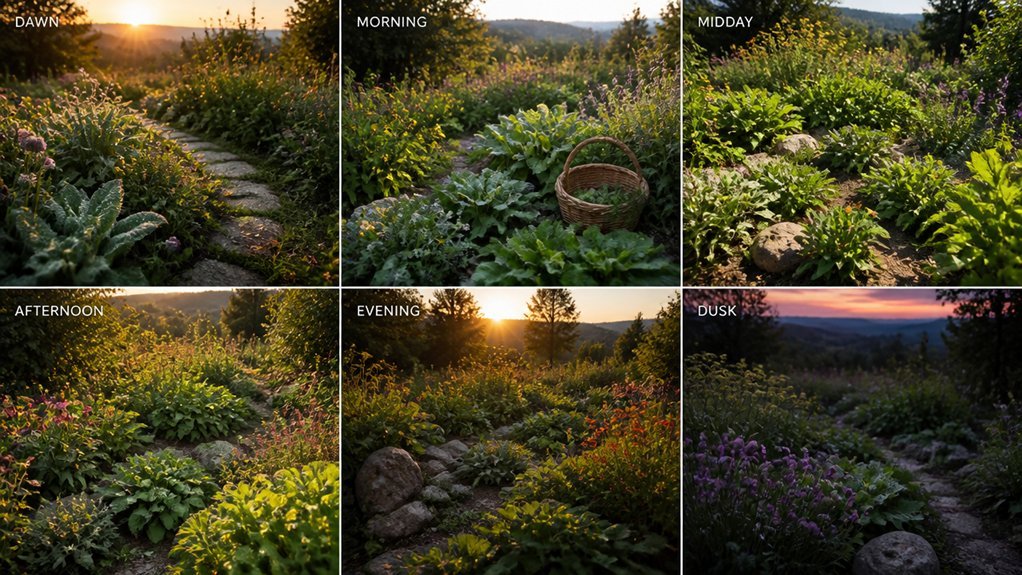
From first light to late evening, foraging patterns shift as temperature, light, and nectar availability change.
At dawn, you’ll see bees move slowly but efficiently, targeting flowers that opened overnight and still hold cool, rich nectar. As the sun climbs, you can expect faster flights and broader search ranges because warmth boosts muscle activity and scent dispersal.
At dawn, bees move slowly, seeking flowers that opened overnight and still hold cool nectar.
Midday often brings peak foraging, especially in sunny spots with abundant blooms. By afternoon, you may notice bees visiting shaded flowers more often as heat stresses open blossoms. Near dusk, activity tapers off, and you’ll watch foragers return to the hive with one last load.
If you plant staggered bloom times, you can support feeding throughout the day and improve your garden’s overall foraging flow. Additionally, understanding seasonal foraging needs can help you tailor your planting schedule to maximize bee activity and crop pollination efficiency.
Frequently Asked Questions
Which Flowers Attract the Most Bees in Small Gardens?
Lavender, borage, salvia, thyme, and sunflowers attract you’ll see the most bees in small gardens. You’ll boost visits by planting clusters, choosing single-flowered varieties, and blooming through spring and summer.
How Can Gardeners Encourage Longer Bee Visits?
You can encourage longer bee visits by planting nectar-rich flowers in clusters, offering continuous blooms, avoiding pesticides, and providing water. Add sheltered sunny spots, and bees’ll linger longer when your garden stays safe and abundant.
Do Bees Prefer Native Plants Over Ornamentals?
Yes, you’ll usually attract more bees with native plants because they’ve evolved together. You can still use ornamentals, but choose nectar-rich, pollen-rich varieties and avoid heavily bred, sterile blooms that offer little food.
What Garden Layout Supports Better Pollination Coverage?
You’ll get better pollination coverage with clustered, diverse plantings, layered heights, and repeating blooms across the bed. Keep flowers in drifts, avoid long gaps, and add sunny paths so pollinators can move efficiently.
How Do Weather Conditions Affect Garden Foraging Activity?
Weather shapes your foraging because bees and insects fly less in cold, wet, or windy conditions, and they visit flowers more on warm, calm, sunny days, so you’ll see stronger activity then.
In Summary
Now that you’ve seen the 5 best garden foraging patterns, you can spot how bees move, search, and return with purpose. You’ll notice how they work garden beds, stay close to the hive entrance, and follow scent trails back to nectar. You’ll also see how their foraging shifts from dawn to dusk. By watching these patterns, you can better understand your garden’s pollinators and support them more effectively.