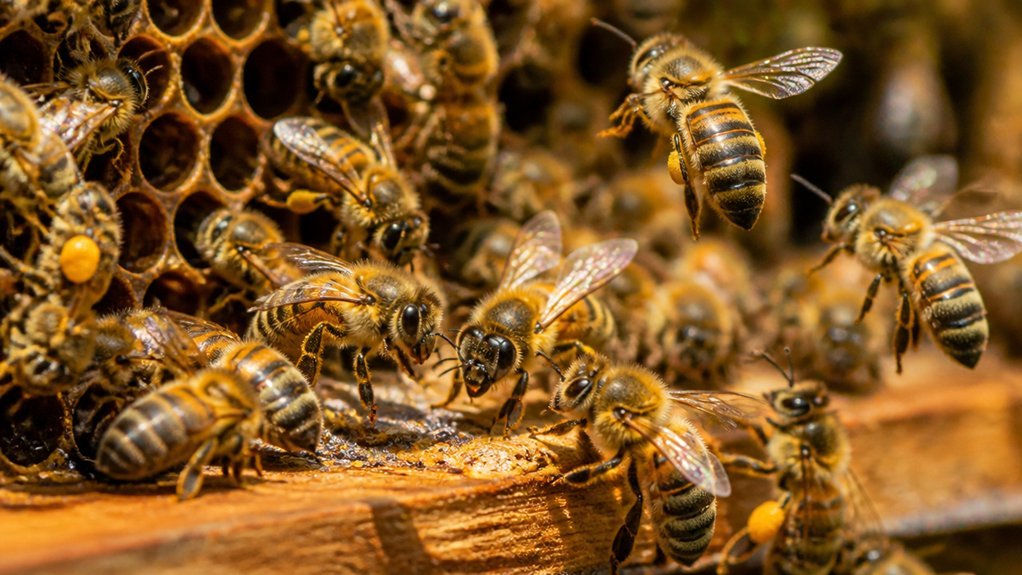
You can prevent most swarms naturally by giving your bees enough space, ventilation, and room to grow. Add supers or brood boxes early, keep frames organized, and clear burr comb so traffic flows well. Split strong colonies before they crowd, and replace old, dark comb with fresh frames. Shade the hive, provide water, and plant nectar-rich flowers nearby. Watch for queen cells and brood congestion, because those signs tell you what to do next.
Why Bees Swarm in the First Place

Bees swarm when their colony gets crowded, their queen’s pheromones weaken, or conditions inside the hive become less stable. You’ll usually see this as a natural reproductive response, not a crisis.
When the hive’s balance shifts, worker bees begin raising new queens and preparing to leave with the old queen. Warm weather, a strong nectar flow, and a healthy, expanding colony can all trigger that instinct. Swarming lets bees split into two groups, giving the species a better chance to survive and spread.
If you understand these signals, you can watch for early warning signs and respond before the colony commits to leaving. The goal isn’t to fight nature; it’s to recognize the conditions that make bees feel ready to swarm. Monitoring hive conditions and controlling the internal environment can help reduce swarming tendencies.
Prevent Overcrowding in the Hive
One of the best ways to reduce swarming is to give the colony enough room to grow. You should inspect your hive regularly and watch for tight clustering, crowded frames, or bees hanging outside the entrance. When space starts shrinking, add another brood box or super before the hive feels packed.
Keep combs organized so bees can move freely through the brood nest and store food without stacking up. You can also remove extra burr comb and fix blocked passages that slow traffic inside the hive. A clean, open layout helps bees spread out and lowers pressure in the colony.
If you stay ahead of congestion, your bees won’t feel forced to divide, and you’ll support a calmer, more stable hive through the season. Proper Hive Management ensures the bees have sufficient space, reducing the likelihood of swarming behavior.
Give the Queen More Laying Space
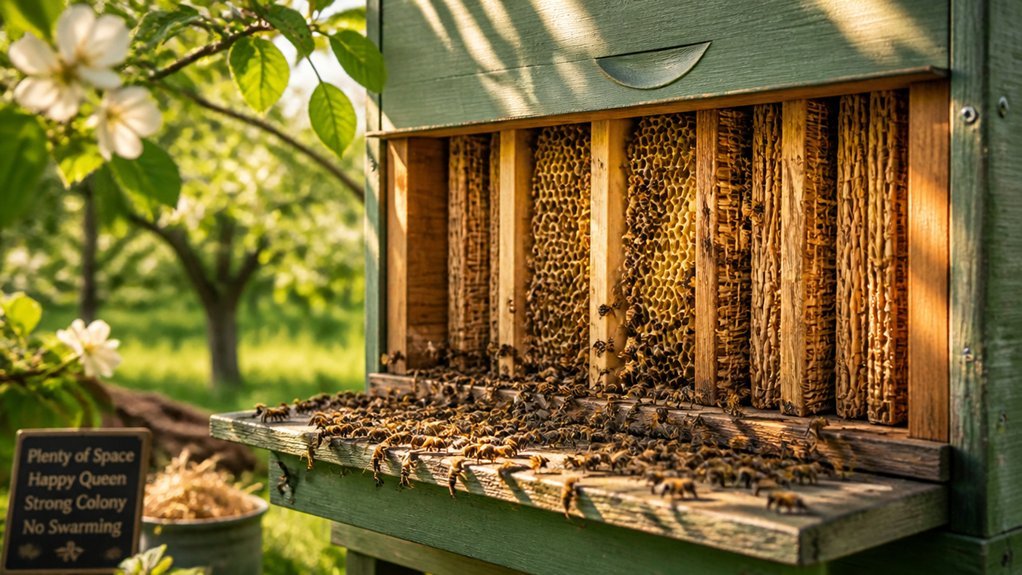
You can help your queen keep laying by expanding the brood nest when it starts to crowd. Add extra frames so she’s more open cells for eggs and the colony has room to grow. Using proper frame size compatibility ensures the frames fit snugly and maintain straight comb development, further reducing congestion and encouraging her laying activities. This extra space can ease congestion and lower the urge to swarm.
Expand Brood Nest
When the brood nest starts to crowd, give the queen more room to lay by adding frames of drawn comb or properly placed foundation next to the existing brood area.
Keep the warmest, busiest center intact, and move honey or pollen frames outward so the queen can extend her pattern naturally. You want to maintain a smooth, contiguous brood arc, not break it with gaps or chilled comb.
Check that workers can easily patrol and feed the new laying area, because strong nurse bee coverage helps the queen stay productive. If the brood nest expands steadily, your colony feels less pressure to swarm and keeps raising brood instead of preparing to leave.
Watch the pattern closely, and adjust the arrangement as the season and colony strength change. Using consistent cage material and proper ventilation techniques can further promote healthy brood rearing.
Add Extra Frames
Add extra frames as soon as the brood nest starts to feel tight, giving the queen fresh comb or well-placed foundation right beside the active brood area. You’re opening more laying room before congestion pushes the colony toward swarming. A well-structured frame compatibility ensures the new frames fit properly and support healthy colony expansion. Place the new frames where the queen can find them quickly, and keep the pattern balanced so brood stays centered and food surrounds it. If you use foundation, make sure strong nectar flow or drawn comb supports acceptance. Check that you haven’t blocked her path with heavy stores or crowded boxes. When she can expand naturally, she keeps laying, nurse bees stay busy, and the colony feels less pressure to split. This simple move helps you manage space early and keep your hive focused on growth, not swarm preparation.
Add Hive Space Before Bees Need It
Keep your colony ahead of congestion by giving it room to grow before the boxes feel crowded. You’ll reduce swarm pressure when you add supers, brood boxes, or frames early, not after bees have already packed every space.
Watch for rapid comb building, heavy nectar flow, and bees clustering in the entrance or top bars. Those signs mean it’s time to expand.
- Add space before the hive feels tight
- Match additions to colony strength
- Use drawn comb when you can
- Check brood nest coverage often
- Keep expansion gradual and timely
When you stay ahead of buildup, your bees keep working instead of preparing to leave. A little extra room now can save you from a lost swarm later, and it helps the colony keep growing in a steady, controlled way. Proper beekeeping equipment, such as hive boxes and frames, greatly facilitates timely expansion and supports healthy colony development.
Improve Hive Ventilation Naturally
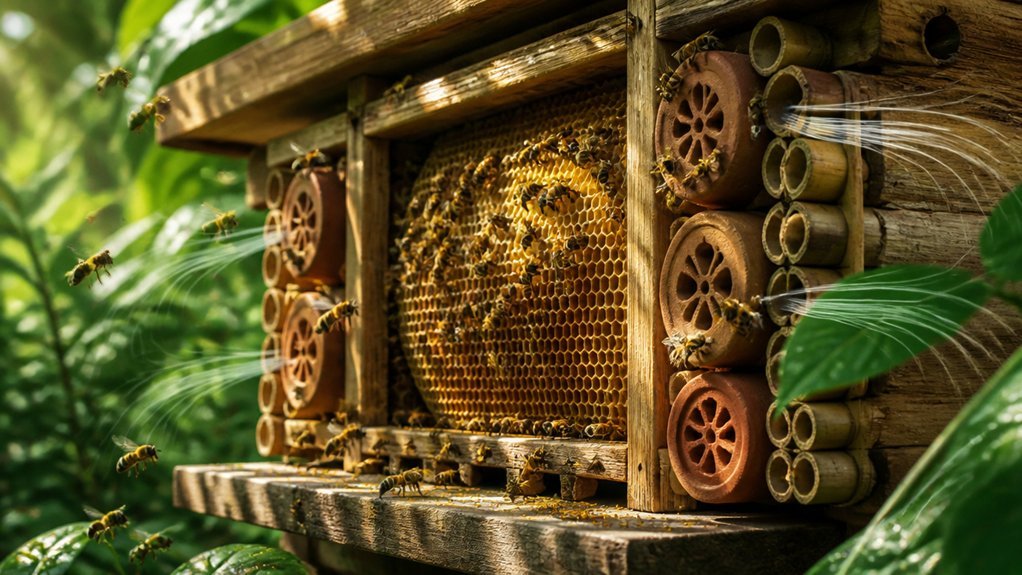
You can help your hive stay cooler by improving upper hive ventilation, which lets warm, moist air escape more easily. A well-placed inner cover with ventilation openings can enhance airflow naturally and efficiently. Leave natural airflow paths open so air moves through the hive without forcing a draft. When you support steady ventilation, you’ll reduce stress that can push bees toward swarming.
Upper Hive Ventilation
When hot air builds up inside the hive, bees can become stressed and more likely to swarm. You can ease that pressure by opening upper space for heat to escape. A small upper entrance or vent helps warm, moist air rise out while the colony keeps working below.
Keep it simple and dry.
- Add a top vent on warm days
- Use a slatted inner cover if needed
- Avoid blocking the upper box with excess insulation
- Check that rain can’t enter
- Reduce congestion by giving bees room above
You don’t need a large opening; a modest one often works best. Regularly monitoring hive conditions with accurate thermometers can help you identify when heat buildup occurs, so you can adjust the ventilation accordingly. Watch the hive during heat waves, and adjust only when you see crowding or heavy bearding. Good upper ventilation supports comfort and helps discourage swarming.
Natural Airflow Paths
Natural airflow paths help hot air move out of the hive without forcing it through narrow, stagnant spaces. You can align entrances, inner covers, and top exits so warm air rises naturally while cooler air enters below. Keep comb spacing even, and don’t block gaps with excess propolis or debris. If you tilt the hive slightly forward, you encourage drainage and steady movement.
A screened bottom board can enhance natural ventilation, allowing debris and dead mites to fall out while promoting better air circulation inside the hive.
Check for Swarm Cells Early
Check your hives regularly in spring and early summer so you can spot swarm cells before the colony splits. Open each brood frame and inspect the lower edges, corners, and comb faces for peanut-shaped queen cells. You’ll catch trouble sooner if you stay calm and move quickly.
Inspect brood frames often in spring and early summer to catch swarm cells before the colony splits.
A good understanding of pheromone signals can also help you identify signs of swarming behavior and prevent it.
- Look for polished cups with eggs or larvae
- Check crowded brood frames first
- Note capped cells along frame bottoms
- Watch for multiple cells at once
- Record what you see each visit
If you find swarm cells, don’t ignore them. Recheck the colony within a few days and compare frame conditions, brood space, and queen activity.
Early detection helps you act before the bees commit to swarming, and it keeps your management simpler and less stressful.
Split Strong Colonies on Time
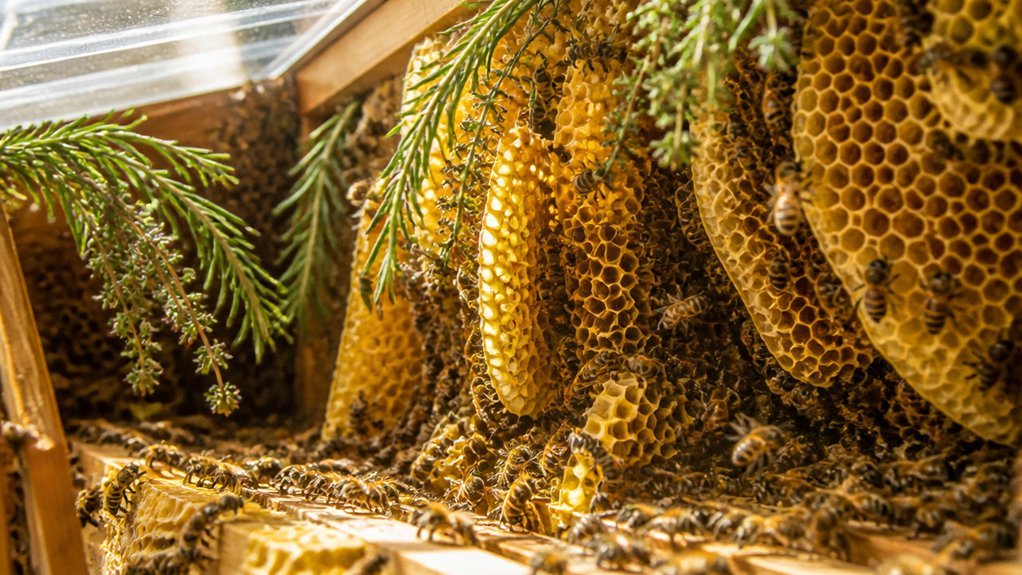
Strong colonies can be split before they feel crowded enough to swarm, which helps you stay ahead of the problem. You reduce pressure by moving a portion of bees, brood, and food into a new hive when the parent colony grows fast. Watch their strength, and act before they’re packed wall to wall. A timely split gives both units room to expand and keeps your apiary balanced.
| Signal | Your move | Result |
|---|---|---|
| Heavy brood coverage | Split now | Less crowding |
| Rapid population growth | Add a new hive | Better space |
| Queen cups appearing | Reassess quickly | Fewer swarm urges |
Keep notes on timing, weather, and flow, so you can repeat what works.
Replace Old Comb and Frames
You should remove darkened comb as soon as you spot it, since old wax can harbor buildup and limit brood space.
Swap out worn frames little by little so your bees have cleaner comb and more room to expand. Fresh comb helps keep the colony healthier and less likely to swarm.
Remove Darkened Comb
Swap out darkened comb and aging frames before they become a problem. You’ll help your bees stay productive by removing comb that’s blackened, brittle, or packed with residue.
Dark comb can hold pathogens, pesticides, and old cocoons, so don’t let it linger in the brood nest. Work on a warm day, inspect each frame, and pull the worst pieces first.
- Check for very dark, heavy comb
- Remove damaged wax with a hive tool
- Replace it with clean, drawn comb
- Keep good brood pattern in the center
- Mark removed frames for melting later
Swap Out Old Frames
When frames get old, warped, or overly dark, replace them before they drag down brood health and swarm pressure. You’ll give the queen cleaner comb, better laying space, and fewer places for pests to hide. Pull tired frames gradually, not all at once, so the colony can keep its balance.
| Frame Condition | Action | Benefit |
|---|---|---|
| Dark, brittle comb | Replace | Reduces disease carryover |
| Warped wood | Swap out | Improves fit and spacing |
| Heavy cocoon buildup | Cull | Frees brood room |
| Old, unused frames | Rotate in fresh | Encourages stronger expansion |
Mark replacement dates, use drawn comb wisely, and feed if needed so bees rebuild quickly. Fresh frames help you keep the hive open, productive, and less tempted to swarm.
Plant Bee-Friendly Forage Nearby
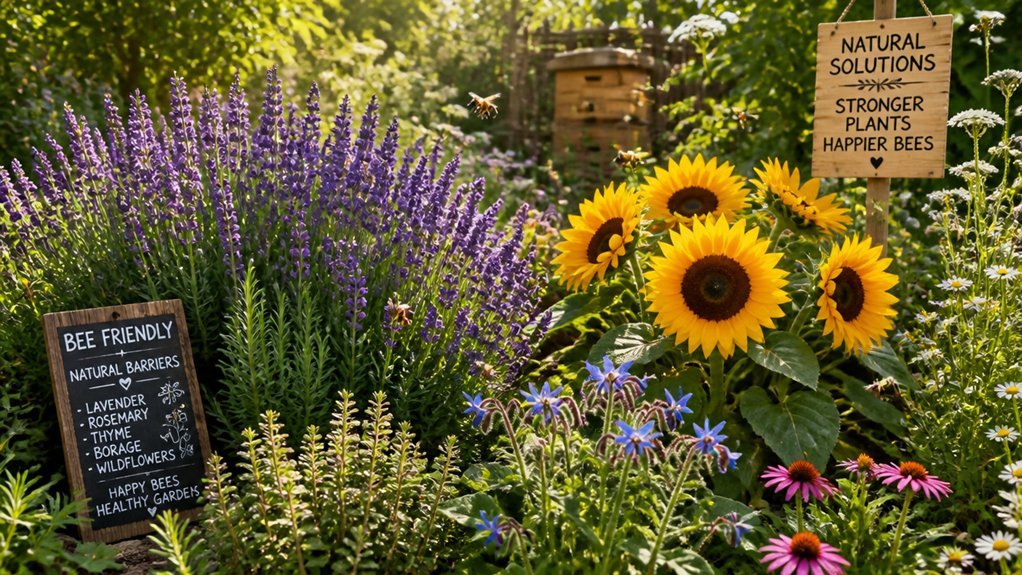
Planting bee-friendly forage nearby gives your colony a steadier food supply and can reduce the urge to swarm. You help bees by adding nectar and pollen sources within easy flight range, so they don’t need to roam far for nutrition.
Choose plants that bloom in sequence, giving them something reliable through the season. Focus on:
- Lavender
- Clover
- Borage
- Sunflowers
- Native wildflowers
Place them along fence lines, paths, and unused beds to create a richer forage map. You’ll also support foraging efficiency when you group several of the same plant together.
Avoid pesticides, and let some areas flower naturally. When bees find abundant, nearby forage, they spend more time collecting and less time searching for a new home.
Keep the Colony Comfortable in Heat and Dearth
Hot, dry weather and nectar dearth can push bees into a stressed, swarm-prone state, so you’ll want to keep the hive cool, shaded, and well supplied. Give the colony afternoon shade with natural cover or a hive wrap that reflects heat. Elevate the hive slightly to improve airflow, and leave the entrance clear so warm air can escape. Provide clean water nearby with landing stones so foragers don’t waste energy searching.
During a dearth, feed syrup if needed, but don’t overdo it; steady, moderate support works best. Check comb space often, because crowded frames plus heat can trigger swarming fast. Add supers before the hive feels tight, and avoid rough inspections on scorching days.
When you reduce heat stress and food scarcity, you help the colony stay calm and focused.
Frequently Asked Questions
How Does Weather Affect Swarm Behavior?
Weather shapes swarm behavior by changing temperature, humidity, and wind, so you’ll see more activity on warm, calm days and less during cold, rainy, or windy conditions, because insects can’t fly or communicate as well.
Can Certain Bee Breeds Swarm Less Often?
Yes, you can choose bee breeds that swarm less often, like Italian or Carniolan strains. You’ll still need good hive management, though, because genetics help, but they won’t eliminate swarming completely.
What Signs Show a Colony Is Preparing to Swarm?
You’ll notice crowded comb, lots of drones, reduced laying, queen cells, and workers hanging outside the hive. They may become restless, less active, and start feeding the queen heavily before they swarm.
Do Nearby Pesticides Increase Swarming Risk?
Yes, nearby pesticides can stress your bees and disrupt brood care, which can raise swarming risk. You’ll want to avoid drift, protect forage areas, and monitor colonies closely after any application nearby.
Is Swarm Prevention Different for Rooftop Hives?
Yes—your rooftop hives need the same basics, but you’ll manage heat, ventilation, and access more carefully. You’ll inspect more often, provide shade and water, and avoid overcrowding to reduce swarming pressure.
In Summary
By staying ahead of overcrowding, giving your queen room to lay, and adding space before your bees feel cramped, you can lower the risk of swarming. Keep your hive well ventilated, replace old comb, and support your colony with nearby forage and good heat management. When you split strong colonies on time, you help your bees stay productive and calm. With these natural steps, you can protect your hives and keep them thriving.