Check your fall hive stores first. Gently lift each box, then inspect outer frames for capped honey so you know whether the colony has enough food for winter. Next, confirm the queen is laying well by looking for a solid brood pattern with eggs, larvae, and capped cells in order. Finally, remove empty supers, keep the hive compact, and add winter protection. If you want, the next steps can show you exactly how to do each check.
Check Fall Honey Stores
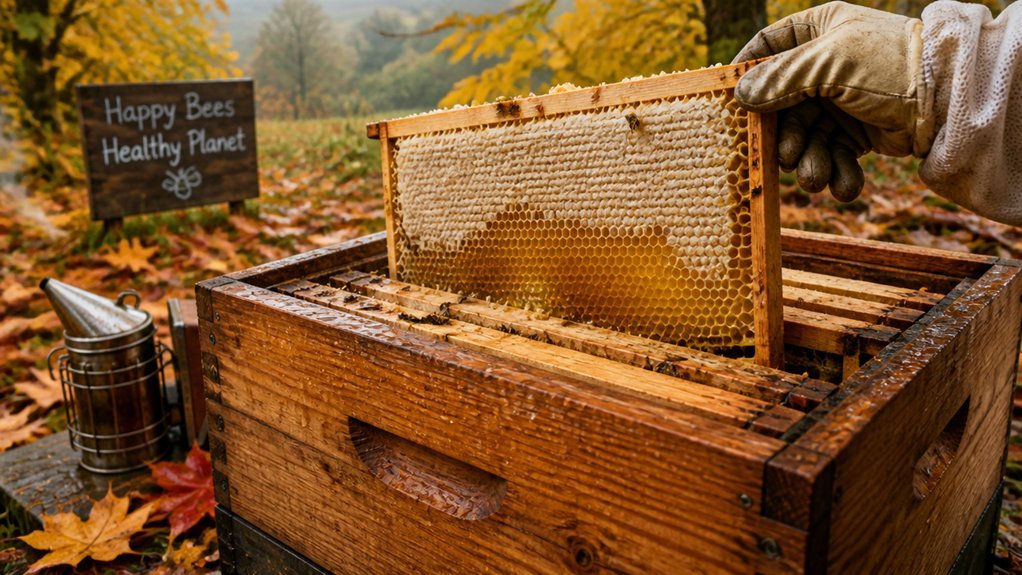
As temperatures drop, you should check whether your colony has enough honey to make it through winter. Open the hive on a calm, mild day and lift each box to gauge weight. If it feels light, inspect the outer frames for capped honey and estimate how much remains.
A strong colony usually needs several full frames to survive cold weather, so don’t guess. If stores look short, add honey frames from another hive or feed thick syrup while temperatures stay above freezing. Place food near the cluster so bees can reach it easily.
Remove empty supers if they don’t hold stores, and keep the hive compact. This helps your bees conserve heat and reduces unnecessary movement in the cold. Ensuring proper feed capacity and large-volume feeding considerations can make a significant difference in winter survival.
Assess Brood Pattern and Queen Health
Once you’ve confirmed the hive has enough stores, check whether the queen is still laying well. Pull a few frames and look for a compact brood pattern with eggs, larvae, and capped brood in the right progression.
You want solid coverage, not scattered cells or large gaps that can signal a weak or failing queen. Watch for healthy larvae glistening in royal jelly and note any spotty brood, multiple eggs per cell, or drone-heavy patches. If you see these problems, your queen may be aging, injured, or poorly mated.
Also, observe the bees’ behavior around the brood nest; steady nurse bee activity usually suggests strong brood care. A healthy queen now helps the colony raise winter bees and enter cold weather with strength. Maintaining proper queen cage management practices can support her health and longevity through the season.
Reduce Hive Space and Add Winter Protection
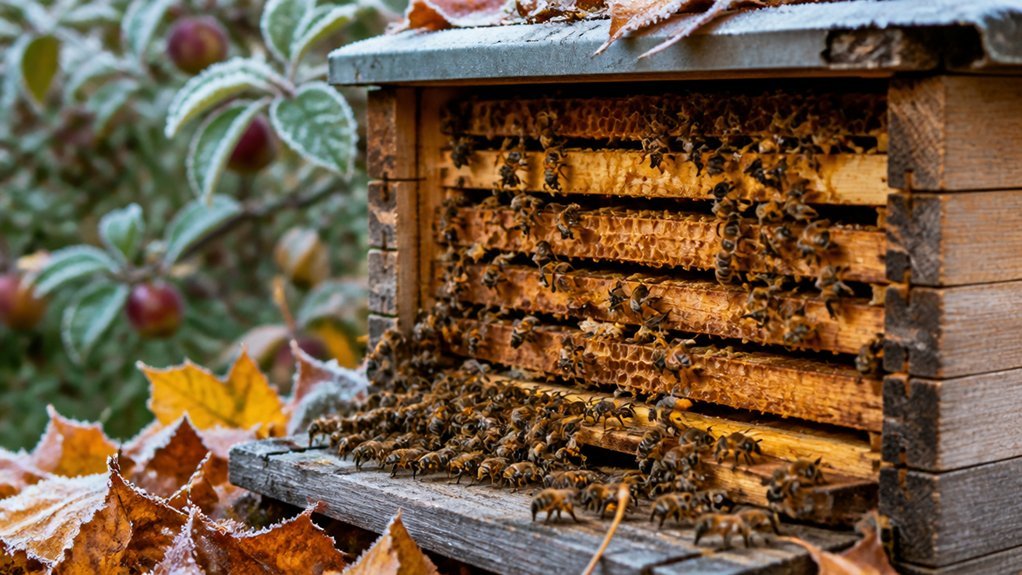
After you’ve checked brood health, reduce the hive to the space the bees can actually cover so they can hold heat more easily. Remove empty supers, then leave only the boxes the colony needs for food and cluster movement. Keep frames tight, and center drawn comb with honey near the bees. Add winter protection once you’ve narrowed the box. Ensuring proper stability and security on terrain can help prevent damage during winter storms, keeping your hive safe and secure.
Frequently Asked Questions
When Should I Inspect Hives in Fall?
You should inspect hives on warm, calm days in early to mid-fall, after the main nectar flow ends and before temperatures drop consistently below 50°F, so you can assess stores, brood, and pests safely.
How Often Should Fall Inspections Be Performed?
You should inspect hives every 7 to 14 days in fall, depending on weather and colony strength. Check stores, queen status, pests, and ventilation, and adjust your schedule if conditions change quickly.
What Tools Do I Need for a Fall Hive Check?
You’ll need a hive tool, smoker, lighter, bee suit, gloves, brush, notebook, and feeder supplies. Bring a scale or your hands to judge weight, plus a flashlight to inspect frames, brood, and stores closely.
Should I Inspect on Windy or Rainy Days?
No, you shouldn’t inspect on windy or rainy days because you’ll stress the bees and make handling harder. Wait for calm, dry weather so you can work safely and spot problems more easily.
How Do I Record Fall Inspection Findings?
You can record fall inspection findings in a notebook or app, noting date, hive strength, brood pattern, food stores, queen status, pests, damage, and your next action, so you’ll track changes clearly.
In Summary
As fall sets in, give your hives one last careful look. Check that they have enough honey to make it through winter, and make sure the brood pattern looks strong and the queen is still healthy. Then reduce excess hive space and add the winter protection your bees need. A few simple steps now can help your colony stay warm, fed, and ready for spring.