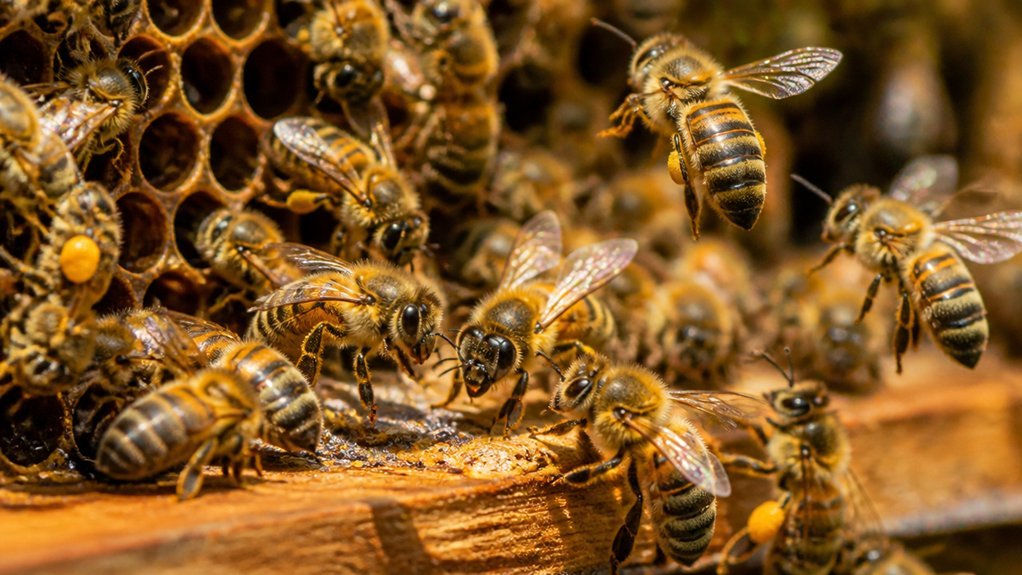
You ventilate your hive to reduce swarming because you help bees stay cooler, drier, and less crowded. Better airflow relieves heat stress, lowers humidity, and moves trapped pheromones out of the brood nest. That means bees spend less time fanning and more time caring for brood and storing nectar. Good ventilation also supports calmer colonies and steadier queen laying. If you keep going, you’ll see how to set it up the right way.
Signs Your Hive Is Overheating
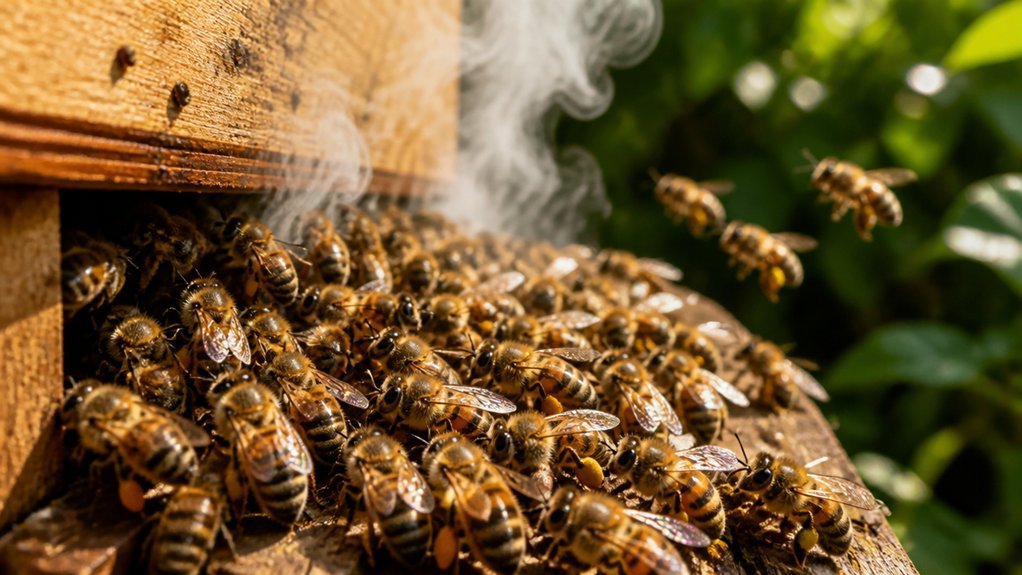
How can you tell when your hive is getting too hot? You’ll spot bees fanning hard at the entrance, wings vibrating nonstop as they push warm air out. You may also see many workers clustering outside the hive instead of working inside. That beard-like mass often grows in the afternoon heat.
Inside, comb can soften, wax may look glossy, and honey might seem unusually runny. Your bees may slow brood care and crowd the frames, leaving less space between workers. Using insulated hive wraps with proper ventilation control helps prevent these overheating issues by allowing moisture and excess heat to escape effectively.
If you notice restless movement, increased water gathering, or bees hanging around the top bars, your colony is probably struggling with heat. Watch closely on hot, still days, because these signs usually appear before serious stress sets in and can signal that your hive needs relief.
Why Hive Ventilation Helps Prevent Swarming
When you improve hive ventilation, you help keep heat and humidity in check, which makes the colony less likely to feel crowded and stressed. Better airflow also gives bees the space they need to regulate conditions inside the hive without overloading the brood area. By balancing air movement with internal space, you can help reduce the urge to swarm. Properly designed ventilation features in screened bottom boards support healthy hive conditions and can further discourage swarming behavior.
Heat And Humidity Control
Heat and humidity build fast in a crowded hive, and that stress can push bees toward swarming. When you ventilate well, you help your bees shed excess moisture and keep brood conditions steadier. A well-designed inner cover with proper ventilation openings allows for better airflow, reducing the risk of condensation and dampness inside the hive.
Dry, warm air moves out more easily, so comb doesn’t feel damp and sticky, and bees don’t have to spend as much energy regulating the nest. That matters because overheated, humid colonies get restless sooner and can shift from normal work to swarm preparation.
You’re not trying to chill the hive; you’re trying to keep conditions stable enough that the colony can function without panic. By easing heat and moisture stress, you support calmer behavior, healthier brood development, and a stronger chance that your bees stay focused on colony growth instead of leaving.
Space And Airflow Balance
Crowding and stale air can make a hive feel smaller than it already is, and that pressure often contributes to swarming.
When you improve airflow, you give bees a clearer sense of space because warm, used air can move out instead of lingering between frames. That movement helps workers spread out, regulate traffic, and keep brood areas less congested.
You also reduce the buildup of scents and moisture that can make the colony feel cramped and restless. By balancing ventilation with solid insulation and enough room for stores, you avoid turning the hive into a stuffy box.
Your bees can stay organized, fan efficiently, and focus on normal work instead of preparing to leave. Proper airflow won’t replace good hive management, but it supports it well. Weatherproof hive covers and proper ventilation help create a stable environment that discourages swarming behavior.
How Bad Airflow Makes Swarming More Likely
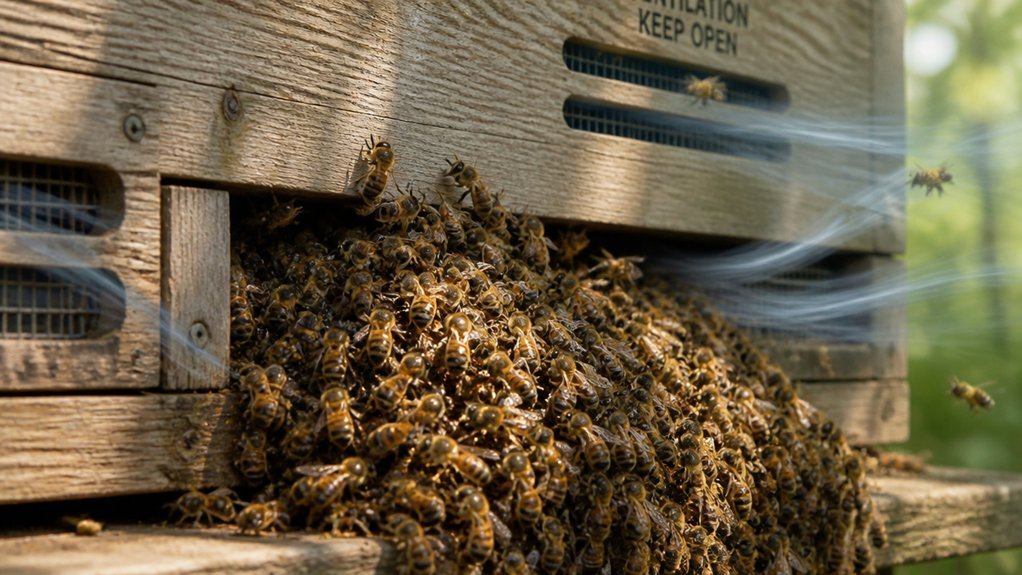
Poor airflow can push a colony toward swarming because it traps heat, humidity, and pheromones inside the hive, making conditions feel crowded and unstable. You’ll notice bees spending more energy fanning and less time on brood care, nectar handling, and comb work. When the hive stays stuffy, workers can’t cool it efficiently, so the brood nest overheats and the queen’s laying rhythm may drop. At the same time, lingering pheromones spread less evenly, which can disrupt colony organization and make the bees act as if space is tighter than it really is. That stress can speed up swarm preparation, especially during nectar flows, because the colony starts treating the hive like a poor long-term home. Proper hive ventilation is crucial because it reduces moisture buildup and helps maintain a dry, stable environment. Good airflow helps you reduce that pressure before bees decide to leave.
Best Ventilation Methods for Beehives
You can lower swarm pressure by choosing the right hive ventilation setup for your climate and colony size. Common options include screened bottom boards, upper entrance vents, and shim spacers, each of which helps move hot, stale air out of the hive.
You’ll also want to guide airflow so fresh air enters low and warm air escapes high, keeping the brood nest cooler and more stable.
Implementing proper outdoor hive finishes can further enhance the durability of your hive while ensuring safety for your bees and honey.
Top Ventilation Types
When summer heat builds inside a hive, the right ventilation can help bees stay calmer and less likely to swarm. You can choose screened bottom boards, upper entrances, or vented inner covers, and each one eases moisture and heat in a different way. Screened bottoms let warm air escape below. Upper entrances give bees another route for moving air. Vented inner covers create space for airflow above the cluster. Incorporating insulation rating considerations in your ventilation choices can further optimize temperature regulation.
| Ventilation type | Main benefit | Best use |
|---|---|---|
| Screened bottom board | Releases heat and debris | Hot, humid weather |
| Upper entrance | Improves air exchange | Strong colonies |
| Vented inner cover | Reduces trapped moisture | Summer buildup |
Pick one that fits your climate and hive strength. When you match the setup to conditions, you support comfort and lower swarm pressure.
Hive Airflow Strategies
Good ventilation does more than cool a hive; it keeps moist air from lingering and helps bees regulate temperature with less effort. You can improve airflow by tilting the hive slightly forward so condensation drains out instead of pooling inside. Use an upper entrance or notch to give warm air an exit point, and keep the lower entrance clear for fresh air intake. Screened bottom boards also help, especially during hot weather, because they let air move through while reducing trapped heat.
To ensure accurate monitoring of hive conditions, employing hygrometers to gauge humidity levels can help you adjust ventilation strategies effectively. Don’t overpack the hive with insulation or blockers that seal it too tightly. Watch for crowding, too, since congested colonies overheat fast. When you balance intake and exhaust, you ease stress, support brood health, and lower the conditions that push bees toward swarming.
Where to Place Hive Entrances and Vents
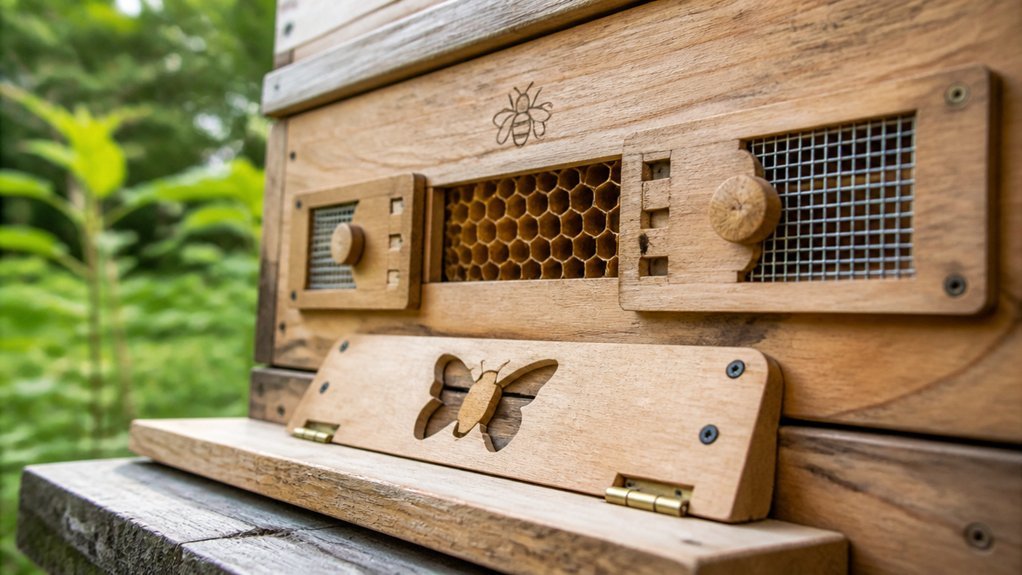
Where you place hive entrances and vents can make a big difference in airflow, heat control, and swarming pressure. You should keep the main entrance low and unobstructed so fresh air can enter and warm air can escape naturally.
Put upper vents near the top of the hive body or cover to let heat and moisture rise out without forcing the bees to crowd the brood nest. Avoid placing openings where rain, strong wind, or direct sun can hit them hard. If you use multiple vents, spread them to support smooth crossflow instead of creating drafts. Check that grass, debris, and equipment don’t block the openings.
Using high-strength materials for vents and straps ensures durability during harsh weather, helping maintain proper hive ventilation and stability.
Smart placement helps your bees stay cooler, drier, and less crowded, which can ease the urge to swarm.
When to Improve Hive Ventilation in Spring
As spring warms up, you’ll want to improve hive ventilation before heat and moisture start building inside. Watch for the first steady warm spell, when daytime temperatures rise and the colony begins expanding brood rearing. That’s the time to act, not after you see heavy bearding or hear bees fanning nonstop.
If your bees are already crowded, late ventilation can’t fully reverse the stress that pushes swarming. Check colonies after winter wraps come off and before nectar flows peak. You should also adjust early if nights stay mild and the hive feels damp, because trapped moisture can make conditions worse.
Use the proper entrance reducers to control airflow and prevent excessive drafts during these transitional times.
Move quickly, but make only the changes the colony needs now. Keep observing weekly, since spring conditions can shift fast and trigger swarming pressure.
How to Ventilate Without Cooling the Brood
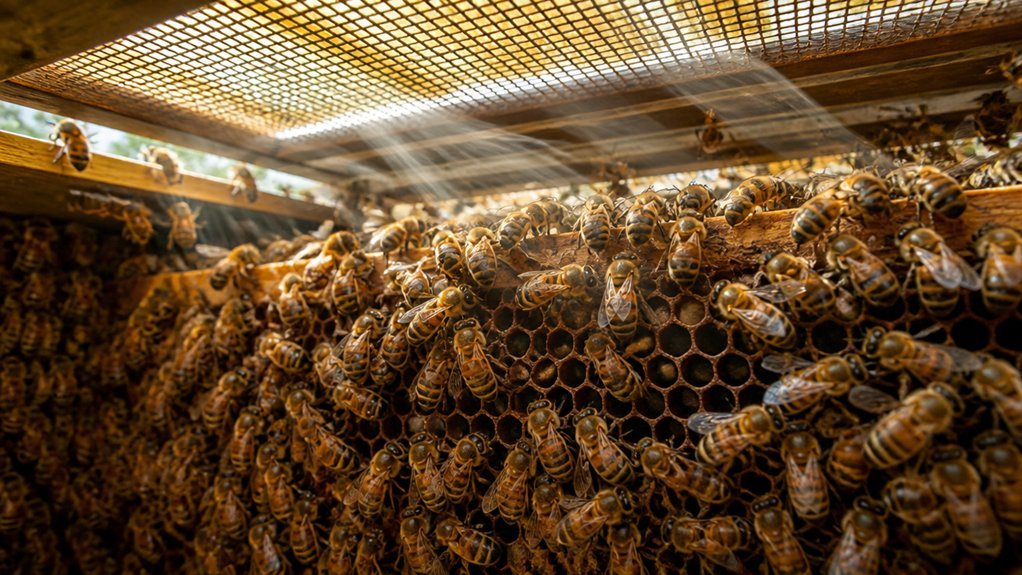
Once you’ve opened up the hive for spring airflow, the next step is keeping that air moving without chilling the brood nest. You can do this by venting the top of the hive while leaving the brood area compact and well insulated.
Add an upper entrance, use a moisture quilt, or crack the outer cover just enough to release damp air. Keep lower entrances clear so bees can regulate flow naturally. On colder days, reduce excess space above the cluster with properly fitted boxes and draw out empty comb only when the colony needs it.
Watch for condensation on inner covers and dampness along the walls; both signal poor circulation. If you balance airflow and warmth, you help bees stay active, healthy, and less likely to swarm.
Swarm Prevention Tips Beyond Ventilation
| Tip | Why it helps |
|---|---|
| Add supers early | Gives bees room to store nectar |
| Requeen regularly | Keeps brood patterns strong and calm |
| Split crowded hives | Reduces congestion and swarm urge |
| Remove swarm cells | Stops a new swarm from launching |
You can also keep strong colonies balanced by sharing frames with weaker hives.
Frequently Asked Questions
How Does Humidity Affect Hive Swarming Behavior?
Humidity can trigger swarming when you let the hive get damp and stuffy. You’ll see bees fanning more, brood health slipping, and colony stress rising, which can push them to leave and split.
Can Ventilation Reduce Odors That Confuse Bees?
Yes, you can improve ventilation to disperse strong hive odors that may confuse bees. You’ll help air circulate, reduce moisture and stale scents, and make it easier for them to orient and stay organized.
Do Different Hive Types Need Different Vent Setups?
Yes, you’ll need different vent setups for different hive types. You should match vents to hive volume, insulation, and bee density, then adjust entrances, upper vents, and moisture control so airflow stays balanced.
Will Extra Ventilation Change Honey Production?
Extra ventilation usually won’t reduce your honey crop, and it may help your bees stay cooler and work better. You’ll see problems only if you overdo it and create drafts, moisture loss, or weak brood temperatures.
How Often Should Hive Vents Be Checked?
You should check hive vents every 1–2 weeks during warm weather, and after storms or heatwaves. You’ll spot blockages, moisture, or pests early, adjust airflow, and keep your bees comfortable and productive.
In Summary
If you keep your hive well ventilated, you help bees stay cooler, drier, and calmer, which can reduce the urge to swarm. Good airflow also supports healthy brood and keeps moisture from building up inside the box. Watch for signs of overheating in spring, then adjust entrances, add vents, or provide shade as needed. Ventilation won’t stop swarming by itself, but it’s a simple step that can make a big difference.