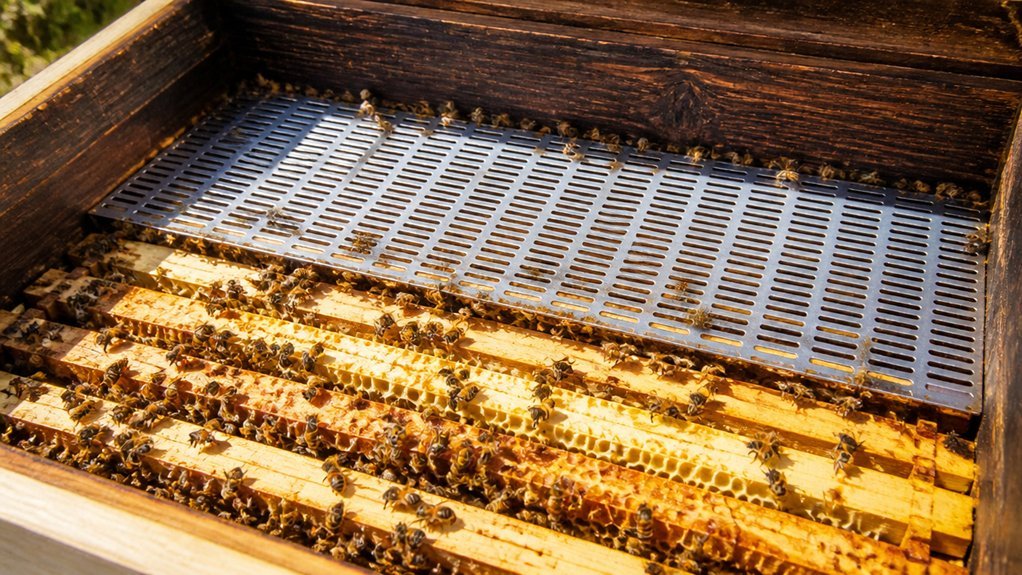
A queen excluder doesn’t prevent swarms by itself. It only keeps the queen out of the honey supers, so it can help with comb management when you already have enough room below. If you put it on too early or leave the brood nest crowded, it can trap the queen and make swarming more likely. To manage swarms well, you need space, inspections, and timely hive adjustments. There’s more to the story if you keep going.
Does a Queen Excluder Prevent Swarms?

A queen excluder can help manage brood placement, but it won’t reliably prevent swarming. You can’t count on it to stop a colony that’s already crowded, stressed, or driven by strong swarm instinct.
The excluder only limits where the queen can move, so it doesn’t address the real causes of swarming. If you rely on it alone, you may still see queen cups, swarm cells, and a hive that wants to split.
You should focus on space, ventilation, and colony condition instead. When you inspect regularly, you can spot early swarm signs and respond before the bees commit. Use the excluder as a management tool, not a swarm solution. Proper excluder fit and placement are also essential to prevent unintended congestion that can lead to swarming.
When a Queen Excluder Helps Swarm Prevention
When you use a queen excluder at the right time, you can help keep brood nest control in check and reduce crowding in the lower hive.
You also give your bees more honey super space, which can ease pressure that often leads to swarming. By limiting queen movement, you help focus egg-laying where it belongs and support a more orderly hive. Additionally, using swarm trap boxes strategically can effectively reduce the likelihood of swarming by providing alternative sites for scouting bees.
Brood Nest Control
By limiting where the queen can lay, a queen excluder can help you keep the brood nest compact and easier for the colony to manage. You can use that control to keep eggs, larvae, and emerging brood concentrated in the lower boxes, where the bees can care for them efficiently.
When brood stays organized, you’re less likely to create a sprawling nest that feels crowded or disordered to the workers. That can reduce one trigger for swarming, because the colony doesn’t need to expand its brood area as quickly.
You still need to watch for congestion, strong nectar flows, and queen health, but brood nest control gives you a practical way to guide colony layout. Used well, it supports brood management instead of letting brood spread unchecked.
Honey Super Space
Plenty of open honey super space can also help delay swarming, because bees need room to store nectar when the flow is strong. If you keep supers empty enough for incoming nectar, your colony stays busy and less crowded.
A queen excluder can support this by keeping brood out of the supers, so workers use those boxes for honey storage instead of treating them like nesting space. That gives you a clearer separation between brood and surplus honey, which can improve traffic and reduce congestion in the brood nest.
Using pre-waxed foundations can encourage bees to draw comb faster and more naturally, helping maintain ample storage space. Still, the excluder only helps when you’ve already provided enough drawn comb or foundation above. If you leave the colony with no usable storage, bees may still feel pressured to swarm.
Queen Movement Limits
A queen excluder can also help with swarm control by limiting where the queen can move inside the hive. You guide her away from the honey supers, which keeps brood nest congestion more visible. When you inspect, you’ll spot crowded frames faster and can add space before the colony decides to swarm. It won’t stop swarming by itself, but it helps you manage the queen’s range.
A dovetail joint or other well-constructed hive components can enhance the overall stability and longevity of the hive, supporting effective swarm prevention strategies.
When a Queen Excluder Makes Swarming Worse
If you leave a queen excluder in place when the colony is running out of space, you can actually make swarming more likely. You’ve boxed the queen below the barrier, and the workers may fill the lower boxes fast with nectar and bees.
When the nest feels crowded, they start swarm preparations instead of expanding normally. You may also trap the queen away from newly available comb, which keeps the brood nest tight and raises congestion in the hive.
That pressure can push the colony toward queen cells and an exit. If you suspect buildup, remove the excluder before traffic gets jammed. Proper ventilation and hive design, such as pre-cut dovetail joints, can also help reduce stress and improve airflow.
Give the bees room, check for space shortages, and add supers early so they don’t treat your hive like a dead-end.
How Queen Excluders Affect Brood Expansion
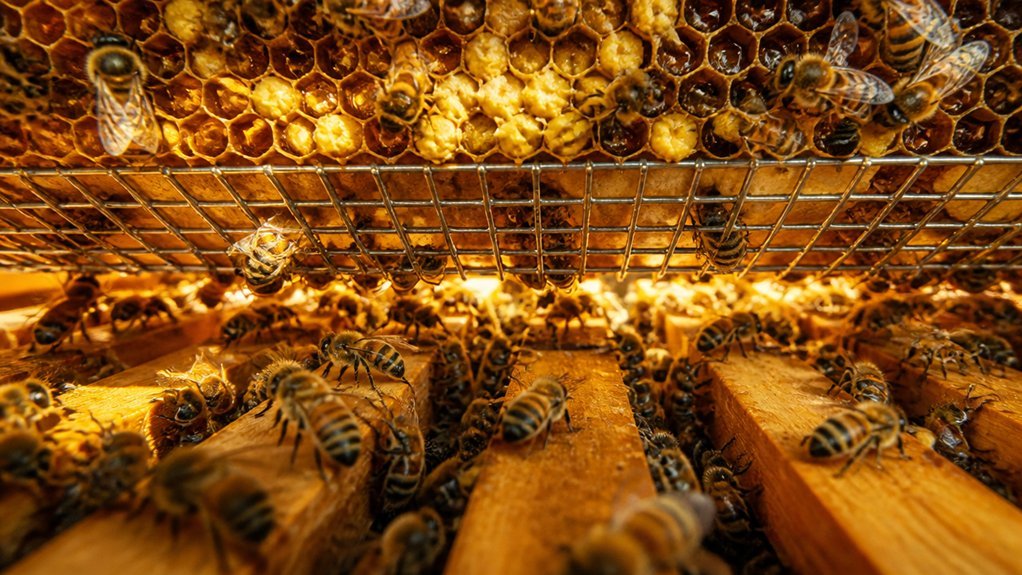
Because a queen excluder limits where the queen can lay, it can slow brood expansion when the colony wants to grow quickly. You still get brood rearing below the excluder, but the queen can’t use empty upper combs, so the cluster may stay tighter than you expect. That doesn’t stop growth, yet it can change its pace and shape.
- You may see fewer new eggs in upper boxes.
- You’ll often find brood concentrated near the lower nest.
- You can delay expansion into supers until space opens below.
- You should watch comb availability and colony strength closely.
- Proper frame size and foundation support the building of straight, solid comb, which can influence how effectively the colony expands comb foundation.
If nectar flow is strong, your bees may outgrow that restriction and still expand rapidly. But when space is limited, the excluder can make brood growth feel more constrained.
Why Queen Excluders Can Crowd the Brood Nest
When you add a queen excluder, you can limit the queen’s movement and keep her from using open space above the brood nest.
That restriction can crowd eggs, larvae, and nurses into a tighter area, which raises brood nest congestion.
As the nest fills up, your colony may feel even more cramped and less able to spread out naturally.
Using sealed pheromone delivery systems can help maintain effective scent diffusion and attract scout bees from a greater distance, potentially reducing congestion issues.
Brood Nest Congestion
A queen excluder can crowd the brood nest by limiting where the queen can lay, which quickly fills the available brood area with eggs, larvae, and capped brood. When you keep brood confined, nurse bees lose open comb for feeding and housekeeping, and the nest can feel packed. That congestion can raise temperature, reduce airflow, and leave less room for pollen and nectar storage nearby.
You may see solid frames of brood with few empty cells. Nurse bees can cluster tightly around developing larvae. The colony can backfill brood comb with nectar. You may notice the brood nest shrinking instead of expanding.
When space stays tight, your bees must work harder to maintain the brood nest, and that pressure can contribute to swarm preparation. Proper hive management can help alleviate some of this congestion and reduce swarming tendencies.
Queen Movement Limits
A queen excluder also limits where the queen can move, so she can’t freely shift into open comb as the brood nest grows. You may think that keeping her below the excluder helps control swarming, but it can also trap her in a shrinking core of brood and bees.
When you add more honey above, you don’t give her extra laying room; you just fence her into fewer frames. As workers pack nectar and emerging brood fill space, the queen can’t expand with the colony’s needs. That restriction can raise crowding pressure in the brood nest and make the hive feel more cramped.
If you want to reduce swarm triggers, you should watch whether the queen has enough accessible comb to lay in, not just whether she’s confined. Proper colony size and layout are essential for healthy queen activity and reducing swarming tendencies.
Signs Your Hive Is Too Tight
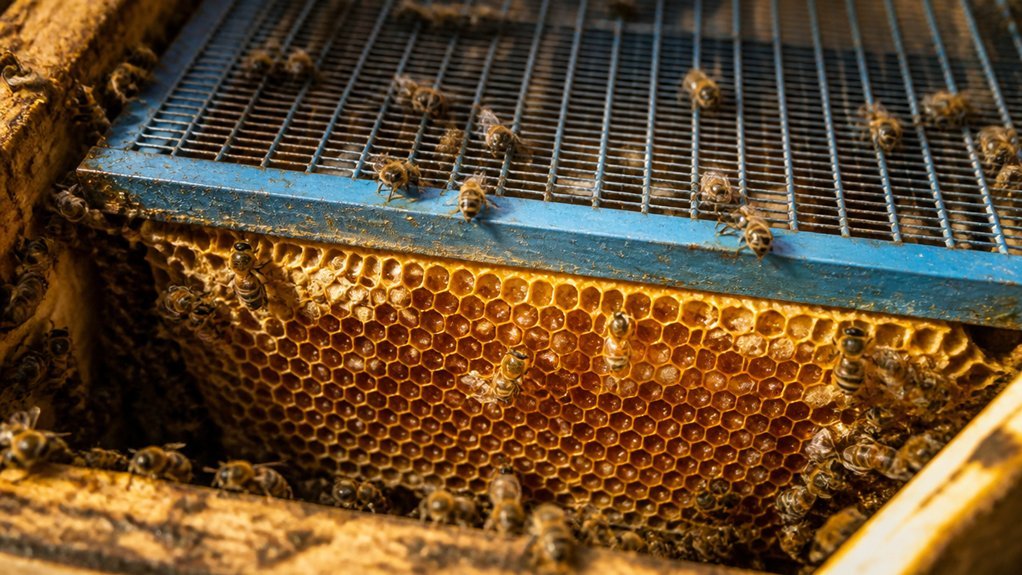
If your hive is getting too tight, your bees will usually tell you before a swarm issues.
Watch for crowding at the entrance, because workers may spill outside when space runs short. You might also notice comb being drawn in every available gap, with little room left for movement.
Pay attention to these signs:
- Bees clustering densely on the frames
- Reduced traffic flow inside the hive
- Fresh white wax appearing in cramped spaces
- More bees hanging around the front board
You may also see the queen’s laying pattern shrink as open cells disappear.
When brood, nectar, and bees compete for room, the colony can shift into swarm mode fast.
Act early by giving them space, so you keep control and calm the hive before they decide to leave.
How to Use a Queen Excluder
When you’re using a queen excluder, place it between the brood box and the super so the queen stays below while the workers can move freely above. Check that the frame sits flat and doesn’t pinch bees at the edges.
If your excluder is metal or plastic, confirm the openings are clean and undamaged before you install it. Lift each box carefully, and keep the hive aligned so you don’t create gaps.
After you add the excluder, inspect the super for eggs or brood within a few days; that tells you whether the queen is still getting through. You should also watch bee traffic, because heavy crowding above the excluder can slow movement and affect honey storage.
When to Add a Queen Excluder
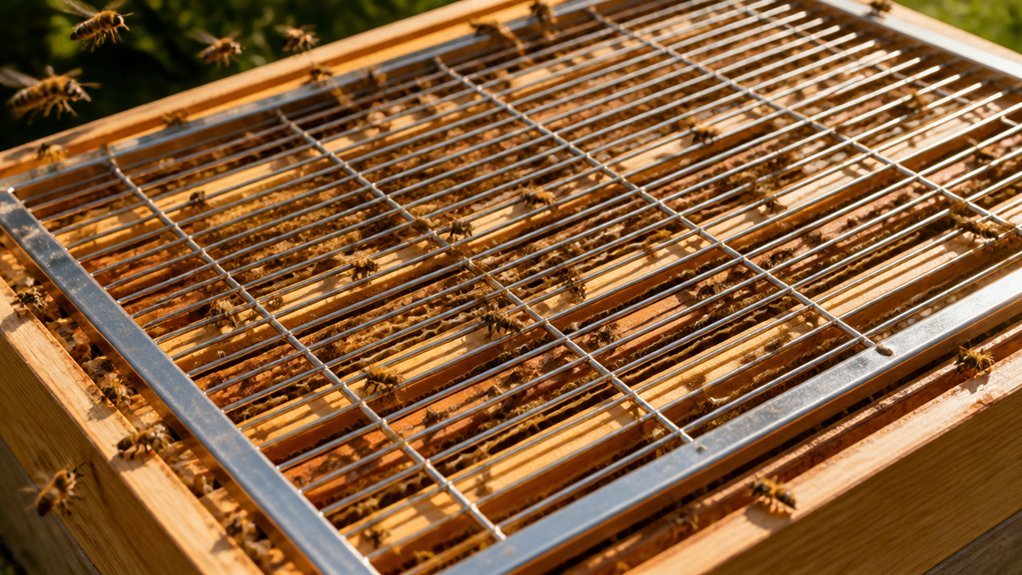
You should add a queen excluder when your colony starts building up fast in spring.
Watch the nectar flow, because you want it in place before the bees need extra room above the brood nest.
Timing it well helps you manage congestion and keep the honey supers clear.
Spring Population Buildup
As spring builds and your colony’s numbers climb, timing matters more than the excluder itself. You should watch brood expansion, comb coverage, and where the queen lays before you install one.
If you add it too early, you can slow the queen and crowd the brood nest. If you wait until the hive fills its lower boxes, you’ll give workers room to organize stores without pinning the queen below.
- Check for solid brood patterns.
- Confirm the lower brood box isn’t packed.
- Add the excluder only after the queen has room.
- Revisit weekly and adjust if congestion starts.
You’re aiming for balance, not restriction. A well-timed excluder supports hive management, but it won’t replace good space, inspections, and swarm prevention.
Nectar Flow Timing
Right before the main nectar flow, that’s usually the best time to add a queen excluder. You want workers to have space to store incoming nectar, but you don’t want the queen blocked too early, when brood rearing still needs room.
| Timing | Result |
|---|---|
| Too early | You can crowd the colony and slow expansion |
| Just right | You guide honey up and keep brood below |
| Too late | Bees may already feel congested and swarm |
Watch your hive’s nectar coming in, brood pattern, and empty comb. If frames fill fast and the supers are on, add the excluder before the colony gets tight. That timing won’t stop every swarm, but it helps you manage space and harvest clean honey.
Where to Place the Excluder in the Hive
The best place for a queen excluder is between the brood chamber and the honey supers, where it lets worker bees move freely upward while keeping the queen below. You should set it flat and centered so bees don’t crowd one side.
Place the queen excluder between brood and honey supers, flat and centered for smooth bee traffic.
If your hive has more than one brood box, place it above the upper brood box only after the queen has enough room to lay.
- Check that frames sit flush.
- Keep the opening clear of burr comb.
- Match the excluder size to your hive.
- Lift it during inspections if needed.
You’ll get cleaner honey supers and easier management when you place it correctly. Misplaced excluders can slow traffic, so handle them carefully and avoid gaps that confuse bees.
Combining Excluders With Other Swarm Controls
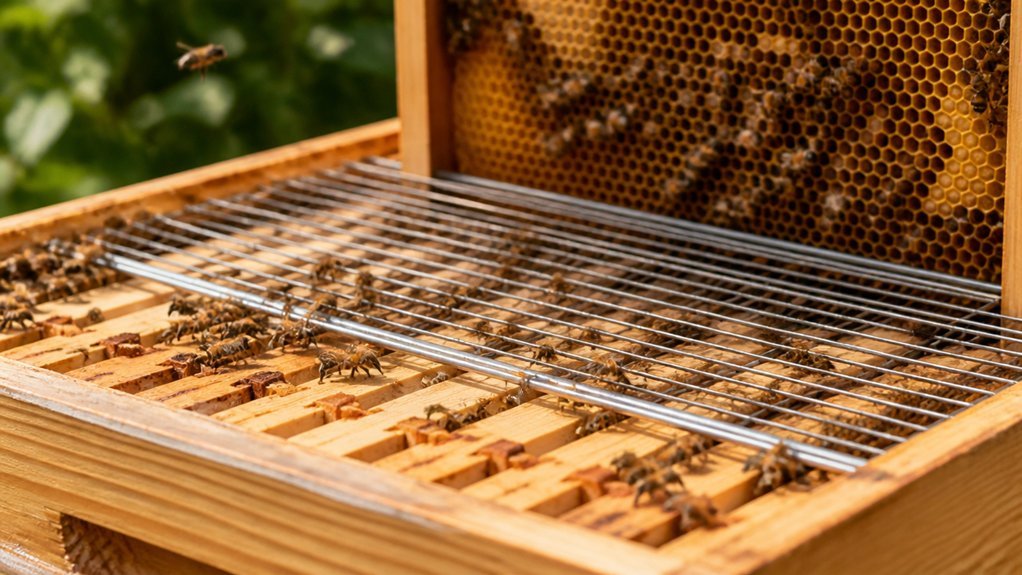
You can get better swarm control when you pair a queen excluder with enough hive space, because crowded bees are more likely to build swarm cells.
If a strong colony still feels cramped, you can split it before swarming pressure builds. You should also time your seasonal inspections well, so you catch problems early and adjust your setup before the colony commits to swarming.
Pairing With Hive Space
More often than not, a queen excluder works best when you pair it with enough hive space, because crowding—not the excluder itself—usually pushes bees toward swarming. You should treat the excluder as one part of a bigger space-management plan.
If your colony can’t expand upward, bees fill every corner fast, and that pressure rises.
- Add drawn comb above the brood nest
- Leave room for nectar storage
- Remove surplus boxes before they choke traffic
- Check for congestion during strong flows
When you give the bees room, they keep working instead of preparing to leave. An excluder then helps you organize the hive without trapping the queen in a cramped brood area.
Space first, restriction second—that’s the balance that keeps your colony calmer and more productive.
Splitting Strong Colonies
When a colony still looks overcrowded despite good hive space, splitting it can do more to stop swarming than any queen excluder alone. You relieve crowding by dividing bees, brood, and stores into two units, which breaks the buildup that drives swarm preparation.
Keep the original queen in one box and give the other a queen cell or mated queen, depending on your management plan. You can still use an excluder on the parent colony, but treat it as support, not the main fix.
A split also gives you a chance to refresh comb, balance resources, and reduce congestion around the brood nest. If the colony rebounds quickly, you’ve acted before it commits to swarming, and that’s far more effective than relying on hardware alone.
Timing Seasonal Inspections
Seasonal inspections work best when you catch swarm pressure early, before the colony starts making queen cells and congestion becomes obvious.
When you inspect every 7 to 10 days during buildup, you can spot crowded brood frames, heavy nectar influx, and resting bees at the entrance. Use that timing to pair a queen excluder with stronger swarm control.
- Check for queen cells on lower frame edges.
- Add boxes before the brood nest feels tight.
- Reorganize frames to open laying space.
- Split colonies if brood demand still outpaces space.
If you wait until cells are capped, the excluder won’t stop swarming. It only helps when you manage space, ventilation, and brood expansion early.
Consistent timing keeps you ahead of the colony’s natural swarm cycle.
How to Super Above the Queen Excluder
To super above a queen excluder, place the next honey super directly on top of the excluder and make sure the colony is strong enough to draw comb there.
Place the next honey super directly above the queen excluder when the colony is strong enough to draw comb.
You should add the super before the bees run out of room in the upper boxes, because crowding can slow nectar storage.
Use drawn comb if you have it; bees fill it faster than foundation.
Keep the supers centered and tight so the hive stack stays stable.
If you’re adding multiple supers, put the emptiest one highest and the most attractive one closest to the brood nest.
Lift components carefully to avoid crushing bees, then close the hive and give them time to move upward and start working the new space.
How to Check for Swarm Cells
Check the brood frames regularly, especially along the bottom and outer edges, for queen cells that signal swarm preparation. Pull each frame slowly and keep the comb vertical so you don’t injure cells or upset the bees.
Look for peanut-shaped, downward-pointing structures and compare them with normal drone or worker brood. Check both sides of each frame, because swarm cells can hide near the rim or between frame lugs.
- Spot capped cells first, since they often mean a swarm’s close.
- Note multiple cells on several frames.
- Watch for crowded brood, reduced egg laying, and beard-like clustering.
- Record what you find, then inspect again in a few days.
If you see active swarm cells, mark the frame and monitor the colony closely.
Alternatives to Queen Excluder Swarm Prevention
If you’ve found swarm cells, a queen excluder won’t solve the root problem on its own. You need to reduce congestion and shift the colony’s focus. Add empty drawn comb to the brood nest so the queen has room to lay.
If nectar flow is light, feed lightly to stimulate expansion, or remove frames of capped brood to strengthen weaker colonies and relieve pressure. You can also split the hive into a nucleus colony, which immediately lowers swarm impulse and gives you backup queens. Requeening with a younger, vigorous queen often helps too.
Keep the brood nest open, inspect regularly, and give bees space before they feel crowded. When you manage space, brood pattern, and colony genetics, you’ll prevent swarming more effectively than relying on hardware alone.
Common Queen Excluder Mistakes to Avoid
A queen excluder can backfire when you use it at the wrong time or in the wrong place. You can block the queen, but if you ignore colony conditions, you’ll only add stress and clutter.
Don’t trap it over a weak brood nest or leave it on without checking space above. Avoid these common mistakes:
- Installing it before the hive has room to expand
- Leaving burr comb or propolis to clog the screen
- Using a damaged excluder that restricts movement
- Forgetting to inspect whether the queen is below it
You should also remove it when it creates more congestion than control. If workers can’t move freely, they may backfill brood areas and crowd the nest faster.
Focus on clean placement, timely checks, and smooth traffic.
Is a Queen Excluder Right for Your Hive?
So, is a queen excluder right for your hive? You should use one when you need to keep brood out of honey supers, especially during strong nectar flows. If your colony builds up fast, an excluder can help you manage comb placement and harvest cleaner honey. It can also support split-making and queen control in smaller setups.
But you shouldn’t rely on it to stop swarming. A crowded hive still swarms if it lacks space, ventilation, or young laying room. If your bees hesitate to cross the excluder, inspect your hive and check the queen’s location. Use the tool as one part of good management, not a fix-all.
Frequently Asked Questions
Can a Queen Excluder Trap Drones Above the Brood Nest?
Yes, you can trap drones above the brood nest if you leave a queen excluder on too long. They’ll pass through initially, but later they can’t return, so you should check and remove it promptly.
Do Queen Excluders Affect Honey Flavor or Quality?
No, you won’t usually notice a queen excluder affecting honey flavor or quality. It keeps the queen out of supers, but your honey tastes the same if you manage colonies and harvest cleanly.
How Often Should I Inspect a Hive With a Queen Excluder?
You should inspect your hive every 7 to 10 days, especially during buildup. You’ll catch congestion, queen issues, and swarm signs early, and you can adjust the excluder if needed.
Can a Queen Excluder Be Used on Nucs or Splits?
You can use a queen excluder on nucs or splits, but you usually shouldn’t. It can restrict movement, slow buildup, and stress the queen. Use one only for short-term management or specific goals.
Will Worker Bees Learn to Avoid Using a Queen Excluder?
No, you can’t count on that. Your workers won’t learn to avoid a queen excluder; they’ll keep trying to pass through it. You should use it only where needed, since it can hinder traffic.
In Summary
A queen excluder can help in some hives, but it won’t stop swarming by itself. If you already have plenty of space, strong ventilation, and room for brood expansion, it may support swarm control. But if it crowds the brood nest or slows movement, it can make swarming more likely. Check for swarm cells often, and don’t rely on one tool alone. Use it as part of a broader hive management plan.