
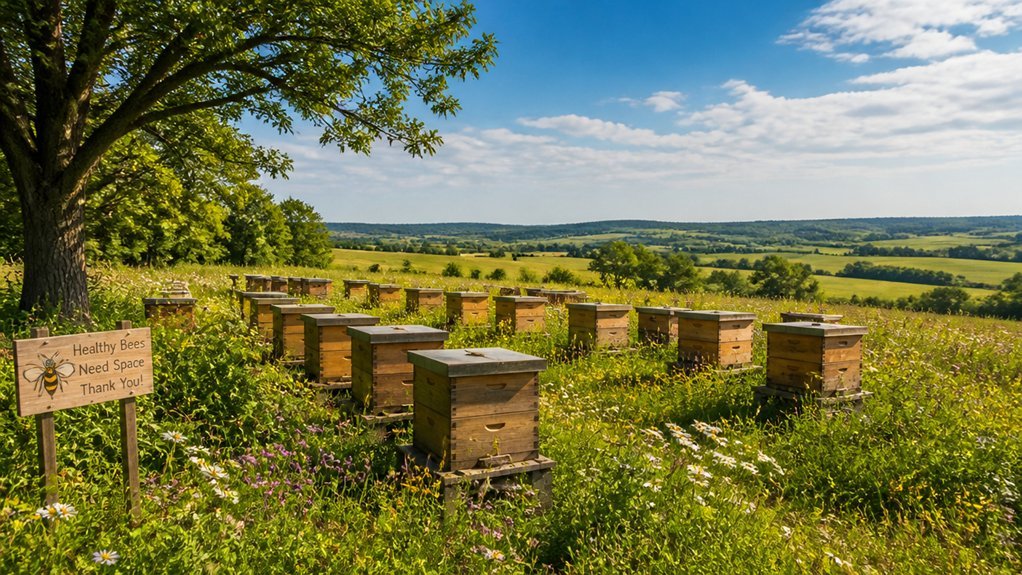
You place apiaries away from neighbors to lower sting risk, reduce complaints, and give bees clear flight paths over your property instead of across shared spaces. When hives sit near patios, driveways, or fences, bees can become defensive and fly lower through human traffic. Good spacing also makes it easier to use barriers, manage pests, and meet local setback rules. Keep going, and you’ll see how smart placement protects both bees and people.
Why Apiaries Should Stay Away From Neighbors

Keeping your apiary away from neighbors reduces conflict and helps you manage your bees more safely. You give yourself room to inspect hives, move equipment, and work without crowding yards, fences, or walkways. That extra space also helps you place barriers, orient entrances, and set up a clear flight path that keeps bees moving over your property instead of nearby homes. Using a robber screen can further protect weak hives from robbing and pest invasions, enhancing safety and hive health.
When you separate hives from neighbors, you also make it easier to maintain good relations, because you lower the chance of complaints about traffic, noise, or wandering bees. A well-placed apiary lets you monitor colonies calmly, respond faster when issues arise, and protect both people and bees.
In short, distance gives you control, improves safety, and supports a more respectful beekeeping setup.
Where Bees Get Defensive
Bees get defensive in places where people, pets, or frequent movement come too close to the hive entrance. You’ll notice the reaction most when you crowd a flight path, block the front of the hive, or work too fast near their home. They guard that space because they see it as the first line of protection.
If you set apiaries near walkways, driveways, play areas, or livestock pens, you increase chances for alarm and agitation.
One way to reduce this stress is by entrance protection, ensuring the hive entrance is properly fitted with reducers that control access and minimize disturbances.
When you understand these pressure points, you can choose a calmer spot that helps your bees stay focused on foraging instead of defending their entrance.
How Distance Reduces Stings

When you place your apiary farther from homes and walkways, you give bees a clearer flight path and lower the chance of sudden contact. That extra space helps them move in and out without crossing where neighbors spend time. As a result, you’ll usually see fewer encounters and fewer stings. Additionally, maintaining proper hive separation can reduce the risk of pest and disease spread, contributing to healthier bee colonies.
Flight Path Separation
Even a modest buffer between your hives and a neighbor’s yard can make a big difference, because it gives bees a clear flight corridor above everyday activity.
When you place hives farther out, you help bees rise, orient, and travel without cutting across patios, walkways, or play spaces. That separation lowers surprise interactions and keeps flight lines predictable.
- Higher takeoff angle: Bees leave the hive, then climb before cruising outward.
- Cleaner traffic lane: You reduce crossings where people move, stand, or work.
- Better colony focus: Bees spend less time reacting to sudden disturbances near the hive.
A wider gap also lets you position fences, shrubs, or sheds as gentle guides, shaping movement away from busy areas and making your apiary feel calmer.
Additionally, increasing the distance can help prevent unintended rodent entry rodent-proofing, which is especially important during winter months when protective measures like mouse guards are used.
Fewer Neighbor Encounters
That added space doesn’t just improve flight paths—it also cuts down on close calls with neighbors, which lowers the chance of defensive stings. When you place hives farther from fences, walkways, and patios, bees spend less time crossing human traffic. You reduce the odds that someone will brush a forager, block a flight line, or startle a guard bee near the colony entrance. Creating a reliable fastening system with straps and hardware can help ensure hives stay secure and stable, especially when placed farther apart.
Distance also gives you room to aim entrances away from homes and play areas, so bees leave and return with less interference. If a neighbor does wander nearby, they’re less likely to stand in the bees’ direct path. Fewer interruptions mean calmer colonies, fewer alarm pheromones, and a safer yard for everyone. Distance won’t eliminate every sting, but it makes them much less likely.
How Hive Placement Changes Flight Paths
When you place hives near fences, trees, or buildings, you can force bees to rise sooner and redirect their flight paths. A larger frame capacity model can handle more bees at once and reduce the need for frequent extraction, helping to manage their flight patterns better. That setup helps keep their traffic above head height and away from people nearby. Extra space from neighbors gives you more room to guide those flight paths safely.
Flight Path Obstructions
A hive’s placement can change how bees leave and return, which matters a lot when neighbors, walkways, or driveways are nearby.
When you set hives behind fences, shrubs, or sheds, you force bees to rise sooner and clear obstacles faster. That steeper climb can keep flight lanes above head height and reduce surprise encounters.
You should also watch for structures that split traffic, like corners, gates, and low branches, because bees may funnel through narrow openings.
- Place hives where bees can launch into open air.
- Use hedges or barriers to redirect lift-off paths upward.
- Keep entrances pointed away from busy routes and doors.
- Elevating hives on beehive stands can further help in keeping flight paths clear and unobstructed, promoting safer and more efficient foraging flights.
Simple changes in layout can make your apiary safer and easier to manage.
Neighbor Distance Effects
How close your hives sit to a neighbor’s yard can shape the bees’ travel line as much as fences or shrubs do. When you place hives near a property line, bees often launch and return on lower, tighter routes that cross shared spaces. That increases the chance they’ll meet people, pets, or outdoor activities.
If you move the apiary farther back, bees gain room to rise quickly and head above head height before they leave your site. You also give yourself more space to guide entrances toward open fields, trees, or hedges on your land.
A greater buffer can reduce complaints and keep traffic concentrated where you expect it. Small changes in distance can make your apiary feel calmer, safer, and easier for everyone nearby to share.
Introducing proper hive placement considerations—such as strategic location and natural barriers—further enhances the bees’ flight paths and minimizes unintended interactions.
Legal Setback Rules to Check

Before you place a hive, check your local setback rules so you know how far it must sit from property lines, homes, sidewalks, and roads. These rules can differ by city, county,, and HOA, so don’t assume one standard applies everywhere.
You should also confirm whether setbacks change for urban lots, schools, or public trails. If you ignore the code, you could face complaints, fines, or orders to move the apiary.
- Read your zoning ordinance and animal code first.
- Call the planning office for written guidance.
- Verify any permit, registration, or inspection requirements.
Being aware of local building codes and regulations helps ensure your apiary remains compliant and avoids potential legal issues.
You’ll save time by checking before installation, because moving hives later is harder and more stressful for you and the bees.
Screens and Fences That Help
You can use tall privacy screens and solid fence barriers to help block direct bee traffic near neighboring yards. These barriers don’t stop bees from flying, but they can steer their flight path upward and away from people. A well-designed ant barrier, such as water moats or adjustable guards, can further enhance this effect by preventing pests from disrupting the hive area. When you place them well, you make your apiary feel more private and less intrusive.
Tall Privacy Screens
Tall privacy screens can soften the impact of an apiary on nearby neighbors by blocking sightlines and helping guide bee traffic upward. You can use lattice, trellis panels, or dense slats to create a visual buffer that feels neat and intentional.
Place the screen close enough to matter, but leave room for airflow and easy access to your hives. Choose materials that fit your yard and local climate, since weathering can change both appearance and function.
- Add climbing plants for extra screening and a softer look.
- Keep the structure taller than head height where regulations allow.
- Check that the screen doesn’t funnel bees toward walkways or doors.
With the right placement, you’ll reduce neighbor concern and improve the apiary’s overall presentation.
Solid Fence Barriers
Solid fences create a stronger visual and behavioral barrier than lighter screens, helping keep bee flight paths higher and reducing direct contact with neighboring yards. You can use wood, vinyl, or composite panels to create a continuous wall that blocks low-level movement around the apiary.
Keep the fence tall enough to matter and place it close to the hive area so bees meet it quickly after takeoff. Avoid gaps, loose boards, or open sections that weaken the effect.
A solid barrier also gives you a cleaner, more controlled setup, especially where people walk, garden, or play nearby. When you pair a sturdy fence with careful hive placement, you make the apiary feel less exposed and give your neighbors a calmer, more comfortable experience.
Flight Path Deflection
When you place a screen or fence in front of the hives, you can steer bees upward as they leave the apiary, which helps keep their flight paths above head height and away from neighboring activity.
You reduce chance encounters because bees rise, clear obstacles, then travel out over open space instead of crossing walkways or patios.
- Choose a barrier tall enough to force an upward climb.
- Position it close to the hive entrance for best deflection.
- Combine it with thoughtful hive placement so traffic stays predictable.
You’ll also calm nearby people, since fewer bees zip through eye level. For stronger results, keep the screen solid enough to block direct takeoff and monitor the route bees take on warm, busy days.
Water Sources to Keep Bees Busy
A reliable water station can keep your bees close to home and less likely to drift toward a neighbor’s pool, birdbath, or dripping hose. Place a shallow basin near the hive and add floating corks, pebbles, or wood chips so bees can land safely.
Refill it often, especially during hot weather, because dry stations lose their value fast. You can also use a dripping faucet or small recirculating fountain if it stays clean and accessible.
If you offer steady water on your property, your bees won’t need to search elsewhere as often, which helps reduce nuisance visits next door. Keep the source in the same general area each day so the bees learn it quickly and return there first.
Garden Layouts That Reduce Bee Traffic

Thoughtful garden design can help steer bees toward the parts of your yard you want them to use. You can create clearer flight paths by grouping nectar-rich plants in one sunny section and keeping walking areas, patios, and play spaces separate. Use hedges, trellises, and tall shrubs to guide movement and break up open lines across the yard.
- Place bloom-heavy beds near the apiary so bees don’t crisscross the whole property.
- Frame seating zones with fragrant herbs or low fencing to nudge bees upward and away.
- Stagger flowering times so bees focus on one area at a time.
When you plan with layers and boundaries, you make your garden easier to enjoy and keep bee activity more predictable.
Signs Your Apiary Is Too Close
If your bees keep buzzing through doorways, hovering over patios, or cutting across paths where people regularly walk, your apiary may be too close for comfort. You may also notice more complaints from neighbors, especially when bees gather around pools, pet dishes, trash cans, or flowering shrubs near property lines.
If you hear frequent alarms from people rushing indoors, or see visitors avoiding your yard, your hive placement is probably creating tension. Watch for defensive bee behavior too: bumping, chasing, or repeated stinging usually means traffic funnels through busy areas. Strong odors from honey, wax, or syrup can draw attention as well.
When your bees consistently interact with everyday human activity, you need to rethink their location and reduce contact before problems grow.
How to Move a Hive Safely
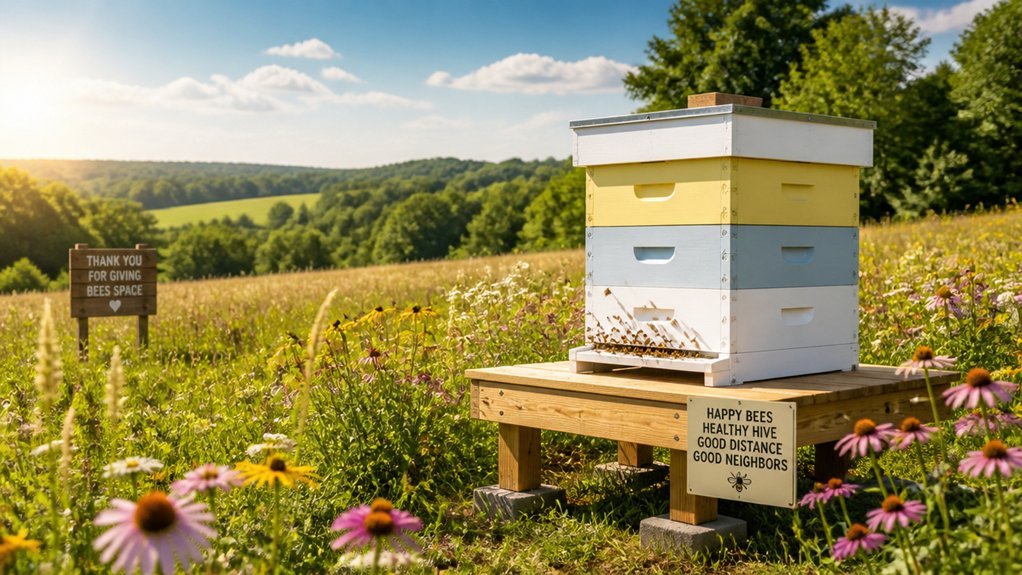
Before you move a hive, plan the route and the timing so you can keep the bees calm and avoid disturbing neighbors. Choose a cool, quiet evening, close the entrance at dusk, and secure every box with straps. Wear protective gear, lift with steady support, and use a truck or cart that won’t jolt the colony. Keep the hive level so combs don’t shift or break.
- Block the entrance with breathable mesh, not solid material, so airflow continues.
- Move the hive more than three miles, or shift it only a few feet at a time.
- Set the hive on a stable stand, reopen the entrance, and monitor flight paths.
Check for loose frames, spilled syrup, or overheating before you leave.
How to Keep Neighbors Comfortable
To keep neighbors comfortable, place your apiaries where bee traffic won’t cross yards, walkways, or play areas. You should point hive entrances toward open space and use fences, hedges, or sheds to lift flight paths above head height. Keep colonies well fed and watered so bees don’t search neighboring yards for resources.
You can also reduce swarming by inspecting hives regularly and giving crowded colonies extra space. Let nearby residents know when you’ll inspect, move, or split hives, and warn them about any temporary increase in activity.
If you harvest honey or handle boxes, work calmly and avoid spilling syrup. Respectful placement, steady management, and clear communication help you protect your bees while keeping neighbors relaxed and confident around your apiary.
Frequently Asked Questions
How Many Hives Can I Keep on a Suburban Lot?
You can usually keep 1–3 hives on a suburban lot, depending on local rules, yard space, and neighbors. Start small, manage swarms, and provide water, flight barriers, and good forage to stay compliant.
What Flowers Attract Bees Away From Nearby Homes?
You can lure bees with lavender, clover, borage, sunflowers, catmint, and herbs like thyme and oregano. Plant them in sunny patches away from doorways, and you’ll encourage foraging farther from nearby homes.
Do Certain Bee Breeds Tolerate Neighbors Better?
Yes, you can choose gentler breeds like Italian or Carniolan bees, and they’ll usually bother neighbors less. Still, you need good management, because any colony can become defensive if you disturb it or they feel threatened.
How Often Should Apiaries Be Inspected for Safety?
You should inspect your apiary at least weekly, and more often during swarming season or after storms. Check hive stability, entrances, pests, aggression, and nearby hazards so you can catch problems early and stay safe.
Can Noise From Hives Bother Nearby Residents?
Yes, a hive’s hum can bother nearby residents, especially if you place it close to homes, patios, or bedrooms. You’ll reduce complaints by siting colonies farther away and using barriers, shrubs, or fencing to muffle sound.
In Summary
Keeping your apiaries away from neighbors helps you avoid conflict, protect people, and make life easier for everyone. When you give bees space, you reduce defensive encounters, lower sting risk, and guide flight paths away from yards and walkways. You also stay more likely to meet setback rules and keep neighbors comfortable. If your hive feels too close, move it safely and rethink the layout before problems start.



