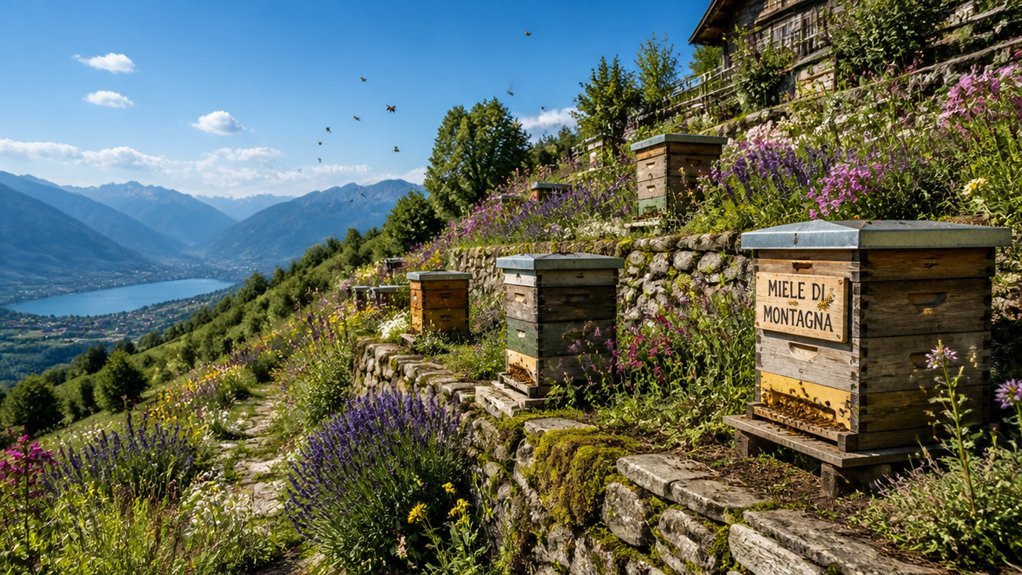
On a sloped yard, you should pick the flattest dry patch you can find, ideally above runoff lines and away from swales, gullies, or wet low spots. A south-facing slope helps warm hives early, while firm soil and a slight rise keep boxes level and dry. You can also build terraces, add windbreaks, and keep access paths stable and clear. The best setups make inspections safer and your colonies healthier, and there’s more to fine-tune beyond the basics.
Choose the Safest Slope Angle
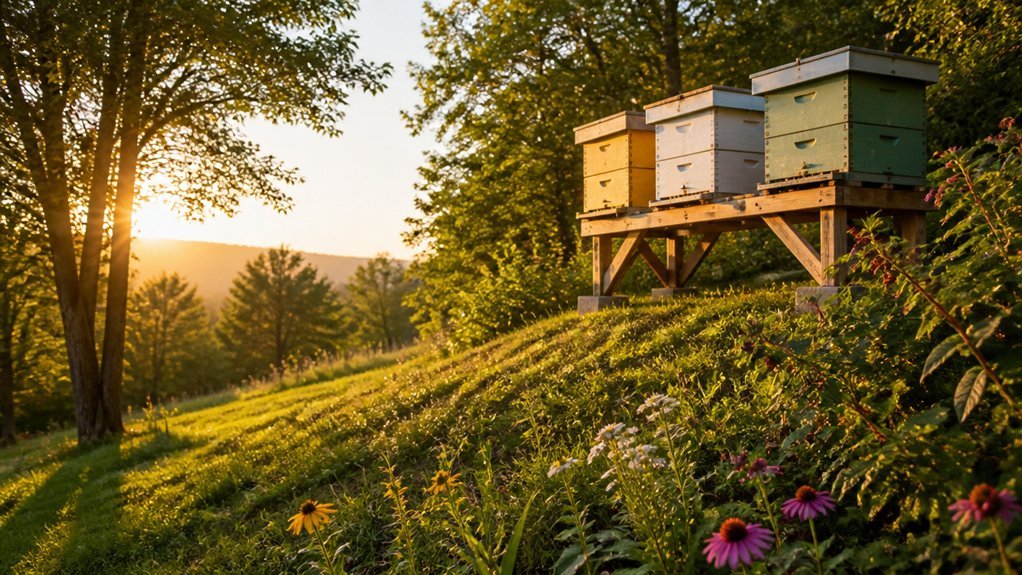
How steep is too steep for a hive site? You should treat any slope that makes footing unstable as a warning sign. Aim for a gentle grade that lets you stand, lift boxes, and carry tools without sliding.
If you can’t walk the line comfortably in boots, the bees likely won’t be your biggest challenge. Moderate slopes can work when the ground stays firm and you can level each hive stand safely.
Avoid steep, eroded, or slick banks, because they increase the chance of falls, tipped equipment, and shifting boxes after rain. Test the site in dry and wet conditions, and choose the flattest usable patch within the slope. Proper terrain stability is essential for maintaining hive safety and reducing the risk of pest entry.
Your goal is simple: keep your bees accessible, secure, and easy to inspect.
Place Hives on a South-Facing Slope
A south-facing slope can give your hives a warmer, sunnier start each day, especially in cooler climates. You should position colonies where morning sun reaches the entrance first, because bees warm up faster and begin foraging sooner. This exposure also helps dry dew and reduce lingering dampness around the apiary. Proper hive ventilation is essential to prevent moisture buildup and maintain hive health, especially in such exposed locations. Pick a spot with open light but some wind protection from nearby trees, hedges, or terrain. You’ll want to avoid deep shade from buildings or tall plants that block that warming effect. In winter, the extra sunlight can support steady cluster activity and encourage healthier spring buildup. If your slope gets strong afternoon heat, use natural cover nearby to soften it. Aim for balanced sun, airflow, and shelter so your hives stay productive.
Level Hives on Uneven Ground
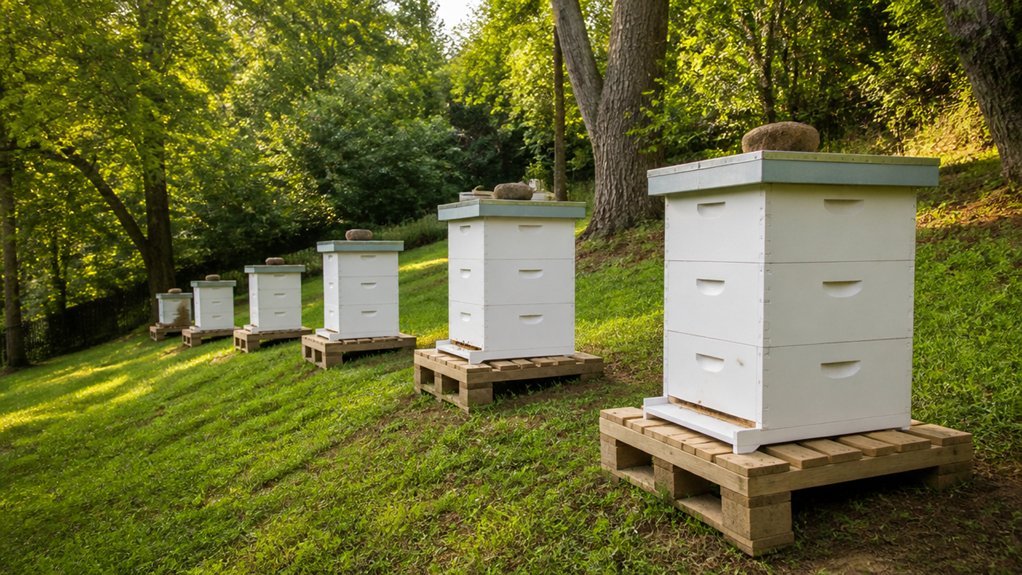
Before you set a hive on uneven ground, assess the slope so you can spot high and low points that might tip it. Once you know the terrain, you can level the hive with shims, blocks, or an adjustable stand. A steady hive helps your bees build comb evenly and keeps moisture from pooling inside. Using quality materials like FSC-certified cedarwood and beeswax coatings can further enhance hive stability and durability over time.
Site Slope Assessment
Start by checking how the ground falls across your apiary, since even a slight tilt can affect hive stability, drainage, and how frames sit inside the box.
Walk the site after rain and note where water pools, runs off, or soaks in slowly. Watch for hidden dips, soft soil, exposed roots, and rocky patches that can make one stand wobble or shift over time.
Use your eyes, a long straight board, or a simple line of sight to judge slope across each potential stand area. Pick spots where the grade changes gently and where bees can approach without battling erosion or standing water.
You want a location that feels steady, stays dry, and lets your hives sit in a predictable position through changing weather. Additionally, pay attention to strap strength and durability, as uneven terrain may require extra reinforcement to keep hives secure during storms or high winds.
Hive Leveling Methods
Once you’ve found a good slope and marked the most stable ground, level each hive so the box sits flat and the frames hang true. Use concrete blocks, pavers, or treated wood shims under the stand’s low side, then check both front-to-back and side-to-side with a small level. Keep the hive entrance slightly higher than the rear to help drainage and discourage dampness.
- Pack soil firmly before you set the stand.
- Recheck level after rain, frost, or shifting soil.
- Raise multiple hives to the same height for easier work.
- Proper weatherproof hive covers can help protect the hive from moisture and weather fluctuations.
If the yard keeps settling, reset the base instead of forcing the hive to compensate. A steady foundation helps bees build straight comb, reduces stress, and makes inspections smoother for you.
Build Terraces for Stable Hive Sites
If your yard has a noticeable slope, build level terraces to give each hive a stable, secure base. You can cut into the hillside and form flat pads with compacted soil, gravel, or landscape blocks. Keep each terrace wide enough for safe lifting, cleaning, and inspections.
Place hives so the entrances face open space, and leave room behind and beside them for your gear. Use a level to confirm each platform sits true from front to back and side to side.
When you tier the slope, you reduce tipping, make swarm checks easier, and improve long-term hive management. Add edging to hold the terrace shape, then maintain it by filling settled spots and rechecking levels after heavy rain or seasonal freeze-thaw cycles.
Additionally, modular layer options allow you to adjust hive weight and configuration, making maintenance more manageable on uneven terrain.
Shield Hives From Wind and Runoff
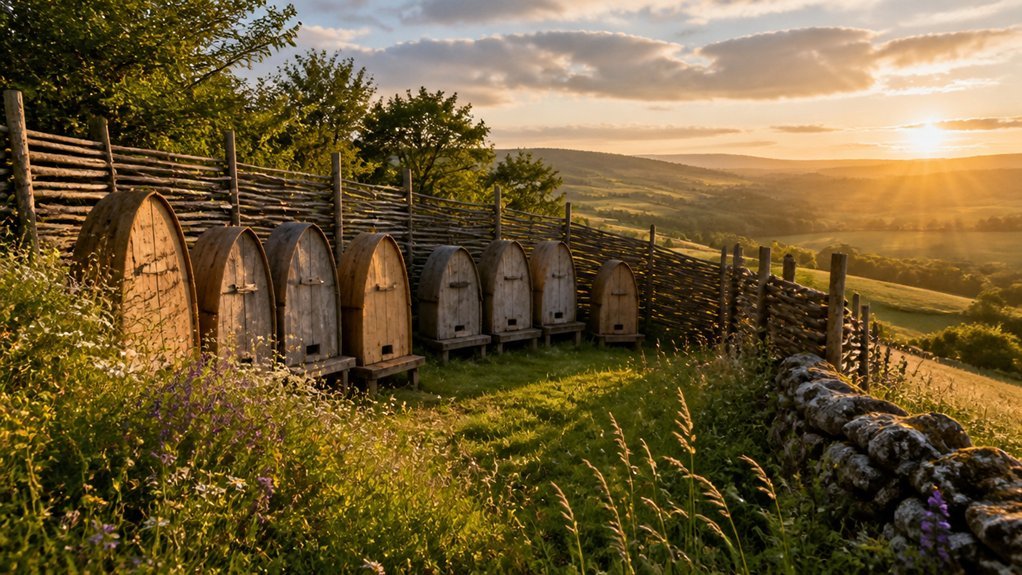
Place your hives where a windbreak can block the strongest gusts without cutting off airflow. You should also guide runoff away from the stand with shallow swales, gravel, or a slight grade so water doesn’t pool around the bases. These two steps help keep your bees drier, steadier, and better protected on a slope. Incorporating a protective finish that resists weathering and UV damage can further extend the longevity of your hive infrastructure.
Windbreak Placement
Where should you set a windbreak on a sloped yard? Place it uphill and slightly to the side of your hives, where it can slow gusts before they hit the entrances. You can use a fence, hedge, or row of shrubs, but keep airflow gentle, not sealed off.
Aim for a barrier that stands higher than the hive boxes and sits far enough away to avoid crowding foraging paths. Proper fit ensures the screen functions effectively without causing additional airflow issues.
- Blocks prevailing wind before it reaches the apiary
- Reduces chill at the hive entrance
- Leaves space for easy inspection and bee flight
You’ll protect colonies best when you match the windbreak to the slope’s natural exposure. Choose a stable spot, anchor the barrier well, and keep it from casting too much shade on the hives.
Runoff Diversion
After you set a windbreak, direct runoff away from the hives so water doesn’t pool at the base or wash across the entrances.
On a slope, you can guide water with shallow swales, small berms, or gravel channels that carry stormwater downslope. Keep the hive stand slightly elevated, and make sure the ground beneath drains fast after rain.
If you notice muddy splash zones, add more stone or regrade the soil so water moves past, not through, the apiary. You should also avoid placing hives below roof drips, gutters, or compacted paths that funnel water toward them.
Good runoff control keeps entrances dry, reduces moisture stress, and helps your bees fly safely after storms. Proper well-ventilated screened bottom boards can also improve airflow and prevent excess moisture buildup within the hive.
Keep Apiary Access Open Year-Round
Even on a sloped yard, you need a clear path to your hives in every season, so keep the route wide, stable, and free of obstructions. You’ll work faster and safer when you can reach supers, feeders, and tools without slipping or detouring. Install sturdy steps, compacted gravel, or pavers where you walk most. Trim back grass, canes, and low branches before they crowd the approach. Mark edges so you can see them in dim light or after snow. Proper entrance size ensures bees can enter and exit efficiently while reducing pest and predator access.
Keep a wide, stable path to your hives so every visit stays safe and efficient.
- Store gear close to the path.
- Keep gates easy to open with gloves.
- Check footing after heavy rain or freeze-thaw cycles.
When access stays open, you’ll make inspections, emergency visits, and honey pulls with less strain and fewer delays throughout the year.
Pick Dry Ground Above Runoff Lines
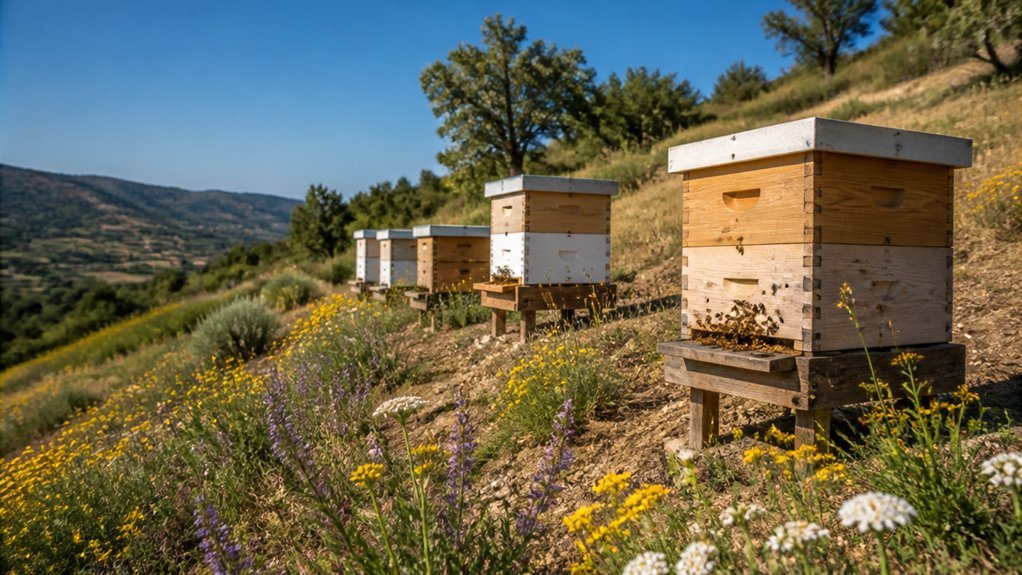
Choose the highest dry pocket on the slope, above any channels where stormwater gathers and races downhill. You want firm soil that drains fast after rain, so your hives stay stable and your bees don’t face puddles or damp footing.
Walk the yard after a storm and trace where water flows; avoid swales, gullies, and the base of the hill. If you can, place stands on a slight rise, with enough slope for water to move away, not pool under the hive.
Add gravel or pavers only if they won’t redirect runoff into the apiary. Dry ground also helps prevent mud around entrances, which keeps foragers moving cleanly and lets you inspect boxes without slipping.
Frequently Asked Questions
How Do You Move Hives Safely on Steep Terrain?
You move hives safely on steep terrain by using a dolly, securing straps, clearing footing, and having a helper steady the load. Keep movements slow, level the hive, and stop often to prevent tipping or stings.
Which Plants Thrive Best Around Sloped Apiary Sites?
You’ll do best with clover, lavender, thyme, borage, and native wildflowers; they thrive on slopes, hold soil, and feed bees well. Plant sun-loving, drought-tolerant species, and avoid waterlogged ground that can stress roots.
What Ground Cover Reduces Erosion Near Hives?
You’ll reduce erosion near hives with deep-rooted ground covers like clover, creeping thyme, and native grasses. They hold soil, withstand traffic, and won’t crowd your bees, while adding forage and stabilizing slopes naturally.
How Far Should Hives Be From Neighboring Properties?
Keep your hives at least 25 feet from neighboring property lines, and farther if possible. You’ll reduce complaints, give bees a clearer flight path, and help everyone stay safer around your apiary.
Can Slopes Affect Honey Production or Bee Foraging?
Yes, slopes can affect both. You’ll often get better drainage and warmer microclimates on gentle slopes, but steep, exposed sites can increase wind stress, limit flight efficiency, and reduce nearby forage access for your bees.
In Summary
A sloped yard can still make a great apiary if you choose the right spot. Keep your hives on a gentle, south-facing slope with dry, well-drained ground and good wind protection. Level each hive, build terraces if you need them, and make sure you can reach the apiary safely all year. When you avoid runoff paths and unstable ground, you’ll give your bees a steadier, healthier home.