
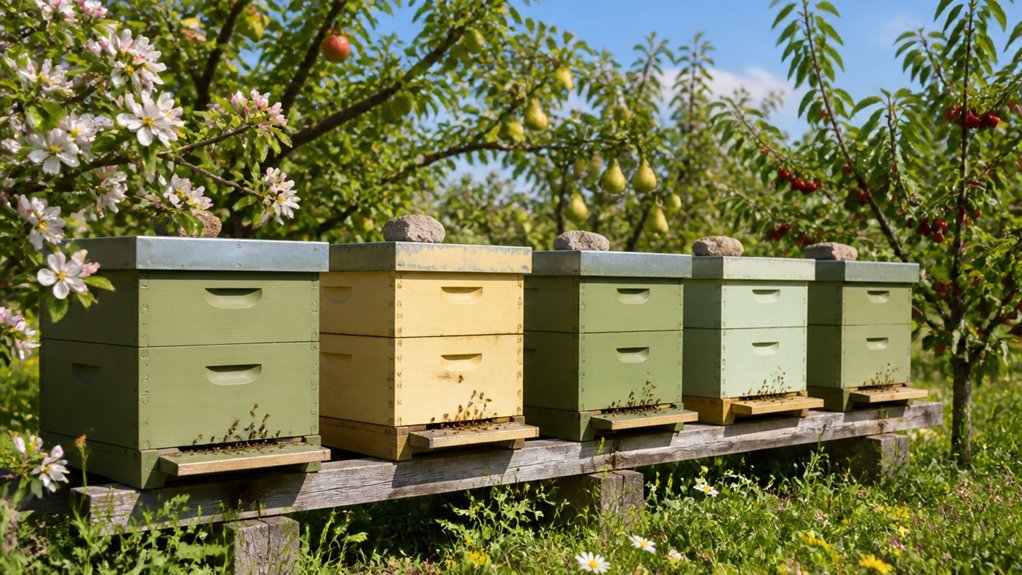
Choose a spot with morning sun, dry, gently elevated ground, and shelter from strong winds, ideally facing hives southeast or east for early light. Keep colonies away from spray drift and coordinate with orchard treatments. Leave clear flight paths, with at least 10 feet of open space, and remove branches or clutter nearby. Place hives near early blooming fruit trees, but balance shade, water, and easy access. Keep going, and you’ll uncover the finer points.
Choose the Best Apiary Spot for Sun and Shelter

When you place your apiary near fruit trees, choose a spot that gets morning sun and stays sheltered from harsh wind. You’ll help your bees warm up early, start flying sooner, and forage efficiently through the day.
Put hives on gently elevated ground so cold air and moisture don’t settle around them. Face entrances southeast or east to catch the first light and avoid harsh afternoon heat.
Keep the site dry, well drained, and easy for you to reach in all seasons. You should also leave enough space for airflow around each hive without exposing them to strong gusts.
When you balance sun, shelter, and drainage, you create steadier colony conditions and support stronger honey production near your fruit trees. Proper beehive stand placement enhances airflow, stability, and pest resistance, contributing to healthier hives.
Keep Hives Away From Fruit Tree Sprays
Keep your hives well away from fruit tree spray drift, because pesticides and fungicides can harm foragers, brood, and the entire colony. Place hives where sprays won’t reach them, even on windy days or when drift rides over hedges and fences.
Ask orchard owners when they plan to treat trees, and avoid moving colonies during spraying periods. If you manage both bees and fruit trees, choose bee-safe products and spray only when bees aren’t active.
You should also cover or relocate water sources near treated trees so bees don’t collect contaminated water. After any nearby application, watch for dead or disoriented bees, reduced traffic, or unusual brood patterns. Quick action helps you protect colony health and keeps pollinators strong. Testing kits can be useful for monitoring mite levels and ensuring the overall health of your colonies following pesticide exposure.
Leave Enough Space for Flight Paths

Once you’ve protected your colonies from spray drift, give them room to fly freely around the apiary. You should position hives so bees can launch straight out without weaving through fences, branches, or equipment.
Give bees a clear launch path from the hive—free of fences, branches, and other obstacles.
Clear a broad flight corridor in front of each entrance, and keep it open to at least 10 feet if you can. If you place hives near paths or work areas, angle the entrances away from traffic so foragers don’t meet people head-on.
Trim low limbs, remove tall weeds, and avoid stacking gear where bees need to rise. When you leave open air in front of the boxes, you reduce collisions, calm defensive behavior, and help bees orient faster.
Proper wood material quality and beeswax coatings can also improve hive stability and insulation, promoting healthier colonies.
Good spacing makes daily hive checks safer for you too.
Place Hives Near Early Blooming Trees
Early blooming trees can give your bees an important head start in spring, so placing hives nearby helps them find the first nectar and pollen sources with less effort. You’ll support faster colony buildup when apple, cherry, plum, or pear blossoms open before other forage is available. Set hives where bees can leave and return quickly to these trees, and they’ll waste less energy on long flights. This early access helps nurses raise brood sooner and strengthens your colonies for the main bloom cycle. You should still keep enough distance to avoid blocking branches or bumping into workers during maintenance. If your orchard blooms in stages, choose a spot that serves the earliest trees first, then lets bees spread to later blossoms as the season moves on. For optimal support, select pollinator-friendly varieties, known for high nectar production and long flowering periods, to maximize foraging benefits for your hive.
Balance Shade, Water, and Access Paths

As you choose a hive site near fruit trees, balance shade, water, and access paths so the colony stays productive and easy to manage.
Choose a hive site with balanced shade, water, and easy access to keep colonies productive and manageable.
Give hives morning sun and light afternoon shade to prevent overheating without keeping bees damp. Place a reliable water source nearby, like a shallow tub with floats, so bees don’t raid irrigation lines or neighbors’ pools.
Keep paths wide enough for your cart, smoker, and tools, and avoid placing hives where branches, fences, or mud slow you down. You’ll also want clear flight lanes that don’t cross busy walkways or pruning areas.
If you can reach each hive quickly and safely, you’ll inspect more often, reduce stress, and keep your fruit trees and bees working well together throughout the season.
Using suitable mouse guards can help protect your hive entrances from winter pests, ensuring your colonies stay healthy year-round.
Frequently Asked Questions
How Often Should Fruit Trees Be Inspected for Hive-Safe Pesticides?
You should inspect fruit trees before every spray and again within 24 hours after treatment. Check labels, weather, and nearby bloom stages, and keep bees away until residues’ve dried or the reentry interval’s passed.
Which Bee Hive Orientation Works Best in Windy Orchards?
You’ll get best results with hive entrances facing southeast or east, so you catch morning sun and reduce wind exposure. You should add a windbreak, but avoid blocking flight paths or trapping damp air.
Can Apiaries Affect Fruit Yield or Pollination Quality?
Yes, your apiary can boost pollination and fruit yield if bees match bloom timing, but too many hives can crowd flowers, increase competition, and slightly reduce fruit set quality in some orchards.
How Far Should Hives Be From Neighbors’ Property Lines?
You should place hives at least 25 feet from neighbors’ property lines, though more distance is better. If you can’t, use fences or hedges to guide flight paths and reduce conflicts.
What Local Permits Are Needed for Placing Hives Near Orchards?
You’ll usually need zoning approval, agricultural registration, and sometimes a beekeeping permit, pesticide-use notice, or farm access agreement. Check county, state, and orchard rules first, since local ordinances can change quickly.
In Summary
By choosing a sunny, sheltered apiary spot, you’ll help your bees thrive. Keep hives clear of fruit tree sprays, and leave plenty of room for easy flight paths. Place them near early blooming trees so they can forage sooner, and balance shade, water, and access for smooth hive management. When you plan carefully, your apiary will support healthier bees, better pollination, and a safer setup for you too.



