
You can spot a healthy queen by her calm, steady movement and the way workers make room for her. She doesn’t rush; she moves with purpose and keeps the hive focused through her pheromones. Look for a long, undamaged abdomen, fresh eggs, and a neat brood pattern. Keep her strong by reducing stress, protecting brood space, and supporting food and protein needs. If you keep going, you’ll see how each sign works together.
What Queen Bee Behavior Looks Like
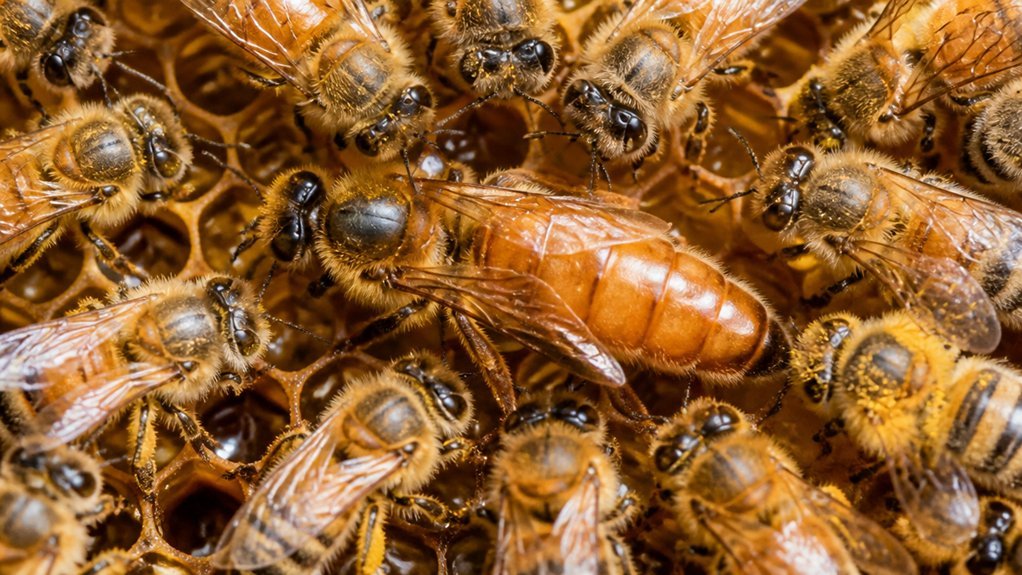
Queen bee behavior usually looks calm, confident, and decisive, with the bee moving through the hive as the clear center of activity. You’ll notice her steady pace, controlled movements, and the way other bees make room around her.
She doesn’t rush or fidget; instead, she acts with purpose and consistency. Her presence signals order, and you can often see workers staying attentive nearby.
Her body language stays composed, which helps you read her as a stable focal point in the hive. If you observe closely, you’ll spot a pattern of quiet authority rather than aggression. That calm, measured style sets her apart and makes her behavior easy to recognize once you know what to watch for. Proper queen handling practices and the use of suitable cages can help maintain her confidence and reduce stress during management.
How a Queen Bee Leads the Hive
Her calm, steady presence does more than stand out in the hive—it helps guide how the colony functions. You can think of the queen as the colony’s central organizer, because her role shapes brood care, hive rhythm, and long-term stability.
She doesn’t manage every task directly, but her influence helps workers stay focused on feeding larvae, building comb, and keeping the nest running smoothly. When you observe a healthy hive, you’ll see that the queen’s behavior supports order without constant movement or force.
Her main job is to sustain the colony’s future, and you can trace that impact in the coordinated work around her. By keeping her own actions consistent, she helps the hive stay productive, balanced, and ready to grow. Her pheromones also play a vital role in maintaining colony cohesion and communication using chemical signals.
How Pheromones Guide the Hive
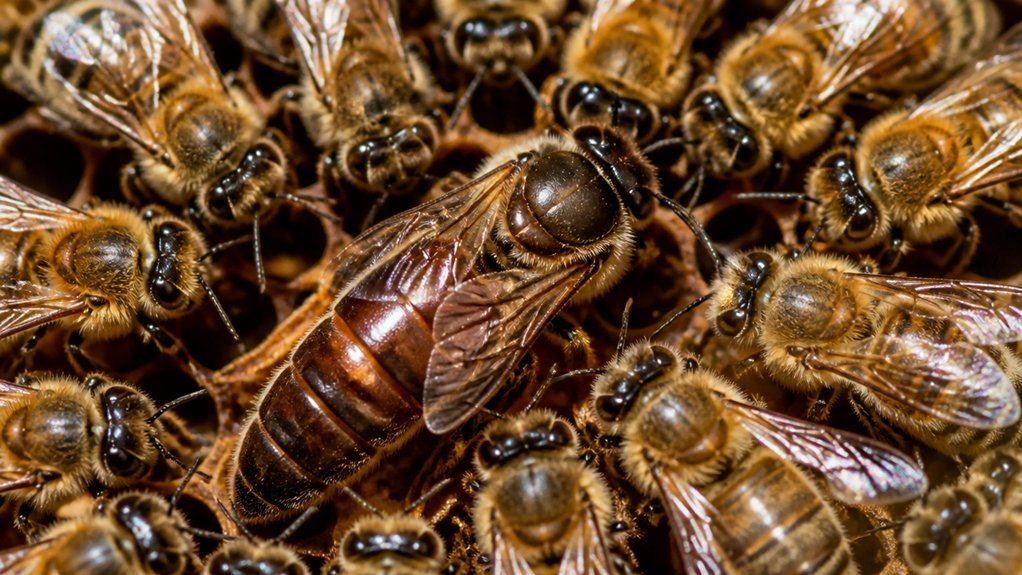
Pheromones are one of the clearest ways a queen bee influences the hive without direct contact. You can think of them as chemical messages that travel through the colony and tell workers how to respond. When you sense strong queen scent in the hive, you’re seeing order at work.
These signals help keep bees organized, reduce chaos, and support steady activity throughout the comb. Workers pick up the scent and adjust their behavior, staying focused on hive tasks rather than drifting into disorder. Using queen marking kits can help you easily identify and monitor the queen’s presence, ensuring her pheromonal influence remains effective.
You don’t need to watch the queen move to know she’s present; her chemical trail does the talking. By releasing these cues, she keeps the colony connected, responsive, and functioning as one unit.
Five Signs Your Queen Is Healthy
When you know what to look for, a healthy queen is easier to spot than you might think. You’ll see her moving steadily across the comb, with workers calmly making room for her. Her abdomen should look long and full, not shriveled or damaged.
You’ll also notice a strong pattern of brood around her, which shows she’s laying well. Another sign is steady egg production; you should find fresh eggs in neat cells, not gaps or scattered patchiness.
Finally, the hive often feels orderly, because workers follow her scent and stay focused on their tasks. If your queen shows these signs, she’s likely in good condition and doing her job effectively, especially when proper varroa mite testing methods are used to monitor hive health.
How to Support a Healthy Queen Bee
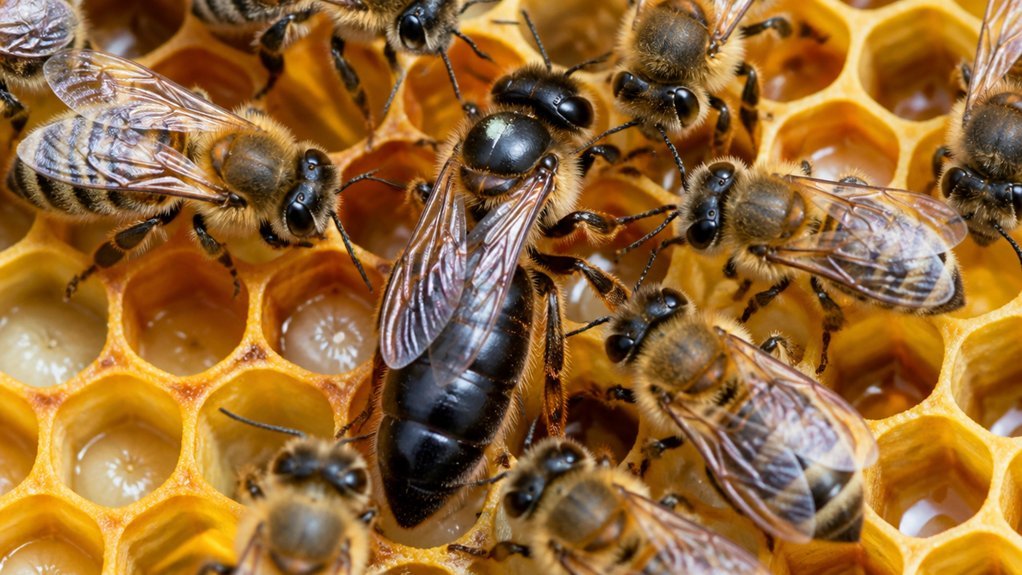
A healthy queen can only stay that way if the hive gives her the right support. You help her thrive by keeping brood nest conditions stable, feeding the colony when nectar runs low, and reducing stress from pests or harsh handling. Watch her space closely and avoid unnecessary disruptions. Ensuring adequate protein support is essential for maintaining a resilient colony and promoting continuous brood production.
Frequently Asked Questions
How Long Does a Queen Bee Typically Live?
A queen bee typically lives two to five years, though you’ll usually see her active for about three. You can expect her lifespan to outlast worker bees, which often survive only weeks in summer.
Can a Hive Survive Without a Queen Bee?
Yes, your hive can survive briefly without a queen, but it won’t thrive. Workers keep gathering food and caring for brood, yet they can’t raise new bees long-term until you replace her or they make one.
How Do Worker Bees Choose a New Queen?
Worker bees don’t choose a queen directly; you see, they raise several larvae in queen cells, feed them royal jelly, and the first emerging virgin queen usually kills rivals and takes over.
What Causes a Queen Bee to Stop Laying Eggs?
A queen bee stops laying eggs when you see her age, illness, injury, poor nutrition, or colony stress reduce her fertility. You’ll also notice winter, swarming, or worker replacement can cut egg laying.
How Often Should Beekeepers Inspect the Queen’s Condition?
You should inspect your queen’s condition every 7 to 10 days during active season, and less often in winter. Check brood pattern, egg laying, and temperament so you can catch problems early.
In Summary
In the end, you can see how a healthy queen keeps your hive calm, organized, and growing. When she moves confidently, releases strong pheromones, and stays productive, your bees respond with steady work and less chaos. Watch for the signs of a strong queen, and you’ll know when your hive is thriving. If you support her with good care, space, and resources, you’ll help your colony stay balanced, active, and ready for the season ahead.