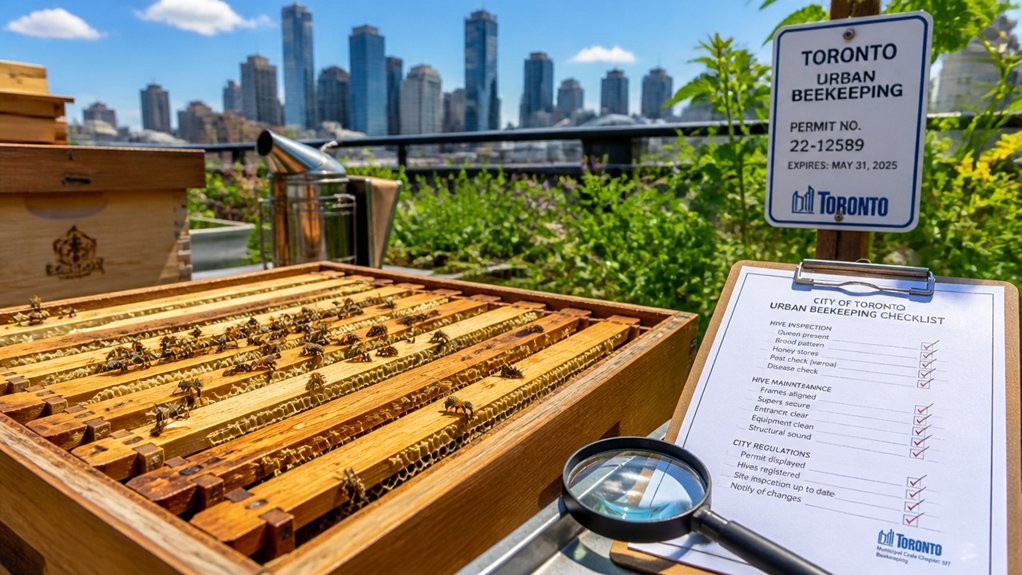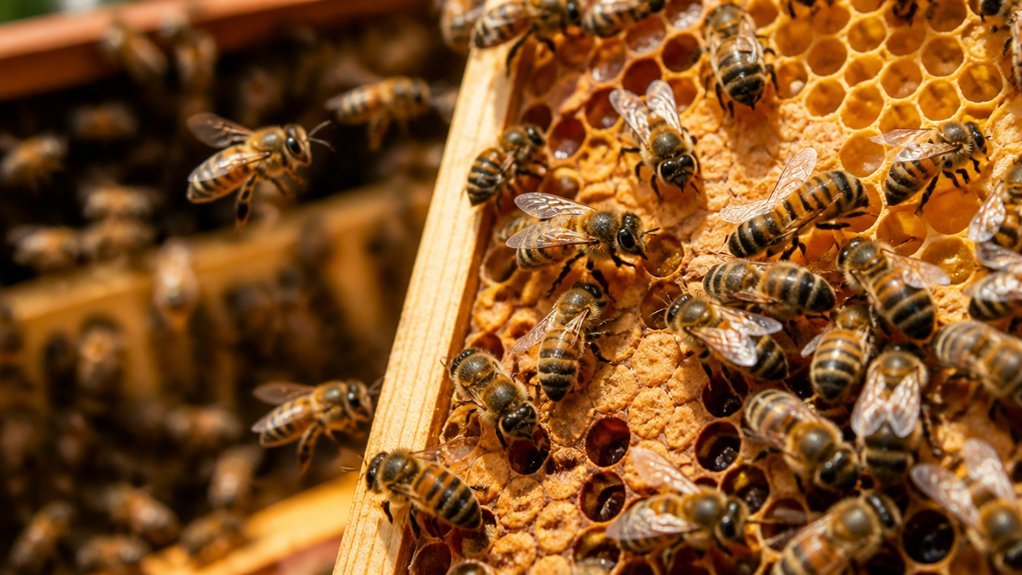
You can learn a lot from seven bee behaviors. Watch the waggle dance to find nectar sources, and note how long it lasts to gauge distance. Check how bees fan, cluster, and regulate heat to keep brood steady. See workers clean, nurse, and forage, while guards test strangers at the entrance. Queen cells warn of swarming, foraging changes reveal hive health, and disturbance shows up fast in buzzing, fanning, and defensive motion.
How Bees Use the Waggle Dance?
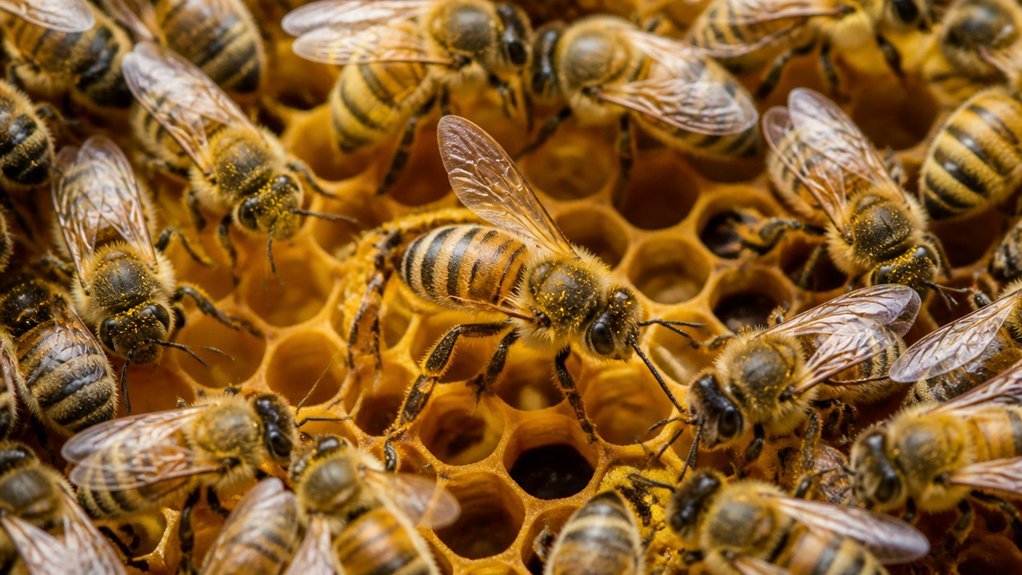
When bees find a rich source of nectar or pollen, they don’t just head back to the hive—they perform the waggle dance to tell other workers where to go. You can read this behavior as a built-in map.
The dancer waggles straight ahead to show direction, and the angle to the sun helps guide foragers toward the food. The longer the waggle, the farther away the source lies. You’ll also notice excited followers crowd around the dancer to pick up scent cues and fine-tune the route.
As a beekeeper, you should see this as evidence of healthy communication and strong colony coordination. When forage is plentiful, the dance intensifies, helping your hive send workers efficiently and quickly to productive blooms nearby. Seasonal care plays a role in the availability of nectar sources, affecting the frequency and vigor of the waggle dance.
Why Hive Temperatures Stay So Steady?
Ever wonder how a hive stays nearly the same temperature through blazing afternoons and cool nights? You can thank the bees’ own built-in climate control. They keep brood areas close to the ideal range by adjusting body heat, moving air, and changing their cluster size.
When heat rises, bees fan at the entrance and spread water around the comb so evaporation cools the interior. When cold sets in, they tighten into a dense cluster and trap warmth from their own muscles.
The wax comb also helps, because it insulates and buffers sudden swings. As a beekeeper, you can read this balance in the hive’s calm rhythm: steady activity usually means the colony’s temperature control is working well. Additionally, thermometers and hygrometers provide valuable data to monitor and ensure these natural processes are maintaining optimal hive conditions.
What Worker Bees Do in the Hive?
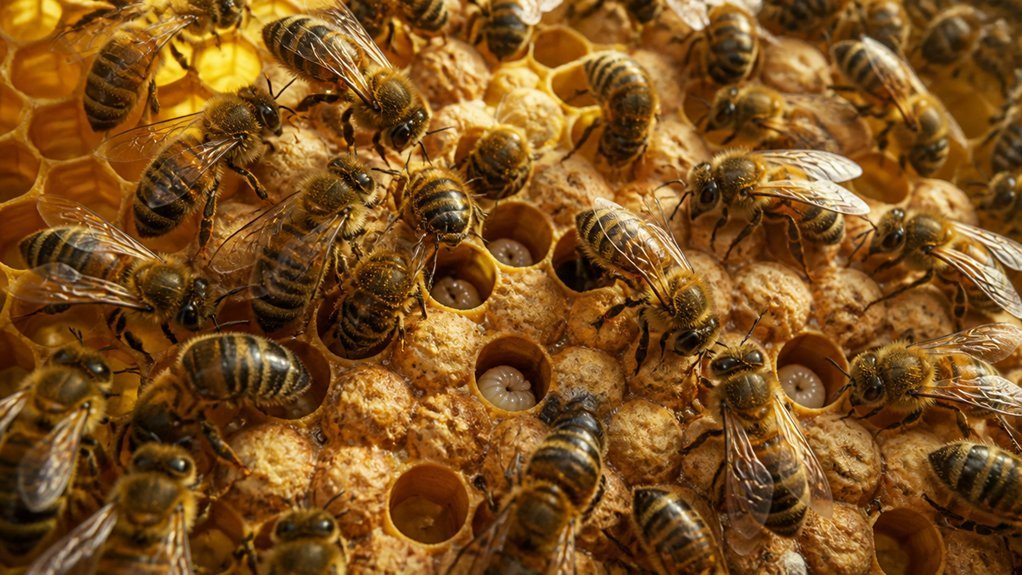
When you watch worker bees in the hive, you’ll see each one take on an essential job. They clean cells, care for brood, and keep the hive organized and healthy.
You’ll also notice them heading out to forage, bringing back nectar that helps feed the colony. A crucial part of their role is supporting brood rearing with balanced nutrition, often through the consumption of pollen patties, especially during early spring build-up when natural pollen is scarce.
Worker Bee Roles
Inside a healthy hive, worker bees handle nearly every task that keeps the colony alive. You’ll see them feed larvae, tend the queen, build comb, and gather nectar, pollen, water, and propolis.
As a beekeeper, you can read a colony’s needs by watching these roles shift with age. Young workers often nurse brood and process food, while older workers fly out to forage and bring back resources. They also fan their wings to regulate temperature and spread scent signals that help the hive stay organized.
When you understand these jobs, you can judge colony strength, spot stress early, and support better honey production. A busy, balanced worker force usually means your hive’s health is on track. Understanding hive component functions can further help you interpret behaviors and optimize your beekeeping practices.
Hive Cleaning Duties
A healthy hive stays cleaner because worker bees constantly remove waste, dead brood, and debris from the comb. You’ll notice these bees act like the hive’s sanitation crew, carrying trash to the entrance and dropping it outside.
They also polish cells with their mouths and feet, which helps prepare the comb for eggs, food, and growing brood. If you inspect frames, you may see workers dragging out wax scraps or tiny bodies that could attract pests or spread disease.
This cleaning work matters because a tidy hive supports stronger brood development and lowers stress on the colony. When you understand these habits, you can judge hive health more accurately and spot trouble before it spreads. Additionally, screened bottom boards play a crucial role in maintaining hive cleanliness by allowing debris and dead mites to fall out, supporting overall colony health.
Foraging And Nectar Collection
While many worker bees stay busy inside the hive, others leave to forage for nectar, pollen, water, and plant resins that support the colony. You’ll notice these bees fly steady routes, sample flowers, and return with loads that fuel brood rearing, honey storage, and comb building.
They don’t just collect; they also report rich food sources through the waggle dance, helping you understand how your hive finds resources. Watch for strong foraging flights during warm, sunny hours and reduced activity in bad weather.
Additionally, bees may utilize pollen substitutes to supplement protein intake during nectar dearth periods, ensuring colony health and brood development.
What Guard Bees Watch For?
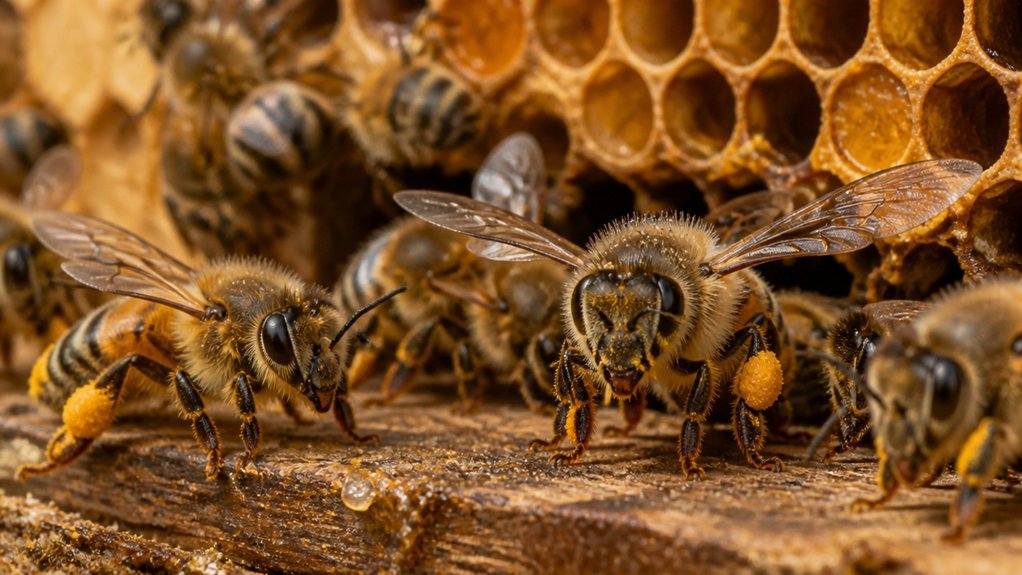
Guard bees watch for anything that doesn’t belong at the entrance: unfamiliar scents, odd movement, and bees that arrive without the colony’s scent. When you open a hive, you can see them standing alert, testing visitors with their antennae and blocking anything suspicious. They’re quick to notice robbing bees, wasps, and drifting workers from nearby colonies.
You’ll also see them tighten the entrance during tense periods, making access harder for strangers. If you notice more guards than usual, your colony may be under pressure, so move carefully and avoid triggering extra agitation at the hive mouth. Proper entrance management and robbing prevention techniques, like robbing screens, can help reduce the stress on your hive.
How Bees Signal Swarming Time?
You can spot swarm prep when your bees start crowding the entrance, acting restless, and reducing brood care.
Look for queen cell clues, since the workers build these special cells when they’re getting ready to split. If you catch these signs early, you can act before the hive swarms. Additionally, monitoring the pheromone signals, especially Nasonov lure, can help indicate increased scout bee activity gearing up for swarming.
Swarm Prep Signals
When a colony starts preparing to swarm, the signals usually show up days or even weeks before bees actually leave. You’ll notice the hive feels crowded, with more bees hanging around the entrance and less room to move inside.
Foragers may seem restless, and activity can shift toward idle clustering instead of steady work.
Watch for these key signs:
1. Heavy traffic at the entrance
Bees spill out and cluster near the doorway more often.
2. Reduced comb organization
You’ll see less neat movement and more scattered, distracted behavior.
3. Unusual calm inside the hive
The colony can feel strangely settled despite rising congestion.
If you catch these swarm prep signals early, you can act before the bees commit to leaving. Lightweight hive components make it easier to manage and respond swiftly to early swarm indications.
Queen Cell Clues
Queen cells are one of the clearest clues that a colony may be gearing up to swarm. When you spot them along the frame edges or bottom bars, your bees may be raising a new queen because the hive feels crowded.
You’ll often see several at once, especially during a strong nectar flow. Check whether the cells are capped or still open; both can mean the colony is moving fast.
Look for other signs too, like reduced space for egg laying, packed bees, and a quieter queen. If you catch these clues early, you can add space, split the hive, or inspect more often.
Acting quickly can help you stay ahead of a swarm and keep your colony in balance. Monitoring queen cell capacity and ensuring your kit contains sufficient queen cell cups can make managing swarms more effective.
What Foraging Patterns Reveal About Hive Health?
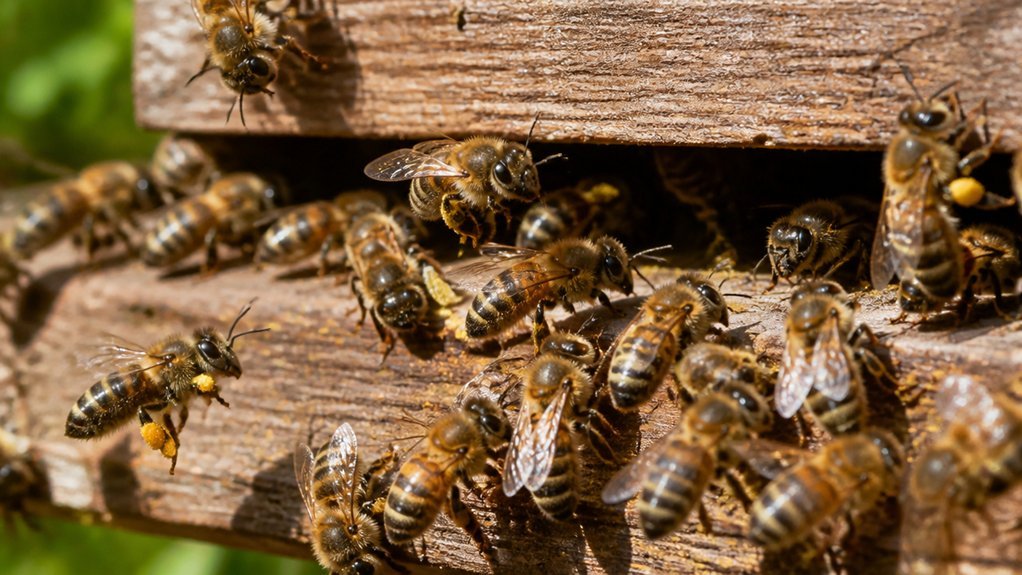
A hive’s foraging patterns can tell you a lot about its overall health. When you watch your bees, you’re really reading their workload, energy, and resilience.
A hive’s foraging patterns reveal its health, reflecting the colony’s workload, energy, and resilience.
Strong hives send out steady foragers, bring in varied pollen, and keep returning throughout the day. Weak or stressed colonies often show fewer trips, uneven pollen loads, or long gaps in activity.
- Consistent traffic means your colony likely has enough workers and brood to support collection.
- Diverse pollen colors suggest access to rich forage and a balanced diet.
- Sudden drops in flight can point to poor weather, low stores, or internal issues.
Check the entrance regularly, and compare activity across seasons. Patterns matter more than one busy day.
How Bees React When the Hive Is Disturbed?
If you open a hive too quickly or work too roughly, the bees will let you know fast. They may rush up the frames, fan their wings, and raise the buzz around your hands and veil.
You’ll often see guard bees cluster near the entrance, ready to defend the colony. If the disturbance continues, they can bump you, follow you, or sting to warn you off.
Stay calm, move slowly, and use smoke sparingly so you don’t trigger a bigger alarm. Watch their posture and noise; those signals tell you when to pause or close the hive.
When you handle them gently, you help the colony stay organized, and you make inspections safer for both you and your bees.
Frequently Asked Questions
How Long Does a Queen Bee Live?
A queen bee usually lives 2 to 5 years, though you’ll often replace her sooner if her egg-laying drops. You’ll want to watch your hive closely, because her health keeps colonies productive and stable.
When Should a Beekeeper Inspect a Hive?
You should inspect your hive on warm, calm days, usually every 7–14 days in spring and summer. You’ll check brood, food, space, and pests, but avoid disturbing bees during cold, rainy, or windy weather.
What Plants Do Bees Prefer to Forage?
You’ll see bees prefer nectar-rich flowers like clover, lavender, sunflowers, wildflowers, and herbs. You should plant diverse blooms, because they’ll forage where pollen and nectar are easiest to collect, especially nearby.
How Much Honey Can One Hive Produce?
You can expect a healthy hive to produce about 30 to 60 pounds of honey yearly, though strong colonies in rich nectar flows may yield over 100 pounds if you manage them well.
How Do Bees Make Beeswax?
You’ll see worker bees eat honey, then your hive converts its sugars into wax in special glands. They secrete tiny flakes, chew them, and shape comb cells for storing honey, pollen, and brood.
In Summary
By watching your bees closely, you’ll start to notice these key behaviors before they turn into bigger problems. The waggle dance, hive temperature control, worker roles, guard activity, swarming signals, foraging patterns, and disturbance responses all give you clues about colony health. When you understand what your bees are telling you, you can act faster, keep your hive stronger, and become a more confident beekeeper season after season.