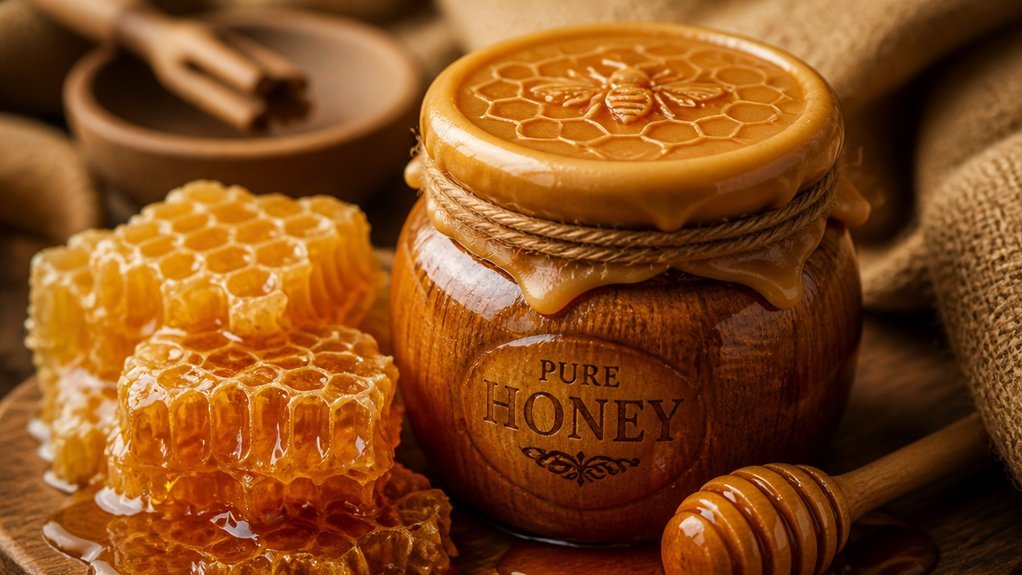
After harvest, strain your honey through fine mesh or cheesecloth to remove wax and debris, then pour it slowly into clean, airtight glass jars, stainless steel containers, or BPA-free food-grade buckets. Choose a container size that leaves little extra air, seal it tightly, and label it with the harvest date and batch. Store it in a cool, dark, dry place away from sunlight and heat, and you’ll see why the details matter next.
Choose the Best Honey Storage Containers

When you store honey, choosing the right container matters because it helps protect the flavor, texture, and quality over time. You should pick food-grade glass jars, stainless steel tanks, or heavy-duty plastic buckets made for food use.
Glass won’t absorb odors, and it lets you inspect the honey easily. Stainless steel works well for larger batches because it resists corrosion and seals tightly. If you use plastic, choose high-quality, BPA-free containers with secure lids.
Always select containers with tight closures to keep out moisture and pests. You’ll also want a size that matches your harvest so you don’t leave excess air inside. For best results, store honey in containers that seal cleanly and won’t react with it.
Clean and Filter Honey Before Storage
Before you store honey, strain out wax bits, bee parts, and other debris so the honey stays clean and stable. Use a fine mesh strainer, cheesecloth, or a double layer of food-safe nylon to catch particles without removing too much pollen or flavor.
Pour the honey slowly and let gravity do most of the work; squeezing or stirring can push debris through and add air bubbles. If the honey still looks cloudy, strain it again with a finer filter.
Keep your tools clean and dry before each use. Don’t wash honey with water, and don’t let contaminants from dirty equipment get into the batch.
Filtering now helps you avoid gritty texture, improves shelf life, and makes the honey easier to jar neatly for later use. Proper mesh size selection ensures you retain beneficial pollen and achieve a clear, high-quality honey product.
Protect Honey From Moisture, Heat, and Sunlight

Once the honey is clean, store it in a tightly sealed, dry container to keep out moisture, which can cause fermentation and spoilage. Keep your storage area cool, because heat can darken honey, weaken its flavor, and speed up quality loss. Choose a pantry, cabinet, or cellar away from ovens, windows, and sunny shelves. Direct sunlight also breaks down aroma and color, so use opaque containers or place jars in a dark spot. Using food-grade plastic containers ensures the honey remains safe and uncontaminated during storage.
Seal and Label Honey Jars for Long-Term Storage
With your honey protected from moisture, heat, and light, the next step is to seal each jar tightly and label it clearly for long-term storage. Use clean lids that fit securely, and tighten them enough to create a reliable barrier without damaging the threads.
If you use metal lids, check that the sealing surface is intact. Write the harvest date, floral source, and any batch number on each label so you can track freshness and quality later. Add storage notes if needed, especially for specialty varieties.
Use waterproof labels or cover them with clear tape so handwriting won’t smear. Good sealing keeps contaminants out, and clear labeling helps you rotate stock efficiently and identify jars quickly when you need them. Additionally, airtight lids are essential to maintaining the honey’s freshness during storage.
Store Honey in a Cool, Dark Place at Home

Choose a cool, dark spot for your honey, such as a pantry, cupboard, or cabinet away from the stove, oven, and direct sunlight. You’ll protect flavor, color, and texture by keeping jars at a steady room temperature.
Avoid placing honey near windows, radiators, or appliances that warm the air, because heat can darken it and speed quality loss. If you store several jars, keep them in one shaded area so you can grab them easily without exposing them to repeated light.
- Pick a dry shelf with stable temperature.
- Keep lids tight to block moisture and odors.
- Store jars upright to prevent leaks.
- Check occasionally for crystallization, then warm gently if needed.
- Selecting a durable honey pot material can also help preserve honey’s quality over time.
Frequently Asked Questions
Can Honey Be Stored in Plastic Containers Long-Term?
Yes, you can store honey in food-grade plastic long-term, but you’ll want airtight, opaque containers and cool storage. Avoid heat and sunlight, and choose plastic that won’t absorb odors or degrade over time.
How Long Does Harvested Honey Stay Fresh?
You can keep harvested honey fresh for years, even decades, if you seal it tightly and store it cool and dry. It won’t spoil easily, but its flavor and texture may gradually change.
Should Crystallized Honey Be Refrigerated?
No, you shouldn’t refrigerate crystallized honey. You’ll speed up granulation and make it harder to use. Keep it sealed at room temperature instead, and warm the jar gently in warm water when needed.
Can Honey Be Frozen for Storage?
Yes, you can freeze honey for storage, but you usually won’t need to. You’ll keep it in a sealed, moisture-free container; freezing won’t harm it, though it may thicken and need warming later.
Does Honey Ever Expire?
No, honey doesn’t really expire if you store it well. You can keep it for years, and it may crystallize or darken, but that won’t spoil it. Just seal it tightly and avoid moisture.
In Summary
By choosing the right containers, cleaning and filtering your honey, and protecting it from moisture, heat, and sunlight, you’ll help it stay fresh and flavorful for a long time. Seal each jar tightly, label it clearly, and keep it in a cool, dark place at home. With these simple storage habits, you can preserve your harvest’s quality and enjoy every last drop of your honey whenever you need it.