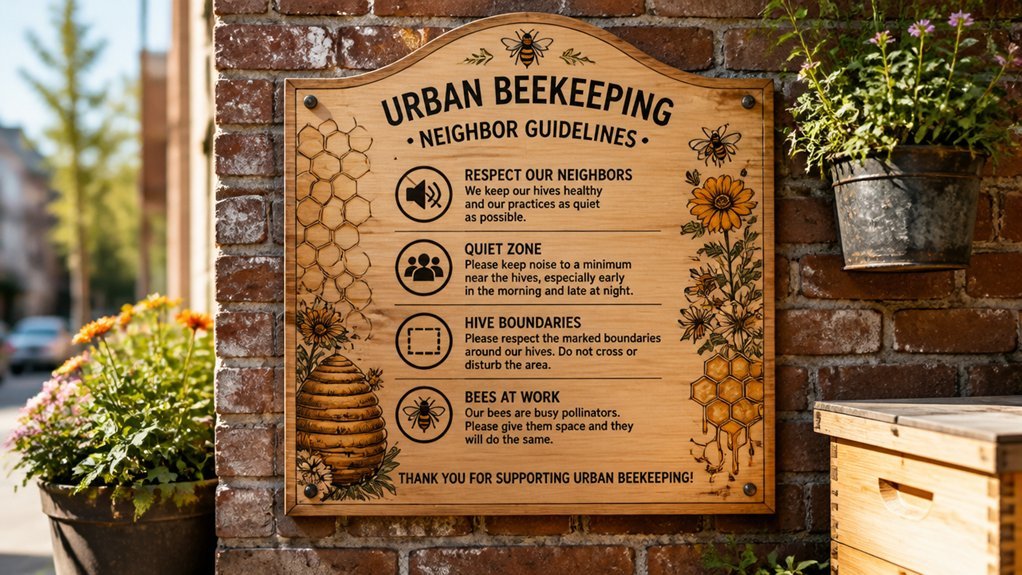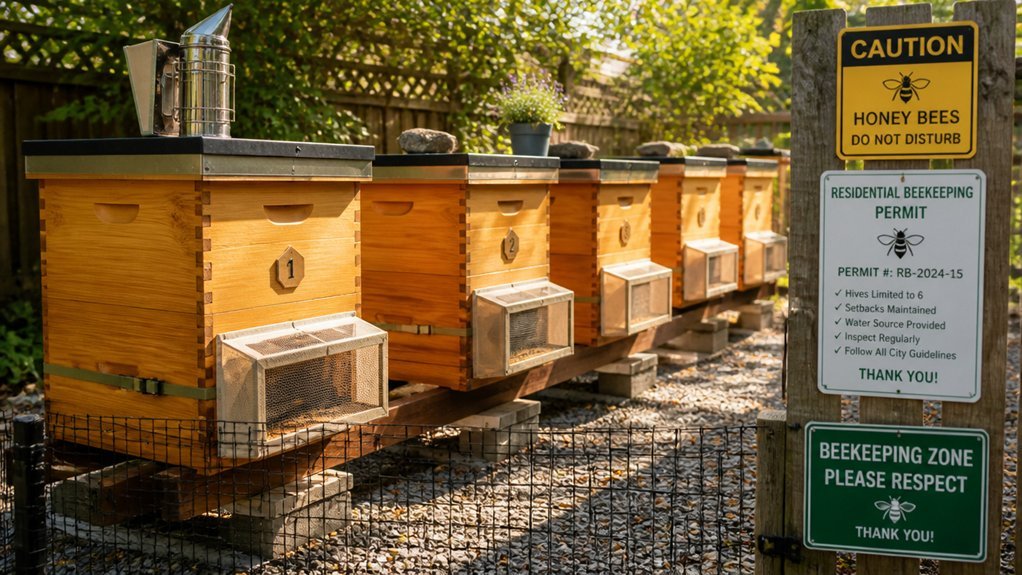
You should check your city’s beekeeping permit rules, because many places require registration, annual reporting, and renewal deadlines. Make sure your zoning allows backyard hives, and follow setback rules from property lines, sidewalks, and neighbors. Stay within any hive-limit rules, keep water and screening in place, and maintain clean access for inspections. Log hive health, manage swarms, handle complaints quickly, and keep copies of all filings. There’s more to cover if you keep going.
Check Your City’s Beekeeping Permit Rules
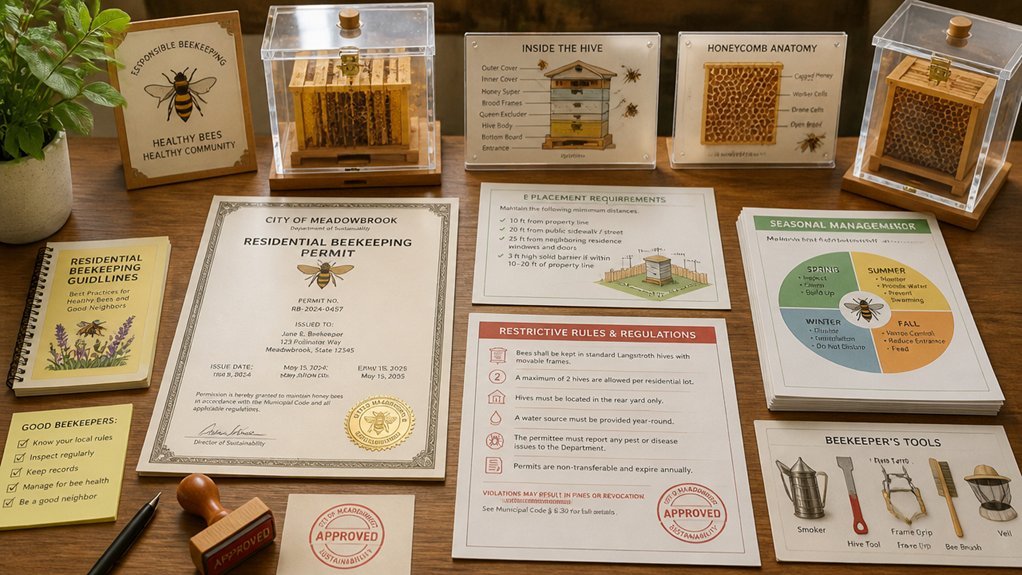
Before you bring home your first hive, check your city’s beekeeping permit rules so you know exactly what’s allowed. Start with your municipal code, since some cities require a permit, registration, or annual renewal before you keep bees at home.
Look for limits on hive numbers, setback distances, water sources, and inspection steps. You should also verify whether your neighborhood has extra rules through a homeowners association or local ordinance.
If the requirements seem unclear, call the city clerk or animal control office and ask for written guidance. Keep copies of every form, fee receipt, and approval notice. That way, you can show you’ve met the rules if a neighbor questions your setup later. Beehive kit features like modular expansion and protective gear can also influence local regulations you might need to consider.
Confirm Zoning For Backyard Hives
Next, confirm that your property’s zoning allows backyard hives, because a permit alone doesn’t always make beekeeping legal. You should check your city or county zoning map, then read the rules that apply to your lot type. Some residential zones welcome hives, while others limit them or require extra approval.
Confirm your zoning allows backyard hives, since a permit alone may not make beekeeping legal.
A good rule of thumb is to look for any local beekeeping ordinances that might specify hive placement and management restrictions. If the code uses unusual terms, call the planning office and ask for the exact section in writing. Keep a copy of the rule and your address on file, so you can show you’ve done your homework.
- Review zoning districts tied to your parcel.
- Verify whether hives are listed as an allowed use.
- Save written confirmation before you buy equipment.
Meet Setback Rules For Neighbor Safety
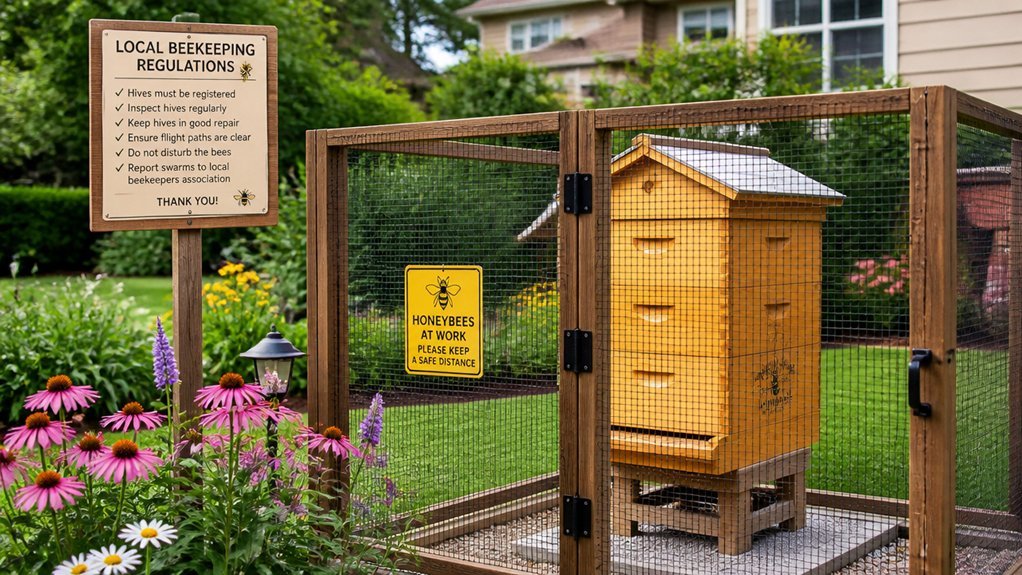
You’ll need to check hive distance requirements so your bees stay a safe distance from neighboring homes and shared spaces.
Set your hives with enough property boundary clearance to reduce conflict and meet local setback rules. These limits help protect your neighbors while keeping your setup compliant.
Ensuring that your hive entrances are properly aligned with entrance control design can also help minimize robbing and disturbances that might upset neighbors.
Hive Distance Requirements
When you place hives, keep them far enough from property lines, sidewalks, and neighboring homes to meet local setback rules and reduce conflict. You should check your permit conditions before siting each hive, because distance limits often vary by zone, lot size, and hive count.
Proper spacing helps you protect passersby, limit drifting bees, and lower nuisance concerns from neighbors. If your yard is tight, choose a location that still gives bees a clear flight path and easy access for maintenance. Measure carefully, then document the placement for your records.
- Review your city or county setback standard first.
- Mark hive locations before you set equipment down.
- Recheck distances after you add stands, fences, or panels.
- Consider hive strap options to secure your hives against wind and storms during installation and transport.
Property Boundary Clearance
Property lines matter because they define the minimum clearance your hives need from neighboring yards, walkways, and shared fences. You should measure from the hive entrance, then confirm your permit’s setback number before you place anything. If you’re tight on space, use barriers, hedges, or a taller fence to guide flight paths upward and away from people. Proper entrance sizing helps prevent robbing and intrusion, ensuring a safer environment for both your hive and neighbors.
Follow Hive Limits For Residential Lots
Even on a small residential lot, the number of hives you can keep is usually capped by local rules, so check your permit before you add more colonies. You’ll often find a limit based on lot size, zoning, or nearby homes, and you need to stay within it to keep your permit valid.
If you exceed that cap, inspectors can require you to reduce hive count or face penalties. Keep your setup simple and track each colony carefully.
- Confirm the maximum hive number listed on your permit.
- Match your hive count to your lot’s allowed capacity.
- Remove extra colonies before they trigger a violation.
- Using standard hive configurations can help ensure your setup remains within permitted limits.
Prepare Your Bee Management Plan
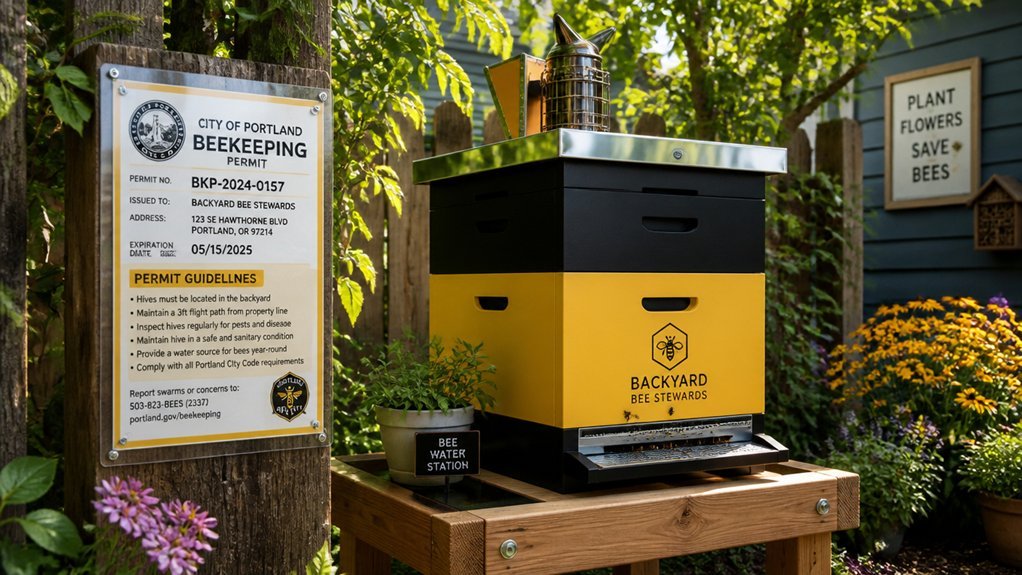
Before you submit your permit, map out how you’ll care for the hive year-round so inspectors can see you’re keeping things under control.
Describe how you’ll inspect brood patterns, monitor food stores, and check for pests or disease on a set schedule. Explain how you’ll add space during heavy nectar flows, keep water available, and manage swarming before it starts.
Note the gear you’ll use for safe handling, the records you’ll keep, and the steps you’ll take during extreme heat, cold, or drought. Show that you can clean up spills, remove deadouts promptly, and maintain a tidy apiary. Additionally, integrating reliable thermometer and hygrometer measurements can help you maintain optimal hive conditions throughout the seasons.
A clear plan helps officials trust that you’re prepared, attentive, and ready to keep your bees healthy without creating problems for neighbors or the property.
Register Your Hives With Local Authorities
You’ll need to check your local registration rules before you place any hives on your property. Many cities and counties require you to report hive locations, and they may ask for specific details about your setup. Additionally, some jurisdictions may specify beekeeping record-keeping requirements to help you track inspections and hive health effectively. Make sure you note any reporting deadlines so you stay compliant and avoid penalties.
Local Registration Requirements
When local rules require it, register your hives with the city, county, or other authority that oversees beekeeping in your area. You’ll usually provide your name, address, hive count, and yard location so officials can identify your apiary. Some places also ask for a map, contact number, or proof that you own or manage the property.
Keep your records accurate, because officials may use them to confirm compliance and reach you if concerns arise.
- Check the exact office that handles bee registration.
- Submit every required form before placing hives outside.
- Update your information if you move or add colonies.
- Proper recordkeeping and understanding seasonal hive care help ensure smooth compliance with local regulations.
Hive Reporting Deadlines
Check your local deadline for hive reporting as soon as you decide to keep bees, because many authorities require registration before you place colonies on your property.
You’ll usually need to submit the number of hives, their location, and your contact details to the city, county, or agricultural office. Some places want annual updates, while others require notice when you add, move, or remove colonies. Don’t miss renewal dates, since late reporting can trigger fines or permit delays.
Keep copies of every filing and confirmation number so you can show compliance if a neighbor complains or an inspector visits. If your local rules change, update your report right away. Staying current helps you avoid penalties and keeps your residential beekeeping permit in good standing. Remember that beehive paint and stain choices can affect the longevity of your woodenware and the health of your colonies, so choose bee-safe, weather-resistant finishes.
Provide Water And Screening For Your Hives
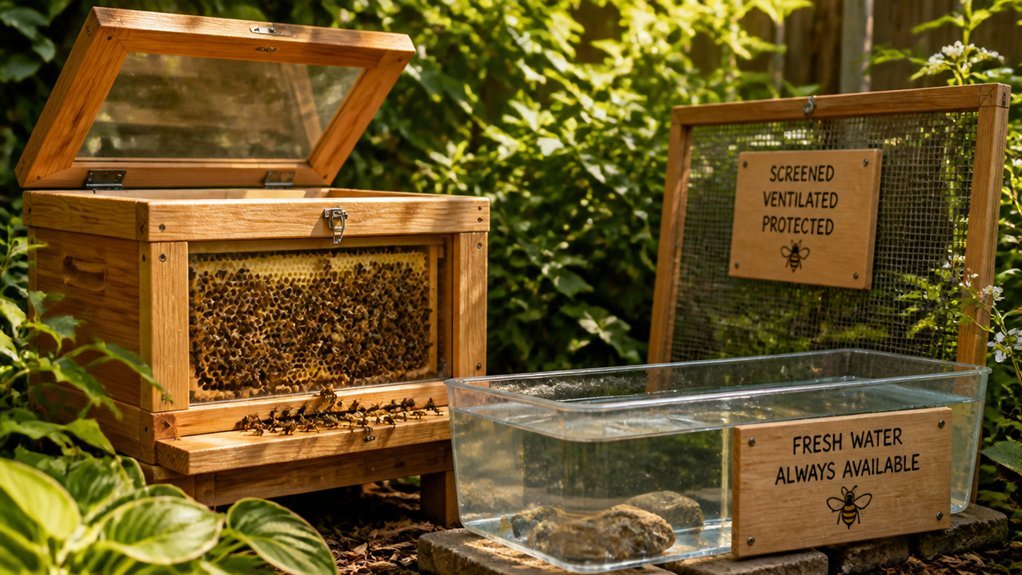
To help keep your bees healthy and less likely to bother neighbors, provide a clean water source near the hive and place screening where it can guide their flight. You can use a shallow basin with pebbles, corks, or floating wood so bees land safely without drowning.
Refill it often, especially during hot spells, and keep it close enough that bees don’t search for water elsewhere. Add fencing, shrubs, or lattice to lift flight paths above head height and reduce traffic across sidewalks and patios.
- Set the water in a sunny, stable spot.
- Refresh it before it gets slimy or stale.
- Position screening to steer bees upward, not outward.
Keep Inspection Access And Hive Records
Keep your hives easy to inspect by leaving enough space around them for you to open boxes, lift frames, and work without blocking paths or fencing. You should also keep the site neat so you can reach every colony quickly when you need to check health, equipment, or permit compliance.
Record each inspection date, hive count, queen status, brood pattern, food stores, and any treatments you apply. Keep notes on changes in box configuration, splits, or replacements, and save receipts for medications or equipment if local rules ask for proof. A simple logbook or digital spreadsheet works well if you update it right after each visit.
Clear access and accurate records help you show that you manage your bees responsibly and make future inspections smoother.
Handle Swarm Control And Complaints
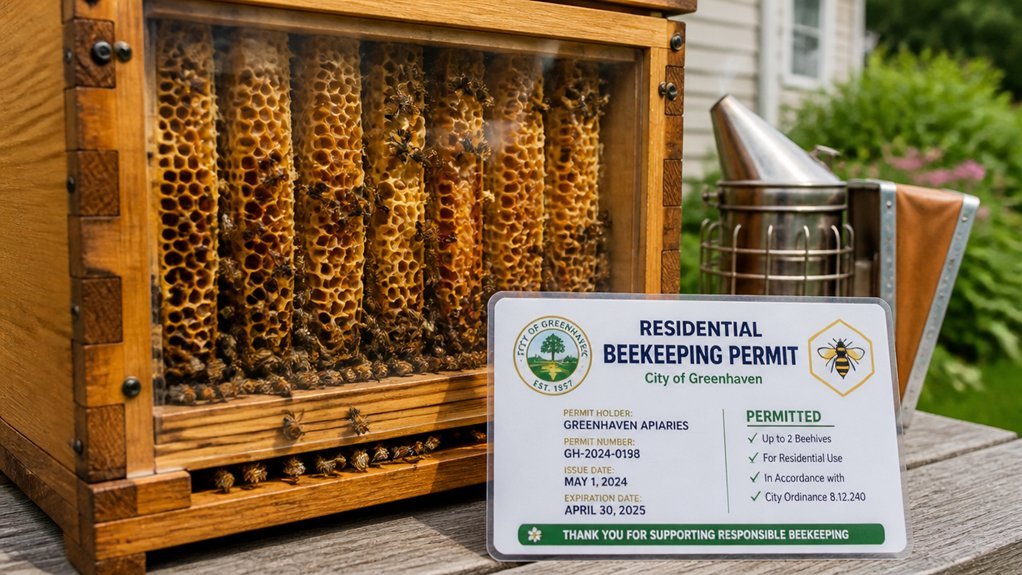
You should use swarm prevention methods like regular hive checks and adding space before bees get crowded.
If a neighbor complains, you can respond quickly, explain what you’re doing, and document the issue.
When a swarm starts, you’ll need to relocate or contain it fast to protect people and keep the permit in good standing.
Swarm Prevention Methods
Even under a residential beekeeping permit, swarm prevention starts with routine hive checks, enough space for brood expansion, and timely splitting or adding supers before the colony gets crowded. You should watch for queen cells, congestion, and fast increases in bee numbers, then act early.
Keep the brood nest organized by rotating frames, removing excess burr comb, and maintaining strong ventilation so your hive stays balanced. Feed only when needed, because heavy nectar flows and overfeeding can push a colony toward swarming.
- Inspect weekly during spring buildup.
- Split strong hives before they feel cramped.
- Give bees room with extra supers.
These steps help you keep control, reduce losses, and avoid a swarm leaving your yard unexpectedly.
Neighbor Complaint Response
When a neighbor raises a concern, respond quickly and calmly, then check your hive for signs of crowding, poor control, or a recent swarm. Thank them for speaking up, and don’t dismiss their worry, even if you think the hive looks fine.
Explain what you’ve done to manage the bees, such as splitting strong colonies, adding space, or removing queen cells. If you spot a problem, fix it promptly and document the steps you took.
Keep your tone respectful and factual, and share your contact information so they can reach you again if needed. You should also watch for repeated issues and adjust your management before complaints grow.
Good communication builds trust, shows responsibility, and helps you keep beekeeping in good standing with your permit and your neighbors.
Relocation During Swarms
If your colony swarms or looks ready to swarm, act fast to reduce the chance of bees settling on a neighbor’s property. Move the hive only if you can do it safely and legally, and notify nearby residents before you begin. Keep calm, suit up, and close entrances after dusk when most bees are inside. Use smoke lightly, then transport the hive to a temporary site that meets permit rules and gives the bees space.
- Check local setback and transport requirements first.
- Relocate the hive at night or early morning.
- Inspect the original site for stray bees and lingering clusters.
After relocation, watch for returning foragers and add space, ventilation, or a new queen if swarming pressure stays high. Quick action helps you control complaints and protect neighbors.
Renew Your Residential Beekeeping Permit On Time
Stay ahead of deadlines by renewing your residential beekeeping permit before it expires, so you can keep your hive legally and avoid gaps in compliance. Check your permit date early and note any renewal window your city or county requires.
Renew your residential beekeeping permit before it expires to stay legal and avoid compliance gaps.
Gather updated documents, pay the fee, and submit everything before the deadline so you don’t risk penalties or a lapse in approval. If your property, hive count, or contact details changed, report them with your renewal.
You should also review current inspection or setback rules, since officials may update them each year. Keep copies of your submission and confirmation for your records. If you’re unsure about timing, contact the permitting office now rather than waiting until the last minute.
Timely renewal keeps your bees, neighbors, and your backyard operation protected.
Frequently Asked Questions
Can Children Help Manage Registered Backyard Hives?
Yes, children can help manage backyard hives if you supervise them closely, teach safety, and keep tasks age-appropriate. You’re responsible for their actions, so stay present and make sure they don’t disturb bees.
Are Rooftop Hives Treated Differently Than Ground-Level Hives?
Yes, you usually treat rooftop hives differently if local rules do. You’ll often need extra safety, access, and setback checks, since you’re placing bees above ground and near neighbors, roofs, and walkways.
What Happens if a Permit Application Is Denied?
If your application’s denied, you’ll usually receive reasons and may appeal, revise, or reapply. You should fix problems, like setbacks or hive limits, then submit again after meeting local requirements.
Can I Move My Hives to Another Property Temporarily?
Yes, you can usually move your hives temporarily, but you’ll need to check local rules, notify the relevant authorities if required, and confirm the new site meets zoning, safety, and bee-management requirements.
Do Permit Rules Change During Drought or Wildfire Emergencies?
Usually, you’ll still follow permit rules during drought or wildfire emergencies, though authorities may add temporary restrictions, waivers, or relocation orders. You should check local emergency updates, because rules can change quickly.
In Summary
Before you bring bees home, make sure you’ve checked your city’s permit rules, zoning limits, setbacks, hive counts, and management requirements. Keep water nearby, screen your hives, and stay ready for inspections, records, and swarm control. If neighbors have concerns, handle them quickly and respectfully. When your permit is due, renew it on time so you can keep beekeeping legally and responsibly. A little preparation now helps you protect your bees, your property, and your community.