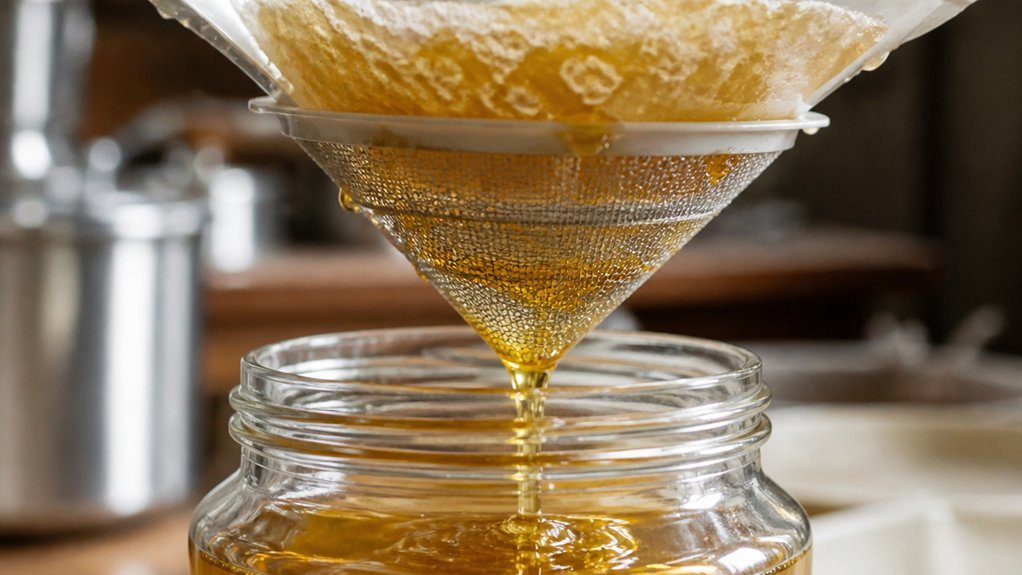
You can render beeswax with sunlight in three practical ways: a shallow tray for small batches and fast melting, a double-container setup for gentler, more controlled heat, and a sloped collector for cleaner wax separation. Use a dark, insulated box with a clear lid, keep the wax off debris, and monitor the temperature for best results. After that, you’ll want to filter and store it properly, which can make the final wax even cleaner and better.
What You Need for Solar Wax Rendering

To render wax with the sun, you need a simple setup that captures heat well and keeps the wax contained. You’ll need a dark, insulated box or tray, a clear lid, and a small rack or strainer to hold the wax away from debris.
Render wax with the sun using a dark, insulated tray, a clear lid, and a small rack.
Choose heat-resistant containers that won’t warp in direct sun. You can also benefit from using food-grade materials, which are safe for working with wax and ensure long-lasting durability.
Line the bottom with foil or black material to absorb warmth, and use a thermometer so you can check temperatures without guessing.
Keep a lid or glass cover tight to trap heat and shield the wax from dust, insects, and wind. Set everything on a stable surface with strong sunlight, and have gloves, tongs, and a clean collection jar ready.
That way, you can work safely and keep your wax clean throughout the process.
3 Solar Wax Rendering Methods
Once your setup is ready, you can choose from three practical solar wax rendering methods depending on how much wax you’re processing and how clean you need the final result.
First, use shallow trays for small batches; spread broken comb thinly so heat reaches it quickly and melts it evenly.
Second, use a double-container method when you want a steadier melt; place wax in a smaller pan inside a larger heated chamber so it softens without scorching.
Third, use a sloped collector when you’re handling dirty cappings or mixed scrap; gravity helps the melted wax move away from debris, especially when combined with durable trap materials that resist deterioration over time.
You can also combine methods for better efficiency. Start with the simplest option, then adjust the container size, depth, and exposure to sunlight until you get the melt rate you want.
How to Filter and Store Solar-Rendered Beeswax

After the wax melts, strain it while it’s still warm so debris doesn’t harden back into it. Use a fine mesh strainer, cheesecloth, or nylon filter over a heat-safe container to catch slumgum, pollen, and propolis bits.
If the wax still looks cloudy, pour it through a second filter while it stays liquid. Let it cool slowly so any leftover grit sinks below the clean layer. Once it firms up, lift off the wax cake and scrape away the underside if needed.
Store your filtered beeswax in a dry, sealed container away from heat, sunlight, and moisture. Glass jars, food-grade tubs, or wrapped blocks all work well. Label each batch by date so you can track quality and use older wax first. Proper storage helps maintain the wax’s quality and scent for future use.
Frequently Asked Questions
How Long Does Solar Wax Rendering Usually Take?
Usually, you’ll need several hours to a full day, depending on sunlight, wax amount, and your setup. On cloudy days, it can take longer, so you should plan for extra time.
Can Solar Wax Rendering Work on Cloudy Days?
Yes, you can render wax on cloudy days, but you’ll get slower, weaker heating. You’ll need more time, insulation, and perhaps a darker box to capture limited sunlight and keep temperatures up enough.
What Pests Are Attracted to Melting Wax Outdoors?
You’ll attract ants, bees, wasps, flies, and sometimes rodents to melting wax outdoors because sweet residues, heat, and scent draw them. Cover the wax, clean spills quickly, and keep nearby trash sealed tightly.
Does Solar-Rendered Wax Smell Different Than Stove-Rendered Wax?
Yes, you’ll usually notice a gentler, cleaner smell from solar-rendered wax because it heats slowly. Stove-rendered wax can smell stronger or smokier if you overheat it, scorch impurities, or use a rougher container.
How Much Wax Loss Occurs During Solar Rendering?
You’ll usually lose about 5% to 15% of the wax during solar rendering, depending on how dirty your cappings are, how hot it gets, and how much debris you strain out afterward.
In Summary
Now that you know what you need for solar wax rendering and the three best methods, you can turn raw beeswax into a cleaner, usable product with less effort. By choosing the right setup, filtering carefully, and storing your wax properly, you’ll get better results every time. Solar rendering lets you work with the sun instead of extra heat, so you save energy while making the most of your beeswax.