

To render old comb, first sort through it and remove moldy, heavily propolized, or debris-packed pieces. Shake off loose bits, brush away dirt and cocoons, then rinse briefly in cool water and dry well. Next, melt the clean comb gently using a double boiler, low heat in a pot, or a warm sun bath. Finally, strain the wax through fine mesh or cheesecloth and let it cool into clean blocks, where the details get even better.
Sort and Clean Old Comb

Before you render an old comb, sort through it and clean it well so you know exactly what you’re working with. Start by separating usable comb from trash, and set aside anything moldy, heavily propolized, or packed with dead bees.
Shake off loose debris, then brush each piece gently to remove dirt, cocoons, and wax crumbs. Rinse the comb in cool water if needed, but don’t soak it long enough to soften it. Drain it thoroughly and spread it on a clean towel or screen to dry.
As you inspect, cut away damaged sections and keep only the parts that look sound enough to process. Good sorting saves time later, reduces contamination, and helps you get cleaner results without wasting effort. Paying attention to material comb building design can also help you identify which parts are more suitable for rendering.
Melt Beeswax Three Ways
Once your comb is sorted and dry, you can start melting the beeswax in a method that fits your setup.
You can use a double boiler for the safest control: place the comb in a heatproof bowl over simmering water and let the wax liquefy slowly.
If you need speed, heat the comb in a dedicated pot on very low heat, stirring often so it doesn’t scorch.
For small batches, you can also set the comb in a dark jar and warm it in the sun or a hot water bath, which keeps the temperature gentle.
Keep the heat low no matter which method you choose, because overheated wax loses quality and can ignite if neglected.
Choosing the right melting method ensures you maintain the wax quality and avoid contamination or scorching.
Strain and Store Beeswax
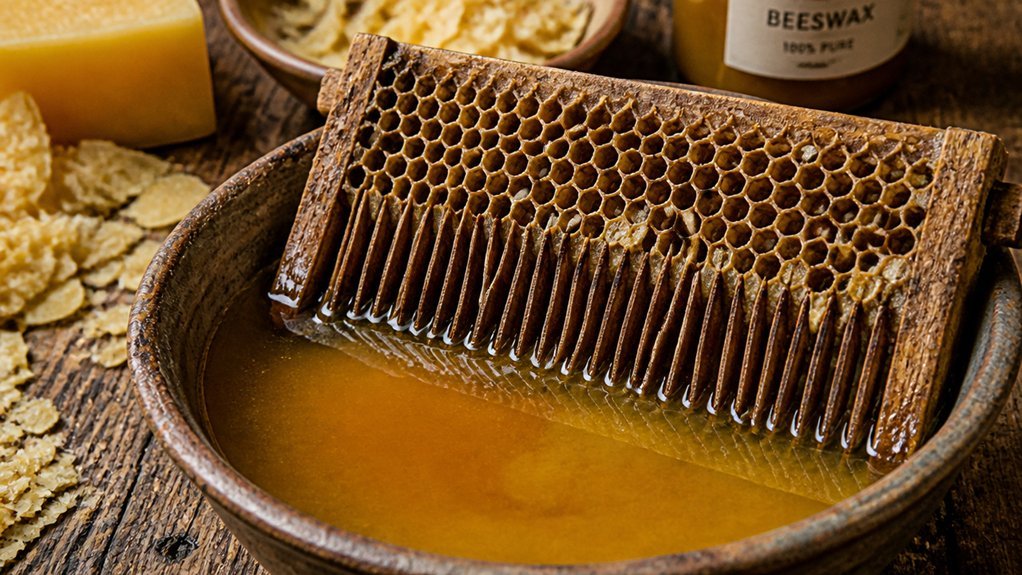
Pour the melted beeswax through a fine mesh strainer, cheesecloth, or a nylon stocking into a clean heatproof container to catch bits of comb, propolis, and debris. Keep the strainer steady so you don’t spill hot wax, and pour slowly to leave sediment behind.
Using a food-grade silicone strainer can help ensure safety and easy cleanup.
If the wax looks cloudy, strain it again through a fresh layer for a cleaner finish. Let it cool untouched until it hardens into a smooth block or puck.
Store it in a dry, cool place away from sunlight and dust. Label each batch so you know its age and source.
- Cleaner wax melts and pours better
- Proper storage preserves scent and color
- Labeled batches make future projects easier
Frequently Asked Questions
How Do I Safely Dispose of Leftover Comb Debris?
You can safely dispose of leftover comb debris by scraping it into a sealed bag, wiping surfaces, and tossing it with regular trash. Don’t rinse large pieces down drains; they’ll clog pipes and attract pests.
Can Old Comb Be Used for Candle Making?
Yes, you can reuse old comb pieces for candle making if they’re clean, dry, and heat-safe. You’ll want to avoid synthetic or dirty material, since it can smoke, smell bad, or release harmful fumes.
What Containers Are Best for Storing Rendered Wax?
You’ll want airtight glass jars, metal tins, or silicone molds for storing rendered wax. You can keep it cool and dark, and you shouldn’t use plastic if you want to avoid sticking or warping.
How Do I Remove Impurities From Beeswax Without Straining?
You can remove impurities by melting the beeswax gently, adding hot water, and letting debris sink. Cool it slowly, lift off the clean wax, then repeat until it’s clear enough for your needs.
Is Rendered Beeswax Safe for Skin Products?
Yes, rendered beeswax is usually safe for skin products if you’ve cleaned it well and use cosmetic-grade sources. You should patch-test first, since residual impurities or sensitivities can still irritate your skin.
In Summary
By sorting and cleaning your old comb first, you’ll make the rendering process smoother and safer. Then, when you melt the beeswax, you can choose the method that works best for your setup and comfort level. Once it’s fully melted, strain it carefully to remove any leftover debris and store it in a clean container. With these simple steps, you’ll turn old comb into useful beeswax you can keep and use later.



